Bethlehem archaeology in Context: A City of Constant Change
The story of Bethlehem archaeology unfolds in a city that sits at a unique cultural and geographic crossroads. Nestled in the Judaean foothills, Bethlehem has long been a place where routes cross, networks of trade shift, and religious significance concentrates. The archaeological record of this city reveals a long sequence of settlement, adaptation, and transformation that mirrors broader regional histories. From early Bronze Age communities to modern urban life, the excavation and study of Bethlehem’s material past illuminate how residents lived, worshipped, traded, and negotiated power over centuries. In this article, we explore discoveries, historical context, and the ongoing work that shapes our understanding of archaeology in Bethlehem, sometimes described more broadly as the archaeology of Bethlehem or the Bethlehem site studies, while keeping an eye on what these findings tell us about daily life, sacred space, and political change.
Historical backdrop and the fabric of layers
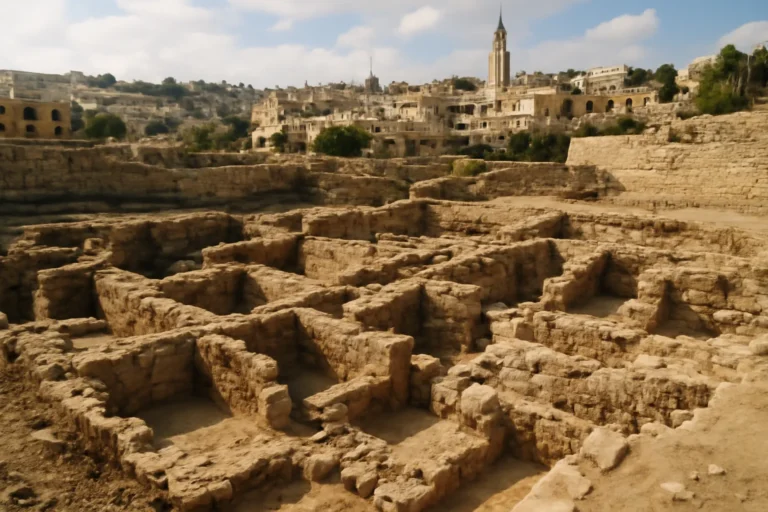
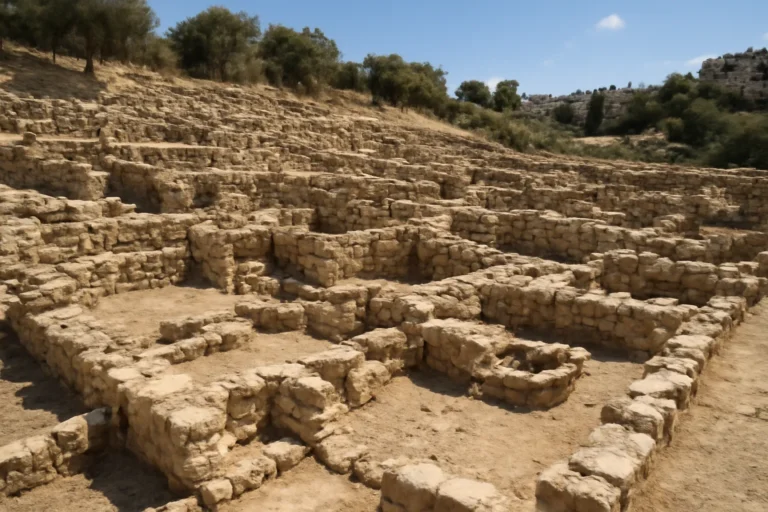
Any serious treatment of Bethlehem archaeology begins with an appreciation for the layered nature of the site. The city sits atop a landscape that preserves multiple strata from distinct eras. In broad terms, researchers distinguish periods that span from the Bronze Age into the Ottoman era, with notable transitions during the Iron Age, the Hellenistic and Roman periods, the Byzantine era, and the Islamic caliphal centuries. Each layer captures a set of material remains—city walls, domestic architecture, water infrastructure, religious installations, and everyday objects—that allow scholars to reconstruct patterns of life, ritual practice, and sociopolitical organization.
The practice of archaeology in Bethlehem often emphasizes how religious narrative and material culture intersect. Sites connected with Christian tradition, such as the Church of the Nativity complex and surrounding grottoes, sit alongside stratified deposits that reflect ordinary urban life. The combination of sacred landscapes and lived history makes Bethlehem archaeology particularly distinctive in the study of the wider region.
Major phases of discovery: from antiquity to modern scholarship
Archaeologists now speak of a long sequence of occupation at Bethlehem, with each phase contributing pieces to a sprawling puzzle. In many cases, the most informative discoveries come from careful excavation, but noninvasive methods—such as ground-penetrating radar, aerial photography, and remote sensing—have also revealed substantial information about the layout of ancient streets, cisterns, and hidden rooms beneath modern neighborhoods.
Key chronological anchors
Bronze Age village remains that hint at early agricultural settlement and localized craft production.
Iron Age domestic architecture showing a shift in building techniques and a possible intensification of settlement during periods of regional change.
Hellenistic and early Roman layers that reveal urbanization, public spaces, and perhaps connections to wider Mediterranean networks.
Byzantine era structures including religious and domestic remains, with the rise of Christian pilgrimage shaping the urban landscape.
Crusader and Ayyubid/Mamluk periods deposits illustrating changing control, architectural styles, and trade patterns.
Ottoman-period reconfigurations that reflect population growth, taxation, and the adaptation of older sites to new uses.
The practice of excavating in Bethlehem—and more broadly within the Palestinian territories—has involved collaborations among local scholars, regional universities, and international institutions. Campaigns over the decades have explored everything from the city’s water systems to its religiously significant spaces. While the most famous sites often draw attention to Bethlehem’s sacred geography, many important discoveries come from careful study of the neighborhood-scale urban fabric, where narrow alleys and courtyards preserve micro-histories of everyday life.
Notable research programs and approaches
Interdisciplinary projects combining archaeology, archaeobotany, and bioarchaeology to understand diet, health, and land use.
Engagement with heritage management to balance research goals with community needs and preservation concerns.
Use of noninvasive methods to map underground features before any digging, minimizing disturbance to modern infrastructure and sacred spaces.
Community-driven documentation projects that record local knowledge and oral histories as a complement to material remains.
What the excavations have revealed about daily life
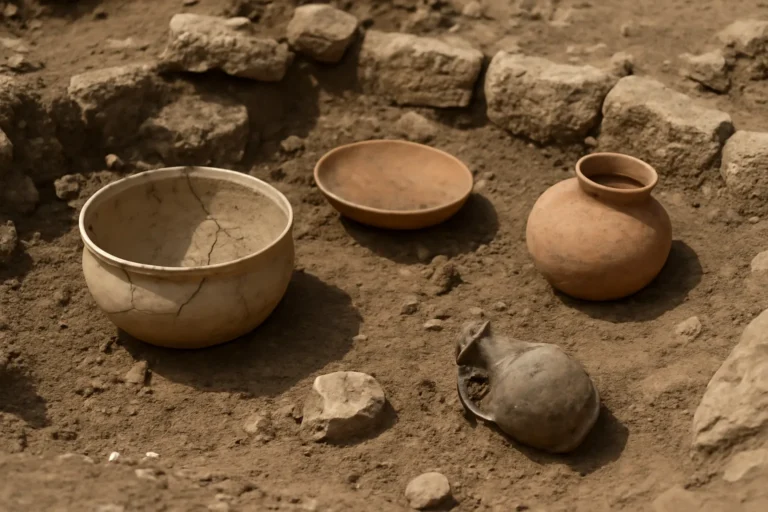
The findings emerging from Bethlehem archaeology emphasize more than grand temples or royal monuments; they illuminate the everyday rhythms of the city. Domestic quarters, storage facilities, and workshops reveal how families organized space, how crafts were produced, and how goods moved in and out of the city. In many cases, artifacts such as pottery shards, food remains, and tools offer a tangible sense of daily routines—preparing meals, mending clothing, or engaging in local trade networks.
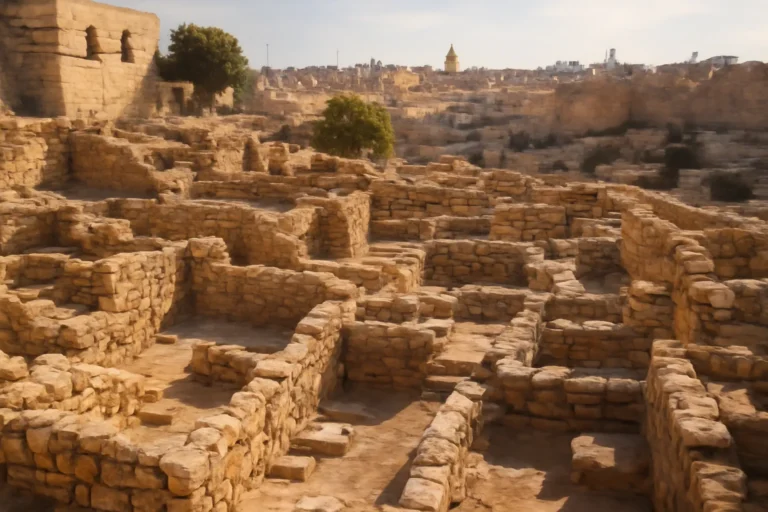
A recurring theme is the ability of the city to adapt to changing political contexts. When new rulers arrived or when religious practices shifted, the urban landscape often responded through the modification of courtyards, the addition of new walls, or the construction of religiously filtered spaces. The archaeology of this city thus presents a narrative of continuity and resilience, where old foundations support new buildings and new beliefs.
The Nativity narrative and sacred sites: an archaeological dialogue
Bethlehem’s reputation as a site of religious significance adds a complex layer to its archaeology of sacred space. The Church of the Nativity and its associated grottoes have been focal points for centuries of ritual, pilgrimage, and devotion. The relationship between liturgical tradition and material remains has shaped how archaeologists interpret findings around these spaces. While the religious tradition identifies the site as the birthplace of a central figure in Christian faith, scholars approach the matter with a careful emphasis on historical context, architectural evolution, and the transformations the complex has undergone through time.
Architectural strata around sacred spaces
Early Christian layers that reflect the earliest worship practices at or near the traditional grotto or surrounding church precincts.
Medieval reconstructions that show how later builders reinterpreted space while preserving or repurposing earlier foundations.
Modern restorations that aim to balance religious function with archaeological visibility, ensuring that visitors can engage with both faith and history.
In this dialogue between faith and science, the Bethlehem archaeology of sacred spaces emphasizes careful recording of stratigraphic contexts, textual annotations from historical travelers, and careful preservation strategies that respect both devotion and evidence.
Methods and technologies shaping Bethlehem archaeology
The toolkit of modern archaeology is diverse, and researchers working in Bethlehem employ a suite of methodologies designed to uncover, date, and interpret material remains without compromising the integrity of the urban landscape. The combination of hands-on excavation with advanced technologies allows for a more precise reconstruction of past environments and, crucially, a better understanding of how people lived in a city constantly under change.
Stratigraphic excavation to separate and interpret successive occupation layers, from ancient floors to later fill layers.
Careful documentation of architectural features such as walls, doorways, staircases, and courtyards to understand spatial organization.
Microarchaeology of soils and residues to infer everyday activities and environmental conditions.
Dating and material analysis
Radiometric dating methods, including radiocarbon dating, to place organic materials in time.
Typological analysis of ceramics, metal artifacts, and lithic tools to correlate Bethlehem finds with broader regional chronology.
Residue analysis on vessels to determine contents, which can illuminate trade, diet, and storage practices.
Noninvasive and preservation-first approaches
Ground-penetrating radar and aerial imagery to map subsurface features before any excavation occurs.
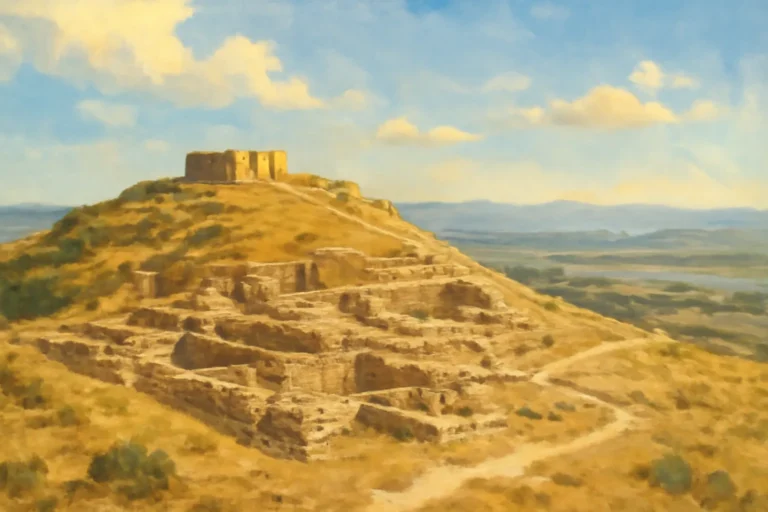
3D modeling and digital reconstruction to visualize how streets, buildings, and public spaces may have looked in different periods.
Heritage impact assessments that consider the needs of local communities and ongoing urban development projects.
Chronology and cultural layers: a synthetic narrative
The chronology emerging from Bethlehem’s archaeology points to a city that was rarely static. Each era left its imprint not only on the built environment but also on the social fabric and economic networks of the community. The vibrancy of everyday life—households, markets, workshops, courtyards—emerges in the record as a counterweight to the more monumental aspects of the past, such as the presence of a dominant religious complex or the footprints of imperial administrations.
Researchers often frame this timeline as a sequence of phases rather than isolated events. The interplay between occupation and reorganization demonstrates how inhabitants responded to external pressure, seasonal variations in resource availability, and shifting trade routes. The Bethlehem site studies emphasize how urban cores can endure and adapt, preserving a palimpsest of living memory that scholars read through material culture.
Heritage, memory, and public engagement
Beyond the scholarly sphere, Bethlehem archaeology intersects with heritage management, tourism, and community life. The way findings are presented to the public—through museum displays, guided tours, or interpretive signage—shapes how residents and visitors relate to the past. In a city where sacred and secular identities often overlap, responsible presentation requires clear communication about what is known, what remains speculative, and how ongoing research could revise existing understandings.
Public programs sometimes emphasize collaborative projects that involve school groups, local historians, and traditional craftspeople. This approach not only broadens the base of knowledge but also strengthens the social fabric around sites that hold cultural and religious importance. It also helps ensure that preservation decisions consider the needs of residents who live amid ancient remains and modern infrastructure.
Preservation, ethics, and contemporary challenges
The field faces a number of practical and ethical challenges. Balancing preservation with urban growth, protecting fragile organic remains, and ensuring that excavation results are accessible to local communities all demand careful planning. Political realities, security concerns, and restrictions on research access can complicate fieldwork, yet many projects persevere by building partnerships with universities, NGOs, and international scholars committed to responsible study.
Ethical considerations also shape what is studied and how findings are reported. The responsible archaeologist asks not only what can be learned, but who benefits from the information and how silences or biases in the record can be addressed. In Bethlehem, this means presenting findings in ways that respect local narratives while contributing to a global understanding of Mediterranean and Near Eastern history.
Education, training, and the future of Bethlehem archaeology
The training of the next generation of archaeologists is a recurring theme in Bethlehem’s research ecosystem. Field schools, seminars, and interdisciplinary programs cultivate expertise in excavation methods, conservation, and digital documentation. Students often gain experience in data management, artifact analysis, and geospatial techniques, which are increasingly essential for handling complex urban sites. This investment in human capital ensures that the study of archaeology in Bethlehem remains dynamic and capable of addressing new questions as methodological tools evolve.
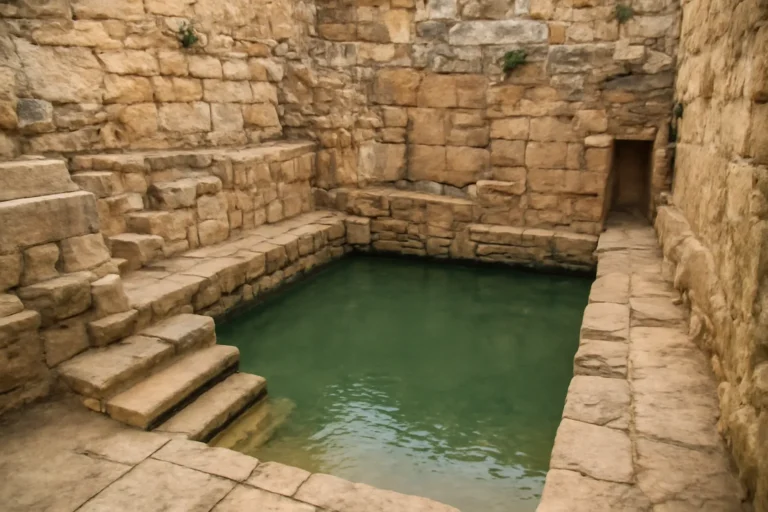
Looking ahead, researchers anticipate deeper investigations into the relationship between city housing patterns and economic activity, the role of water infrastructure in sustaining urban life, and the archaeology of everyday religious practice. The combination of traditional fieldwork with cutting-edge technologies promises to produce richer narratives about how a city like Bethlehem has functioned across millennia.
Timeline highlights: a compact guide to major epochs
Bronze Age settlements and early agricultural networks
Iron Age villages and the emergence of local governance structures
Hellenistic urban formation and Roman-period expansion
Byzantine religious architecture and pilgrimage culture
Crusader-era modifications and Muslim-era continuity
Ottoman administration, modern urban reorganization, and contemporary archaeology
Glossary of terms and concepts in Bethlehem archaeology
To help readers navigate the specialized language that often accompanies excavations in historic cities, here is a concise glossary of terms frequently encountered in Bethlehem’s archaeology literature:
Stratigraphy – the study of sequential layers deposited over time in an archaeological context.
Grotto – a cave or small chamber, often associated with sacred or ritual space in Mediterranean cities.
Ceramics typology – the classification of pottery according to style and function to date artifacts.
Residue analysis – examination of organic traces on artifacts to infer use and contents.
Noninvasive survey – methods that map beneath the surface without excavation, such as radar or drone-based imaging.
Readers’ guide: how to engage with Bethlehem’s past
For those who wish to explore Bethlehem archaeology beyond the page, several avenues offer accessible entry points. Museums and visitor centers in and around Bethlehem display artifacts and reconstructions that illustrate urban life across periods. Curated tours, especially those that combine architectural history with storytelling about daily life, provide a way to connect with the city’s deep past. For students and researchers, primary sources, site reports, and published monographs offer in-depth treatment of specific sites or periods, while public-facing summaries help bridge the gap between specialist scholarship and general understanding.
Conclusion: what the future holds for the study of Bethlehem’s past
The field of Bethlehem archaeology remains vibrant, driven by a combination of curiosity about ancient urban life and commitment to safeguarding a living heritage. The city’s unique position—home to sacred sites, long-standing communities, and a history that mirrors the broader arc of the region—ensures that ongoing research will continue to refine our knowledge. As new technologies come online and interdisciplinary collaborations expand, the archaeologies of Bethlehem will become more detailed, more nuanced, and more relevant to both local residents and a global audience. The dialogue between the past and present—and between researchers and communities—will shape how Bethlehem’s layers are interpreted, preserved, and celebrated for generations to come.
In sum, the Bethlehem archaeology program—whether described as the archaeology of Bethlehem, the study of Bethlehem site history, or the documentation of Bethlehem excavations—offers a compelling narrative about how a city endures through time. It shows how archaeology can illuminate daily life, sacred space, and social change, and it highlights the enduring value of patiently piecing together fragments to understand a place that matters to many people around the world.