Caesarea Maritima in the Bible: History, Significance, and Biblical References
Caesarea Maritima in the Bible: History, Significance, and Biblical References
In the biblical world, Caesarea Maritima, often simply called Caesarea, stands as a pivotal port city on the Mediterranean coast. Built by Herod the Great in the late first century BCE, renamed in honor of Caesar Augustus, and later serving as the Roman provincial capital, it is a stage for several key biblical episodes that shaped the early Christian movement. This article surveys the history, significance, and biblical references to Caesarea Maritima, and considers how readers and scholars understand this city within the biblical narrative and in archaeological memory.
What makes Caesarea Maritima special in the biblical map?
The city’s prominence rests on a combination of geography, political strategy, and religious interchanges. It sits at a natural harbor on the western edge of the tribal lands of Judah and the coastal plain known as the Plain of Sharon. Its grandscale harbor system, provincial administration, and prestige as a Roman urban center made Caesarea a natural setting for encounters between Jewish communities, the expanding Gentile Christian movement, and imperial power. In the biblical record, the city functions less as a mere backdrop and more as an active arena where faith, authority, and mission intersect.
Historical background: from Herod’s city to the Roman capital
The trajectory of Caesarea Maritima begins with Herod the Great, who masterminded a harbor city to underscore Roman influence while serving as a formidable administrative hub for the region. Around 22–10 BCE, Herod laid out the plans for a port that could accommodate trade, Roman ships, and diplomacy. The city’s original name, Caesarea, honored Caesar, signaling a deliberate political symbolism that would endure long after Herod’s era.
The distinguishing epithet Maritima clarifies its geographic identity: it is the “Caesarea by the sea,” setting it apart from other biblical Caesareas such as Caesarea Philippi in the north. Over time, the site grew into the administrative heart of the province of Judaea after Rome reorganized provincial boundaries around the mid-first century CE. The governor’s residence and the seat of Roman authority settled in this harbor city, making it the point of contact between imperial power and the local populations.
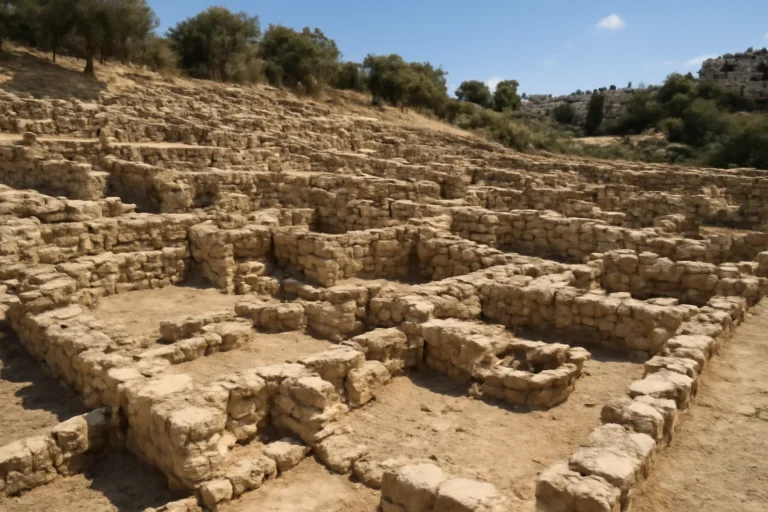
Architecturally, Caesarea Maritima boasted a sophisticated water system, a grand theater, an amphitheater-like structure, a hippodrome for Roman-style chariot events, and royal palaces. The harbor itself was a monumental achievement, with breakwaters and artificial basins that showcased Roman engineering prowess. Later layers of occupation—Roman, Byzantine, and Crusader—leave a palimpsest of walls, baths, streets, and religious spaces that archaeologists study to understand daily life, politics, and worship in antiquity.
Caesarea in the biblical narrative: key episodes and characters
Philip’s journey to Caesarea and the spread of the gospel
In the book of Acts, the evangelist Philip continues the gospel’s expansion beyond Judea. In Acts 8:40, we read that Philip, after preaching in many Samaritan towns, “was found at Azotus and passing through he preached the gospel in all the towns till he came to Caesarea.” This placement marks Caesarea as a horizon for the early Christian movement, where traveling teachers encountered new audiences, both Jewish and Gentile. The reference underscores how the early church’s mission extended from rural villages to thriving urban centers, where commerce, culture, and religion intersected.
The Cornelius episode: Gentile inclusion in Caesarea
One of the most consequential biblical episodes linked to Caesarea occurs in Acts 10–11. A Roman centurion named Cornelius, stationed in Caesarea, receives a vision inviting him to summon Peter. At the same time, Peter receives a vision that leads him to break customary Jewish dietary and ritual boundaries. When Peter arrives in Cornelius’s house in Caesarea, the Holy Spirit comes upon Gentile believers, and Peter proclaims that God has granted life to all who fear him, irrespective of ethnic background. This event in Caesarea marks a turning point in the universal scope of the gospel and the inclusion of Gentiles into the church without circumcision requirements.
Paul’s legal trials and imprisonment in Caesarea
The apostle Paul’s travels intersect with Caesarea repeatedly. In Acts 9–10, Paul’s mission broadens beyond Asia Minor and Judea, and in Acts 18:22 we see him arriving at Caesarea and greeting the church before continuing to Jerusalem. More in-depth are the episodes in Acts 23–26, where Paul defends himself before the Roman governors in Caesarea, first before Festus and later before King Agrippa II. The city serves as the venue for high-stakes legal proceedings, demonstrating the close relationship between early Christian preaching and imperial law. Acts 25–26 records Paul’s appeals to Caesar and his eventual transfer to Rome, part of the broader Roman apparatus that governed Christian minorities in the first century.
Herod Agrippa II, Festus, and the urban stage of power
The memory of Caesarea in Acts is also tied to the politics of power. The narrative of Herod Agrippa II and the governor Festus unfolds within the same urban landscape. Caesarea becomes a theater for political theater, legal maneuvering, and the testing of apostolic endurance under imperial oversight. The city’s status as the administrative capital makes it a plausible setting for the kinds of pronouncements, trials, and audience with the authorities that shape the early church’s trajectory.
The voyage to Rome: Caesarea as springboard for mission to the imperial capital
The voyage of Paul toward Rome, described in Acts 27–28, begins with a departure from Caesarea. The city serves as the launching point for a journey that would place the gospel at the heart of the Roman Empire. While the fates of ships and storms are part of the maritime narrative, the underlying significance rests in Caesarea’s role as the bridge between local ministry and a universal, even imperial, audience. This transition from local teaching to a broader audience mirrors the biblical arc of the mission—from Jerusalem to Judea, to Samaria, and to the ends of the earth.
Architectural and archaeological significance: what remains tell us
The physical remains of Caesarea Maritima help readers connect biblical mentions with material culture. Archaeologists have uncovered a city that reflects a layered history—Herodian foundations, Roman urban planning, Byzantine churches, and Crusader fortifications. Notable features include:
Harbor complex with breakwaters and basins that attest to remarkable engineering and a city built to handle maritime trade and imperial traffic.
Roman theater and the amphitheater, which reveal a culture accustomed to public performance and political theater, a reminder of how cities hosted masses and spectacles alongside governance.
Hippodrome for chariot games, illustrating the social and political rhetoric of Rome’s presence in the region.
Palaces and baths that show wealth, administration, and everyday life under imperial rule.
Aqueducts and water systems that demonstrate a concern for the practical needs of a growing urban center and a symbol of Roman technological prowess.
Temple precincts and sacred spaces that reveal shifts in religious expression—from Herodian worship to later Christian spaces, reflecting the city’s evolving identity.
In addition to Roman-era remains, the Crusader era adds layers saying something about continuity and change in sacred space. The coastal fortress built by Crusaders above the ancient harbor shows how the site remained strategically valuable for centuries. For readers of the Bible, these physical traces offer a bridge from textual description to the tangible city that hosted early Christian communities and imperial governance alike.
Linguistic variants and biblical mentions: breadth of terminology
When exploring Caesarea Maritima in the biblical lexicon, it helps to recognize the various terminologies and how they function in Scripture and in translation.
Variations used in scripture and translation
Caesarea — the most common biblical reference; in Acts, letters, and narrative portions, the city is typically named simply “Caesarea” as the urban center where events unfold.
Caesarea Maritima — used in more formal or descriptive contexts to distinguish the coastal city from other places named Caesarea (for example, Caesarea Philippi). In scholarly and some translations, the full title helps readers discern the specific site.
Caesarea by the Sea or Caesarea on the Mediterranean — descriptive renderings that appear in modern readers’ guides and translations to emphasize geography and to disambiguate from other Caesareas in the biblical landscape.
Caesarea in Judea — a phrase used in commentaries to situate the city within the historical province of Judea during certain periods.
Caesarea Philippi — often mentioned in parallel chapters of the Gospels, but it is important to distinguish this northern city (named after Caesar Augustus and Herod Philip II) from Caesarea Maritima. The two places share the name but differ in geography and biblical role.
Caesarea near Joppa or Lydda— in narrative transitions, the text may move between Caesarea and other urban centers; readers should track the movement to avoid conflating places with similar names.
The variations above help scholars and readers trace how the biblical authors and later interpreters used a single name to refer to multiple urban centers controlled or inspired by Rome. The context—Acts 10 for Cornelius, Acts 12 for Herod’s death, Acts 23–27 for Paul’s trials—reveals how the same place can function differently within the story and theology of the New Testament.
Distinguishing Caesarea Maritima from Caesarea Philippi clarifies the narrative geography of the New Testament. It prevents conflating a northern Gentile center with a southern coastal capital. For biblical readers, this distinction matters because it shapes how readers understand the spread of the gospel, Jewish–Gentile relations, and the temporal shifts in Roman governance that color the Acts narrative. When a commentator notes Caesarea in Acts 10, the natural inference is the coastal capital in Judea, not the region of Caesarea Philippi in the far north.
Caesarea Maritima and early Christian identity
The relationship between Caesarea and the early church reflects the broader dynamics of mission, authority, and cultural exchange. The city’s role as a port and administrative seat made it a natural meeting ground for Jewish Christians, Gentile converts, Roman leaders, and traveling missionaries. In Acts, we see a church that is not confined to a single locale but moves through urban centers enabled by networks of believers, merchants, and soldiers. The Cornelius episode demonstrates that God’s promise to bless all nations extends into the heart of the Roman world, using a Gentile centurion and a Jewish apostle to demonstrate the unity of faith across boundaries.
The city’s governance context also highlights tensions and accommodations between religious identity and imperial power. The presence of the governor’s palace, the theater and the amphitheater, and other public institutions suggests a public square where faith and politics intersect. The gospel’s proclamation in a Roman city—where Roman virtue, law, and cultic life intersected with diverse populations—clarifies how early Christians navigated social space to witness to Christ.
Caesarea Maritima in practice: a guide to reading and reflection
For readers aiming to engage with Caesarea in the biblical text, several interpretive approaches can be productive:
Historical-critical reading: situate Acts and the Paul narrative within the urban framework of a Roman provincial capital, noting how governance and law influence the storyline.
Literary-reading: consider how Luke-Acts builds Caesarea as a setting for transformation—from a city symbolizing Roman authority to a locus of the Spirit’s activity among Gentiles.
theological reading: explore how the Gentile inclusion in Caesarea reframes Israel’s covenantal expectations and expands the people of God beyond traditional boundaries.
archaeological and contextual reading: connect biblical descriptions with the material culture of Caesarea Maritima—its harbor, public buildings, and religious spaces—and consider how such spaces shaped everyday life and religious practice.
Visiting Caesarea Maritima today: a modern encounter with an ancient site
Today, Caesarea Maritima is an archaeological park and a living reminder of the biblical narrative. Visitors can walk along a shoreline that has hosted Phoenician traders, Roman soldiers, and early Christians. Notable experiences include:
Exploring the harbor ruins, where the sea meets Roman engineering and medieval layers.
Walking through the Roman theater and imagining public assemblies, oratory, and cultural life in a city under imperial rule.
Examining the hippodrome and the public spaces that hosted chariot games, political ceremonies, and social gatherings.
Visiting the baths and palatial remains to glimpse the everyday comforts and political grandeur of the elite.
Seeing the Crusader-era fortress perched above the ancient harbor, a reminder that the site remained strategically valuable through centuries of change.
For readers of the Bible, a visit to Caesarea Maritima can illuminate how geography, power, and religion interplayed in the early centuries of Christian history. The city’s remains help translate the biblical text into a tangible space where communities once gathered, debated, believed, and proclaimed good news in the shadow of empire.
Key biblical passages to read with Caesarea in mind
To explore the biblical material connected to Caesarea, consider these anchor verses and chapters:
Acts 8:40 – Philip’s ministry reaching Caesarea; the city as a terminus of evangelical travel.
Acts 9:31; Acts 10–11 – Peter and Cornelius in Caesarea, the decisive moment for Gentile inclusion.
Acts 12:20–23 – Herod’s death in Caesarea, illustrating the tension between divine and human authority.
Acts 18:22 – Paul’s arrival at Caesarea and greeting of the church there.
Acts 21–27 – Paul’s movements that anchor his trials and eventual voyage to Rome, with Caesarea serving as the launch point and staging ground for legal and spiritual engagement.
Reading these passages together with modern historical knowledge about Caesarea Maritima helps illuminate how the biblical writers used place to shape narrative meaning and theological purpose. The city isn’t merely a backdrop; it functions as a symbolic and practical junction where the gospel encounters power, law, and culture.
Conclusion: why Caesarea Maritima matters for biblical interpretation
Although the biblical authors do not present Caesarea Maritima as a theological treatise in itself, the city plays a crucial role in the story of the early church. It is a place where faith met empire, where Gentiles came into the fold, and where Paul’s mission was anchored in a real, living urban center. By examining Caesarea—in its biblical references, its variations in naming, and its archaeological remains—readers gain a richer understanding of how geography, politics, and faith intersect in the biblical world.
Glossary of terms and quick references
Caesarea Maritima
The coastal city built by Herod the Great, renamed to honor Caesar Augustus; the biblical Caesarea most often referenced in the New Testament (Acts and Paul narrative).
Caesarea
A shortened reference for the city, used repeatedly in Acts and other New Testament writings; typically implies Caesarea Maritima unless otherwise specified.
Caesarea by the Sea/Caesarea on the Mediterranean
Caesarea Philippi
A different city in the far north of ancient Israel, named for Caesar Augustus and Herod Philip II; bears no direct textual relationship to the Caesarea Maritima in Acts except through the shared prefix.
Whether you approach Caesarea Maritima as a historical port, a political capital, a stage for gospel expansion, or a site whose stones tell a long story of continuous occupation, the city remains a vivid example of how place and narrative intersect in the biblical world. By tracing its history, examining biblical episodes tied to its streets and harbors, and recognizing its modern-day remains, readers can appreciate the breadth and depth of its impact on biblical memory and Christian history.






Leave a Reply