Jericho Excavation Findings: Key Discoveries from the Ancient City
Jericho, a landmark site in the Jordan Valley, has long captured the imagination of archaeologists, historians, and curious readers. Its tell, known to scholars as Tell es-Sultan, preserves a sequence of occupation that stretches back to some of the earliest settled communities in the world. This article surveys the most important discoveries from the Jericho excavations, highlighting how each finding informs our understanding of ancient life, social organization, economy, religion, and technology. The discussion focuses on the principal excavations at Jericho and the influential results they produced, while offering a sense of how interpretations have evolved with new methods and new evidence. Throughout, we emphasize the breadth of Jericho excavation findings—from monumental architecture to everyday domestic debris—and we use a variety of terms to describe the same core discoveries so readers can appreciate the semantic richness of the field.
Historical context and the beginnings of Jericho archaeology
As one of the oldest continuously inhabited places on earth, Jericho sits at a crossroads of culture and climate. Its strategic location near the Dead Sea corridor made it a hub for trade, migration, and cultural exchange across millennia. The history of modern Jericho archaeology begins in the 19th and 20th centuries, when explorers and scholars first sought to understand what the tell could teach about the distant past. Early fieldwork laid the groundwork for later, more systematic investigations, even as methods and interpretations evolved. The Jericho excavations would come to symbolize the transition from treasure-hunt antiquarianism to careful stratigraphic analysis and cultural reconstruction based on material remains.
Chronology of excavation at Jericho: major phases and researchers
Early explorations in the 19th century: the first glimpses of an ancient city
Initial field observations identified substantial architectural remains on the mound, including thick stone features that suggested urban planning and defensive works.
Stratigraphic challenges arose quickly, as early investigators often documented walls, towers, and burials without a fully developed framework for separating different occupation layers. This made later reinterpretations necessary.
The work of these early explorers, despite methodological limitations, established Jericho as a site of interest that would become a touchstone for discussions about early urban life, monumental architecture, and the social organization required to maintain large-scale constructions.
Mid-20th-century fieldwork and the rise of a systematic program
Excavations in the mid-20th century shifted toward more systematic questions about chronology, settlement patterns, and architecture. The emphasis was on building a robust stratigraphic framework that could separate distinct periods of occupation.
Scholars began to distinguish the various phases of Jericho’s occupation by using well-defined cultural-historical sequences, enabling more precise dating of walls, towers, houses, and artifacts.
These efforts laid the groundwork for later interpretations of the relationship between architecture and community life, showing how the material record could reflect social organization, ritual practices, and economic activities.
Kathleen Kenyon and the Kenyon-era excavations (1950s): establishing a robust chronology
Kathleen M. Kenyon and her team carried out a landmark program at Jericho between the early 1950s and the late 1950s. Her meticulous approach to stratigraphy and context became a standard for Levantine archaeology.
Kenyon redefined the timeline of Jericho’s occupation, arguing for a long Neolithic sequence at Tell es-Sultan and clarifying the relative order of layers associated with the Pre-Pottery Neolithic and later periods.
Her work emphasized the importance of rejecting unsystematic attributions and stressed the need for secure associations between architectural features, artifacts, and their age, which in turn shaped debates about early fortifications, urbanism, and social complexity.
Later projects and re-evaluations: ongoing dialogue and new techniques
Following Kenyon, researchers revisited Jericho with new questions and methods—ranging from more precise radiocarbon dating to advanced material analyses. These later studies often refined or revised earlier conclusions while preserving the core insight that Jericho provides a uniquely long archaeological sequence.
Modern Jericho projects have integrated multidisciplinary approaches, including paleoenvironmental reconstructions, bioarchaeology, and technologically assisted artifact analysis, to extract richer information about diet, mobility, climate, and social organization across time.
The ongoing dialogue around Jericho also reflects how archaeologists balance interpretations of monumental architecture with the lived experiences of ordinary residents, showing that the excavated material can yield stories about both elite actions and common daily life.
Key discoveries from the Neolithic settlement: early urbanism and monumental architecture
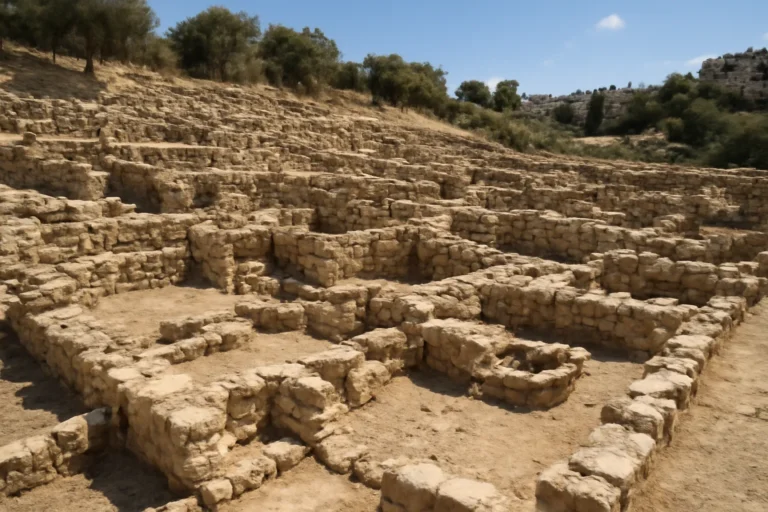
The Neolithic layers at Jericho stand among the most consequential chapters in the story of early urban life. The discoveries from this period illuminate how people transitioned from small forager-hunter groups to more complex, organized communities with public works, specialized construction, and a shared sense of place. Among the most famous findings are monumental walls, towers, and distinctive domestic architecture that together indicate a capacity for collective planning and social cooperation.
The monumental wall and watchtower: early expressions of urban defense
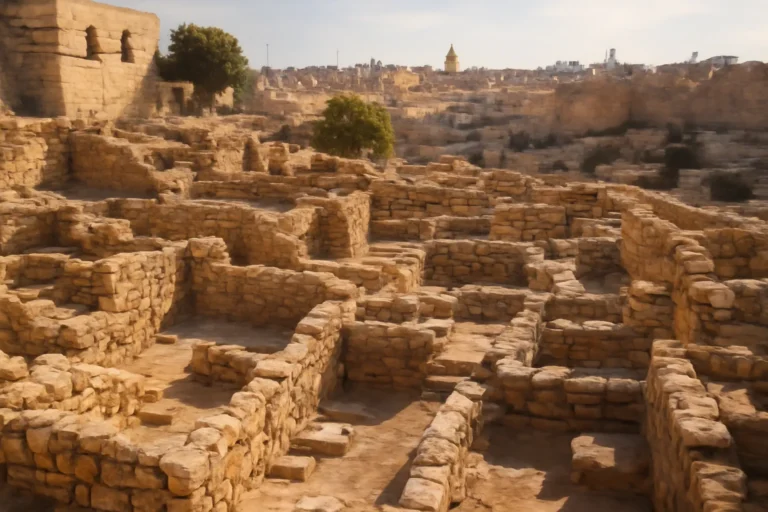
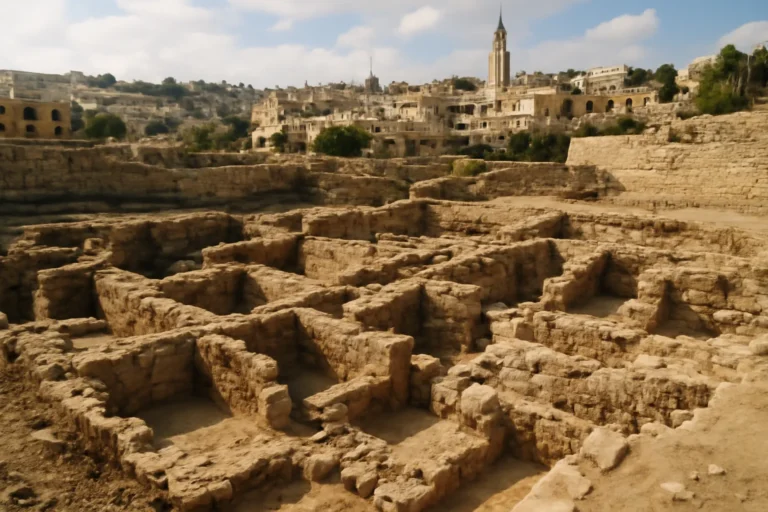
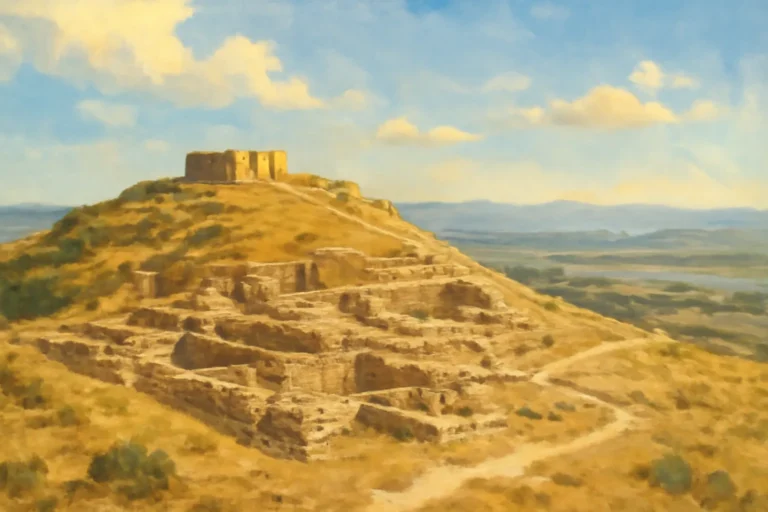
Monumental walls and a potential watchtower appear in the earliest Neolithic layers, often dated to around 8000–7500 BCE in some reconstructions. These fragments of stonework suggest that the residents of Jericho invested in city-scale defense and community-wide projects even in the earliest settled periods.
These fortifications have been interpreted as evidence for organized leadership, coordinated labor, and the capacity to mobilize large groups for collective tasks, including the transport and placement of stones and the maintenance of life-sustaining infrastructure in an arid environment.
Scholars debate the exact function and scale of these walls, but the consensus emphasizes that they reflect a social order capable of planning for risk, creating boundary spaces, and signaling civic identity to inhabitants and potential visitors alike.
Public architecture and domestic space: a window into daily life
The layout of houses, courtyards, and communal spaces points to a settled way of life with repeated patterns of occupancy and use, suggesting that people formed enduring communities with recognizable social roles and productive routines.
Building materials, plaster surfaces, and floor treatments provide clues about technology, climate adaptation, and aesthetics, illustrating how early communities managed shelter, cleanliness, and comfort in a challenging environment.
Observations on urban planning and social coordination
When taken together, the Neolithic houses, walls, and associated artifacts indicate a level of urban coordination that challenges simplistic views of prehistoric life as purely subsistence-focused. The Jericho evidence implies a society capable of shared risk management, resource allocation, and perhaps ritual or ceremonial activities tied to the community’s built environment.
Some researchers see signs of social differentiation in the distribution of house sizes, building complexity, and the placement of artifacts, though the extent and nature of inequality in these early communities remain a subject of discussion.
Burial practices, ancestor veneration, and the plastered skulls
Jericho is renowned for its striking and somewhat controversial burial practices, particularly the plastered skulls that are associated with memory, lineage, and ritual preservation of the dead. The plastered skulls stand as some of the oldest known examples of intentional human modification and ancestor reverence in the archaeological record. This practice provides a window into belief systems and social memory long before the emergence of writing or formal religious institutions.
Plastered skulls were created by removing a skull, preserving it, applying plaster to shape facial features, and eventually redescribing it as an ancestral figure within a household or courtyard context. These skulls reveal a reverence for lineage and a desire to maintain a tangible connection to forebears.
The skulls were often integrated into domestic spaces, suggesting a ritual or symbolic function tied to daily life, seasonal cycles, or agricultural calendars. The placement of these skulls in courtyards or rooms implies ongoing interaction between the living and their predecessors.
In addition to skulls, Jericho’s burials demonstrate varied practices across time, including inhumations and other forms of interment that reflect evolving beliefs about death, memory, and social status within the community.
Economy, subsistence, and the domestication of plants and animals
The Jericho sequence also provides rich data about how early communities sourced food, managed crops, and engaged in the early domestication of plants and perhaps animals. The material culture associated with subsistence—grinding implements, pestles, storage containers, and traces of agricultural activity—paints a picture of an ecosystem in flux and a people adept at exploiting a challenging landscape.
Evidence for early plant management includes phytoliths, seed impressions, and preserved remains that indicate cereal and legume cultivations or at least a pattern of exploiting wild relatives alongside early cultivation practices.
The presence of grinding stones, mortars, and pestles in domestic contexts points to processing grains, seeds, nuts, and other edible plant resources, underscoring the importance of food processing for diet regulation and storage efficiency.
Animal remains, where preserved, provide insights into hunting, herding, or early forms of animal management, highlighting a diversified subsistence strategy that balanced foraging with predictable food sources.
Water management and subterranean infrastructure: cisterns and domestic hydrology
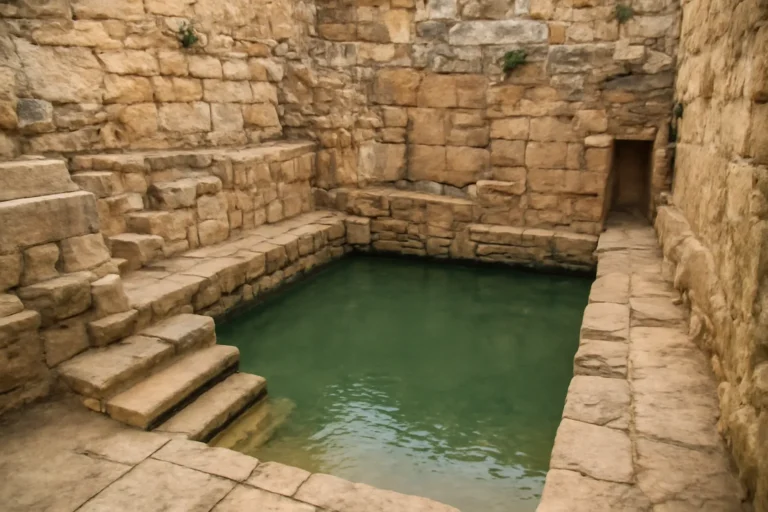
One of Jericho’s enduring themes is the adaptation to an arid environment, which is reflected in impressive water-management strategies. Excavations have uncovered features that reveal how communities secured a reliable water supply, stored water, and managed hydraulic resources for daily life and ritual activities.
Cisterns and water storage facilities were carved into rock or lined with plaster to prevent leakage and contamination. These cisterns show foresight in securing a water source during droughts and times of scarcity, which would have been crucial for urban resilience.
Recurring architectures associated with water supply indicate coordinated labor and maintenance, suggesting organized labor practices, shared civic responsibilities, and a sense of communal well-being tied to reliable access to water.
Hydrological considerations also influenced settlement patterns, with the siting of houses and public spaces oriented toward water access and micro-climates that made daily activities more sustainable over many generations.
Material culture, technology, and everyday life in Jericho
The artifacts recovered from Jericho illuminate the daily routines, trade networks, and technological know-how of its inhabitants. The Neolithic to Bronze Age material record demonstrates a continuity of craft and a capacity for adaptation across changing political and environmental conditions. The broader artifacts—tools, containers, figurines, and decorative items—reveal a society that valued utility, beauty, and symbolic expression in equal measure.
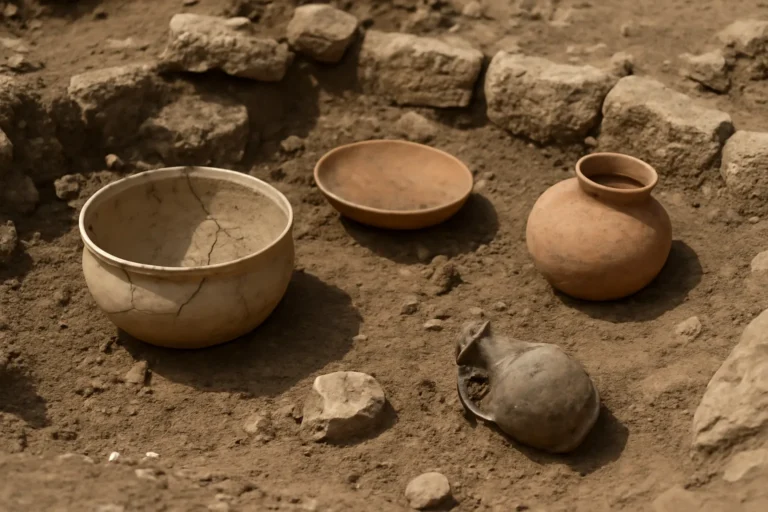
Stone tools and implements include scrapers, blades, and pounding tools that reflect varied activities such as hide processing, woodworking, and plant processing. These implements highlight the practical skills essential to daily life in a developing urban center.
Storage vessels, beads, and pottery fragments—even when incomplete—offer clues about economies of exchange, social networks, and the movement of goods within and beyond Jericho’s borders.
Decorative and symbolic items, including figurines and crafted objects, point to aesthetic preferences, ritual practices, and possibly status markers for individuals or households within the community.
Bronze Age to later periods: continuity and transformation
While Jericho is most famous for its Neolithic legacy, the site continued to hold significance through the Bronze Age and beyond. Excavations have identified layers that reflect shifting political landscapes, trade connections, and evolving architectural forms. The later strata show how Jericho remained a focal point in the region’s wider networks while also adapting to new technologies and cultural currents.
Continuity of occupation through different eras demonstrates a remarkable resilience and ability to repurpose existing sites for new residents, new livelihoods, and new belief systems.
Architectural changes in later periods reveal evolving urban forms, from multicomponent structures to more standardized building patterns associated with different cultural influences in the Levant.
Artistic and architectural tendencies in the Bronze and Iron Ages reflect broader regional dynamics, including connections with neighboring settlements and long-distance exchange networks that supplied raw materials and finished goods alike.
Interpretive challenges: how excavations have shaped Jericho’s narrative
The interpretive arc of Jericho’s excavation findings illustrates both the power and the limitations of archaeological study. Early excavations often faced methodological constraints, biases, and imperfect dating techniques. As methods matured, scholars reinterpreted earlier conclusions, sometimes revising dates, layers, or the function of specific constructions. The Jericho story showcases a broader pattern in archaeology: initial discoveries spark questions that later research revises, leading to a more nuanced understanding of cultural development over time.
Stratigraphic precision emerged as a cornerstone of Jericho’s modern interpretations, with new dating techniques enabling researchers to sequence layers more reliably and correlate architectural features with specific timeframes.
Interpretations about the purpose of walls, towers, and public spaces have evolved from assumptions about defense to more complex models that consider social cohesion, ritual life, and collective identity.
Cross-disciplinary collaboration—combining chrono-stratigraphy, paleoenvironmental data, and conservation science—has enriched our understanding by linking material culture with ecological context and feasible daily practices.
Jericho excavation findings in the broader arc of Levantine archaeology
The discoveries at Jericho resonate beyond the site itself, contributing to debates about the emergence of cities, the onset of agriculture, and the nature of early social complexity in the ancient Near East. Jericho’s monumental architecture challenges simple notions of early urbanism as an exclusively Mesopotamian or Egyptian affair, underscoring that independent or parallel developments in the Levant also produced remarkable results. Moreover, Jericho’s burial practices and ancestor veneration gestures offer a powerful reminder that spiritual life and memory were integral to communal existence long before formal religious institutions arose.
Comparative significance places Jericho alongside other early settlements in the region, highlighting both shared patterns and local variations in how communities organized labor, built infrastructure, and expressed identity.
It has influenced theoretical discussions about the relationship between ritual practice and social organization, prompting scholars to examine how symbolic acts—like plastering skulls—interface with everyday urban life and collective memory.
Jericho’s long occupational sequence has made it a touchstone for discussions about resilience, adaptation, and longevity in the face of environmental and political change across millennia.
What Jericho teaches us about early urban life and the human story
Taken together, the Jericho excavation findings illuminate several enduring themes in the human story. They reveal a society capable of large-scale cooperation, complex planning, and sustained engagement with the surrounding landscape. They reveal how people carved out a durable presence in an arid valley by building networks of water, storage, shelter, and shared spaces that enabled community life to persist across generations. They also reveal a deep sense of memory and lineage—an impulse to preserve faces, identities, and relationships through plaster, plastered skulls, and site-specific rituals—long before the emergence of formal writing or centralized religious institutions.
Public and private spheres coexisted in Jericho, as evidenced by public walls and towers alongside intimate domestic spaces, suggesting a society that balanced communal obligations with household life.
Innovation in architecture and engineering—especially the early use of stone-building techniques, water storage, and durable construction materials—reflects a persistent effort to stabilize life in a demanding environment.
The material record demonstrates a robust culture of practice—whether in tool-making, processing of foods, or ritual acts—that sustained the community while adapting to shifting climate and trade networks.
Key terms and concepts to remember from Jericho’s excavation findings
Tell es-Sultan – the site’s modern designation referring to Jericho’s tell or mound where excavations have revealed layered occupations.
Pre-Pottery Neolithic – a critical cultural phase in Jericho’s Neolithic sequence, characterized by distinctive architecture and early monumental works, prior to widespread pottery.
Fortifications – walls and towers from early Neolithic phases that signal coordinated labor and social organization for defense or communal display.
Plastered skulls – a notable burial practice reflecting ancestor reverence and social memory, often associated with courtyard contexts in Neolithic layers.
Urbanism in the Neolithic – evidence for public works, house clustering, and systematic labor that hint at a form of early city life preceding classical urban centers.
Water management – cisterns and hydraulic planning that enabled Jericho’s inhabitants to cope with scarcity and maintain a stable settlement.
Stratigraphy – the method of separating and dating layers to reconstruct a chronological sequence of occupation and use at Jericho.
Preservation, public understanding, and the future of Jericho research
Preservation of Jericho’s remains is a continuing challenge, given the site’s exposure to the elements, environmental pressures, and the passage of time. Ongoing conservation efforts aim to safeguard the tell’s architectural features, fragile artifacts, and the integrity of its stratigraphic record so that future researchers can build on decades of scholarship. In addition, Jericho provides a compelling case study for public education about the ancient world. The discoveries—from monumental walls to tiny domesticated seeds—offer a tangible link to humanity’s long memory and the shared human project of building, feeding, and remembering together. Modern scholarship continues to refine Jericho’s story, using new technologies and interdisciplinary approaches to deepen our understanding of this ancient city’s life, death, and continuing influence on the imagination of students, scholars, and the general public alike.
Conclusion: Jericho’s excavation findings as a window into human ingenuity
While the term “conclusion” may imply a final chapter, Jericho’s story remains dynamic. Each excavation report and each reinterpretation adds nuance to our understanding of how communities organized themselves, how they built, how they used resources, and how they marked their world through memory and ritual. The Jericho excavation findings—whether framed as a discussion of the Neolithic wall, the plastered skulls, the cisterns, or the everyday objects that filled houses and courtyards—continue to serve as a powerful testament to human ingenuity. They remind us that the origins of urban life, while ancient, are not static; they are a legacy of problem-solving, cooperation, and cultural expression that echoes across millennia. By studying Jericho, researchers can connect the earliest chapters of city-building to the vast tapestry of civilizations that would follow, and readers can appreciate how one ancient city, in a desert valley, helped illuminate the story of humanity’s enduring capacity to adapt, collaborate, and remember.