Origins, Meaning, and Relevance of the Pool of Siloam
The Pool of Siloam, sometimes rendered as the Siloam Pool, is one of the most resonant reliquaries of ancient Jerusalem. It sits at the crossroads of urban water planning, religious ritual, and biblical memory. Though the site is an archaeological find of the modern era, its roots reach deep into the city’s water system and its late Second Temple era landscape. In contemporary scholarship and public imagination, the Pool of Siloam serves as a touchstone for discussing how water, health, faith, and memory intersect in a storied urban setting. In this article, we explore the origins of the pool, how it was discovered, what it meant in antiquity, and why its legacy resonates today for scholars, faith communities, and visitors alike.
Origins and the Geography of the Pool
The city of Jerusalem has long relied on its Gihon Spring as a lifeline. Water from the spring was directed through channels and conduits to different parts of the city, including a subterranean waterway known as Hezekiah’s Tunnel, which was carved to ensure a secure water supply during times of siege. The pool that modern researchers have identified as the Pool of Siloam sits in the broader context of this ancient hydraulic network. The name itself evokes the Siloam” channeling of water from the spring to the urban center, and it bears witness to how biblical and architectural memory converged in a single water feature.
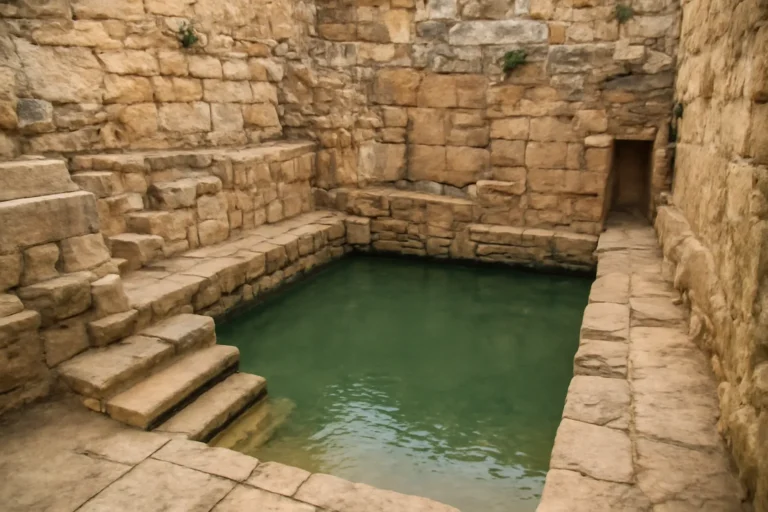
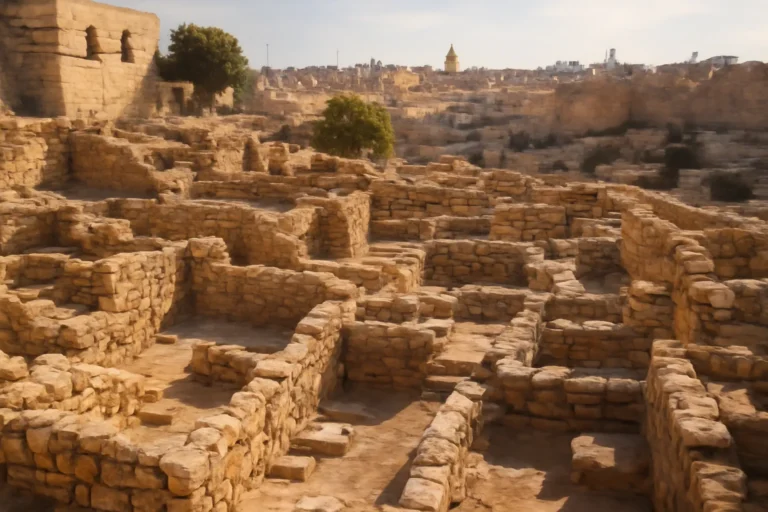
The discovery of the Pool of Siloam is closely tied to excavations conducted near the City of David, in the area traditionally associated with the biblical Siloam and the water systems that supplied Jerusalem’s inhabitants. The pool is a man-made reservoir, cut and shaped in stone, with a substantial masonry structure and a basin that could be entered via a series of steps. Although details vary in popular descriptions, the core aspects that define this pool as a Second Temple period water feature include its size, its channeling away from the street-level environment, and its relationship to the water supply that fed through a tunnel associated with the historical Hezekiah project. Its placement near the edge of the ancient city precinct underscores its function as both a utilitarian water reservoir and a focal point for ritual or cleansing practices.
The Discovery: When and How a Pool Emerged into Public Memory
The modern identification of the Pool of Siloam rests on a pivotal pair of archaeologists and a sequence of careful fieldwork. In the mid-2000s, Ronny Reich and Eli Shukron led excavations in the area of the City of David. Their team uncovered a substantial pool that was rectangular in plan, with stone steps descending into water, and a surrounding wall that suggested deliberate urban-scale construction. This pool, they argued, aligns with the biblical Pool of Siloam described in the Gospel of John as the place where the blind man was sent to wash after his healing by Jesus.
The discovery was not merely about matching a biblical name with a hole in the ground. It was about deciphering a real space that once formed part of Jerusalem’s public life. The pool’s position, its relationship to the Gihon Spring, and its architectural character all pointed to a project undertaken in the late Second Temple period. While some scholarly debates linger about the exact dating, most researchers place the pool within the urban and hydraulic developments of the era when Jerusalem was fortified and expanded, and when ritual cleanliness and public water access were integral to city life.
The dating of the Pool of Siloam rests on a combination of architectural features, stratigraphy, and contextual associations with other waterworks in Jerusalem. The pool’s formal characteristics—such as its retaining walls, the stone pavement around the basin, and the presence of a step-driven access into the water—are consistent with a date in the late Second Temple period, roughly from the 1st century BCE through the 1st century CE. While the pool’s exact inception date remains a matter of scholarly discussion, the consensus is that it formed part of a broader system that managed water for both practical use and ritual cleansing, a dual function that is well attested in ancient Jerusalem.
Excavation teams also studied the pool’s relation to the Siloam Tunnel and the Gihon aqueduct. The tunnel, carved to bring water from the spring into the city, is a famous engineering achievement with its own inscriptional significance. The Pool of Siloam’s proximity to such infrastructure supports the interpretation that this pool was integrated into the city’s water architecture, serving populations who depended on reliable water access for daily life as well as for ceremonial purification.
The Meaning of the Pool in Antiquity: Purification, Pilgrimage, and Public Life
The historical meaning of the Pool of Siloam extends beyond its dimensions and alignment with the waterworks. In the cities of the ancient Near East, bodies of water near gateways, temple precincts, or central thoroughfares often carried ritual and symbolic significance in addition to practical utility. A pool such as this would have served multiple purposes:
Ritual cleansing: In many periods of Judea and Jerusalem’s history, water was employed for cleansing rites. Pools provided a controlled setting where individuals could wash in a manner consistent with religious norms and communal expectations.
Public water distribution: Access to clean water was a public good. A sizeable pool adjacent to major routes or neighborhoods could function as a water source for residents, pilgrims, and travelers.
Social and religious symbolism: Water bodies near sacred spaces could symbolize spiritual renewal and the purification of the soul, themes that resonate with biblical narratives that emphasize sight, healing, and renewal.
Botanical and ecological context: Pools and their surroundings supported a micro-ecosystem in urban settings, offering a glimpse into the daily lived environment of ancient Jerusalem’s inhabitants.
The gospel tradition that culminates in a healing narrative around the Pool of Siloam adds another layer of meaning. In John’s Gospel, the pool is the scene of a miraculous living encounter, where a man receives sight after obeying Jesus’ instruction to wash in the pool. This association has made the Pool of Siloam a focal point for Christian pilgrimage and theological reflection, linking water, healing, and faith in a single locus. Its presence in Christian memory complements its utilitarian and ritual roles, illustrating how a single physical site can acquire layered significance over time.
Variations in Names and Textual Echoes
Across languages and traditions, the pool has appeared under various appellations. In biblical translations, it is most often called the Pool of Siloam, aligning with the site’s geographical reference to the Siloam channel. Some scholarly texts and older inscriptions refer to it as the Siloam Bath or Siloam Basin, reflecting different interpretive angles on its function. These naming variations are more than cosmetic; they demonstrate how a single ancient site can carry multiple meanings for different communities—archaeologists, theologians, historians, and lay readers who encounter the pool in different contexts.
Construction, Technology, and Urban Life in the Pool’s Locale
The Pool of Siloam is a testament to the ingenuity of urban water management in antiquity. Its construction reveals a deliberate engineering approach to creating a water reservoir that could receive flow from a major conduit, store it, and provide controlled access for cleansing or other uses. The labor that went into shaping the pool—cutting steps into stone, shaping a rectangular basin, and securing an enclosing wall—speaks to a community that valued architectural permanence and public welfare.
The pool’s geomorphological context—its position along a hillside, its orientation toward the water source, and its integration into the surrounding street plan—helps scholars reconstruct how the city organized space for practical needs such as water collection and distribution. The presence of a stepping descent into the water and the surrounding platforms would have facilitated accessibility for people of different ages and physical abilities, mirroring the social inclusivity of certain urban spaces in antiquity.
Material culture: The masonry and masonry-to-stone connections demonstrate typical building practices of the period.
Hydraulic logic: The pool operated as a catch basin that could be filled by spring water and then drawn upon as needed.
Public health implications: In a crowded ancient city, a stable water reservoir would have reduced the risk of waterborne disease and supported communal hygiene routines.
The Pool in Biblical Narrative and Interpretive Significance
The biblical association with the Pool of Siloam gives the site a distinctive interpretive valence. In the Gospel of John, the healing of a blind man is linked explicitly to the protocol of washing in the pool after Jesus declares that the man’s sight would be restored. This narrative is not merely a miracle story; it also engages themes of perception, faith, and the transformation of a person’s life. Archaeologists and theologians alike have used this linkage to discuss how space and text mutually illuminate memory. For readers and listeners, the Pool of Siloam becomes a powerful symbol of spiritual awakening, the clarity that comes with insight, and the way religious experience can occur within real places shaped by human hands.
Beyond its gospel resonance, the pool also invites readers to consider how sacred memory is anchored in specific locales. If the Pool of Siloam is indeed the site described in the New Testament, it stands as one of the few ancient water features that can be cross-referenced by both biblical text and material archaeology. This cross-disciplinary corroboration strengthens the case for a tangible, historically grounded reading of biblical events, while also acknowledging the interpretive layers added by centuries of tradition.
Interdisciplinary Relevance: Archaeology, Theology, and History
The discovery and ongoing study of the pool offer a rich field for interdisciplinary inquiry. Archaeologists examine stratigraphy, construction techniques, and the pool’s integration with other waterworks. Theologians analyze how the pool functions within the narrative arc of healing and spiritual signification. Historians place the site within the broader urban history of Jerusalem, considering how governance, religion, and daily life intersected around public water facilities. The Pool of Siloam, therefore, becomes a meeting point for multiple scholarly languages, where material culture and scriptural interpretation guide a more nuanced understanding of the ancient city’s life.
Archaeology helps verify the physical presence of a pool that matches the biblical description.
Theology offers a framework for interpreting the symbolic meanings attached to water, healing, and perception.
History situates the pool within the social and political dynamics of Jerusalem at the end of the Second Temple period.
Relevance Today: Education, Tourism, and Public Memory
The Pool of Siloam is not merely a dusty artifact of ancient life; it is a living educational resource that informs contemporary understanding of religion, history, and urban infrastructure. In the present day, several facets of its relevance stand out.
For students of biblical studies, archaeology, and ancient history, the Pool of Siloam provides a concrete case study of how to connect textual sources with physical spaces. It demonstrates how corpus-based analysis—cross-referencing the Gospel of John with excavated evidence—can yield a richer picture of the past. For K-12 educators and university instructors, the pool offers a tangible entry point into topics such as ancient water systems, ritual purification, and the relationship between memory and place.
Tourism, Pilgrimage, and Cultural Heritage
As a site of pilgrimage for Christians and a point of interest for tourists and biblical scholars, the Pool of Siloam contributes to Jerusalem’s broader heritage landscape. Visitors encounter not only a remarkable piece of engineering but also a space where faith narratives are anchored to real, walkable geography. The pool thus functions as a bridge between devotional practice, historical inquiry, and the shared cultural heritage of diverse visitors.
Public History and Conservation Implications
The continued study and presentation of the Pool of Siloam also presents challenges and opportunities in public history. Museums, heritage centers, and archaeological parks may curate exhibits that explain the pool’s construction, function, and biblical associations. Conservation considerations include preserving the structural integrity of ancient stonework, ensuring accessibility for visitors, and balancing the protection of sensitive archaeological contexts with the educational value of public engagement.
Common Questions and Clarifications
Because the Pool of Siloam occupies a special place in both biblical memory and archaeological discourse, several questions recur among readers and visitors. Here are some concise clarifications.
Is the pool mentioned in the Bible the same pool excavated in the city’s ancient water system? Most scholars identify the Pool of Siloam with the pool uncovered near the City of David, given the biblical description and its proximity to the city’s water infrastructure.
What is the pool’s date? The pool is generally dated to the late Second Temple period, with the surrounding hydraulic system associated with Jerusalem’s waterworks of the era. Exact dates vary among scholars, but the midl2st century BCE to the 1st century CE is a common range of interpretation.
Why does it matter for faith communities? For many readers of the Gospel of John, the pool is a tangible connection to the narrative of healing, sight, and spiritual transformation. It helps people visualize the biblical text and understand its ordinary and extraordinary dimensions alike.
The Pool of Siloam reflects a city that prioritized practical infrastructure and symbolic spaces. The dual emphasis on utility and ritual meaning reveals a complex urban persona: Jerusalem as a place where governance, religion, and everyday life intersected through concrete, human-scale engineering. The pool’s existence prompts broader reflections on how ancient cities managed scarce resources such as water, how they choreographed movement through urban spaces (with pools and conduits serving as nodes in the network), and how sacred narratives were anchored in physical places people could visit, see, and touch.
For students of archaeology and biblical archaeology, examining the Pool of Siloam fosters a critical understanding of sources. Researchers compare textual accounts with physical layouts, materials, and dating evidence. They also remain mindful of the limitations that accompany interpretation: dating methods, preservation state, ephemeral associations with narratives, and the interpretive frames behind different readings. The pool’s story thus becomes a case study in how to balance textual testimony with material facts to build a historically grounded narrative.
The Pool of Siloam demonstrates the powerful interplay between space and memory. A single pool can carry multiple layers of meaning: it was a functional water reservoir for the city, a ritual cleansing site that fits within a broader religious culture, and a narrative locus for a miracle story recounted millennia later. The modern discovery reanimates a memory that had existed in scriptural literature for centuries and situates it within a real landscape where visitors can walk the same terrain that ancient inhabitants once walked.
In light of this, the Pool of Siloam discovery stands as a paradigm for how archaeology can illuminate biblical scenes without reducing them to artifacts. It preserves the delicate balance between preserving sacred memory and presenting verifiable historical context. This balance matters for educators, researchers, and faith communities who aim to foster deeper understanding while respecting the integrity of both the text and the site.
While the phrase “conclusion” isn’t used as a heading here, it is worth noting a closing reflection: the Pool of Siloam’s enduring importance lies in how it connects people to a city’s continuous life cycle—from water extraction and distribution to cleansing practices, from a healing narrative in a gospel story to a living site of public memory. The discovery invites ongoing inquiry, dialogue, and exploration, reminding us that to study a pool is to study a city, its people, and the stories they tell about themselves through time.
If you are exploring further, consider these directions:
Primary descriptions and site reports from excavation teams involved in the Pool of Siloam discovery, especially the City of David excavation programs.
Scholarly articles on Second Temple period Jerusalem and its hydraulic engineering traditions.
Commentaries on the Gospel of John that discuss the healing narrative and the symbolic use of water in early Christian thought.
Public history resources that examine how excavated spaces become educational and devotional sites for contemporary audiences.
In sum, the Pool of Siloam discovery offers a rare synthesis of archaeology, theology, and urban history. Its significance extends beyond the dating of a water basin; it is a window into how a city designed infrastructure to sustain life, how communities used water as a medium for purification and ritual, and how biblical memory can be anchored in a real, walkable place. The pool remains a testament to Jerusalem’s layered past and a beacon for cross-disciplinary learning that invites visitors to see, touch, and contemplate the past with new clarity.






Leave a Reply