Holy of Holies in the Temple: Meaning, History, and Significance
The Holy of Holies, also known in Hebrew as the Kodesh HaKodashim, stands as the most enigmatic and sacred chamber within the ancient temple complex of Jerusalem. This was not merely a room with architectural prestige; it was the innermost sanctuary, the divine presence made accessible only through tightly prescribed ritual action and exceptional ceremonial purity. Throughout history, different traditions used a variety of terms to describe this sacred space—often translated as the Most Holy Place, the inner sanctuary, or the Oracle of God—each emphasizing a facet of its significance: proximity to God, the mystery of revelation, and the boundary between humanity and the divine realm. In this article, we explore what the Holy of Holies means, trace its history from Solomon’s Temple to Herod’s expansion, and examine its enduring significance for Judaism, Christianity, and the broader study of religious architecture and ritual.
What is the Holy of Holies?
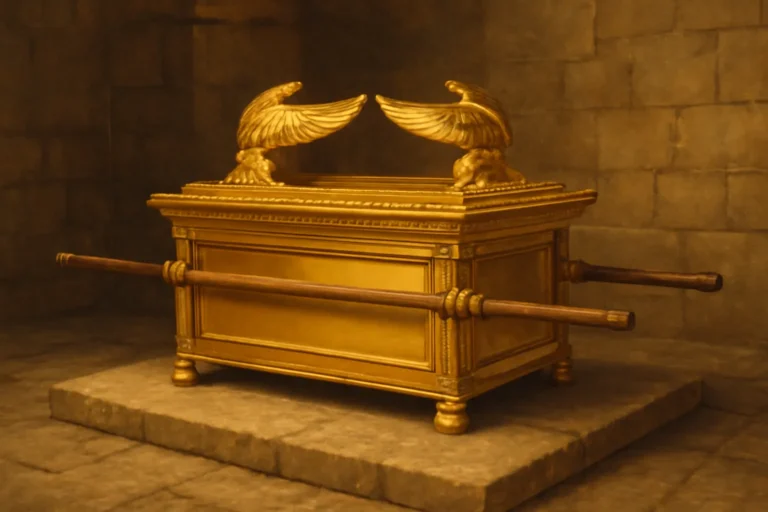
At its core, the Holy of Holies was the chamber that housed the Ark of the Covenant in the First Temple period. In later periods, especially during the Second Temple era, the exact contents of the inner sanctuary are debated, but the sanctity of the very space remained a constant. The term itself signals an extreme degree of sanctity: it was the place where divine presence dwelt among the people in a unique and concentrated way. In many biblical descriptions, this chamber is described as the dwelling place of God, where the cloud and the Shekinah — the visible and felt manifestation of divine glory — could be perceived in some form by those permitted to enter, or at least by the senses of faith and ritual awareness.
In Jewish texts, the Kodesh HaKodashim is sometimes referred to as the Oracle or the Most Holy Place within the sanctuary’s architectural trio. The temple precinct was traditionally divided into three zones: the outer courtyard, the Holy Place (or Hekhal), and finally the inner sanctuary where the Ark was kept and where only the high priest could step, and only on a single day of the year. In Christian readings, this space often becomes a symbol of Jesus’ role as a high priest and the subsequent access to God opened through his life, death, and resurrection, leading to discussions about the tearing of the temple veil and the new covenant described in the New Testament.
Architectural Context and Layout
The ancient temple's architecture can be understood as a progressive ascent toward the divine presence, with each zone amplifying the sense of holiness. The standard layout included:
The Outer Court — a public area where worshipers gathered, offerings were prepared, and ritual activities were visible to the community.
The Holy Place — an inner chamber containing sacred objects such as the table of showbread, the golden lampstand, and the altar of incense.
The Holy of Holies — the innermost sanctuary containing the Ark of the Covenant in the First Temple era, or serving as the symbolic center of divine presence during the Second Temple period.
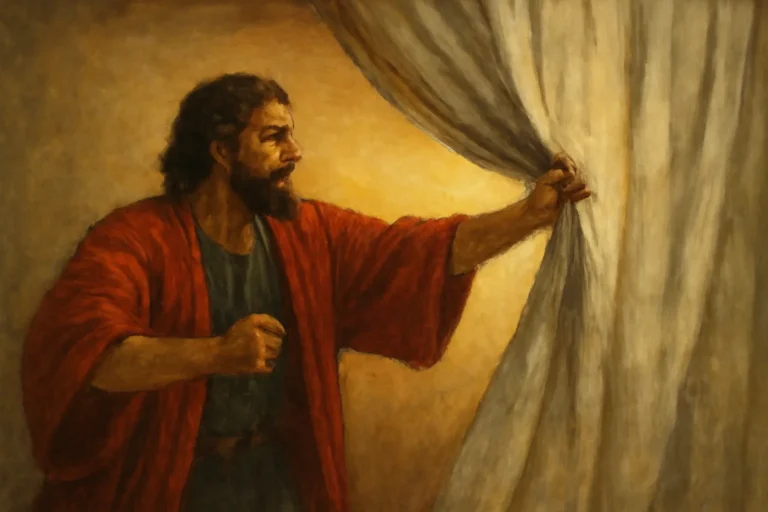
Two crucial features define the practical sanctity of the innermost chamber. First, a thick veil or parochet separated it from the Holy Place, creating a barrier between the people and the divine. Second, access was tightly restricted: the high priest alone could enter, and only on Yom Kippur, the Day of Atonement, after undergoing a sequence of purification rites and wearing special ceremonial garments. These architectural and ritual elements together framed the spirituality of the temple and shaped Jewish liturgical imagination for centuries.
Historical Trajectory: From Solomon to Herod
The history of the sacred inner chamber is inseparable from the long arc of Jerusalem’s temple cult. The story moves through several distinct phases, each leaving a mark on how the Holy of Holies was imagined, accessed, and described in sacred literature and later religious thought.
Solomon’s Temple: The First Holy of Holies
King Solomon’s construction, traditionally dated to the 10th century BCE, established the template for the inner sanctuary as a uniquely consecrated space. The Ark of the Covenant was placed inside the inner sanctuary, beneath a carved throne of gold where the living presence of God, embodied in the Shekinah, was believed to dwell. The description in the biblical narrative emphasizes the exceptional purity required for anyone to approach this chamber, and the temple’s purpose was to concentrate worship and covenant fidelity within a sanctified center. In this period, the Most Holy Place was literally the dwelling place of the covenant’s contents, and the high priest’s annual entry performed the most solemn ritual in the calendar.
Destruction, Exile, and Rebuilding: The Second Temple Era
In 586 BCE, the First Temple was destroyed by the Babylonians, and the Ark’s fate became a matter of faith, legend, and scholarly speculation. When the Persian king Cyrus allowed the return from exile and the rebuilding of the temple, the Second Temple framework emerged. The rebuilt inner sanctuary did not house the Ark in the same way as the earlier temple; instead, the ritual center focused on the same theological idea—the presence of God within a sacred space—while the material contents and cultic practices adjusted to the realities of the post-exilic era. The later Herodian expansion (in the late first century BCE and early first century CE) greatly enlarged and refined the temple precinct, making the Holy of Holies a symbol of national and religious identity for the Jewish people, even as controversy and debate over the temple’s political status intensified under Roman rule.
During the Second Temple period, the inner sanctuary remained the spiritual focal point, often described as the innermost chamber or the place where God’s glory was believed to reside among the people. The absence of the Ark—whether due to disappearance during the exile or loss in subsequent events—did not erase the chamber’s symbolic power. In rabbinic and later Jewish thought, the Holy of Holies continued to represent the ultimate closeness to the divine and the ultimate limit of access in mortal terms.
Rituals, Access, and Daily Life around the Most Holy Place
Ritual life surrounding the sacred inner sanctuary was elaborate and exacting. The high priest’s annual pilgrimage into the interior of the temple is one of the most famous ritual episodes in ancient religion, but it was preceded by a long sequence of priestly purification and ceremonial steps. The documentation of these practices appears most fully in Leviticus and later rabbinic sources, which together shaped how generations understood the process and its significance.
Purification and sacred garments — Before entering the inner sanctuary, the high priest underwent cleansing rites and donned special garments, designed to safeguard ritual purity and reflect the seriousness of the act.
Incense and clouds — On Yom Kippur, the high priest burned incense within the Holy Place, generating a cloud that was believed to shield him from the divine presence as he approached the veil.
Blood offerings — The rite involved the sprinkling of blood and the offering of atonement sacrifices to purify the sanctuary, the people, and the sanctuary’s divine dwelling itself.
The veil and the veil’s barrier — The parochet separated the Holy of Holies from the Holy Place, marking the boundary that only allowed entry by the high priest on one holy day.
Annual entry on Yom Kippur — The single annual entry symbolizes repentance, national purification, and the unique, life-sustaining relationship between God and Israel.
Beyond the Yom Kippur rite, the inner sanctuary’s sanctity shaped the day-to-day religious imagination. The inner sanctuary was not a place for public worship or casual curiosity; it was a spiritual axis holding the concept of covenant fidelity and divine nearness. In many passages, the inner chamber is described with terms that highlight its exclusivity: it is set apart, consecrated, and reserved for the divine-human encounter in the most precise sense. The architectural boundary—the veil—accentuated the sense that entering this space required more than ritual cleanliness; it demanded a kind of spiritual readiness that the wider community did not share on ordinary days.
The Ark, the Veil, and the Symbolic Geography of Access
The Ark of the Covenant is the most memorable artifact associated with the Holy of Holies. In the First Temple period, the ark’s presence within the inner sanctuary was a literal claim to God’s covenantal presence among the people. In the Second Temple era, by contrast, the inner sanctuary retained its symbolic charge even if the ark’s physical contents were no longer believed to be present. The veil or parochet functioned as more than a decorative boundary; it embodied the principle that human beings could not witness or approach the divine directly without undergoing a process of purification and ritual transformation. The temple’s geography thus tells a broader story: humanity approaches the divine through a carefully regulated pathway, and the inner sanctuary lies beyond the ordinary reach of worshipers, accessible only by the designated ritual agent—the high priest—on the most sacred day of the year.
In Christian interpretation, this architectural and ritual structure takes on additional theological weight. The gospel narratives point to the moment when Jesus’ crucifixion tore the veil of the temple, symbolizing the removal of the barrier between humanity and God and inaugurating a new way of access through faith. The Epistle to the Hebrews expands on this idea, presenting Jesus as the ultimate high priest who enters the heavenly sanctuary, thereby reinterpreting the Holy of Holies as a cosmic event rather than a single temple room. This shift from a localized sanctuary to a universal access to God is one reason the Holy of Holies remains a potent symbol in Christian thought and art, even where the physical temple no longer stands.
Significance in Jewish Thought: The Most Holy Place as Covenant Center
For Judaism, the Kodesh HaKodashim represents the axis of divine presence and covenantal love between God and Israel. Several strands of meaning emerge in Jewish teaching and liturgy:
Covenant fidelity — The inner sanctuary embodies the fidelity of God to the people and the people’s responsibility to live according to the covenantal commands central to the Torah and the temple service.
Holiness and separation — The special status of the Holy of Holies reinforces the idea that holiness is not universal but is a concentrated quality reserved for sacred spaces and sacred times.
Limitations of ritual — The restricted access highlights that even in the most sacred economy, human beings function within bounded moral and ritual parameters.
Memory and longing — In post-Temple Jewish thought, the inner sanctuary remains a powerful symbol of abiding longing for a future temple and for a renewed sense of closeness to God, preserved in liturgy and prayer.
In rabbinic literature, the inner sanctuary is sometimes described with images of concealment and revelation, suggesting that divine wisdom can be accessed through disciplined practice, study, and prayer, even if the physical space is inaccessible. The beloved phrase that emerges in many sacred texts is that God’s presence is both hidden and revealed, a paradox that the Holy of Holies helps to crystallize in narrative and ritual memory.
Significance in Christian Thought: Access, Atonement, and the Enduring Symbol
In Christian theology, the Holy of Holies offers a potent narrative frame for understanding Jesus’ vocation as the high priest and the fulfillment of the law. The following themes recur across Christian interpretation:
Fulfillment of the law — Jesus is portrayed as the faithful high priest who fulfills the Levitical rites, offering a once-for-all sacrifice that transcends the limitations of the annual Yom Kippur ritual.
Access to God — The temple veil becomes a symbol of the barrier between humanity and God that is removed through Christ, enabling believers to approach the divine directly by faith.
Heavenly sanctuary — In the Letter to the Hebrews, the earthly Holy of Holies is contrasted with a heavenly, eternal sanctuary, where the mediator performs his work in the presence of God the Father.
Christological symbolism — The sanctified space, the blood ritual, and the cleansing of sin acquire renewed meaning in the context of salvation history and the church’s liturgical life.
Moreover, the concept of the Holy of Holies has informed Christian worship in symbol and ritual, influencing architectural forms of churches and cathedrals, where certain spaces are designed to evoke a sense of the sacred center or to reflect on the mystery of divine encounter. The symbolic language of the “most holy place” speaks to a longing for direct access to God—now reinterpreted through the lens of faith in Christ and the hope of eternal fidelity in God’s presence.
Destruction, Diaspora, and the Legacy of the Inner Sanctuary
The fate of the temple complex and its inner sanctuary is marked by dramatic ruptures. The destruction of the First Temple and its inner sanctum in 586 BCE marked a turning point in Jewish history, forcing a reimagining of ritual life that could endure in exile and rebuildings. The subsequent return and reconstruction of the Second Temple, including Herod’s monumental renovations, demonstrated resilience and continuity of religious identity, even as the physical Ark’s fate remained uncertain. The eventual destruction of the Second Temple in 70 CE by Roman forces ended the temple-centered cult in the form described in biblical sources, but the sacred concept of the Holy of Holies persisted in rabbinic imagination, liturgical composition, and Christian interpretation. The inner sanctuary’s memory continued to shape Jewish eschatology and liturgy, while Christians have reinterpreted the space as a veiled but enduring symbol of divine access and sacrifice fulfilled in a new covenant.
Historical and Theological Debates: Contours of Mystery
Scholars and theologians have long debated several questions related to the innermost sanctuary:
Contents of the inner sanctuary — Was the Ark present in the Second Temple era, or was the chamber emptied of its most sacred contents? The biblical texts differ in emphasis, and post-Exilic sources reflect a thinking that emphasizes divine presence apart from a tangible Ark.
Nature of divine presence — How was the Shekinah understood in different periods, and how did the experience of the inner sanctuary compare with prophetic encounters that occurred outside the temple precinct?
Ritual boundaries — How did later Jewish communities interpret the practice of restricted entry, especially after the temple’s destruction and the dispersion of the Jewish people?
Christian readings — How do New Testament writers, particularly Hebrews, reinterpret the inner sanctuary in light of Christ’s priesthood and the concept of a heavenly sanctuary?
These debates underscore how a single architectural feature—a fortified, sacred chamber—could generate enduring theological reflection, liturgical practice, and interfaith dialogue across centuries and civilizations.
Modern Reflections: The Holy of Holies in Art, Literature, and Spirituality
Even in the absence of a standing temple, the Most Holy Place continues to function as a rich symbol in art, literature, and spiritual reflection. Artists and writers explore its paradox: a place that is simultaneously inaccessible and irresistibly powerful; a space that concentrates divine mystery yet invites believers to seek intimacy with God through prayer, ethical action, and communal worship. In modern Jewish liturgy, the image of the inner sanctuary often appears in prayers as a reminder of covenant fidelity and the longing for a future temple. In Christian devotional life, the Holy of Holies is often used as a metaphor for the believer’s heart or for the contemplative life that seeks to dwell in God’s presence beyond the noise of the world.
Common Questions and Clarifications
Was the Ark always inside the Holy of Holies? — In the First Temple era, yes, the Ark stood in the innermost chamber. In the Second Temple era, the Ark’s location and presence are less explicit in the sources, which has led to varying interpretations about what occupied the space in that period.
Could anyone see or touch the inner sanctuary? — Access was strictly limited. The high priest could enter, and only on Yom Kippur after purification rituals. No ordinary worshiper could enter the Holy of Holies.
What happened to the temple’s sacred rooms after 70 CE? — The physical temple was destroyed, and the inner sanctuary lost its original function. The concept, however, lived on in Jewish and Christian thought, often reinterpreted in light of new theological horizons.
What does the tearing of the veil signify in Christian tradition? — It is commonly understood as a moment when access to God was opened through Christ, transforming the way humanity approaches the divine and shifting focus from a localized sanctuary to a heavenly, eternal reality.
In Summary: Meaning, History, and Significance
The Holy of Holies in the temple complex is more than a physical space. It is a symbol of the deepest commitments of a people: fidelity to the covenant, reverence for the divine mystery, and the longing for direct encounter with God. Its architecture—the three-part sanctuary, the sacred veil, and the sacred object housed within—embodies a theology of proximity and distance: God is near in presence, but access remains profoundly qualified and exclusive. Across generations, this space has inspired liturgy, ritual practice, and imaginative reflection that have transcended the temple’s physical ruin to continue shaping religious experience in Judaism, Christianity, and the broader cultural memory of the ancient world.
Readers may also observe that the inner sanctuary’s story intersects with questions about sacred space in general: How do communities design spaces for worship that honor mystery while inviting participants into meaningful engagement? How do rituals balance the human longing to touch the divine with the humility required to respect boundaries of holiness? The Holy of Holies offers a compact, powerful answer: a space of supreme sanctity that teaches reverence, discipline, and hope—the very core of a tradition’s spiritual life.
For anyone exploring sacred architecture, ritual life, or biblical interpretation, the legacy of the Holy of Holies provides a vivid case study in how a single room can shape a people’s self-understanding and their relationship with the divine. Whether considered through the lens of ancient temple construction, ritual purity, theological interpretation, or modern spiritual imagination, this most sacred chamber remains a touchstone for questions about holiness, access, and the meaning of dwelling in the presence of God.






Leave a Reply