Nazareth Archaeological Evidence: What the Findings Reveal
Nazareth sits at a crossroads of history, religion, and landscape. The archaeological record in and around the modern city offers a window into a long, layered story that spans from ancient settlement patterns to more recent centuries. Although the number of large, spectacular ruins in Nazareth may be modest compared with some other ancient cities, the material remains—together with historical references—provide a valuable tapestry for understanding daily life, social organization, religious practices, and regional connections. This article surveys the kinds of evidence that scholars draw on, explains what the data suggest about the town’s development, and highlights how archaeologists interpret the findings to illuminate Nazareth’s past without overstating what the material traces can prove.
Context and Scope: What Counts as Nazareth Archaeology?
When archaeologists refer to Nazareth archaeological evidence, they mean traces recovered from excavations, surveys, and non-invasive investigations within the Nazareth region, as well as objects recovered from nearby rural hinterlands that were economically linked to the city. The evidence spans multiple periods, from early settlement phases through the Roman, Byzantine, Islamic, Crusader, and Ottoman eras, continuing into modern times. What makes it especially compelling is not a single grand ruin but a palimpsest of architectural remnants, everyday objects, and landscape features that reveal how people lived, worked, worshipped, and moved through the area over centuries.
Because Nazareth is densely built up in the present, much of the most informative material comes from targeted excavations at key sites, from careful stratigraphic work in limited trenches, and from survey-level discoveries that document patterns of building, water management, and pottery exchange. The combination of domestic architectures, public infrastructure, religiously significant spaces, and artifact assemblages allows researchers to piece together a nuanced picture of past life in the locality. It is also important to recognize that archaeology in Nazareth often intersects with archaeology in the broader Galilee and Levant, so broader regional patterns help contextualize local findings.
Patterns Across Periods: How the Evidence Shifts Over Time
From Early Settlement to the Hellenistic and Roman Phases
In the earliest layers studied in the Nazareth area, researchers encounter indications of habitation that may stretch back to prehistoric or ancient times, though much of the clearest evidence comes from later periods. The transition into the Hellenistic and Roman eras is visible in the emergence of more organized residential space and public infrastructure. Typical findings include:
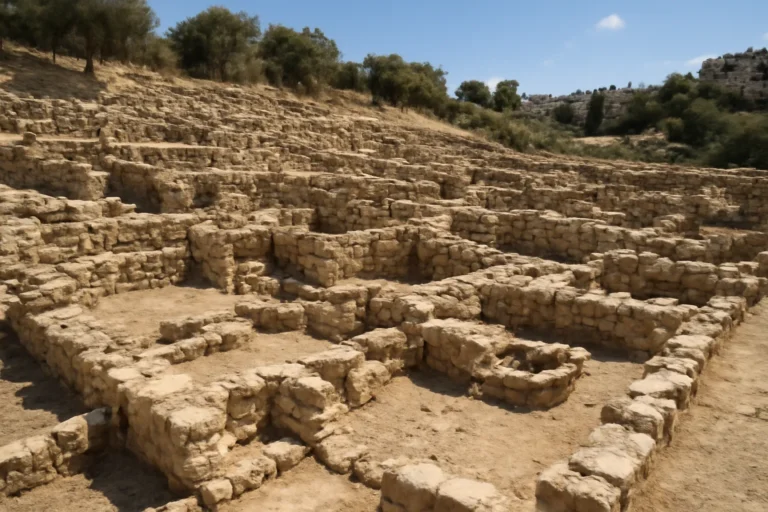
Stone houses with defined rooms and plastered floors, suggesting domestic life organized around courtyards and private space.
Earth and plaster floors alongside stone thresholds and wall plots, indicating patterns of habitation typical of Galilean towns in these centuries.
Water management features such as cisterns, wells, and drainage channels, which reflect strategies to collect and store rainwater in a semi-arid climate.
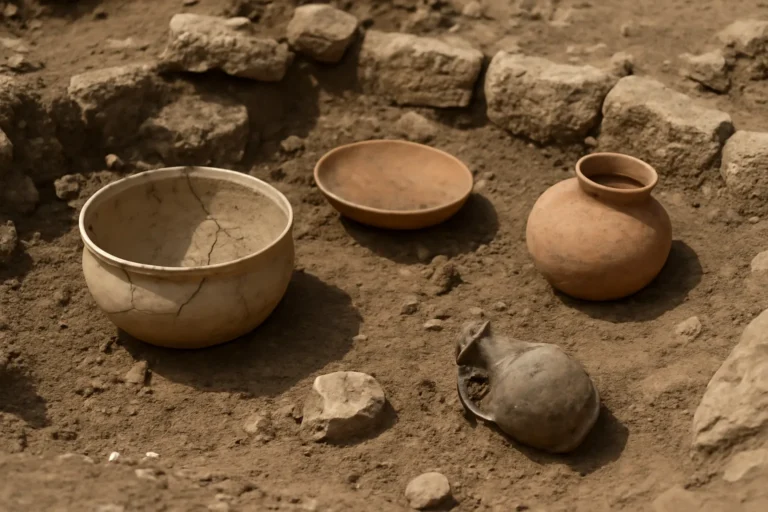
Domestic pottery sherds, sometimes with imports or regional styles, that reveal everyday cooking and storage practices and hint at trade connections within the eastern Mediterranean world.
Oil presses, grindstones, and tool remains that show agricultural productivity and artisanal activity supporting a local economy.
These elements together suggest a community with a recognizable urban footprint, even if it did not achieve grand-scale grandeur. The distribution of finds often points toward a densely settled core with outward expansion along streets and lanes that connected houses to water sources and to agricultural hinterlands.
Byzantine Phase and Christian Cultural Layers
During the Byzantine period, Nazareth becomes more closely connected to Christian religious geography and pilgrimage networks. The archaeological record in some areas reveals spaces that may have held religious or commemorative significance, as well as continuous domestic occupation. Key indicators include:
Religious architecture remnants, including foundations or floor levels that align with early church-building patterns, suggesting the adaptive reuse of sites for worship or pilgrimage.
Mosaic fragments, inscriptions, and architectural ornament that reflect broader Byzantine artistic and cultural influences.
Evidence of urban continuity—residential buildings maintained or adapted in the face of changing political and religious authorities.
Coins and chronologies that help date occupation layers and connect Nazareth to wider economic networks of the eastern Mediterranean.
The presence of these Byzantine-era traces supports the view that Nazareth was integrated into broader Christian cultural life, even as it remained a local center for daily work and family life. It is essential to interpret religiously infused layers with caution, distinguishing literal architectural elements from later symbolic associations that communities ascribe to older sites.
Islamic and Crusader–Era Transitions
In the medieval and early modern periods, the landscape shows adaptations to new political and religious regimes. The evidence from Islamic and Crusader-era contexts tends to emphasize changes in building techniques, household organization, and agricultural practices. Notable patterns include:
Continued occupation of domestic quarters with modifications such as updated roofing, stair arrangements, and wall reinforcements reflecting shifting social and economic conditions.
New ceramic assemblages—local ware and imported pottery—that map changing trade routes and consumer preferences.
Structural repairs and reconstructions that reveal resilience and adaptation to new rulers and administrative systems.
Water infrastructure updates and drainage improvements, indicating ongoing attention to urban hygiene and public works.
These layers collectively demonstrate continuity of habitation alongside adaptation to new cultural and political orders—an important reminder that Nazareth’s urban fabric did not disappear or reset entirely but rather transformed in response to larger regional dynamics.
Ottoman and Early Modern Developments
In the Ottoman period and into the early modern era, Nazareth shows signs of stable village- or town-scale life with a recognizable rural-urban interface. The evidence from this era often includes well-preserved building techniques, local craft traditions, and routine agricultural support along with market activities tied to regional networks. Highlights may include:
Houses adapted to stone and plaster construction that reflect long-standing local building practices.
Routinely-used domestic artifacts such as cooking vessels, storage jars, metal tools, and oil lamps that illuminate daily routines.
Agricultural tools and terrace systems indicating land management strategies in a hilly landscape.
Local ceramic sequences that help establish a chronological framework for Nazareth’s Ottoman-era life.
Altogether, the Ottoman-era traces help connect the earlier Byzantine and Islamic periods with the modern town’s continuity, highlighting how Nazareth persisted as a hub of family life, crafts, and regional exchange.
Architectural Remains and Urban Layout: What the Street Plan Reveals
Architectural remnants in Nazareth are among the most tangible testimonies to the town’s past. The spatial organization of houses, lanes, and public spaces provides a visible record of how people inhabited the area and navigated their environment. Important themes include:
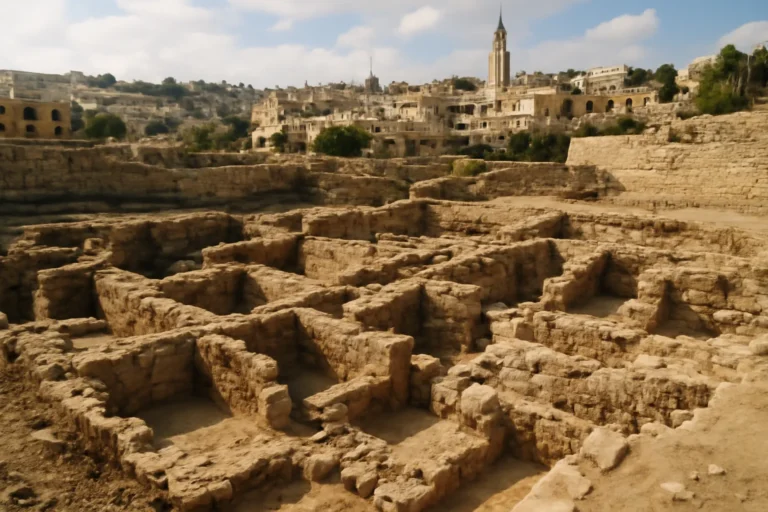
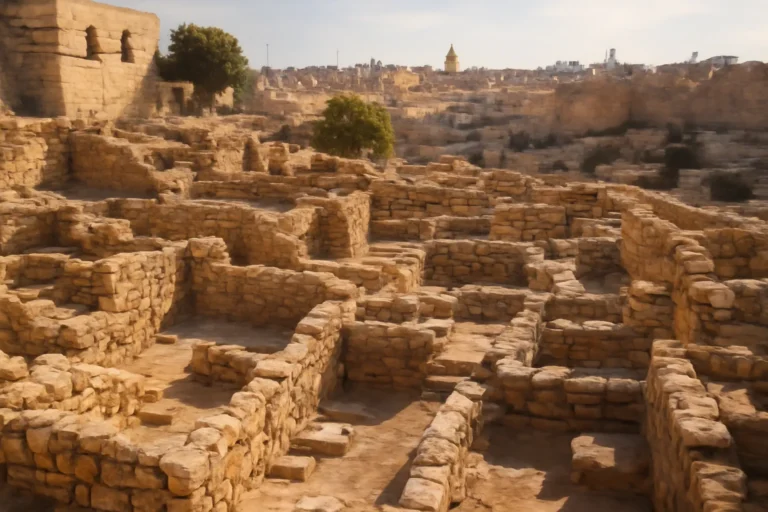
House plans that show compact, courtyard-centered layouts typical of Levantine towns, often with thick stone walls capable of insulation against heat and cold.
Courtyards and entrances that reveal domestic routines, family life, and social interactions within confined spaces.
Public-space remnants such as staircases, narrow lanes, and thresholds that indicate how residents moved through the town and accessed essential resources.
Water-related infrastructure—cisterns, wells, and drainage systems—that illustrates community-level planning to secure reliable water access.
These architectural traces are crucial for reconstructing urban density, land-use patterns, and the relationship between Nazareth’s inhabitants and their physical surroundings. While not every room or corridor survives, enough structural evidence remains to allow researchers to sketch plausible layouts and use-cases for different spaces within the urban core.
Religious and Cultural Layers: Sacred Space and Daily Life Intersect
Nazareth’s identity is deeply entangled with religious history, and the archaeological record reflects this intersection of worship, memory, and daily life. The evidence supports several broad observations:
Sites connected to early Christian practice—even when not excavated as purpose-built churches, certain spaces appear to have taken on religious significance or been repurposed for communal worship.
Continuity with sacred geography—the city’s layout and the location of key sanctuaries often align with Christian narrative associations, further embedding Nazareth into a broader devotional landscape.
Embedded material culture such as lampstands, iconography motifs, and ritual items that shed light on the spiritual life of inhabitants, craftsmen, and pilgrims.
Inscriptions and epigraphy—where present, inscriptions help anchor chronological frameworks and illuminate social identities within a religiously plural setting.
These religious and cultural layers do not merely reflect piety; they reveal how communities negotiated faith, memory, and belonging in an area where multiple traditions intersected over centuries.
Material Culture: Everyday Life Through Artifacts
Artifacts recovered in Nazareth are essential for understanding daily routines, diet, and economic activity. The material culture record comprises a broad spectrum of objects that include:
Pottery and ceramics—cooking pots, storage jars, dishware, and sometimes glazed wares, which illustrate domestic economies and tastes that changed over time.
Metal tools—knives, nails, and hardware that reflect construction, agriculture, and craftwork.
Glass and miniature objects—glassy fragments and small items that signal trade connections and local production capabilities.
Oil lamps and lighting devices, revealing energy use and cultural habits around mealtime and evening routines.
Coins—coin finds help date layers and illuminate economic ties with broader empires and urban centers.
Organic residues and ecofact clues—seeds, charred material, and animal bones that provide glimpses into diet and landscape use.
Interpreting this material requires careful typology work—matching fragments to known classes from regional traditions—and contextual analysis within trenches or survey areas. When combined, the artifacts sketch a narrative of household economies, artisanal production, and long-distance exchange that connected Nazareth with wider Mediterranean networks.
Dating, Methods, and How Archaeologists Build a Timeline
Establishing a reliable chronology in Nazareth relies on a combination of methods. The main tools include:
Stratigraphic analysis—observing successive layers to understand the sequence of occupation and construction, and to separate later disturbances from authentic living floors.
Pottery typology—dating ceramic styles to specific cultural periods; pottery often provides a durable, reasonably precise temporal marker.
Architectural sequencing—the evolution of building techniques and room arrangements clues into changing architectural practices and urban growth.
Scientific dating methods—when applicable, radiocarbon analysis of organic residues or contextual material can calibrate timelines, though not every site yields material suitable for such testing.
Epigraphic and textual cross-referencing—any inscriptions or references that survive can align site phases with known historical periods, providing corroborative dating.
Together, these methodologies enable researchers to place Nazareth’s local development within the broader framework of Levantine history. They also help distinguish concurrent occupations and understand how natural and social factors shaped the town across different centuries.
Interpreting the Evidence: Debates and Ambiguities
Like many urban archaeological narratives, Nazareth’s story involves interpretation debates, where scholars weigh competing readings of the same data. Common areas of discussion include:
Extent of urban continuity—some researchers emphasize steady occupation and incremental growth, while others stress episodic occupations and more limited continuity depending on the site and period.
Religious associations vs. everyday life—the challenge of separating sites shaped by devotional practices from those representing ordinary domestic life, particularly where religious traditions influence site use without explicit architectural markers.
Dating precision—in some cases, artifact assemblages offer broad windows of time, which can lead to interpretive flexibility; researchers strive to tighten chronologies through multiple lines of evidence.
Preservation and bias—the urban environment complicates preservation; modern construction can destroy contexts, and excavations in restricted or dense areas must contend with limited exposure and sampling bias.
These debates illustrate that archaeology is an interpretive discipline. The best reconstructions of Nazareth’s past emerge from integrating multiple kinds of evidence, acknowledging uncertainty, and refining conclusions as new evidence arises.
Nazareth in the Public Eye: Museums, Museums, and Education
The value of the Nazareth archaeological record extends beyond academic scholarship. It informs public understanding in museums, heritage centers, and educational programs. Notable ways the findings enter public life include:
Interpretive displays in local museums and visitor centers that present domestic artifacts and architectural reconstructions to illustrate everyday life across periods.
replicas of domestic interiors and reconstructive models that offer tangible glimpses of historical rooms, courtyards, and workspaces.
Site-based information panels near archaeological zones or in public squares, explaining water systems, street layouts, and building techniques for visitors and residents alike.
Educational programs that connect Nazareth’s archaeological record to broader topics like ancient economies, urban planning in antiquity, and the diffusion of cultural practices.
The public-facing dimension of Nazareth archaeology helps communities reflect on their shared heritage and fosters a sense of place grounded in material evidence. It also enhances responsible tourism by highlighting preservation needs and respectful engagement with fragile contexts.
Preservation Challenges and the Path Forward
Preserving Nazareth’s archaeological heritage faces several practical and ethical challenges. Limited space in an inhabited urban core means some sites cannot be excavated without disrupting current life. Wholly protected zones must balance civic needs with scholarly inquiry. Other issues include:
Urban development pressures—new construction can threaten buried remains, making preemptive surveys and rescue (salvage) excavations essential.
Environmental and geological factors—soil movement, moisture, and human activity can degrade delicate layers, complicating interpretation.
Legal and governance frameworks—clear stewardship responsibilities, permits, and collaboration among local authorities, universities, and religious communities are crucial for sustainable research.
Public engagement—ongoing dialogue with residents and visitors helps align research goals with cultural values and fosters long-term support for preservation.
Looking ahead, the most productive paths combine non-invasive techniques with targeted excavations, digital documentation, and community archaeology initiatives. Technologies such as ground-penetrating radar, lidar, and 3D reconstructions enable researchers to imagine hidden layers without extensive digging, while careful excavation remains essential for recovering intact contexts and making meaningful scholarly interpretations.
Future Prospects: What New Discoveries Could Change
The story of Nazareth is not finished. Ongoing and future projects may bring fresh insights into how the town grew, interacted with its surroundings, and responded to changing political and religious climates. Potential avenues for advancement include:
Integrated regional studies that connect Nazareth with neighboring sites in the Galilee, offering a wider view of trade, migration, and cultural exchange.
Expanded water system analyses—more extensive mapping of cisterns, wells, and drainage to reconstruct urban infrastructure and water access strategies.
Neo-inscriptions and epigraphy—additional inscriptions could anchor chronologies more securely and reveal social identities, affiliations, or religious practices.
Digital humanities projects—online portals, 3D reconstructions, and interactive maps that bring the Nazareth story to a global audience and support classroom learning.
Preservation-driven excavations—carefully planned digs that maximize information while minimizing disruption to living communities and preserving site integrity for future generations.
As research advances, scholars will refine timelines, broaden the interpretive framework, and continue to balance caution with curiosity. The enduring value of Nazareth’s archaeological evidence lies in its capacity to illuminate a local life in dialogue with broader historical currents, offering a disciplined counterpoint to more sensational narratives and a durable foundation for understanding this uniquely storied place.
Key Takeaways: Consolidating What We Learn from the Record
To summarize the big picture, the archaeological record in Nazareth consistently points to a town with:
Long-standing habitation across multiple eras, with a distinctive urban character adapted to local geographies and resources.
Continuity of daily life—household spaces, kitchens, work areas, and water management that reveal how people supported family life and local economies.
Religious significance embedded in space and memory, reflected in sacred sites, ritual objects, and the layering of devotional landscapes.
Connections beyond Nazareth—artifacts, ceramics, and coins that illustrate networks of exchange linking Nazareth to wider Mediterranean and Near Eastern dynamics.
Methodological rigor—a careful blend of stratigraphy, typology, dating evidence, and non-invasive technologies that collectively build credible historical narratives.
Ultimately, the story told by Nazareth’s archaeological evidence is one of resilience and adaptation. It shows a community that persisted through centuries of change, negotiating evolving political regimes, cultural influences, and religious meanings while maintaining a tangible sense of place. The findings do not resolve every question about Nazareth’s past, but they provide a robust framework for understanding how one locale can be deeply rooted in tradition while continually integrating new patterns of life and exchange.




Leave a Reply