Bethesda Pool Archaeology: Exploring Jerusalem’s Ancient Pool
The study of Bethesda pool archaeology opens a window onto a landscape where sacred memory, urban life, and engineering intersected in ancient Jerusalem. Known from Biblical and later Christian texts as a place of healing near the Sheep Gate, the Pool of Bethesda sits at a crossroads of faith, water, and city planning. This article surveys the archaeological evidence, the evolving interpretations, and the methods by which scholars have reconstructed a site that is both a physical ruin and a resonant symbol in world history. By tracing the layers of the Bethesda Pool site, we can glimpse how an urban water feature functioned during the Second Temple period and how later communities perceived and repurposed the space.
In exploring the archaeology of the Bethesda Pool, we encounter a story that combines fieldwork, stratigraphy, and textual connections. The broader field of Bethesda pool archaeology situates this pool within the urban archaeology of Jerusalem, where water sites, public baths, ritual pools, and drainage systems reveal the city’s complexity. The investigation of such a pool is not merely about stones and steps; it is about how a people imagined, used, and remembered a place where healing and everyday life intersected. This article will trace the geography, the historical backdrop, the major campaigns of investigation, and the interpretive debates that continue to shape our understanding of this remarkable site.
Readers will encounter variations on the phrase Bethesda pool archaeology as we discuss the site from multiple angles: the physical remains of basins and peristyle structures, the hydraulic networks that fed and drained the pools, the artifacts that illuminate daily routines, and the textual traditions that pressed scholars to read the site in light of John’s Gospel account of healing at the Pool of Bethesda. Throughout, bolded terms mark the terms and concepts that anchor this field of study, while the discussion remains grounded in the material record retrieved from excavations and surveys conducted over more than a century.
Geography, setting, and the landscape context of the Bethesda Pool
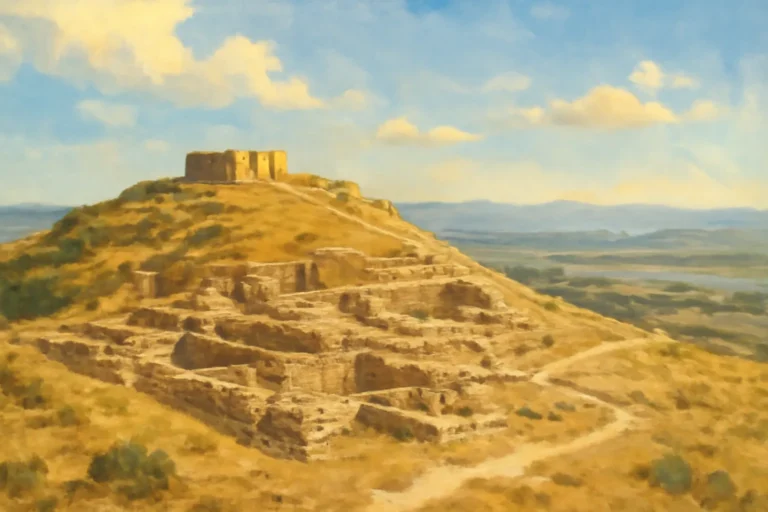
The Bethesda Pool site sits at a historically important juncture in Jerusalem’s Old City, at the edge of a densely developed quarter near the long-standing gate known in ancient sources as the Sheep Gate. The spatial relationship between the pool and this gate signals a mixed function: it was a place where travelers and local residents could access water, wash, and perhaps gather for communal activities, while also serving as a location tied to ritual or therapeutic expectations in certain periods. The pool’s proximity to the water networks of ancient Jerusalem—a city already famous for its springs, channels, and cisterns—suggests it was integrated into the city’s hydraulic infrastructure, rather than existing as an isolated monument.
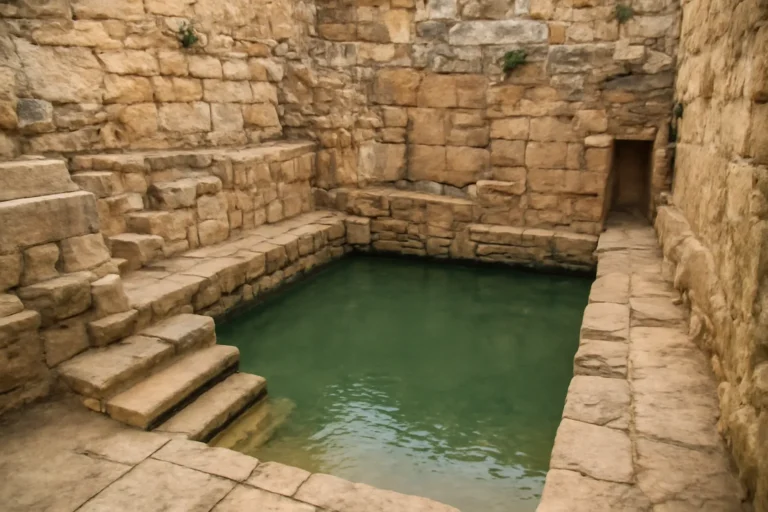
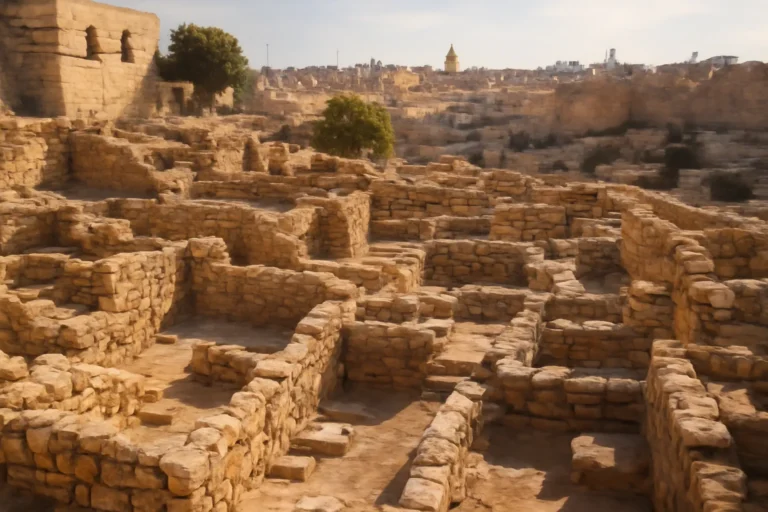
In terms of layout, the discoveries associated with Bethesda pool archaeology reveal a complex plan rather than a single basin. Excavated evidence points to a multi-basin arrangement with stepped access, peristyle-covered walkways, and retaining walls built of hammered stone. Some basins appear to have been separated by stone partitions or by colonnades, producing distinct pools with their own depth and flow patterns. The overall arrangement indicates careful urban planning: a space designed not only to hold water but to accommodate people moving through, gathering, or observing in specific weather and times of day.
The water supply would have been essential to any interpretation of the site. While the precise sources and conduits can vary across scholarly reconstructions, the prevailing view is that the Bethesda Pool received water from nearby springs and nearby conduits that connected to the city’s broader water system. Drainage channels and outlet features reveal a concern for maintaining water quality and preventing stagnation, which would be in keeping with both public health concerns and ritual considerations that favored clean water for immersion or ceremonial purposes.
The historical backdrop: biblical echoes and the long arc of the site
The pool’s prominence in history is in part a function of textual memory. In the Gospel of John, the Pool of Bethesda is described as a place where an angel stirred the water and where ailing individuals sought healing (John 5:2–9). This association has made the Bethesda pool site a focal point for Christian pilgrims and for scholars who want to ground a theological narrative in a physical setting. The archaeology of the Bethesda Pool therefore sits at an intersection of textual tradition, religious history, and material culture.
Beyond the biblical voice, the pool also exists within the broader social and urban life of Jerusalem in the Second Temple period. In this era, cities in the Levant often anchored their water features to places that carried ritual or therapeutic significance, as well as practical purposes for daily cleansing and public bathing. The Bethesda Pool site, with its multiple basins and covered walkways, fits a pattern observed in several ancient Near Eastern and Mediterranean cities where pools served multiple roles: ritual immersion, wastewater management, and social gathering spaces.
Over the centuries, the meaning and use of the Bethesda Pool likely shifted. During some periods, it may have functioned primarily as a public bath or a drainage feature alongside ritual or healing associations. In other moments, it could have stood as a marker of a particular street or neighborhood identity. The archaeology of the Bethesda Pool thus documents not only how water was managed but also how residents encountered water in everyday life and in seasonal religious calendars.
Key campaigns and milestones in the study of the Bethesda Pool
The archaeological record of the Bethesda Pool has been shaped by a succession of campaigns spanning well over a century. Each phase of investigation contributed pieces to a larger puzzle: the physical structure, the layers of occupation, and the evolving interpretation of the site within Jerusalem’s urban fabric. Here we outline the most influential periods and the kinds of findings they produced.
Early explorations and the identification of the pool’s remains
In the late 19th century, researchers first began to identify and document remains associated with the Bethesda Pool in the context of broader surveys of Jerusalem’s water systems and public spaces. These early efforts were often limited by the technology and recording practices of the time, yet they were crucial because they established a rough map of the pool’s footprint and its relation to surrounding gates, streets, and structures. The emergence of the pool as a named feature in the city’s literature helped scholars frame more targeted questions about function and chronology.
Mid-20th-century efforts and the refining of stratigraphy
As archaeology matured, more methodical fieldwork allowed researchers to refine the chronology of the Bethesda Pool’s components and to interpret the basins, walls, and channels within a clearer stratigraphic framework. This period saw the application of more rigorous excavation techniques, better documentation, and a push toward understanding how the pool-related structures related to other contemporaneous waterworks and public spaces in Jerusalem. The Bethesda pool archaeology program began to emphasize not just what remained, but how those remains integrated with the city’s hydraulic logic and daily rhythms.
Modern stratigraphic studies and focused site reports
In the last few decades, contemporary field methods—procedural labeling, sub-surface imaging, and precise typology of pottery and material culture—have allowed scholars to reconstruct a more complete timeline for the Bethesda Pool complex. The volume of data from modern surveys enables more nuanced interpretations about phases of construction, maintenance, and abandonment. These investigations have also improved our understanding of how the pool functioned in relation to seasonal changes, religious festivals, and urban growth in late antiquity.
Architectural features revealed by the investigations
The physical evidence gathered through Bethesda pool archaeology reveals a complex architectural program. The principal features include a sequence of water-retaining basins, carefully cut stone walls, and a system of passageways that connect the basins to wider public spaces. The presence of colonnaded sections and covered walkways suggests an environment designed for comfort, shade, and social interaction as people moved between baths and public streets.
Multi-basin layout: The site comprises more than one basin, with varying depths and widths, suggesting different uses or stages of filling and draining.
Retaining walls and steps: Stone retaining walls define the edges of basins, while stepped access would have allowed users to descend and ascend between levels.
Colonnades and porches: Architectural elements that provided shade and a sense of enclosure, typical of public water sites in the region.
Drainage and outlets: Channels and outlets indicate deliberate efforts to manage water, reduce stagnation, and control flow into surrounding drainage networks.
Adjacent urban features: The pool’s footprint is tied to nearby gates, lanes, and other public amenities, illustrating how water sites integrated with city life.
The details of these features help researchers distinguish phases of construction and use. For instance, the alignment of basins with street axes points to intentional urban design, while changes in wall thickness or the presence of different stone types can signal renovations in different eras. The archaeology of the Bethesda Pool thus becomes a narrative of continuous modification, reflecting political, economic, and religious shifts in Jerusalem over centuries.
Artifacts and material culture associated with the Bethesda Pool site
Material finds from the Bethesda Pool complex enrich the architectural narrative with everyday reminders of life around the pool. Pottery shards, oil lamps, and other refuse indicate the kinds of activities that occurred in and around the water features. The presence of ritual objects in some layers—together with domestic wares in other strata—helps scholars understand how the pool functioned for different social groups at different times.
Pottery sherds from various production centers reveal trade networks and dating clues.
Oil lamps and lighting-related debris indicate evening or nocturnal use and social gatherings near the pools.
Coin finds provide chronological anchors and hints about the pool’s economic context within the city’s quarter.
Glass and metal objects reflect daily routines, bathing practices, and possible ceremonial activities.
While no single artifact defines the Bethesda Pool’s purpose, the assemblage as a whole demonstrates that the site functioned as more than a drainage basin or a decorative feature. The combination of utilitarian objects and ritual items supports a view of the Bethesda Pool as a space where public life, ritual practice, and urban infrastructure intersected in meaningful ways.
Interpreting the pool’s function: healing, ritual, and daily life
The debates surrounding the function of the Bethesda Pool revolve around whether the site primarily served as a therapeutic or ritual space, or whether its primary role was practical water management for the surrounding neighborhood. The Gospel account has strongly shaped popular perception, but archaeology offers a more nuanced picture. The presence of multiple basins and sheltered walkways suggests that people used the space in varied contexts—perhaps for immersion rites, for socializing while water circulated for cleanliness, and for interacting with the flowing water that linked the area to the city’s hydraulic network.
Some scholars emphasize a healing association in certain periods, arguing that the pool’s symbolic meaning as a place of restoration would have reinforced its social legitimacy. Others highlight the pool’s everyday utility, pointing to its role in maintaining sanitary conditions, offering a public water resource, and functioning as a focal point for street life near the Sheep Gate. The synthesis of these perspectives under the umbrella of Bethesda pool archaeology recognizes that ancient urban spaces could simultaneously host sacred and secular activities.
Religious memory and architectural adaptation
A common interpretation is that the site carried a layered memory. A portion of the space may have retained ritual significance through time, while other sections were repurposed for secular bathing or public water management as needs changed. This kind of adaptive reuse is a hallmark of urban archaeology in Jerusalem, where sacred topography often overlaps with pragmatic infrastructure. In this sense, the Bethesda Pool becomes a case study in how cities preserve memory while accommodating changing functional demands.
Bethesda pool archaeology within a broader regional context
It is instructive to compare the Bethesda Pool with other water-related structures in the Levant. Across the region, pools, baths, and fountains illuminate how communities managed water resources, conducted ritual immersion, and displayed public wealth or religious piety. The Bethesda Pool’s multi-basin design shares affinities with other public water facilities from the Roman and late antique periods, where stonework, colonnades, and monumental steps signaled status and order in the urban environment.
In a wider sense, the archaeology of water in Jerusalem resembles a dialogue between faith and infrastructure. Water features are not mere utilitarian objects; they are cultural artifacts that reveal how people connected the divine, the body, and the city. Bethesda pool archaeology therefore contributes to a larger conversation about how material culture encodes memory, identity, and daily life in historic urban landscapes.
Preservation, interpretation, and public engagement
The modern approach to the Bethesda Pool site emphasizes preservation and accessible interpretation. Protective measures, site restoration, and informative signage help visitors appreciate the complex layers of the pool while protecting fragile remains. Museums and guided tours frequently reference the pool’s biblical associations to connect visitors with a tangible link to ancient Jerusalem. This public-facing aspect of Bethesda pool archaeology illustrates how scholarly research translates into educational experiences for a diverse audience, from religious pilgrims to students and general readers.
The relationship between archaeology and religious memory is nuanced. Some viewers emphasize the historicity of the pool’s biblical associations, while others focus on the broader urban context and the technical prowess of ancient builders. Both lines of inquiry contribute to a richer understanding of how a single site can carry multiple meanings across time. The Bethesda Pool thus serves as a compelling example of how archaeology can illuminate the complexity of ancient cities without collapsing memory into a single narrative.
How this site informs broader studies of pool archaeology and urban water systems
Studies of Bethesda pool archaeology feed into larger questions about public spaces and water in antiquity. Urban water systems required coordination among engineers, merchants, priests, and municipal officials. Pools like Bethesda often functioned at the nexus of sanitation, ritual life, and social interaction. By examining the retention basins, flow channels, and adjacent structures, researchers can reconstruct how ancient cities balanced practical needs with cultural expectations. This approach is consistent with broader programs of archaeology of water systems in the eastern Mediterranean, which seek to understand both how water flowed through cities and how communities imagined water as a source of relief, life, and spiritual meaning.
Education, research, and future directions in Bethesda Pool studies
The ongoing study of the Bethesda Pool site invites multidisciplinary collaboration. Conservation science, architectural reconstruction, ceramic typology, and hydraulic engineering analyses all contribute to a fuller picture of the pool’s life cycle. Future work may aim to tighten the chronology by applying advanced dating methods to organic residues or by performing more detailed mapping of the water channels. As new technologies become available, the Bethesda pool archaeology narrative will continue to evolve, refining our sense of the pool’s phases, usage patterns, and social significance.
Beyond technical research, there is a growing emphasis on making the results of bethesda pool archaeology accessible to diverse audiences. Public lectures, digital reconstructions, and interactive museum exhibits help translate archaeological data into engaging stories about how ancient Jerusalem functioned as a living city. In this sense, Bethesda serves not only as a subject of scholarly inquiry but also as a bridge to public understanding of how people in antiquity managed water, embodied ritual, and navigated daily life in a densely built urban landscape.
Concluding reflections and ongoing questions
The study of the Bethesda Pool remains dynamic. Each new excavation, survey, or analysis adds a layer to the evolving portrait of Jerusalem’s water architecture and religious landscape. Key questions persist: How precisely did the water supply connect to the pool across different eras? What does the distribution of artifacts within the basins reveal about the daily rituals of bathers or worshippers? How did the surrounding streets and gates shape the pool’s accessibility and meaning? By continuing to integrate excavation data with textual sources and comparative studies, scholars aim to articulate a more nuanced timeline for the Bethesda Pool complex and its place within the city’s long urban story.
In sum, the journey of Bethesda Pool archaeology is a testament to how a single water feature can illuminate the intersection of faith, urban life, and technology. It invites readers to consider not only the stones and channels that survive but also the people who interacted with them—pilgrims, residents, craftspeople, and priests—whose memories, practices, and aspirations are encoded in the remains we study today. The Bethesda Pool thus remains a powerful case study in how the archaeology of public water spaces can enrich our understanding of ancient cities and their enduring legacies.
Glossary of key terms related to the Bethesda Pool
For readers seeking quick reference, here is a compact glossary of terms frequently used in discussions of Bethesda pool archaeology.
Pool basin — a water-holding chamber or tank, typically rectangular or polygonal, separated from other basins by walls or partitions.
Colonnade — a row of columns supporting a roof or covering, often forming a shaded walkway around a pool or courtyard.
Hydraulic network — the system of pipes, channels, conduits, and basins that move and manage water within a city or site.
Stratigraphy — the study of layered earth deposits to determine chronological sequences at an archaeological site.
Public bath area — zones within ancient urban settings where residents engaged in cleansing, bathing, or related activities.
Ritual immersion — water-based practices tied to religious beliefs, purification rites, or healing traditions.
The Bethesda Pool case shows how careful excavation, typological analysis, and contextual reading of biblical and historical sources can converge to illuminate the life of an ancient city. The site’s layered history invites ongoing inquiry and invites readers to appreciate the texture of daily life in Jerusalem across centuries.
Note: The material presented here reflects current scholarly perspectives on Bethesda Pool archaeology and related research under the broader umbrella of ancient water architecture in Jerusalem and the Levant.






Leave a Reply