Defining Yom Teruah: The Day of Blasting and Shouting
The biblical term Yom Teruah literally means the Day of Blasting or Day of Shouting. In Hebrew, teruah conveys a loud cry, alarm, or shrill blast, typically associated with trumpets or horns and a call to attention. When the ancient Israelites entered the seventh month, they were commanded to gather for a distinctive occasion characterized by trumpets, gathering, and worship. In the Bible, this designation marks the specific day on which the people were to hear the trumpet blasts, rest from ordinary labor, and assemble for sacred purposes. Although later Jewish tradition associates this day with the start of the civil year and with the observance known as Rosh Hashanah, the biblical wording itself centers on a formal act of blowing trumpets and a holy convocation.
The concept of Yom Teruah sits at the intersection of ritual practice, prophetic expectation, and communal identity. The day’s sound signals a summons—both to the people and to God—to pause, reflect, and renew covenant commitments. In biblical narrative, the sound of the shofar (a ram’s horn) is the audible marker of this moment. The term Yom Teruah appears in a key scriptural context that binds the practice of trumpet blowing to a precise calendar date: the first day of the seventh month. This convergence of time, sound, and sacred assembly is central to understanding both how the festival functioned in ancient Israel and how it has been interpreted and reinterpreted across Jewish and Christian traditions.
Biblical Foundations: Where the Word Appears and What It Means
Leviticus 23:23-25: The first day of the seventh month
The biblical instruction for Yom Teruah is given in the opening portion of the seventh-month observances. In this passage, the Lord commands Moses to speak to the Israelites, saying that on the first day of the seventh month there shall be a holy convocation, a day of rest, and a memorial of blowing of trumpets. The verse emphasizes that no ordinary work is to be done and that the people should gather for this special occasion. The phrase memorial of blowing of trumpets is the essence of the day in the biblical text, anchoring it to the sound of the shofar as a symbolic summons before God.
In this brief scriptural snapshot, Yom Teruah is not merely a festive ceremony; it is a solemn, divinely commanded gathering. The emphasis is on the action (blowing the trumpets) and the communal response (rest, sanctity, and assembly). The Hebrew concept of a memorial here signals remembrance—remembering God’s sovereignty, His acts in the past, and the people’s commitment to live under His guidance.
Numbers 29:1-6: The offerings and ritual provisions
A parallel but complementary description is found in Numbers 29:1-6, which outlines the sacrificial framework for the day. On the same date—the first day of the seventh month—the community is to observe a holy convocation and present specific offerings. The text enumerates the kind and number of animals to be offered, highlighting that this is a season of formal worship and devotion. The precise sacrifices underscore that Yom Teruah is not only about the sound of the trumpet but also about making atonement through worship and ritual fidelity.
Taken together, Leviticus 23 and Numbers 29 situate Yom Teruah within a calendar rhythm that binds time, sound, and sacrifice. The day’s obedience requires both audible signals (the trumpets) and tangible acts of worship (the offerings) that reaffirm the covenant relationship between God and Israel.
Other biblical usages of the root and related terms
Beyond the explicit designation of Yom Teruah on the biblical calendar, the root idea behind teruah—a loud cry, alarm, or blast—appears in other biblical contexts as well. The term’s semantic field encompasses not only celebratory or ceremonial blasts but also warnings, calls to assemble, and expressions of great emotion. In the broader biblical canon, such blasts serve as audible cues that God is near, that the people must respond, or that an important transition is underway. This helps explain why trumpet blasts are repeatedly associated with pivotal moments—exodus, warfare, covenant renewal, and prophetic announcements.
When readers encounter references to trumpets in the Psalms, Prophets, and historical narratives, the word picture often conveys more than music. It conveys memory (recalling God’s acts), anticipation (looking toward a future act of God), and moral exhortation (calling the people to faithfulness). The biblical term teruah thus carries a range of meanings—from a ceremonial summons to an urgent alarm—throughout the sacred text.
The biblical tradition exhibits variations in how the day and its sounds are described in Hebrew and later translations. While the common English rendering is Yom Teruah, the Hebrew itself appears in slightly different transliterations (reflecting consonantal roots and vocalization patterns) and sometimes appears in compound forms when describing the sounds of the shofar.
Yom Teruah (Day of Blasting/Shouting) — the standard designation for the day itself, invoking the trumpet blasts and the summons to assembly.
Yom Tru’ah — an alternate transliteration reflecting how the vowels are rendered in Hebrew into English letters.
Yom Teru’ah — another common spelling that preserves the glottal stop between the syllables in transliteration.
Teruah as a noun — the blast, alarm, or trumpet sound that characterizes the day, often used in parallel contexts to describe the sound itself rather than the date.
Teru’ah in poetic or prophetic phrasing — illustrating the breadth of the term beyond a calendar label, including moments of alarm or divine revelation.
In the narrative and liturgical lact of the Bible, these variants point to the same core reality: a deliberate, audible signal that calls the people to pause, pay attention, and respond to God. The sound of the shofar—whether described as a teruah or as a broader trumpet blast—functions as a symbolic gateway, connecting the earthly act of producing sound with the heavenly act of divine visitation.
Origins and Calendar Context: Why the Seventh Month?
To understand Yom Teruah, it helps to situate it in the broader Israelite calendar and worship life. The date—the first day of the seventh month—corresponds to a particular moment in the agricultural and religious year. In the ancient Near East, months and feasts were tied to harvest cycles, agricultural rhythms, and commemorations of God’s redemptive acts. For Israel, the seventh month stands out as a season of reflection and renewal, a time when the community would pause to acknowledge God’s sovereignty and to realign its life with His covenant expectations.
The biblical text does not always spell out every symbolic meaning attached to the date, but it clearly emphasizes the ritual components: rest from work, a holy assembly, and the blowing of trumpets. The foretaste of future revelation embedded in this day—anticipation of God’s governance and, for later readers, of eschatological hope—also contributes to its lasting significance. The day is thus anchored in a historical and theological memory: it recalls the Lord’s rule, invites repentance, and initiates a distinctive period of reflection that leads into the Day of Atonement season in the broader cycle.
The relationship to the other festivals in Leviticus 23
In Leviticus 23, Yom Teruah sits alongside a calendar of sacred days, each with its own distinctive purpose. The chapter culminates with a series of appointed times that culminate in the Day of Atonement (Yom Kippur) and the Feast of Tabernacles (Sukkot). The sequence highlights a thematic progression from summons and remembrance to atonement, renewal, and gratitude. While Yom Teruah is the opening act of this seasonal sequence, its sound functions as a catalyst—stirring the people to move toward deeper covenant faithfulness in the months that follow.
Ritual and Worship: What the Day Entailed in Ancient Israel
Communal gathering and rest
A central feature of Yom Teruah is the holy convocation. The people were to assemble in a designated sacred space, drawing near to God in communal worship. The day also required a cessation of ordinary labor—a pattern that helped the nation reorient its priorities toward divine matters and spiritual reflection. The combination of rest and assembly signals that the day is about more than ritual sound; it is about a reordering of life under God’s sovereignty.
The shofar: instrument and symbol
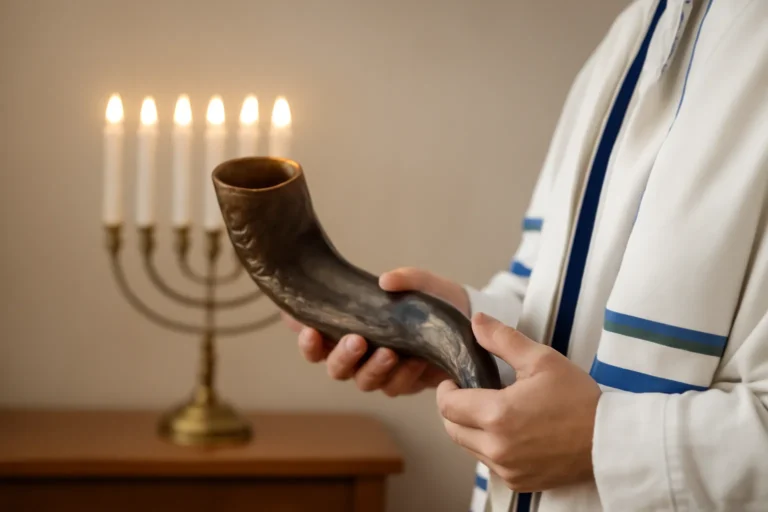
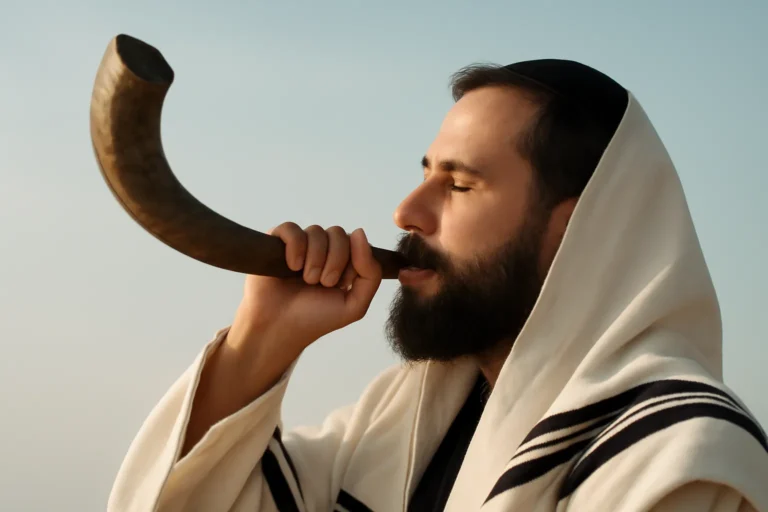
The shofar—the ram’s horn—was the primary instrument on this day. Its blasts were not mere decorations but meaningful signals: a call to listen, a reminder of God’s presence, and an invitation to respond with humility and repentance. The sound of the shofar, and the teruah-type blasts it produces, stands as a powerful auditory cue in the biblical imagination, shaping the way the people heard God’s word and discerned His will.
Sacrifices and offerings
Sacred offerings accompany the day in the biblical text (as described in Numbers 29). The prescribed sacrifices emphasize that the day’s observance is not only about ceremony; it is about returning to God through worship and sacrifice. The combination of ritual sound and sacrificial practice illustrates a holistic approach to worship—one that integrates auditory signs with tangible acts of devotion.
Ethical and spiritual emphasis
While the surface of the day is a festival of trumpet sounds, the deeper spiritual current is one of accountability and renewal. The biblical pattern invites the people to examine their ways before God, to confess, and to realign their lives with the divine order. In this sense, Yom Teruah functions like a spiritual marker that situates Israel in a posture of repentance and covenant faithfulness as the year begins its annual cycle.
Interpretive Perspectives: Jewish and Christian Readings
Rabbinic and Jewish tradition: Rosh Hashanah and the civil year
In later Jewish tradition, the day described in the biblical text as Yom Teruah is identified with the Jewish New Year, known as Rosh Hashanah. This association gives the day a broader cultural and liturgical resonance, linking it to themes of divine sovereignty, judgment, and the renewal of the calendar. While the biblical text itself emphasizes the day’s legal and liturgical aspects, the rabbis emphasize intimate themes of repentance, divine kingship, and the cosmic judgment that are connected to the new year reflections. The rabbinic reading does not replace the scriptural description; it enriches it, offering a lens through which the day is experienced in contemporary life.
Christian perspectives: eschatology and the trumpet motif
In Christian interpretation, trumpets figure prominently in anticipation of final things—ritual echoes of the biblical blasts that announce divine action. Some writers see a typological connection between Yom Teruah and the "last trumpet" imagery found in the New Testament (for example, the trumpet signal associated with the return of Christ). While the New Testament passages are not identical to the biblical festival, readers often encounter a thematic bridge: trumpet blasts as heralds of a decisive divine intervention, calls to wakefulness, and invitations to readiness. These connections are interpretive rather than prescriptive mappings of one tradition onto another, but they have shaped how many Christian readers understand trumpet symbolism and its implications for faith, hope, and ethical living.
Continuities and tensions: historical practice vs. theological reflection
Across centuries and communities, the essential features of Yom Teruah—sound, assembly, rest, and remembrance—remain coherent, even as the surrounding calendars and theological emphases shift. The core idea of listening for God’s call, recognizing His sovereignty, and renewing one’s covenant is a thread that runs from ancient Israel through modern Jewish practice and into Christian theological imagination. Readers should appreciate both the historical specificity of the biblical instructions and the enduring interpretive richness that generations have woven around the day.
Practical Reflections for Today
Historical awareness: Recognize that Yom Teruah originates in a concrete biblical calendar with a distinct ritual pattern, especially the action of trumpet blasts and the call to assembly.
Liturgy and sound: The shofar’s blasts symbolize attention and repentance. Listening for sound—whether in a ceremonial setting or in personal reflection—can be a meaningful way to mark transitions or moments of decision.
Community and repentance: The day’s emphasis on a communal gathering invites individuals to participate in a shared spiritual practice and to consider how actions affect the whole community.
Ethical renewal: In the spirit of a memorial of trumpets, readers can engage in personal inventories—confession, reconciliation, and commitments to repair relationships and align life with one’s deepest values.
Scriptural engagement: For those who study Scripture, exploring Leviticus 23 and Numbers 29 in depth can illuminate how the biblical authors intertwined calendar, ritual, and theology to shape national identity and faithfulness.
In practical terms, modern readers might reflect on Yom Teruah as a reminder to pause, listen for God’s voice, and renew one’s commitments. Whether through a formal liturgical setting, a personal prayer time, or a family gathering around themes of repentance and renewal, the day invites a posture of humility before God and generosity toward others.
Glossary and Quick Reference
Yom Teruah — Day of Blasting/Shouting; the biblical festival focusing on trumpet blasts and holy assembly.
Yom Tru’ah / Yom Teru’ah — alternate transliterations of the same term.
Teruah — a loud shout or alarm; the sound of trumpets associated with this day.
Tekiah, Shevarim, Teruah, Tekiah Gedolah — classic categories of shofar blasts often discussed in liturgical contexts; biblical references to the exact sequence on this day vary, but the terminology reflects the range of trumpet sounds used in ancient practice.
Shofar — a ram’s horn used as the principal instrument for trumpet blasts on Yom Teruah.
Holy Convocation — a sacred assembly required on the day, marking it as set apart for worship.
Whether approached as a historical festival with concrete ritual steps or as a symbol-rich motif for reflection on God’s sovereignty, Yom Teruah remains a potent example of how ancient Israel linked time, sound, and covenant fidelity into a meaningful annual rhythm.







Leave a Reply