Shavuot in the Bible: Origins, Meaning, and Scriptural Significance
Shavuot in the Bible: Origins, Meaning, and Scriptural Significance
Shavuot, a cornerstone of biblical chronology and spiritual memory, is best understood as a festival that blends agricultural timing with divine revelation. In Hebrew, the festival is often called Chag HaShavuot or simply Shavuot, literally “the weeks,” signaling its place in the cycle of counting up from Passover to the great harvest. In later Greek writings, the festival is known as Pentecost, meaning “fiftieth,” reflecting its position after seven weeks plus the several days of counting. This article surveys Shavuot in the Bible—its origins, its meanings, and its scriptural significance—and shows how the biblical portrayal of this festival threads together harvest, covenant, and revelation.
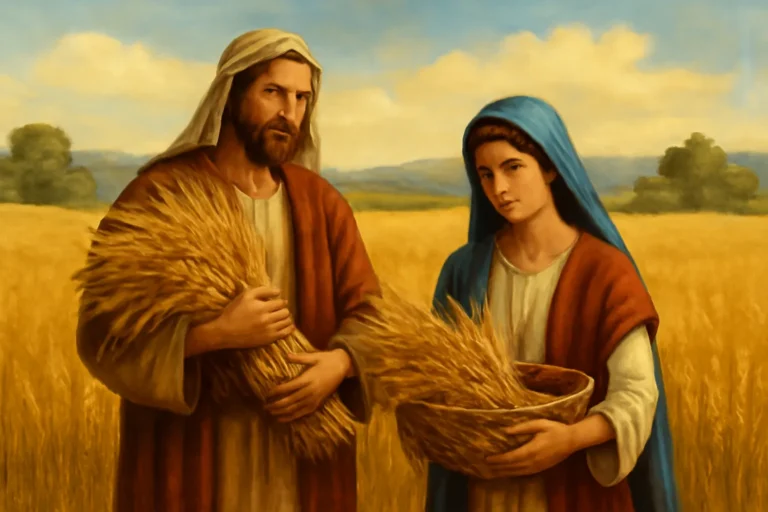
The biblical calendar situates Shavuot within a pattern of festivals tied to the land and its cycles. At its core, the festival is connected to the grain harvest—the culmination of the spring season’s work—and to a grateful offering that acknowledges God as the provider of the land’s yield. In several ancient Near Eastern contexts, harvest festivals were occasions to celebrate fertility, rain, and the abundance that sustained a people. The biblical presentation, however, redefines this seasonal joy in terms of divine relationship and spiritual memory.
Within the Pentateuch, the Feast of Weeks is introduced as a formal, annual observance that arises after a period of counting: seven weeks, or fifty days, from the day after the Sabbath during the Feast of Unleavened Bread. The counting is itself a pedagogical and liturgical rhythm—a way to prepare the heart and mind for a moment when God’s people draw near to Him with thanksgiving and a renewed sense of covenant obligation. As a result, Shavuot operates on two levels: it marks the finish of an agricultural interval and the beginning of a revelatory encounter with God on Sinai.
In the biblical text, there are several manifestations that anchor Shavuot in both history and ritual:
A harvest festival that acknowledges God’s bounty and the land’s provision.
A liturgical remembrance that celebrates the giving of the Law at Sinai, a defining moment in the people’s identity as a covenant community.
A ritual offering that includes the symbolic bringing of two leavened loaves as a distinctive feature of this festival (Leviticus 23:17).
Names, meanings, and semantic breadth
The biblical terminology surrounding this festival reveals a spectrum of meanings and emphases. The Old Testament terms emphasize counting, harvest, and the covenantal encounter, while the New Testament retrojects a new layer of meaning through the outpouring of the Spirit associated with Pentecost. Here are some of the principal designations and their nuances:
Shavuot (Hebrew): “Weeks,” highlighting the seven-week counting period that culminates in the festival.
Chag HaShavuot (Hebrew): “Festival of Weeks,” a formal liturgical label used in scriptural and rabbinic circles.
Feast of Weeks (English renderings of the Hebrew): a direct translation that foregrounds the time dimension of the observance.
Feast of Harvest or the Feast of the Firstfruits (various biblical references): an agricultural frame emphasizing the harvest aspect of the festival and the offering of firstfruits as an act of thanksgiving.
Pentecost (Greek: pente, “five,” and kos, “a hundred” or “ten times ten”): used in the Christian scriptures to designate the same festival by its fiftieth-day timing after Passover, thereby linking the Jewish festival to a new interpretive layer about the Spirit’s outpouring.
Day of Weeks (conceptual equivalent in some translations): a phrase that captures the cadence of the counting and the communal gathering.
The diversity of terms reflects a single festival that carries multiple meanings: agricultural gratitude, legal revelation, and, in the Christian tradition, the inauguration of a Spirit-filled mission. In studying Shavuot in Scripture, readers encounter a festival that binds together land, law, and life in a way that repeatedly invites reflection on identity and destiny.
Old Testament foundations: Law, harvest, and covenant
The most explicit biblical instruction for Shavuot appears in the Torah, where the festival is named, defined, and integrated into the life of the people of Israel. The key passages are located in Leviticus, Deuteronomy, and Exodus, each contributing a facet of the festival’s purpose and practice.
Leviticus and the calendar of weeks
In Leviticus 23, the Lord lays out the calendar of holy convocations. After the Feast of Unleavened Bread, the people are commanded to count seven full weeks from the day after the Sabbath “to the day after the seventh Sabbath” and then to observe the festival on the fifteenth day of the seventh month as the Feast of Weeks. The ritual observance includes a specific offering and a call to rejoice before the Lord during this season of harvest. Notably, Leviticus 23:17 describes a distinctive sacrifice: two loaves of bread, baked with leaven, are to be offered as firstfruits to the Lord. This is a powerful symbolic moment: the introduction of leaven into the festival’s worship signals both the inclusiveness of the community (bread made with leaven includes all) and the transition from a pure agricultural rhythm to a liturgical, covenant-centered memory.
Counting the Omer (the days between Passover and Shavuot) frames the season as a spiritual apprenticeship. Though the precise term “Omer” appears more explicitly in later tradition, the biblical sequence invites believers to mark time with intention.
Two loaves with leaven as the festival offering: these loaves symbolize the fullness of the harvest and the participation of the entire community in God’s blessing.
Deuteronomy 16:9–12 reiterates the command to observe the feast of weeks. It adds ethical and communal dimensions: the celebration is to be conducted before the Lord your God with gratitude for the harvest, and the people are to ensure that the celebration is marked by joy, sharing with the Levites, the strangers, the orphans, and the widows. The language emphasizes that the festival is not merely a private moment of thanks but a shared memory that binds the nation together in covenant fidelity.
Exodus and the agricultural frame
In Exodus, the festival language connects to the broader agrarian calendar. While the explicit naming of Shavuot appears in later verses, the festival’s identity as a harvest celebration is embedded in the language of firstfruits and offerings, framing the law as a divine gift that shapes the community’s life around God’s provision. The biblical pattern here shows how God’s people situate themselves within the land’s bounty, while simultaneously acknowledging God as the source of all grain and grain-derived sustenance.
New Testament resonance: Pentecost and the outpouring of the Spirit
When the biblical narrative turns to the New Testament, the festival’s Judaic identity continues to matter, even as it is reinterpreted in light of Jesus’ life, death, and resurrection. The most explicit transition occurs at Pentecost, the Greek designation for the same festival. The book of Acts depicts a dramatic fulfillment and expansion of the festival’s spiritual significance in the following ways:
Pentecost as a moment of revelation: On the day described as the Day of Pentecost, the apostles gather, and the Holy Spirit descends, enabling them to speak in diverse languages. This event is presented as a divine empowerment for proclamation, mission, and witness to the nations. The linkage to Shavuot is plain enough for early readers familiar with the Jewish calendar: the season of harvest becomes a season of harvest of souls, as the Spirit draws people to faith in Christ.
The gift of the Spirit: The Spirit’s outpouring is described as fulfilling prophetic expectation (see Joel 2) and inaugurating a new chapter in God’s relationship with humanity. The connection to Shavuot is theological as well as calendrical: just as Sinai’s revelation began a covenant era, the Spirit’s empowering inaugurates a mission-era for the church.
Mission and speech in Jerusalem: The gathered believers, including observers from many nations, hear the message of the gospel in their own languages. This moment underscores the universal scope of the Pentecost event and signals a transition from the old covenant to a new covenant emphasis on indwelling guidance and global proclamation.
Thus, the term Pentecost in the New Testament does not replace the biblical Shavuot but carries forward its essential energies: a time of divine revelation, a gathering of God’s people, and a season of harvest that yields fruit in the world. The biblical narrative invites readers to see Shavuot as a prefiguration of an outpouring that would ultimately fulfill the purposes of God for all nations.
Theological themes: revelation, covenant, and communal life
Across the biblical witness, Shavuot embodies several core theological themes that scholars, teachers, and readers repeatedly reflect upon. Understanding these themes helps illuminate why the festival holds enduring significance in both Jewish and Christian traditions.
Revelation and law
One of the most significant motifs associated with Shavuot is God’s revelation of the Torah at Sinai. The festival marks a public enactment of the covenant, with the Law given as a guide for how the people should live in covenant relationship with their Creator. The biblical pattern suggests that revelation is not a one-time act but an ongoing invitation to respond in obedience, love, and trust. The emphasis on the two-leavened loaves and the wave offerings speaks to the inclusion of the entire community in that revelation, transcending social categories and uniting all people under God’s instruction.
Covenant, blessing, and ethical living
Shavuot’s liturgical frame—rejoicing before the Lord, offering the firstfruits, and sharing with vulnerable members of society—embodies an ethical dimension. The festival becomes a reminder that blessing is not merely for individual consumption but is entrusted to a community that loves, cares for the outsider, and pursues justice. The Torah’s instruction to rejoice before the Lord and to present offerings to the Lord’s presence a certain communal ethos: gratitude inspires generosity, and the memory of divine action wins hearts toward righteous living.
Harvest memory and spiritual fruit
The agricultural imagery embedded in Shavuot also invites readers to interpret harvest as a sign of spiritual fruit. Just as the literal harvest testifies to God’s provision, the spiritual harvest—made possible through the Spirit’s work in the life of the community—testifies to God’s ongoing action in history and in individuals. The biblical writers present a parallel claim: the season of reaping grain parallels the season of ethical transformation, so that the harvest becomes both a material and a spiritual symbol of God’s gracious activity in the world.
Ritual observances and cultural expressions in scriptural memory
In the biblical text, ritual actions surrounding Shavuot reveal a structured pattern designed to cultivate community, memory, and devotion. While much of Rabbinic practice developed after the biblical period, the core elements in Torah and prophetic literature provide a foundational architecture for how the festival functions within the life of God’s people.
Offerings and symbols
The ritual offerings associated with Shavuot include the wave offering of firstfruits and the two loaves of bread presented with the barley and grain offerings. These acts symbolize harvest gratitude, inclusion, and the sanctification of ordinary agricultural products through devotion to God. The presence of leaven in the bread loaves also carries interpretive weight, signaling growth, transformation, and the broadening of the community to include all who live under God’s provision.
Temporal structure and counting
The timing of the festival—counting seven weeks from the sickle-season moment after Passover—frames a spiritual discipline. This rhythm invites believers to reflect on the journey from liberation to covenant life, from enslaved memory to transformed presence. The counting period is more than a schedule; it is a pedagogical instrument that shapes worship, communal identity, and expectancy for what God will reveal or accomplish in the season ahead.
Liturgical memory and ethical memory
Shavuot is also a festival of memory. The memory has a double dimension: the memory of deliverance from Egypt (the Exodus) and the memory of the Law given at Sinai. The biblical writers present memory not as mere recollection but as a living call to fidelity, justice, and mercy in the present. In the landscapes of Israel’s worship, memory becomes a dynamic force: it binds past action to present obedience and future hope.
For readers today, engaging with Shavuot invites a convergence of ancient practice and contemporary faith. The festival offers several pragmatic avenues for personal and communal reflection:
Study as celebration: Given the festival’s association with the giving of the Torah, a season of focused study—whether of biblical law, wisdom literature, or prophetic writings—helps participants sense the spiritual seriousness of revelation and obedience.
Gratitude for provision: The harvest imagery invites grateful acknowledgment of God’s daily provision, even in modern contexts where harvest cycles may be symbolic rather than literal. The principle remains: all good gifts come from above, and gratitude should shape generous living toward others.
Community hospitality: The biblical injunction to rejoice before the Lord and to share with strangers and the vulnerable translates well into contemporary practice of hospitality, solidarity, and care for the marginalized.
Spirit-inspired mission: In the Christian interpretation, Pentecost signals the Spirit’s empowerment for witness. For Christian readers, this can translate into prayers for courage, opportunities, and discernment to share faith with humility and love in diverse cultures.
Variations in contemporary observance
Across Jewish communities today, Shavuot is observed with diverse customs, including all-night Torah study, decoration of synagogues with greenery and flowers, and traditional dairy meals. While dairy meals are not dictated in the biblical text, they have become a characteristic cultural expression in many communities (often linked to symbolic ideas about Torah as nourishing and sweet, or to historical associations with dairy economies in ancient times). These customs reflect how a festival rooted in ancient grain cycles continues to be reinterpreted in ways that connect faith to everyday life.
In sum, Shavuot occupies a unique place in the biblical record by uniting three fundamental strands: the celebration of harvest, the enactment of covenant law, and the anticipation of divine revelation. Its Old Testament foundations in Leviticus and Deuteronomy lay out a calendar that binds agricultural timing to worship and obedience. Its New Testament resonance in Acts 2 reinterprets the festival as the moment of the Spirit’s empowering, extending its significance beyond the borders of Israel to the church’s missionary, global horizon. Across both testaments, the festival invites believers to see time as a stage for encounter with God—moments of memory that become seeds for future life in faith, hope, and love.
To help readers locate the core biblical anchors for Shavuot, here is a compact guide to the most important passages and terms. (If you want to dive deeper, you can explore these sections in a study Bible or consult scholarly commentaries that examine the Hebrew terms and their contextual meanings.)
Leviticus 23:15–22: The command to count seven weeks and to observe the Feast of Weeks with offerings, culminating in a joyful assembly before the Lord.
Leviticus 23:17: The instruction to bring two loaves of bread baked with leaven as firstfruits to the Lord, a central ritual feature of Shavuot.
Deuteronomy 16:9–12: The exhortation to celebrate the festival with reverence before the Lord and with generosity toward the less fortunate, highlighting social and ethical dimensions.
Exodus 34:22 and related passages: References that position the festival within the broader framework of the annual cycle of holy days.
Acts 2:1–4: The event of Pentecost, where the Spirit descends on the followers of Jesus, interpreted in Christian tradition as the fulfillment and expansion of the festival’s meaning.
Joel 2:28–32 (prophetic background): The outpouring of the Spirit that the Acts narrative situates at Pentecost, connecting Shavuot to transformative spiritual renewal.
These passages collectively illuminate how Shavuot functions as a hinge between history, law, worship, and the life of the Spirit—an anchor for identity in Israel and a doorway for mission in the church.
Closing thoughts: the enduring relevance of Shavuot in Scripture
Whether read as an agrarian thanksgiving or as a moment of profound divine revelation, Shavuot remains a powerful symbol in the biblical imagination. It invites communities to reflect on what it means to live under covenant law, to recognize God’s provision, and to seek a renewed encounter with the living God. The festival’s continuity—from the biblical Hebrew Bible to Christian interpretations in the New Testament—testifies to a shared spiritual memory: that God’s purposes include both the revelation of His will and the empowerment of His people for witness in every nation. In this sense, Shavuot is not merely a historical observance but an ongoing invitation to posture the heart toward God’s timing, generosity, and transformative power.





Leave a Reply