The Havdalah ceremony marks the symbolic division between the holy time of Shabbat and the ordinary days of the week. It is a compact, candle-lit ritual that blends beauty, meaning, and memory. In many Jewish homes and communities, the Havdalah ritual is a moment to pause, reflect, and carry the peace of Shabbat into the coming days. This article offers a thorough, practical, and educational Havdalah explained guide—covering the history, the objects involved, the exact sequence, possible variations, and the deeper meanings behind each element. You will find a step-by-step plan you can follow at home, plus explanations that help you understand the purpose and symbolism of every action.
What Havdalah Is and Why It Matters
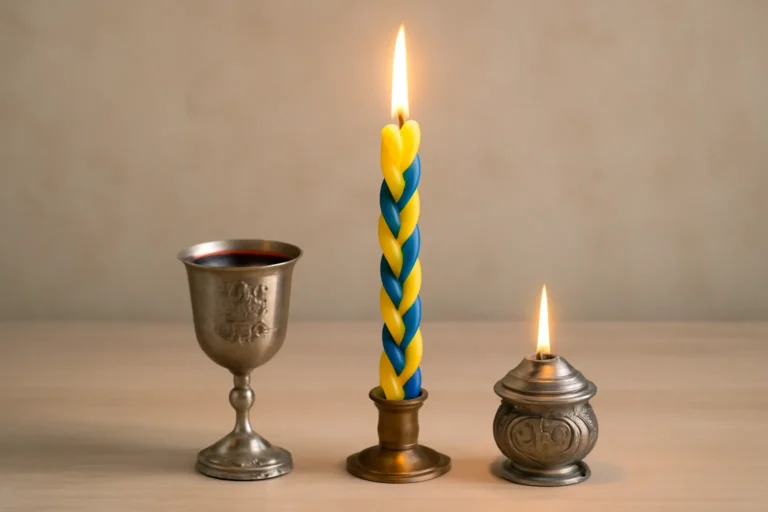
At its core, Havdalah (often transliterated as “havdole” or “hamavdil”) means “distinction” or “separation.” The ceremony creates a formal boundary between two distinct climates of time: the sanctity of Shabbat and the ordinary weekdays that begin after nightfall on Saturday. The ritual is typically performed after the sun has set on Shabbat, when a three- or four-candle Havdalah candle, a cup of wine, and a container of fragrant spices are arranged on a table or a shelf. The blessing over wine, the blessing over spices, and the blessing of separation all come together in a short liturgy that emphasizes both gratitude and memory.
Over time, Havdalah has become more than a ceremonial closing of Shabbat. It is a multi-sensory ritual that invites sight (the glowing candle, the spices’ scent), smell (the spice aroma), taste (a sip of wine), and touch (holding the flame in the hand to examine the difference between Shabbat and weekday). Depending on the community and tradition, the emphasis may shift between the aesthetic, liturgical, or symbolic dimensions. The following sections explain how to perform Havdalah with intention and integrity, while also recognizing that real-life practice can vary in meaningful ways.
A Step-by-Step Havdalah Protocol: A Practical Walkthrough
Below is a clear, pragmatic sequence that mirrors what many families and congregations follow. I present a commonly taught order, but I also note where different traditions might place a blessing differently or introduce optional steps. Use this as a baseline, then adapt to your own community’s custom or family tradition.
Prepare the space and the sacred tools. Arrange the candle, wine in a cup, and the spice box (besamim). If you have children, invite them to participate by passing the spice box or by lighting the candle with you. Clear the surface, wipe it with a new cloth, and set a comfortable stance—often sitting or standing around the table, facing the candle.
Light the Havdalah candle. The flame should be bright and steady. The candle is a central symbol in Havdalah—its flame embodies the differentiation between the sacred and the ordinary. Some families have a single long candle; others use multiple wicks bound together for a fuller glow. The moment of lighting the candle is often accompanied by the blessing for kindling ner shel Shabbat.
Recite the blessing over the candle. In many traditions, this blessing begins Havdalah in a formal way: “Baruch Atah Hashem Eloheinu Melech haolam asher kid’shanu b’mitzvotav v’tzivanu l’hadlik ner shel Shabbat.”
The candle blessing acknowledges that the light of Shabbat is sanctified through the commandments and through the act of kindling a holy flame. If your tradition uses a slightly different formulation, that variation is acceptable and common.
Bless the wine (borei pri hagafen). The blessing over the wine reaffirms gratitude for the fruit of the vine. The standard text is: “Baruch Atah Hashem Eloheinu Melech haolam borei pri ha-gafen.”
After the blessing, the wine is typically tasted or sipped. Some families pour a small amount into a separate cup for each person to partake, while others simply sip from the shared cup. Wine is a symbol of joy and blessing, echoing the Shabbat mood that has just concluded.
Bless the spices (besamim). The spice blessing follows the wine and invites people to inhale the aromatic fragrance. The blessing is: “Baruch Atah Hashem Eloheinu Melech haolam borei minei vesamim.”
After blessing, the spices are waved toward the nose (some people hold the spice box near the face and take a gentle sniff). The lingering aroma is thought to carry the memory of Shabbat into the coming week.
Recite the Havdalah blessing (hamavdil). The final separation blessing. The concluding line is: “Baruch Atah Hashem Eloheinu Melech haolam hamavdil bein kodesh lechol u’bein yisurai lechol.”
In many texts you’ll see a simplification like: “Baruch Atah Hashem Eloheinu Melech haolam hamavdil bein kodesh lechol.”
The essential idea is that God distinguishes between holy and mundane, between Shabbat and the ordinary days ahead. The exact wording can vary by tradition or transliteration.
Reflect, then partake and conclude. After the final blessing, you may take another small sip of wine or pass the cup to others to share a moment of gratitude. Some families also touch the fingertips to the lips and then to the candle’s light to recognize the symbolic light remaining in their hands.
Extinguish the candle and tidy up. The candle is typically extinguished with care—blown out in most households—so it is not used again until next Shabbat. Some people gently dip or press the flame into the wax to smother it, but the most common practice is to blow it out. Preserve the flame as a memory of the closing of Shabbat, and store the extinguished candle for the next Havdalah.
Optional steps that many households incorporate, depending on custom and available time:
Sing or recite poetry. Some families add a short song or a closing psalm after Havdalah to extol the beauty of time, rest, and spiritual renewal.
Invite guests to participate. Inviting a guest to lead a line of the Havdalah blessing adds a sense of communal participation and shared memory.
Switch to Sabbath-like calm. In homes with children, Havdalah can be a gentle transition that helps kids shift from the quiet of Shabbat to a more active weekday, with fewer abrupt changes and more gentle rituals.
The Text and Blessings: What You Say and Why
Understanding the text of the Havdalah blessings helps illuminate the ritual’s purpose. There are four key components: the candle blessing, the wine blessing, the spice blessing, and the final separation blessing. Each one carries a distinct focus—sanctity, blessing, fragrance, and distinction. Below is a compact guide to the wording and the intended meaning, along with notes on where traditions differ.
The Candle Blessing
The candle blessing is a prayer of sanctification directed at the act of lighting a symbol of holiness. It acknowledges that the day’s sacred time has been initiated by human action that sanctifies time itself.
Standard text (Ashkenazi and many others): “Baruch Atah Hashem Eloheinu Melech haolam asher kid’shanu b’mitzvotav v’tzivanu l’hadlik ner shel Shabbat.”
Translation: “Blessed are You, Lord our God, King of the universe, who has sanctified us with His commandments and commanded us to light the candle of Shabbat.”
The Wine Blessing
The wine blessing acknowledges joy and blessing in the daily life that follows, and wine has long stood as a universal symbol of celebration and partnership with divine grace.
Standard text: “Baruch Atah Hashem Eloheinu Melech haolam borei pri hagafen.”
Translation: “Blessed are You, Lord our God, King of the universe, who creates the fruit of the vine.”
The Spice Blessing
The spice blessing invites the soul to carry the scent of the holy into the new week, a sensory reminder of Shabbat’s inner peace. The aroma recalls sweetness, renewal, and a positive memory of the day that has just passed.
Translation: “Blessed are You, Lord our God, King of the universe, who creates various kinds of spices.”
The Havdalah Blessing
The final blessing, often called the hamavdil blessing, is the core statement of separation. It proclaims that God distinguishes between the sanctified time and the ordinary time, between the holy on Shabbat and the mundane that follows.
Translation: “Blessed are You, Lord our God, King of the universe, who distinguishes between holy and mundane.”
Note: Transliterations and exact wording can vary slightly across communities—Sephardic, Ashkenazi, Chassidic, Conservative, and Reform practices all have their own customary formulations. The essential idea, however, remains consistent: to declare separation and transition from the sanctified time of Shabbat to the ordinary workweek.
Havdalah is a richly symbolic ritual. Each element carries layers of meaning that connect the heart, memory, and daily life to ancient tradition. Here is a closer look at the symbolism behind the main components of Havdalah.
The candle — The flame represents illumination, wisdom, and the ability to perceive difference. Light is a universal symbol of knowledge, and in Havdalah it helps us see the distinction between the holy and the ordinary. The candle’s multiple wicks may symbolize the many dimensions of life that Shabbat enriches: rest, family, prayer, study, and gratitude.
The wine — Wine is a sign of blessing, sweetness, and joy. By blessing and drinking wine, participants carry forward the joy of Shabbat into the new week. The cup can also symbolize a vessel for communal memory, a shared ritual that binds participants together.
The spices — The fragrant spices embody memory and the sense of returning to ordinary life with a lingering sense of Shabbat’s sweetness. The aromatic memory helps the soul to retain the calm and restorative quality of Shabbat as the week begins anew.
The act of separation — The final blessing, hamavdil, declares that time itself can be split into holy and mundane. It is a theological reminder that human actions—such as observing Shabbat—shape time, space, and meaning.
Variations Across Traditions: Havdalah Explained in Different Ways
Across Jewish communities, the Havdalah ritual is observed with a range of custom features and emphases. These variations—often described as Havdalah explained in different traditions—reflect historical development, geography, and denominational philosophy. Here are some of the most common differences you might encounter.
Ashkenazi vs. Sephardi/Mizrahi Practices
In many Ashkenazi communities, the candle is lit from a single wax candle, and the order of blessings typically follows the sequence described above. Some families will have two fire sources (a “shay” candle or beeswax candle) to ensure a bright flame. The wine is central to the ritual, and a blessing over wine is almost universally included before the spice blessing.
Sephardi and Mizrahi communities often bring their own flavor to Havdalah. They may use different wording for the blessings, and in some traditions the spice aroma is introduced before the wine blessing, or spice scent is interpreted as a way to “sweeten” the coming week. In some Sephardic traditions, there is a greater sense of communal prayer, with additional verses or Psalms recited as part of the Havdalah ceremony. The layout of the ritual space and the manner in which the candle’s flame is held can also differ, reflecting regional norms and family customs.
Hasidic and Modern Orthodox Approaches
Hasidic customs often emphasize the mystical and spiritual dimensions of Havdalah, with a focus on the candle as a doorway to light and redemption. Some Hasidic communities add small chassidic melodies or niggunim (wordless tunes) after the main blessings, creating a musical transition from Shabbat to the weekday week. In Modern Orthodox settings, you may see a combination of traditional wording with contemporary transliterations and explanations, especially in family-centered Havdalah ceremonies.
Conservative, Reform, and Reconstructionist Practices
In Conservative and Reform Havdalah services, the basic structure remains similar, but the emphasis can be more flexible, and language may be simplified or translated for broader understanding. Some Reform and Reconstructionist homes may include additional readings, poems, or songs, and may place a greater emphasis on inclusive participation. The essential elements—candle, wine, spices, and separation blessing—are preserved while allowing for personal or communal creativity.
Timing, Etiquette, and Practical Considerations
Knowing when and how to perform Havdalah helps ensure that the ritual is meaningful and correct within the community’s calendar and customs. Here are practical guidelines for timing and etiquette, along with common questions people ask when approaching Havdalah for the first time.
When to Perform Havdalah
The ceremony is traditionally performed at night, after sunset on Shabbat. The moment Shabbat ends is defined differently depending on the halachic tradition, but most households begin Havdalah after these guidelines are met: darkness has fallen, three stars are visible, and the week’s work schedule is about to resume.
In some locales, the exact time for Havdalah is calculated by Jewish calendar rules, especially during the long winter nights or on certain holidays when Shabbat may be extended. Always check your local calendar and your community’s practice for precise timing.
Where to Perform Havdalah
In homes, Havdalah is often performed around the dining table or a dedicated ritual space where the candles, wine, and spices can be arranged in an orderly way.
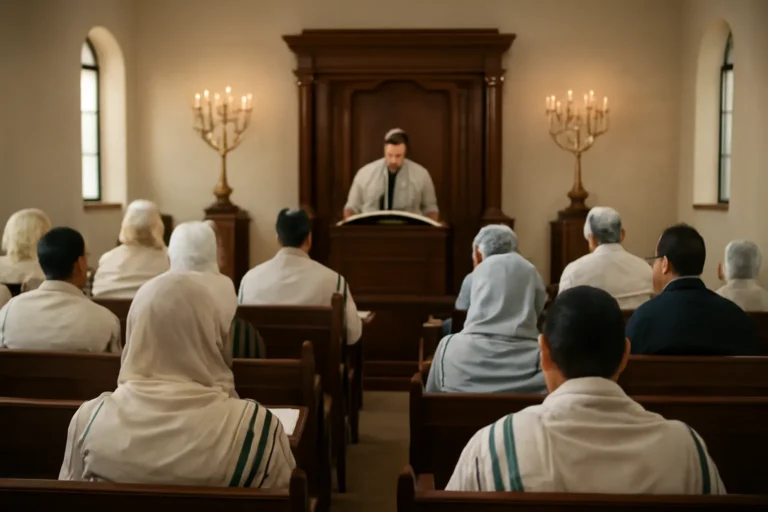
In synagogue or community centers, Havdalah is sometimes held in a larger space with a designated leader who recites the blessings, followed by the congregation.
Etiquette and Practical Tips
Do not rush. Havdalah is a moment of reflection; give it a few thoughtful minutes to savor the sensory elements and the blessings.
Include kids or guests. Children can participate by passing the spice box or by helping to light the candle, making the experience more memorable.
Be mindful of safety. Keep the candle away from long, loose sleeves and combustibles. If a gust of wind threatens the flame, shield it with your hand or move to a more sheltered spot.
Adapt for accessibility. If someone has trouble smelling the spices, you can describe the aroma or offer a non-fragrance-based meditation that aligns with the moment’s meaning.
Havdalah in Modern Life: Family, Community, and Personal Practice
Today’s Havdalah can be a family ritual, an intimate moment between spouses, or a community-wide observance. The core idea—distinguishing between holy time and ordinary time—remains relevant regardless of how large or small the gathering is. For families, Havdalah often becomes a recurring routine that reinforces shared values, gratitude, and memory. For communities, it is a chance to connect, celebrate, and welcome the coming week with a sense of shared purpose. For individuals, Havdalah can be a personal pause, a moment to set intentions for the week ahead, and a reminder to carry Shabbat’s calm into daily life.
In the digital age, you may also encounter virtual Havdalah events, livestreamed services, or family Havdalah held at a distance. The essential elements remain the same: candle, wine, spices, and the blessing of separation. What matters most is the intentional transition from rest and sanctity to action and responsibility—an invitation to bring the peace of Shabbat into the week ahead.
Common Questions and Quick Answers About Havdalah
Can Havdalah be performed alone? Yes. While it is often a communal or familial rite, Havdalah can be observed alone as a personal ritual of separation and renewal.
Is it required to use wine? The wine blessing is traditional and widely practiced, but some communities use grape juice, especially when wine is not suitable for all participants. The blessing is adapted to the substitute, but the symbolism remains.
What if someone cannot smell the spice? If a participant cannot smell the spices, they can still experience the ritual through the other senses, or the spice aroma can be described to them. The meaning of the blessing endures beyond scent alone.
May I change the order of blessings? Variations exist among communities. The most common order is candle blessing, wine blessing, spice blessing, and then the Havdalah blessing. Some traditions place the spice blessing before the wine blessing. If you are new to Havdalah, follow the practice of your community or household to maintain consistency.
What should I do with the candle after Havdalah? Extinguish it safely (blowing out is common) and store it for next Shabbat. Some people keep a candle dedicated to Havdalah for future use as a reminder of the ritual’s purpose.
A Quick Reference: Step-by-Step Havdalah at a Glance
Prepare the space with a candle, wine, and spices.
Light the candle and recite the candle blessing.
Recite the blessing over wine and sip or toast.
Smell the spices; recite the spice blessing.
Pronounce the Havdalah blessing over the separation of holy and ordinary time.
Reflect, then partake, and extinguish the candle.
Whether you call it Havdalah, a Havdalah ceremony explained as a closing ritual, or a simple “distinction ritual,” the purpose is consistent: to acknowledge the transition from the sanctity of Shabbat to the regular rhythm of the week, while carrying forward the tranquil energy of the day into the days ahead. Different communities may call this ritual by various names or incorporate additional readings, songs, or reflective moments. The essential idea, however, remains universal: through a few simple actions—light, blessing, fragrance, and reflection—we create a meaningful bridge between the sacred and the everyday.
Further Reflections: Deepening Your Havdalah Practice
To deepen your understanding and experience of Havdalah, you can approach the ritual from several angles. Here are a few ideas that align with the spirit of Havdalah explained in different ways while keeping the core tradition intact.
Contemplate time as a spiritual dimension. Use Havdalah as a moment to reflect on how you experience time—how Shabbat energized your week and how you will carry that energy forward.
Invite storytelling as part of the ceremony. Have a family member share a short memory from Shabbat or a personal intention for the week, weaving memory into ritual.
Expand the ritual with gratitude. Consider adding a brief gratitude blessing or a moment of silent gratitude for people who supported you during Shabbat.
Combine Havdalah with a family activity. A quiet activity such as lighting the spices and passing them around the circle, or a shared dessert, can reinforce the sense of transition with gentle meaning.
Explore liturgical variations. If you are part of a different tradition or are curious about alternatives, explore other Havdalah texts and melodies to discover what resonates with you and your family.
Final Thoughts: Havdalah Explained as a Living Practice
In its simplest form, Havdalah is a form of memory tied to time itself. It reminds us that days flow into one another, yet life holds within it moments that deserve special recognition. As you become more familiar with the ritual’s components—the candle, the wine, and the spice box—you can tell clearer stories through them: stories of rest, gratitude, joy, and the hope that sweetness lingers into the week. The Havdalah explained in this article aims to give you both a practical blueprint and a window into the deeper meanings of the ritual, so that each Saturday night you can engage with the rite with intention, beauty, and a sense of continuity that links past, present, and future.






Leave a Reply