Tevet Month Explained: A Comprehensive Guide to the Hebrew Month
Tevet Month Explained: A Comprehensive Guide to the Hebrew Month
Tevet is a Hebrew month that sits in the quiet, often chilly heart of winter for many Jewish communities. This article offers a comprehensive guide to the Tevet month explained in detail, from its place in the calendar to its historical and religious significance, as well as practical notes for observance and daily life.
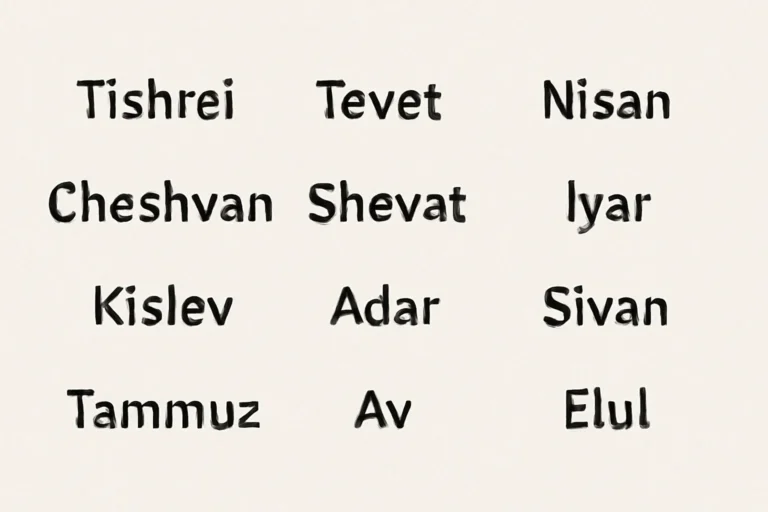
Tevet is the name of a month in the Hebrew calendar. It is one of the twelve (or, in leap years, thirteen) months used to structure the Jewish year. In the standard religious year, which begins in the spring with Nisan, Tevet is the 10th month. In the civil counting of the year, which begins in Tishrei and aligns with the secular calendar’s autumn-to-winter rhythm, Tevet is the 4th month.
The month of Tevet lasts for 29 days. In the lunisolar Hebrew calendar, all months alternate between 29 and 30 days in a regular rhythm, but Tevet is consistently 29 days long. This consistency helps calibrate the calendar so that the seasons and festivals stay aligned with the solar year over the long term.
Tevet in the Calendar: Two Ways to Count
Understanding Tevet’s position requires looking at both major frameworks used in Jewish timekeeping:
Religious year: Tevet is the 10th month when counting from Nisan (the month of Passover) forward. This religious count is the conventional order used in Jewish liturgical life and many Halachic (Jewish legal) discussions.
Civil year: Tevet is the 4th month when counting from Tishrei (the month of Rosh Hashanah). This civil count aligns with the way many communities organize yearly routines, seasons, and administrative calendars.
Because the Hebrew calendar is lunisolar, the Gregorian dates that correspond to Tevet shift from year to year. In practice, Tevet usually falls in December and January, bringing the winter’s quiet and, in Israel, some of the season’s rainfall and cooler weather. The exact onset and finish of Tevet depend on whether the year is a leap year and on the intercalation that keeps the lunar months synchronized with the solar year.
Tevet has 29 days, a common length shared with many of the other Hebrew months. Its placement near the middle of winter brings with it certain seasonal associations, even though the calendar itself is primarily driven by lunar-solar calculations rather than by weather alone. For people in the land of Israel, Tevet sits within the winter rainy season’s early to mid-point, while for Jewish communities outside Israel, Tevet marks a stretch of weeks that often feel like mid-winter in the northern hemisphere.
Asarah BeTevet: The Fast of the Tenth of Tevet
One of the central observances in Tevet is the Fast of the 10th of Tevet (Asarah b'Tevet). This fast commemorates the siege of Jerusalem by Nebuchadnezzar’s armies and the beginning of the destruction that culminated in the Temple’s fate in ancient times. It is categorized as a minor fast, meaning it is observed from daybreak until nightfall with restrictions on eating and drinking, similar in spirit to other fast days like Tisha B’Av, though typically less stringent in duration and intensity.
Key features of this fast include:
The fast is observed by many traditional communities; some have leniencies or variations depending on local customs and health considerations.
If the 10th of Tevet falls on Shabbat, the fast is generally moved to Sunday, in accordance with common Halachic practice, so Shabbat’s sanctity is preserved.
The fast has a strong historical and liturgical resonance: it marks the early stage of the sequence of events leading to the Babylonian exile, and among some congregations it is a time for reflection on judgment, endurance, and the preservation of communal memory.
For many years, Hanukkah—the Festival of Lights—begins on the 25th of Kislev and lasts eight days. Because Kislev and Tevet are consecutive months, the tail end of Hanukkah can fall into Tevet depending on Kislev’s length. If Kislev has only 29 days, Hanukkah typically ends on 2 or 3 Tevet; if Kislev has 30 days, Hanukkah can stretch to 3 Tevet or 4 Tevet in some years. This overlap creates a unique mood in Tevet, where the glow of Hanukkah’s candles lingers into the early Tevet days for those observing the holiday.
In practice, Tevet’s proximity to Hanukkah means:
People may have a few remaining festive candle-lighting moments and songs during the early Tevet days.
The seasonal contrast—winter darkness with the Hanukkah light—often shapes communal gatherings, school activities, and family celebrations during the transition from Kislev into Tevet.
The overlap is a reminder of how the calendar’s structure binds historical memory, ritual cycles, and seasonal change into a single narrative for Jewish communities.
Beyond the fast and the Hanukkah overlap, Tevet carries a broader sense of historical memory and liturgical rhythm. While it does not feature a major Jewish holiday on the level of, say, Tishrei or Kislev, it anchors important themes in Biblical history, exile, and the ongoing renewal of communal life after hardship.
The beginning of the month of Tevet can be observed as Rosh Chodesh Tevet for communities that celebrate the new moon’s appearance. Rosh Chodesh Tevet can be a minor festive or commemorative day depending on local custom and the liturgical calendar being followed. In many congregations, special prayers or readings are added for Rosh Chodesh Tevet, and it signals the transition from Kislev to Tevet—an additional moment to reflect on themes of light, endurance, and renewal.
Tevet’s imprint on daily life goes beyond ritual dates. Its position in winter and in the heart of the rainy season in Israel (where applicable) adds a palpable sense of seasonality to the month. For many families, Tevet’s short days and cool evenings shape routines around home life, study, and community programs. The seasonal mood often emphasizes introspection, study, and preparation for the coming months when the cycle of seasons, agriculture, and religious observance continues to unfold.
In communities outside Israel, Tevet’s winter timing aligns with long evenings and indoor activities: study circles, Sabbath learning, and family gatherings may become central to the month’s rhythm. The weather’s character—rainfall, cold, and shorter daylight—often affects travel, synagogue attendance patterns, and festival preparations, while still leaving ample opportunities to observe Torah portions, prayers, and the fast when it falls on a working day.
Tevet sits within a historical arc that includes Jerusalem’s sieges and exiles as well as the resilient memory of Jewish life through centuries of change. The Asarah b'Tevet fast commemorates an ancient moment when Jerusalem faced siege, and the First Temple period’s events unfolded. For many, Tevet serves as a reminder of resilience, continuity, and the ways in which communities mark memory through ritual time.
In modern times, Tevet’s significance is felt in several ways:
As a marker of wintertime in the Jewish calendar, Tevet helps keep the seasonal rhythm aligned with agricultural and religious cycles, even in urban settings where agricultural life is less immediate.
The Minor fast on Asarah b'Tevet remains a practical reminder of humility, reflection, and communal responsibility—values that echo in study, prayer, and acts of charity during the month.
The overlap with Hanukkah’s lingering lights can deepen the sense of continuity between historical memory and ongoing Jewish life, linking stories of miracle with themes of endurance and illumination in dark times.
For individuals and families seeking to map Tevet onto daily practice, here are some practical notes and suggestions that align with the month’s character and rituals:
Plan around Asarah b'Tevet if you are observing a fast: arrange meals, study, and travel accordingly, and consider health and work obligations when scheduling the fast’s observance, especially if the day falls on a weekday.
If Tevet begins on Shabbat or the fast coincides with Shabbat, consult local community guidance on whether the fast is postponed to Sunday or observed with appropriate exemptions.
In communities where Hanukkah spans into Tevet, allocate time for both Hanukkah-related celebrations and the introspective mood associated with the fast, balancing communal joy with personal reflection.
Use the Rosh Chodesh Tevet observance to add a brief, focused moment of prayer or study—anticipating the month ahead and recalling the broader arc of meaning within the year’s cycle.
For families, Tevet is a good time to emphasize charitable acts and acts of kindness (gemilut hasadim) as a seasonal complement to the fast’s themes of restraint and renewal.
Understanding Tevet explained in daily life means recognizing how the month influences study schedules, synagogue life, and family routines. Teachers and parents often use Tevet as a point of focus for winter learning—both secular and Torah study—because the month’s quiet, contemplative atmosphere can foster concentration and meaningful discussion. In many communities, schools incorporate Tevet- and Hanukkah-related themes into winter programs, ensuring that the sense of spiritual light remains present even as the days grow shorter.
From a community perspective, Tevet can be a time for:
Less crowded travel and more indoor programming, which can enhance attendance at learning sessions, community chesed (kindness) projects, and volunteer opportunities.
Opportunities to weave together historical memory (the siege of Jerusalem) with present-day values such as mutual aid, resilience, and the pursuit of peace.
Reflection on the balance between discipline (fasts and restraint) and illumination (festival lights and songs), a dual mood that characterizes Tevet for many people.
To provide a broader understanding, here are several variations of the phrase “Tevet month explained” and related ideas you might encounter in discussions, literature, or educational materials:
Tevet explained in depth—a thorough, detail-rich exploration of all aspects of the month.
Tevet month overview—a concise survey suitable for quick reference or introductory material.
Understanding Tevet—a broad, context-rich explanation that connects Tevet to historical and liturgical themes.
Tevet month explained for learners—materials tailored for students, with clear sections and prompts for study.
Tevet month explained in calendrical terms—focus on the calendar’s mechanics: lengths, placements, and the dual counting system (religious vs civil years).
Tevet: a guide to its rituals and customs—emphasizing practical observances, fasts, and seasonal rhythms.
Some readers may wonder how Tevet interacts with leap years. In the Hebrew calendar, leap years add an extra month, Adar I, before Adar II (the latter often simply called Adar in non-leap years). This adjustment does not change the length of Tevet itself, which remains at 29 days in both leap and regular years. However, the addition of Adar I affects the sequencing of months earlier in the year, which can influence the timing of related holidays and the order in which Tevet appears within the religious year’s flow.
In leap years, Adar I is inserted before Adar II, shifting later months by one position in the sequence of the year.
Tevet itself remains a 29-day month, preserving the rhythm for the months around Kislev and Shevat.
The practical effect for families and communities can include slight shifts in when Rosh Chodesh Tevet is observed, but the central fast day (Asarah b'Tevet) remains tied to the month’s position rather than to a fixed date in the secular year.
For individuals seeking to turn Tevet into an opportunity for study and reflection, here are some prompts and ideas that align with the month’s themes and rhythm:
Explore the narrative of Jerusalem’s sieges and exile in relation to Asarah b'Tevet, considering how memory shapes identity and communal responsibility.
Study the way the calendar links historical events to seasonal cycles, examining how wintertime and the light of Hanukkah intersect with themes of endurance and renewal.
Pray or reflect on the balance between restraint (fasts) and celebration (lights of Hanukkah and family gatherings), and how these impulses can coexist in daily life.
Engage in a family learning project about the dual counting system (religious year vs civil year) and why two calendars are useful for Jewish timekeeping.
To summarize, Tevet is the 10th month of the religious year and the 4th month of the civil year, typically lasting 29 days. It usually falls in the December–January window in the Gregorian calendar, with exact dates shifting year by year due to the lunisolar calendar. The month contains the Fast of the 10th of Tevet (Asarah b'Tevet) and often sits near the end of Hanukkah, sometimes sharing the atmosphere of both solemn memory and festival light. It is a month whose practical rhythms—fast days, Rosh Chodesh observances, and wintertime routines—are intertwined with deep historical memory and ongoing communal life.
For students, parents, and educators, Tevet explained is an invitation to see how a single month can carry a spectrum of meanings—from ancient sieges and temple history to modern fast-day discipline, from the glow of Hanukkah to the quiet introspection of winter evenings. By exploring the month’s calendar role, its rituals, and its seasonal context, readers gain a deeper appreciation for how the Jewish year orchestrates memory, practice, and hope across time. Whether you are tracing the month’s dates on a wall calendar, planning study sessions around Asarah b'Tevet, or sharing a family Hanukkah moment that spills into Tevet, the month stands as a meaningful bridge between past and present, light and restraint, memory and renewal.







Leave a Reply