In biblical language, the phrase “Court of the Gentiles” refers to the area of the Jerusalem Temple designated for non-Jewish worshipers. Also called the Gentiles’ Court or the outer court, it marks a distinct boundary within the temple precincts between the sacred space reserved for Israel and the broader, non-Jewish world. The meaning of this term goes beyond a simple architectural label; it carries a complex set of religious, historical, and social implications that echo through biblical history and subsequent interpretation.
To understand this signification, it helps to recognize that the Temple complex in Jerusalem was laid out with a series of concentric zones. Each zone carried its own level of access, ritual status, and degree of holiness. The court of the Gentiles meaning is rooted in that layered architecture: it was the area where non-Jews could come to pray and observe, but it was still within a space governed by ritual purity requirements and ceremonial law. This arrangement reflects a cultural reality in which Judaism stressed particular forms of worship, communal identity, and access to divine presence, while also engaging with the broader world of peoples and nations.
In popular memory, the term often appears in accounts of Jesus and the Temple, where the outer court becomes the setting for pivotal events. The way scholars read the Court of the Gentiles meaning in those stories depends on linguistic choices, manuscript traditions, and historical context. Some readers emphasize its role as a designated space for non-Israelites seeking God; others highlight its function as a site of economic activity and political control, which then intersects with religious life. The term’s ambiguity invites careful study rather than a single, rigid interpretation.
Temple layout and the place of the Gentiles
The Jerusalem Temple was constructed and augmented over many centuries, with the most famous version associated with Herod the Great. Within this precinct, the Court of the Gentiles occupied the farthest reach of the sacred complex that non-Jews could legally enter. It stood outside the inner courts that were restricted to Israelites, to priests, and to the ritual sacrifices performed within the inner sanctuaries. This arrangement underscores a key dynamic in ancient religious life: access versus holiness.
In describing the court system, many scholars distinguish several courts by name, including:
The Court of the Gentiles (outermost area accessible to all nations)
The Court of the Women (where women could participate in certain rites)
The Court of Israel (restricted to male Israelites)
The Court of the Priests (where the priestly personnel performed sacrifices)
These divisions were not mere architectural curiosities but rather a map of ritual inclusion and exclusion. The Gentiles’ Court permitted visitors who did not belong to the people of Israel to come near, albeit within limits designed to preserve sanctity and order. The economic and ritual life of the temple often centered in this outer zone, making the area a focal point for interactions between Jewish worship and the wider educated world of merchants, travelers, scholars, and proselytes who wished to engage with Judaism’s God, law, and traditions.
The Gentiles in biblical thought: who are they, and what is their meaning?
The term Gentiles (from the Latin, gentiles means nations) in the Hebrew Bible typically refers to non-Israelite peoples—those outside the covenant people. In the context of the Temple, the Court of the Gentiles meaning includes the paradox of a space intended for nations to approach God, yet within a setting that reinforced a particular national and liturgical identity. The tension between universal accessibility and particular holiness makes the Gentiles’ Court a recurring locus for reflection about inclusion, invitation, and the boundaries of worship.
In the Hebrew Bible, there are patterns that some readers see as anticipatory of a more universal vision. The prophets sometimes speak of all nations streaming to Zion, learning God’s ways, and recognizing the God of Israel. The Temple precincts, including the outer court, become a stage where those visions and tensions interact. In the Second Temple period, the reality of foreign pilgrims who came to observe or participate in festivals prompted both hospitality and concern about purification and ritual boundaries. The court for the nations thus becomes a place where the drama of inclusion and exclusion took on concrete significance for daily worship and for the self-understanding of the Jewish people.
Jesus, the Court of the Gentiles, and a turning point in temple life
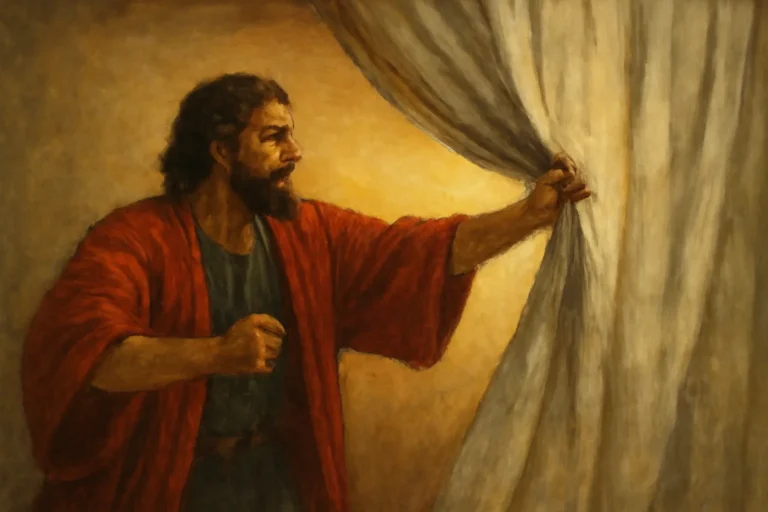
Among the most cited biblical narratives involving the Court of the Gentiles meaning is the account of Jesus cleansing the temple. In the Gospel tradition, Jesus encounters a bustling scene of commerce and money-changing within what many readers identify as the outer court. He quotes prophetic words about the temple as a house of prayer for all nations, and then drives out merchants and money changers, saying that they have turned a house of prayer into a den of thieves. This event highlights several dimensions of the Gentiles’ Court story:
The tension between worship and economic activity in sacred space
The claim that the temple should be a place accessible to all who seek God, including non-Jews
The critique that religious institutions may become barriers to genuine prayer and reverence
Different Gospel writers frame the event in distinct ways, but the core theme remains: the outer court is a space where outsiders could approach God, and Jesus’ actions are often read as a radical re-centering of worship around reverence, prayer, and the integrity of worship spaces rather than their commodification or political policing. The Court of the Gentiles meaning in this narrative thus intersects with early Christian self-understanding, where Jesus is interpreted as fulfilling and transforming temple worship rather than simply abolishing it. For Christian readers, the story also foregrounds the claim that salvation history moves toward a broader inclusion of the nations in God’s plan—an interpretation that expands the sense in which the Court of the Gentiles has meaning beyond a single religious practice or locale.
Historical and theological significance of the Gentiles’ Court
The Court of the Gentiles meaning involves more than the physical boundary of a space; it also reflects a theological boundary that different communities perceived in varied ways. Some scholars emphasize the court as a symbol of open access—that non-Jews could come near to God without fully entering the innermost sanctuaries. Others highlight the protections and limitations that accompanied that access, including purity laws, ritual practices, and the political authority that governed temple life.
From a historical perspective, the Gentiles’ Court helps historians understand how first-century Judaism related to the diverse populations living in and around Jerusalem. It also sheds light on how early Christians navigated these boundaries as they proclaimed a gospel they believed addressed all peoples. The phrase outer court thus becomes a shorthand for debates about mission, hospitality, and the expansion of the covenant community beyond ethnic Israel. In reading the court for non-Israelites in ancient texts, readers encounter a dynamic picture of worship that is both rooted in Jewish law and open to reinterpretation through faith in the God of Israel as revealed in Jesus.
The Gentiles’ Court in Jewish law and temple practice
Legal and ritual texts from the period illustrate how temple governance worked in practice. The Court of the Gentiles functioned within a hierarchy of reverence and surveillance designed to preserve ritual purity, protect the sanctity of worship, and accommodate foreign visitors. Merchants selling animals for sacrifice and money-changers who exchanged foreign currency into temple coins necessarily required space, organization, and governance. Yet when Jesus asks, “Is it not written, my house shall be called a house of prayer for all nations?” (paralleling Isaiah 56:7), the implication is that the meaning of the court goes beyond commercial exchange; it points toward a universal invitation to prayer and reverence before God.
Readers who study the Gentiles’ Court meaning in this light often highlight the tension between ritual economy and spiritual economy. The outer court is a place where the material life of the temple (sales, exchanges, logistics) intersects with the spiritual life of the worshiping community. The way this intersection is handled reveals much about the religious climate of late Second Temple Judaism, including concerns about purity, access, and the proper functioning of sacred space.
Benefits, responsibilities, and access in the Gentiles’ Court
Analyzing the outer court helps scholars and readers think through several key ideas:
Access: Non-Jewish visitors could approach a certain distance within the temple precincts to engage in worshipful acts and observe religious life.
Boundaries: There were clear limits on who could proceed deeper into the sanctuary and into participation in certain rites.
Hospitality: The temple’s design reflects a sense in which Israel’s God invites nations to come near, but within a framework of ceremonial law.
Identity: The court structure reinforces Jewish communal identity while acknowledging the presence and interest of Gentiles in the worship of the God of Israel.
The Court of the Gentiles in later Christian interpretation
As early Christian communities read the Gospel narratives, they often reinterpreted the Court of the Gentiles meaning in light of their sense of mission to the nations. The Greek and Latin traditions used terms that emphasized universality, grace, and inclusion. For many Christian theologians, the story of Jesus cleansing the temple becomes a lens through which the Church understands itself as the new temple—one in which access to God is extended to all nations not by removing boundaries, but by reinterpreting boundaries in light of Christ’s death and resurrection. In this sense, the Gentiles’ Court becomes a metaphor for the broad invitation of the gospel, while also warning against the commercialization or privatization of sacred life.
Historically, Christian thinkers have debated how to interpret the destruction and rebuilding of temple spaces in light of the Gospel, what it means for the Church to be the “spiritual temple,” and how to maintain reverence while welcoming diverse cultures and traditions. The phrase Court of the Gentiles meaning thus extends into ecclesiology, mission theology, and interfaith dialogue, challenging communities to balance sanctity, hospitality, and proclamation.
Interpretative approaches and scholarly conversations
Scholars approach the idea of the Gentiles’ Court from several angles, each offering distinct insights into the biblical text and its historical setting. A few representative strands include:
Historical-critical perspective: Emphasizes temple architecture, ritual practices, and the socio-political context of Second Temple Judaism.
Literary-theological perspective: Reads the narratives about Jesus and the temple within the Gospel writers’ editorial aims and their understandings of Jesus’ mission.
Intertestamental context: Looks at what it meant for non-Jews and Hellenistic influences to enter or observe Jewish worship during the period between the Testaments.
Canonical-theology perspective: Explores how early Christians reinterpreted the temple’s meaning as a symbol of spiritual worship and the inclusion of Gentiles in God’s plan.
Each approach helps illuminate different facets of the Court of the Gentiles meaning—from the practicalities of temple life to the transformative claims about who may worship the God of Israel. In reading the ancient texts, it is valuable to track how the term shifts in emphasis across different sources, communities, and historical moments.
Modern relevance: lessons for worship, hospitality, and truth-telling
Today, the discussion around the Court of the Gentiles offers several practical and ethical takeaways for readers of biblical history:
Hospitality and access: A reminder that sacred space has historically included a tension between exclusivity and invitation, inviting communities to reflect on how places of worship welcome diverse peoples without compromising integrity.
Economic life and sacred space: A case study in how commerce interacts with devotion, prompting contemporary discussions about how religious communities balance financial needs with spiritual aims.
Prophetic critique of temple life: An example of how prophetic voices call attention to distractions within religious life that may hinder authentic prayer, humility, and reverence.
Ecclesial identity and mission: A lens through which Christian communities, or other faith groups, consider their own sense of mission to the wider world and how they articulate boundaries without closing themselves off.
For readers who are exploring the biblical lexicon, the Court of the Gentiles meaning can be a diagnostic term: it points to the struggle to balance purity with openness, tradition with reform, and ritual life with the imperative to love neighbor and invite searchers into worship.
Comparative perspectives: other ancient religious spaces and the idea of universal access
While the Court of the Gentiles is a specifically Jewish concept tied to the Jerusalem Temple, the broader ancient world had other sacred spaces with inclusivity and boundaries. Some temple complexes in antiquity included outer spaces accessible to non-members and pilgrims alike, while inner sanctums required priestly or initiatory status. Exploring these parallels helps modern readers appreciate how different religious communities navigated questions of access and sanctity. The key takeaway is that a sacred precinct often carries a dual longing: to preserve holiness for a revealed God, and to welcome seekers from every nation who wish to honor the divine.
Common misconceptions and clarifications
Several misunderstandings commonly accompany discussions of the Gentiles’ Court. Clarifying these points can deepen comprehension:
Misconception: The outer court was a secular marketplace with no religious function. Clarification: While merchants operated there, the space still functioned within a framework of ritual life and sacred access, and Jesus’ critique targeted the commercialization that overshadowed prayer and worship.
Misconception: The Gentiles were forbidden to pray in the temple entirely. Clarification: Non-Jews could approach the outer areas and participate in certain rites, but access to deeper sanctuaries remained restricted to Israelites and priests.
Misconception: The term exclusively condemns exclusion without any inclusive purpose. Clarification: The term embodies a paradox—an invitation for Gentiles to seek God within a governed structure—reflecting both inclusion and boundary-setting that mattered in ancient religious practice.
Terminology and semantic breadth: variations on the idea of the Court for the nations
To appreciate the semantic breadth of the topic, readers encounter several related phrases that convey nuanced meanings. Variations include:
Gentiles’ Court as a designation for the area permissible to non-Israelites
Outer court in temple descriptions, highlighting its position as the outer boundary of the inner sanctums
Court of the Nations as a broader conceptual framing that some scholars use to stress universal accessibility
Place of the Gentiles or Gentile place of assembly, emphasizing assembly and worship for non-Jews
These variations help scholars and readers discuss the term with greater precision, recognizing that different authors, languages, and traditions emphasize different aspects of the same space. The use of multiple expressions also illuminates how the concept traveled across cultures and how interpreters reframe its meaning for new audiences.
Closing reflections on the Court’s meaning in biblical memory
The Court of the Gentiles meaning in biblical history is not a single, static term but a living entry point into debates about worship, accessibility, and the identity of God’s people. The outer court stands as a historical reality that reveals how ancient worship communities negotiated hospitality within a framework of ritual law. It also acts as a symbolic pointer to a future vision in which the boundaries of worship expand in light of God’s purposes for all peoples. In Christian memory, the narrative surrounding the temple’s outer spaces often reappears as a reminder of the gospel’s universal invitation, while still respecting the integrity of sacred worship.
From ancient temple practice to modern theological reflection, the Court of the Gentiles invites continual reflection on questions such as: How should religious communities welcome outsiders without compromising core beliefs? How can sacred spaces remain places of prayer and transformation in a diverse world? And how does the biblical portrayal of Gentile access illuminate the faith’s self-understanding as a movement toward all nations? The answers are not uniform, but the discussion itself remains an important bridge between history, theology, and lived faith.
For readers who wish to dive deeper into the topic, consider exploring:
Scholarly translations and commentaries on the Temple precincts and their layout during the Second Temple period.
Textual analyses of Gospel passages that describe Jesus’ actions in the temple and how varying manuscripts render the scenes in the Court of the Gentiles.
Studies on Jewish-Roman interactions in Jerusalem and how political authority influenced temple life and the treatment of foreigners in sacred spaces.
Interfaith and ecumenical discourses on hospitality, sacred space, and access to worship across traditions.
In sum, the Court of the Gentiles meaning remains a fruitful locus for reflection on how sacred space, national identity, and universal invitation intersect. The outermost sacred precinct of the temple, far from being a mere architectural curiosity, encapsulates enduring themes: the longing of peoples to know the divine, the responsibilities of worship communities to steward access with integrity, and the ongoing task of interpreting how the divine welcomes all who seek righteousness, justice, and truth.