In the biblical narrative, the shift from a mobile sacred tent to a fixed sanctuary marks a turning point in how the ancient Israelites understood divine presence and communal worship. The structure commonly known as Solomon's Temple, the Temple of Solomon, or the First Temple stands as a formative symbol of organized worship in Jerusalem. Its origins are intertwined with the reign of King David and the accession of his son, who would bring a grand architectural project to fruition. The overarching idea was to provide a lasting house for the Lord, a place where sacrifices, prayers, and pilgrimage could converge in a single sacred precinct.
The concept of a permanent sanctuary did not arise in a vacuum. It represented both religious reform and political consolidation. After a period of nomadic or tribal worship, the monarchy sought to anchor spiritual life in a specifically chosen site, on Mount Moriah in Jerusalem. This sanctified ground was already regarded as fruitful ground for divine encounter, a notion reinforced by narrative strands that tie temple-building to divine covenant and kingly legitimacy. The resulting project—often called the Beit HaMikdash in Hebrew—was designed to reflect celestial order, royal authority, and ritual precision.
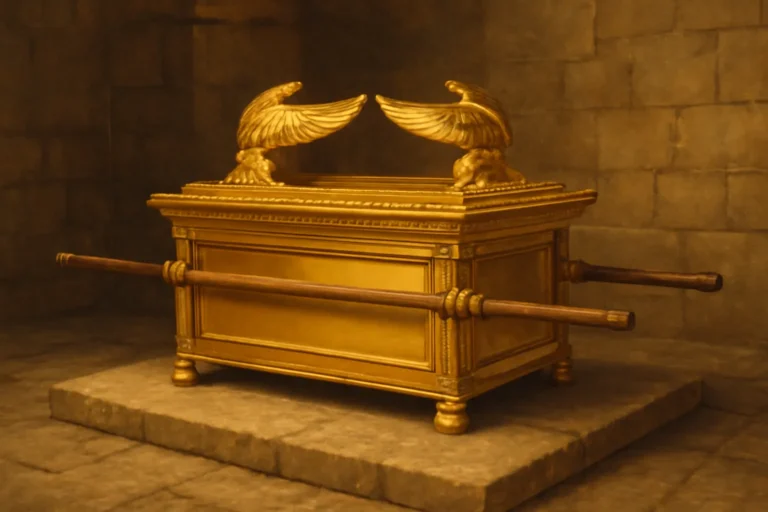
Scholarly discussions emphasize that the roots of this temple-building venture lie in two intertwined streams: (1) a legacy of the tabernacle, the portable sanctuary that travelled with Israel, and (2) a temple-building impulse shared with other ancient Near Eastern royal projects. The Ark of the Covenant, the sacred chest that signified God’s presence, would be placed within the inner precinct, the Most Holy Place (also called the Holy of Holies). The architectural plan sought to harmonize cosmic symbolism—light, order, purity, and access to the divine—with practical concerns of priestly administration and national identity.
From David to Solomon: a transitional moment
The direct authorization for the temple’s construction is tied to the biblical claim that David laid groundwork for the project and secured resources, while the actual building was executed during the reign of Solomon. In biblical accounts, God makes a covenant with David that his son would build the temple, even as David lays foundations for it through planning, gathering materials, and arranging religious personnel. The transition from planning to build embodies a central theme: the divine-human partnership in shaping sacred space.
The temple’s identity as a royal house is reinforced by ritual and iconography. The structure’s grandeur, its golden overlays, and its richly carved decorations signal a ritual economy in which worship is not merely a personal act but a national ceremony. The combined significance of the sacred (the Ark) and the ceremonial (sacrifice, feasting, and pilgrimages) makes Solomon’s Temple a focal point for Jewish religious memory and communal life.
Historical context and biblical narrative
The story of Solomon’s Temple is inseparable from the broader history of ancient Israel and Judah. According to canonical texts, construction began in the mid-dynastic period of Solomon’s reign and culminated in a structure designed for long-term use. The temple is described as a multi-room complex—an outer courtyard and a temple proper—whose inner chambers housed the sacred relics and ritual implements of the priestly order.
Durable materials and lavish workmanship typify the project. Cedar wood from the Levant, along with imported materials and skilled craftsmanship, contributed to a sanctuary that was as much a political monument as a religious center. The grandeur of the temple—its dimensions, architectural motifs, and gilded surfaces—asserted imperial legitimacy and served as a visible symbol of the covenantal relationship between God and the united monarchy.
The temple’s architecture is described in detail in biblical sources, including the appointment of specialized spaces: the audience hall, the Most Holy Place (the inner sanctuary), sacred furnishings, and the allegorical cherubim whose wings formed a protective canopy above the mercy seat. The narrative emphasizes order, purity, and access: only the priests could approach the inner sanctum, and even then, only at designated times for the most sacred rites.
Key biblical features and terminology
Beit HaMikdash — Hebrew name for the Temple as a dwelling-place of the Lord.
Most Holy Place or Holy of Holies — the innermost sanctuary housing the Ark.
Ulam — the vestibule or entrance hall leading from the courtyard to the sacred precinct.
Echal or Heikal — terms used to describe the main sanctuary area and its inner rooms.
Ark of the Covenant — the sacred chest associated with divine presence and mercy.
Architectural design and layout
The architectural plan of Solomon's Temple reflects an integrated approach to space, ritual, and symbol. The structure was a fusion of sanctuary and palace aesthetics, designed to express both religious devotion and royal authority. The layout combined functional zones with symbolic geometry, and its decorative program featured precious metalwork, intricate carvings, and plant motifs that echoed the divine garden imagery often associated with the sacred.
Layout and dimensions
Biblical dimensions place the main temple building at roughly 60 cubits long by 20 cubits wide by 30 cubits high (1 Kings 6:2). Within the temple, the innermost chamber—the Most Holy Place—was described as a 20 cubits by 20 cubits by 20 cubits space, effectively a cube, that housed the Ark and served as the apex of ritual access. The entrance area, often called the porch or vestibule (ulam), preceded the main sanctuary and provided a transitional space for worshippers and priests.
The surrounding complex extended beyond the main sanctuary to include courtyards, altars, and vestibules where offerings and ritual cleansing occurred. The temple precincts were designed to accommodate large pilgrim crowds during major festivals, reinforcing Jerusalem’s status as the spiritual center of the nation.
Materials, craftsmanship, and decoration
The temple’s splendor was achieved through a combination of cedar wood, gold overlays, and carved artistry. The cedar panels from Lebanon provided structural warmth and resilience, while the gold embellishments and decorative motifs communicated transcendence through light and purity. The walls, doors, and furnishings featured elaborate carvings of cherubim, palm trees, and openwork designs, echoing broader Near Eastern royal temple styles while infusing them with Israelite religious symbolism.
The bronze pillars that stood at the entrance—often named Jachin and Boaz in later tradition—were part of the exterior grandeur and signaled the temple’s stability and permanence. The altar of burnt offerings outside the temple, along with the basin for ritual cleansing, completed the ritual complex, ensuring that worshippers could transition from daily life into the sacred sphere with appropriate purification and sacrifice.
Significance for religion, culture, and governance
The First Temple was far more than a building; it was a symbol of covenantal life anchored in a single sacred precinct. Its significance spanned religious practice, political legitimacy, and cultural memory. The temple centralized sacrifices, festivals, and priestly administration, thereby stabilizing worship in a way that mobile sanctuaries could not. It established a ritual calendar around major pilgrimage feasts—Passover, Weeks (Shavuot), and Tabernacles (Sukkot)—when people from across the kingdom gathered in Jerusalem to offer sacrifices and seek atonement.
Theologically, the temple was conceptualized as a locus where heaven and earth connect. The idea of God’s dwelling with Israel—“the glory of the Lord filled the house” (a phrase echoed in prophetic and priestly literature)—gave the community a tangible sense of divine nearness. The temple therefore functioned as both a liturgical center and a political symbol: it reinforced the legitimacy of the Davidic dynasty, rooted national memory in a physical space, and provided a shared narrative around sacred time and space.
Ritual life and priestly administration
Only designated priests could enter the Holy Place, with an even more restricted access to the Most Holy Place.
Daily offerings and sacrifices formed the heartbeat of worship, coordinated by a hierarchy of priests, Levites, and temple officials.
Pilgrims performed cleansing rites and entered the court to present offerings during festivals, consolidating social cohesion and collective memory.
Timeline: key milestones in Solomon’s Temple history
A chronological outline helps situate the temple within the broader arc of ancient Israelite history. The dates below are traditional biblical timestamps, interpreted through various chronologies. In many cases, scholars emphasize approximate ranges rather than precise year-by-year dating.
Preparation under David (late 10th century BCE): David consolidates power, organizes resources, and plans for a permanent sanctuary. He sets aside wealth, timber, and skilled laborers and receives divine guidance about the project.
Divine promise and architectural mandate (early 10th century BCE): God speaks to David or through prophetic channels, promising that his son will build the temple, thereby legitimating the project as part of the divine plan for the nation.
Solomon’s accession and initiation of construction (mid-10th century BCE): Solomon begins the excavation, foundation laying, and structural work that will culminate in a monumental sanctuary.
Construction period (approximately seven years): The temple is built using a combination of cedar, gold, and skilled craftsmanship. The interior spaces are finished, and the sacred vessels are prepared for use.
Dedication and consecration (late 10th century BCE): The temple is dedicated with ceremonial offerings, prayers, and a ceremonial procession. The divine presence is described as filling the house.
Role in national life (post-dedication): The temple becomes the center of worship, pilgrimage, and national identity, shaping the religious conscience of Israel and the sovereignty of the monarchy.
Destruction and the end of the First Temple (586 BCE): The temple is destroyed by the Babylonians under Nebuchadnezzar II, ending the First Temple period and initiating a diaspora memory that would influence Jewish religious imagination for centuries.
Destruction, legacy, and historical memory
The fall of the First Temple is a watershed event—both historically and theologically. In 586 BCE, the Babylonian army breached Jerusalem, leveled the city, and burned the temple. The destruction did more than erase a physical structure; it disrupted centralized ritual life and led to a reimagining of religious authority in the absence of a standing temple. The Ark, the sacred container that symbolized divine presence, is not described as surviving into the post-exilic period, leading later traditions to reflect on God’s presence in exile and in a reconstituted community.
The memory of Solomon’s Temple persisted in scripture, liturgy, and poetry. It served as a standard against which later generations measured fidelity and devotion. After the exile, a new center emerged—the Second Temple, constructed during the Persian period, which reinterpreted the temple’s purpose and liturgy for a rebuilt community. The idea of a permanent sanctuary continued to shape Jewish religious life, even as the physical form of the temple changed.
Cross-cultural perspectives and religious significance
The Temple on Mount Moriah has resonated beyond Judaism, attracting interpretations in early Christianity and, in modern times, discussions within Islam as well. In Christian tradition, Solomon’s Temple is often cited as a prototype of temple imagery that appears in spiritual narratives about God’s dwelling among people. The temple’s architecture and ritual complex offer typological material for understanding topics such as mediation, atonement, and divine presence in sacred space.
In Islamic tradition, the temple site later became associated with Haram al-Sharif (the Noble Sanctuary) and the Al-Aqsa Mosque. While the religious meaning of the site diverges across communities, the shared sense of sacred geography underscores how a single hill—Mount Moriah—became a powerful symbol of divine encounter across multiple faiths. The layered history of this site invites respectful dialogue about religious heritage, memory, and stewardship of sacred spaces.
Archaeology, scholarship, and ongoing debates
The physical remnants of Solomon’s Temple have proven elusive to archaeologists, and much of what is known about the temple comes from biblical and extrabiblical sources rather than from an intact architectural plan. Scholarly discussions emphasize several important points:
The precise architectural measurements and internal arrangements described in biblical texts are debated, and reconstructions vary among scholars.
Archaeology in Jerusalem has revealed substantial evidence of the Iron Age in the broader area, but definitive artifacts that can be incontrovertibly linked to Solomon’s Temple are scarce.
Many proposals concern the temple’s physical location, the dimensions of the sanctuary complex, and the nature of its ritual precincts. These proposals often rely on a combination of textual, literary, and archaeological clues.
Scholars also examine the temple’s symbolism in the context of ancient Near Eastern temple-building traditions, comparing motifs such as divine kingship, cosmic order, and temple economies with those of neighboring cultures.
Symbolism, theology, and narrative impact
The story of the Temple of Solomon blends theology, myth, and political memory. It presents a model for understanding divine-human relationship through ritual access, sacrificial economy, and the sanctification of time (the festival calendar) and space (the temple precinct). The temple’s architecture and ritual program were meant to teach and sustain the covenantal relationship and to articulate a vision of justice, holiness, and worship that unified diverse tribes under a shared sacred center.
The legacy of Solomon’s Temple can be felt in later literary and liturgical traditions. Its memory surfaces in prophetic writings that admonish fidelity to the covenant, in psalms that celebrate divine majesty, and in apocryphal and pseudepigraphal works that reframe temple theology across generations. Even without the physical structure, the First Temple remains a potent symbol of how sacred space can shape collective memory, identity, and spiritual aspiration.
Practical reflections for readers and learners
For students of history, theology, or architecture, Solomon’s Temple offers a rich case study in how ancient communities conceived sacred space as a meeting point between heaven and earth. It demonstrates how a religious project can become a national project—an architectural program that encodes religious ideals, political power, and cultural memory. For modern readers, the temple’s story invites reflection on:
How communities translate divine callings into tangible structures and rituals.
What it means to centralize worship around a single site and how this affects social cohesion and identity.
How sacred spaces endure in memory, even after their physical form is destroyed or transformed.
How later religious traditions reinterpret ancient sanctuaries to address new historical circumstances.
Frequently encountered questions about Solomon’s Temple
Was Solomon's Temple the same as the Tabernacle?
It represented a shift from the portable Tabernacle to a permanent sanctuary. While the Tabernacle symbolized mobility and immediate divine presence, Solomon’s Temple stood as a fixed testament to a centralized cult and royal authority.
When was the temple built?
Traditionally dated to the 10th century BCE, often placed around 957–950 BCE in biblical chronology, though precise dating varies with scholarly interpretation.
What happened to the Ark of the Covenant?
The biblical text does not give a definitive post-destruction account of the Ark’s fate. Some traditions suggest it remained in Jerusalem; others claim it disappeared or was lost during the Babylonian conquest.
Did the Temple have a significant influence on later religious structures?
Yes. The Second Temple period reinterpreted temple worship in a rebuilt sanctuary, and temple-centered imagery continued to shape Jewish liturgy, ritual practice, and theological imagination for centuries.
The story of Solomon's Temple continues to be a touchstone for discussions about sacred architecture, ritual life, and the long arc of religious memory. It illustrates how a single monumental project can anchor a people’s sense of identity, devotion, and continuity across generations, even as political fortunes rise and fall.
For further exploration, readers may wish to compare the temple's biblical portrayal with archaeological reports from the broader region, examine how Jewish exilic memory reframed temple theology, and study how Christian and Islamic traditions reinterpreted Mount Moriah’s sacred geography. Each lens reveals a different facet of the same historical jewel: a monumental sanctuary whose legacy persists in memory and tradition as a defining moment in the story of ancient Israel.
In sum, the Solomon Temple history spans origin myths, royal ambition, architectural ambition, liturgical complexity, and enduring memory. Its enduring significance lies not solely in stones and gold but in what such a sanctuary sought to symbolize: a tangible expression of covenant faith, a center for communal life, and a cultural anchor for a people seeking to live in right relationship with the divine.
If you are building a study guide or teaching resource, consider using a timeline chart that marks the preparation, construction, dedication, and destruction, alongside sections that examine the temple’s ritual life, its architecture, and its enduring religious symbolism. A curated set of primary sources, archaeological summaries, and scholarly perspectives can help readers navigate the complexity of this foundational chapter in ancient religious history.





Leave a Reply