What is the Temple Veil and why is it central to biblical imagery?
The concept of a veil or curtain within the ancient temple served a practical and symbolic role. In the Jerusalem Temple complex, the veil separated the Holy Place from the Most Holy Place (often called the Holy of Holies). The Holy of Holies was the sanctuary’s innermost chamber, believed to be the dwelling place of the divine presence in a unique and reserved way. Only the officiating priest could enter this inner chamber, and entry was permitted only once a year on the Day of Atonement (Yom Kippur) under stringent ceremonial requirements. The veil, then, functioned as a powerful visual and ritual boundary between two realms: the ordinary worship space of the people and the transcendent, covenantal access granted to the high priest in the presence of God.
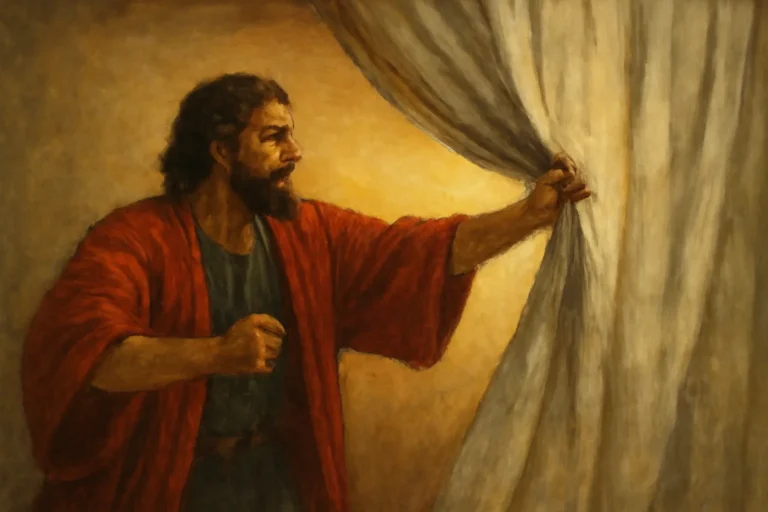
In biblical language the veil is not merely a physical barrier; it embodies a theological boundary—representing the separation between humanity and God due to sin, and the old covenant’s ceremonial framework that required ongoing offerings and ritual purity. The fabric of the veil—woven with colors and perhaps adorned with symbolic imagery—was thought to be thick and imposing, a tangible sign that access to the divine throne room is restricted apart from divine enactment. When the text speaks of tearing the veil, it speaks to a moment of cosmic and religious significance: a dramatic shift from a mediated, exclusive access to a broader, inclusive access that would be opened by the sacrifice and person of Jesus.
In biblical study, scholars often emphasize two dimensions of the veil’s significance. First, its tearing is interpreted as an immediate, dramatic statement about access: access to God of the covenant is now available through Christ. Second, the tearing is read as a symbol pointing toward a new era in God’s redemptive plan—the transition from the old covenant’s system of temple-based mediation to a new covenant reality in which believers are invited to approach God directly by faith.
Primary gospel accounts of the tearing and its immediate context
The moment of the tearing is recorded in the synoptic Gospels, each presenting a concise account that ties the event to the crucifixion and the declaration of Jesus’ work. These accounts are brief but rich in meaning, inviting readers to consider what it reveals about Jesus, the temple, and the path to God.
Matthew, Mark, and Luke: the moment the curtain splits
Matthew 27:51—“And behold, the veil of the temple was torn in two from top to bottom.” The wording emphasizes a divine origin and a dramatic severance of the barrier between God and humanity.
Mark 15:38—“And the veil of the temple was torn in two, from top to bottom.” Mark’s account reinforces the same theological significance with a concise report, aligning with the broader gospel message about Jesus’ death and its implications for access to God.
Luke 23:45—“and the veil of the temple was torn in two.” Luke echoes the same event, underscoring the unity of the gospel narrative across the four gospels and inviting readers to consider what this means in the light of Jesus’ innocence and redemptive mission.
Beyond the textual wording, the parallel elements in these gospel accounts—centered on the crucifixion, the earthquake, and the curtain’s tearing—tie the event to the larger drama of salvation. The tearing is not framed as a mere accident of architecture but as a sign of what God is doing through Jesus at the moment of his death.
How the tearing is connected to the death of Jesus
In each account, the tearing occurs at or near the moment of Jesus’ crucifixion. This timing is significant for a number of reasons:
It highlights the accomplishment of atonement—the belief that Jesus’ death was the decisive act that dealt with sin and opened a path to reconciliation with God.
It signals the end of the old ritual system’s exclusive access and foreshadows a future in which the new covenant believers have direct access to God through Christ.
It reinforces the motif of the temple as a living, symbolic instrument: the physical structure becomes a backdrop for a spiritual reality that is being inaugurated in Jesus’ death and resurrection.
Immediate theological implications: access, atonement, and new covenant motifs
When the temple veil is torn, the biblical writers move from a ritual boundary narrative to a theological proclamation: access to God is no longer restricted to a single, trained functionary within a single sacred space. The larger implication resonates especially in the book of Hebrews, which uses the imagery of a “new and living way” opened by Jesus’ body, a phrase that deepens the veil symbol into a personal, relational reality rather than a mere architectural feature.
The door opened by the blood of Christ
The New Testament presentation frequently uses the language of sacrifice and blood to describe the pathway to God. The tearing of the veil accompanies the declaration that Jesus’ death provides a unique, once-for-all access to God. The author of Hebrews expands on this in a way that mirrors the torn veil with a personal invitation: through Jesus’ flesh, a new and living way is opened for believers to approach the throne of grace. In other words, the tearing is emblematic of a cosmic doorway opened by Christ’s sacrifice.
Access for a wider community
Another layer of significance concerns the widening of who can approach God. The Old Covenant framed access through priestly mediation and specific rituals tied to the temple in Jerusalem. The tearing of the veil, read within the broader biblical narrative, is often understood as signaling that Gentiles and Jews alike are now invited into an intimate relationship with God through faith in Jesus. This expansion aligns with other New Testament themes about the inclusion of Gentiles into Israel’s people and the fulfillment of God’s promises to all nations.
The curtain as symbol and metaphor
Across biblical interpretation, the veil is frequently treated as a metaphor for barrier, revelation, and revelation’s removal. The act of tearing, then, becomes a dramatic narrative device that communicates more than a physical event: it announces a new pattern of relationship, where knowledge of God is no longer restricted to a cultic center but is accessible to all who trust in Christ. In this sense, the tearing of the veil is a theological signal that reconciliation and communion with God have become available through the crucified Messiah.
Temple architecture, ritual, and the meaning of the tearing within the old covenant
To understand the tearing’s significance, it helps to situate it within the temple system of sacrifice, purification, and worship. The Most Holy Place was the endpoint of a carefully ordered ritual path. The barrier served several purposes: it protected the sacred space, it regulated access, and it underscored the seriousness with which the people approached God. When the veil tears, the action suggests that the old ritual economy, with its doors tightly controlled and its ceremonies prescribed, is moving into a new era—an era defined by the presence of God with humanity through the ministry of Christ and the empowerment of the Spirit.
Ritual cleansing, sacrificial atonement, and the high priest’s role
In the ancient system, the high priest entered the Holy of Holies once a year on the Day of Atonement, carrying the blood of animal sacrifice to atone for the people’s sins. The tearing of the veil concurrently dramatizes the relocation of access: the old boundary that required a sacrifice and a priestly mediator is replaced by a mediated access through the once-for-all sacrifice of Christ. The tearing thus reframes the high priest’s work in light of Jesus’ crucifixion and resurrection, inviting believers to view the temple’s symbolism as fulfilled in the presence of God with humanity through the incarnate Son.
Old Covenant expectations and their reinterpretation
For readers steeped in the Old Testament narrative, the tearing of the veil can be read as an unmistakable sign that God’s plan has transcended mere temple worship to realize a more expansive redemptive purpose. The old covenant preserved a distinct separation between the holy God and a stained humanity due to sin; the tearing signals a move toward a reconciled humanity living in the Spirit and in faith, with Jesus as the mediator who bridging the gap.
Key biblical passages beyond the gospels that inform the symbolism of the tearing
Several New Testament texts draw explicit or implicit parallels between Jesus’ death, the tearing of the veil, and the new relationship between God and people. Readers who want a more robust interpretive framework often turn to Hebrews and Paul’s letters, which articulate the theology of access, sacrifice, and temple imagery in a way that complements the gospel accounts.
Hebrews: the doorway into God’s presence
Hebrews 10:19-20—“Therefore, brothers and sisters, since we have confidence to enter the Most Holy Place by the blood of Jesus, by a new and living way opened for us through the curtain, that is, his body.” This passage explicitly links Jesus’ body to the curtain, inviting readers to see the tearing as the opening of a way into God through Christ.
Hebrews 9-10—A broader meditation on the covenant, sacrifice, and superiority of Christ’s priesthood, with temple imagery woven throughout. The author contrasts the old system’s limitations with the new order secured by Christ.
Pauline theology often expands the idea of believers as God’s temple (for example, 1 Corinthians 3:16 and Ephesians 2:19-22). While not always discussing the veil explicitly, Paul’s language about being joined to Christ and becoming living stones in a spiritual temple ties into the same overarching theme: access to God is established in Christ and is extended to the church as a people.
Peter’s letters emphasize holiness and the living of a chosen life in light of God’s revelation, which presupposes that the barrier between God and humanity has been reframed in Christ’s work, even if the imagery of the veil is not always foregrounded.
Broader historical and interpretive debates around the tearing of the veil
Throughout church history, scholars and theologians have offered varying readings of the tearing. Some emphasize a literal event with cosmic significance; others highlight its symbolic dimensions. A few points of debate commonly surface in thoughtful discussions:
Historical reliability: Some critics ask whether the tearing should be understood as a literal historical event connected to the destruction of the temple or whether it serves as a theological on-ramp to the gospel story in the narratives. Most mainstream interpreters treat the event as historically plausible within the gospel accounts, while recognizing that the theological purpose is primary in the narrative.
Two veils vs. one»—In the Herodian temple, there is debate whether there was a single curtain or multiple veils within the sanctuary architecture. Some scholars propose the possibility of more than one curtain, which can influence how readers imagine the tearing’s scope and impact. Regardless of the exact architecture, the theological message remains, that a barrier between God and humanity has been removed or redefined by God’s intervention in Jesus’ death.
Continuity vs. discontinuity with the temple: Some theologians argue that the temple’s physical presence and ritual continue to have significance for Christian life, while others see the tearing as signaling a shift away from temple-centric worship toward a community shaped by Christ’s presence and the Spirit in the church. Both perspectives often converge on the central claim that Jesus reoriented access to God and inaugurated a new mode of relationship with the divine.
Implications for interfaith and historical study
For scholars and readers interested in historical context, the tearing of the temple veil invites exploration of late Second Temple Judaism, Jewish temple cult practices, and early Christian communities’ negotiations of identity and worship after Jesus’ death and resurrection. It also raises questions about the ongoing function of the Jerusalem temple in the first century and how early Christians interpreted its role in light of Jesus’ work.
Theological reflection for contemporary faith communities
Today, readers across Christian traditions encounter the tearing of the temple veil as a multifaceted symbol with practical implications for worship, ethics, and spirituality. Several themes recur across monographs, sermons, and liturgical settings:
Bold access to God: The tearing communicates that believers may draw near to God with confidence, not because of ritual distance but because of the atoning work of Jesus. This has practical implications for prayer life, confession, and corporate worship.
Unity of the people of God: The widening of access beyond a single priestly class or ethnic group signals a vision of the church as a diverse, inclusive body that honors the universal scope of the gospel.
Fulfillment of the law: The event is often read in light of Jesus’ role as the fulfillment of the law and the prophets. The veil tearing is understood by many as evidence that the ceremonial shadows have found their substance in Christ.
Hope for future renewal: Some traditions connect the tearing to eschatological hopes—the belief that God’s ongoing plan includes the renewal of all things and a people fully reconciled to God in the new creation, where the barrier between creator and creation has finally dissolved.
Practical applications for personal spirituality
Practice honest prayer as a response to access granted through Christ, not as a ritual compliance.
Cultivate humility and worship that recognizes grace as the freeing force behind one’s relationship with God.
Engage with community life as a response to a God who invites all sorts of people into a shared life in the Spirit.
The tearing of the temple veil remains one of the most evocative images in Christian scripture. It captures a moment when the sacred architectural boundary between heaven and earth was, in a dramatic sense, opened by the divine work of Jesus. The event’s impact extends beyond a single moment in Jewish temple history and enters the ongoing history of Christian faith as a reminder that God has drawn near to humanity in a personal and transformative way. The narrative invites believers to live in the tension between reverence for the sacred and bold confidence in the grace that grants direct access to the presence of God. In the end, the torn veil points to a future where God dwells with his people, their lives shaped by the Spirit, and their worship informed by the truth that through Christ, the barrier has been removed and the path to God is open for all who come in faith.
As readers and students consider the many threads of this biblical motif, it is useful to keep in mind the central claim: the tearing of the veil is not merely a dramatic detail of a first-century event. It is a theological declaration about the way God interacts with the world through Christ, a declaration that invites ongoing reflection, worship, and lived faith in the community of believers.





Leave a Reply