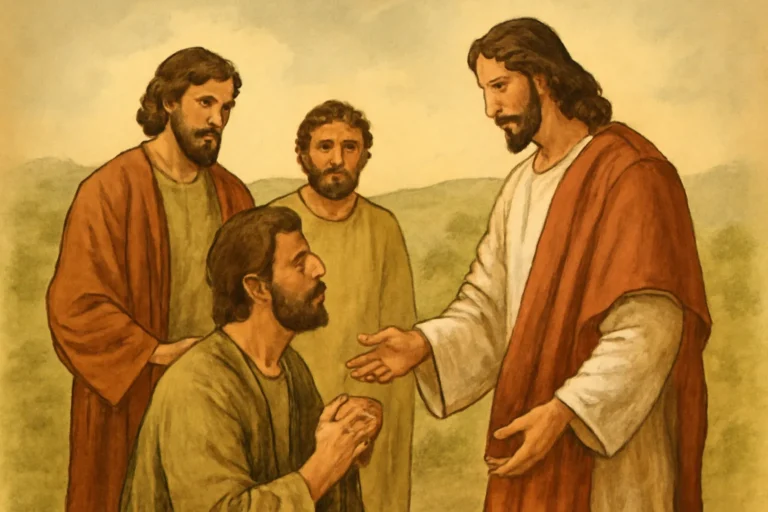
Who Was Jesus’ 12 Disciples? Names, Roles, and Background
Who were Jesus’ twelve disciples? This article offers a detailed look at the original group known as the Twelve Apostles, often simply called the twelve. We will explore their names, roles, and backgrounds, while also noting variations in how they are listed in the biblical texts and later tradition. Understanding this circle helps illuminate how early Christian ministry began, how Jesus trained his closest companions, and how these figures have been understood in theology, art, and church practice for two millennia.
The term Apostles refers to a special office in the early Christian movement. While the broader group of Jesus’ followers included many disciples and learners, the twelve were designated with a particular mission and authority. In the Gospels, the list of the Twelve appears with slight variations, but it consistently includes figures who held diverse occupations, backgrounds, and personalities. The idea of a chosen number—twelve—ties into Jewish symbolism (twelve tribes of Israel) and underscores the sense that this group carried forward a foundational mission for the emerging Christian community.
Peter (Simon Peter) – Often described as the leader among the Twelve, Peter is repeatedly presented as a spokesman and a stabilizing presence in the early ministry. He is called by Jesus, given a key role in the church’s formation, and is depicted as a prominent figure in the Acts of the Apostles after the Resurrection. In many lists, he is the first name, signaling his significance in traditional memory.
Role: leadership, preaching, guiding the early church; central to the spread of the gospel in Jerusalem and beyond.
Background: a fisherman from Galilee, brother of Andrew; married tradition often emphasizes his bold but fallible character.
Andrew – Peter’s brother, also a fisherman, who is portrayed as a disciple who brought people to Jesus, including his own brother. Andrew’s presence in the Twelve emphasizes the role of personal invitation and early evangelism.
Role: connector and missionary; often depicted as one who introduces others to Jesus.
Background: fisherman from the same fishing family as Peter; traditionally linked with the region of Bethsaida or Capernaum.
James the son of Zebedee – One of the inner circle with his brother John, James is sometimes called James the Great to distinguish him from another Apostle named James. He shares priority in several crucial gospel events.
Role: part of the inner circle; witness of key events and close collaborator with Jesus in the early ministry.
Background: fisherman; son of Zebedee, indicating a family with fishing ties across the Sea of Galilee.
John – Brother of James and often described as “the disciple whom Jesus loved” in the Gospel of John. John’s later writings (the Gospel of John, three epistles) anchor a distinct apostolic voice in early Christianity.
Role: close companion to Jesus and a key contributor to the Gospel tradition; author of Johannine literature.
Background: fisherman; part of the inner circle with James and Peter; traditionally linked with love, humility, and theological reflection.
Philip – Noted for his questions and for inviting others to meet Jesus. Philip’s role in the Gospel narratives includes a practical emphasis on encounter and explanation.
Role: facilitator of dialogue and outreach; helps connect seekers to Jesus’ message.
Background: from the region around Bethsaida, sharing a common milieu with several other first-century Galilean followers.
Bartholomew – In Mark and Matthew Bartholomew appears as a member of the Twelve; in John’s Gospel, the disciple associated with Nathanael is often identified with Bartholomew in the tradition, leading to the common pairing Nathanael = Bartholomew in scholarship and art.
Role: one of the faithful witnesses; associated with questioning and revelation in dialogue with Jesus.
Background: traditionally linked with Nathanael of Cana; the exact hometown and social background are less explicit in the canonical texts.
Thomas (Didymus) – Best known in popular memory as “Doubting Thomas” for his insistence on seeing and touching to believe. The Thomas tradition also emphasizes a courageous missional impulse in early Church stories.
Role: tester of claims in the early ministry; later tradition highlights missionary activity in various regions.
Background: name didymus signals a twin or paired identity; his questions reflect a thoughtful, skeptical approach to faith topics.
Matthew (Levi) – A tax collector before following Jesus, Matthew’s gospel identity as an author highlights the inclusion of outsiders and the bridging of Jewish and Gentile audiences.
Role: administrative and writing capacity; his gospel emphasizes Jesus’ appeal to marginalized communities and to the broader audience beyond Israel.
Background: much-cited example of a tax collector who becomes a devoted follower; illustrates transformation through encounter with Jesus.
Jamesson of Alphaeus – Also known as James the Less in some lists, to distinguish him from James the son of Zebedee. This James is part of the broader apostolic group but appears less prominently in the Gospel narratives.
Role: among the Twelve with a quieter presence in the earliest Gospel accounts; his influence is more visible in post-resurrection and early church traditions.
Background: son of Alphaeus; the designation the Less is a traditional label used to differentiate him from James the Great.
Thaddaeus (Judas, son of James) – Also called Judas Thaddaeus by some, he is sometimes identified with Jude, the author of one of the Catholic letters. In some lists, he is rendered as Judas, not Iscariot to avoid confusion with the betrayer.
Role: one of the more enigmatic members; traditions emphasize his role in missionary activity in various regions.
Background: son of James; the nickname Thaddaeus helps differentiate him in historical lists and later hagiography.
Simon the Zealot – A figure whose designation points to a political and religious background related to Jewish zeal and resistance to foreign domination, illustrating the diversity of the Twelve.
Role: represents the reformist or nationalistic strands within the early community, illustrating how Jesus gathered people from varied social and ideological contexts.
Background: the title Zealot indicates a past or potential political zeal; his later trajectory shows a focus on mission over political strife.
Judas Iscariot – The disciple who would become infamous for betrayal of Jesus. His actions precipitated the arrest and crucifixion narrative central to the Passion accounts.
Role: initially entrusted with a position among the Twelve; his story serves as a doctrinal and moral cautionary tale within Christian tradition.
Background: Iscariot indicates a geographic or familial identifier; his fate raises questions about free will, betrayal, and divine plan in the gospel narratives.
The 12 disciples came from diverse walks of life. Some were professional fishermen who left their nets, others were tax collectors or city artisans, and a few may have carried more diverse or uncertain social roles. This diversity mattered for the way they carried forward the message, organizing communities, and eventually knitting together a movement that would become the early church.
Fishermen and tradesmen among the Twelve
The early Galilean coastal region produced several of Jesus’ earliest followers. The stories of Peter, Andrew, James (son of Zebedee), and John highlight the theme of leaving a familiar trade to follow a radical new vocation. Their backgrounds as fishermen helped shape imagery in the New Testament, with fishing metaphors recurring in Jesus’ teaching and in the apostles’ preaching about calling people to “catch” others for the kingdom.
Tax collectors, officials, and educated observers
Matthew represents the tax collector turned apostle, an emblem of social transformation. His gospel presents Jesus as someone who engages with people from all strata of society, including those who were often viewed with suspicion by the religious establishment. Figures like Matthew demonstrate the inclusive reach of Jesus’ mission.
Reconciliation of different backgrounds in the Twelve
The presence of Simon the Zealot alongside others with more tranquil or contemplative dispositions illustrates how Jesus drew together people who might otherwise have opposed one another. The Twelve, in their diversity, offered a microcosm of the broad and inclusive message the followers would carry to Jews and Gentiles alike.
Judas Iscariot and Matthias: The Betrayer and the Replacement
A crucial dimension of the Twelve in the New Testament narrative is the story of Judas Iscariot, the one who conspired against Jesus. After Judas’ betrayal and the events of Passion Week, the early church faced the need to maintain a full number of twelve. The book of Acts records the selection of Matthias to replace Judas (Acts 1:15–26). This act was significant as it preserved the symbolic number twelve and reflected early followers’ desire for continuity and legitimacy in their leadership.
Matthias: The replacement apostle
The selection of Matthias involved a process of prayer and casting lots among the candidates. While Matthias did not play as prominent a role in the surviving gospel narratives as the other apostles, his inclusion underscores a foundational principle in early Christian leadership: the community’s responsibility to discern and appoint leaders who would witness to the resurrected Christ and carry the mission forward.
Biblical Variations: Why the Names and Orders Vary
Readers will notice that the lists of the Twelve do not always present identical orders or identifications. Some variations come from the different Gospel accounts (Matthew, Mark, Luke, John) and their distinct perspectives on who joined Jesus on his journeys. In addition, later Christian tradition sometimes identifies certain names with others in a way that helps readers connect disparate texts. Three examples illustrate these variations:
Nathanael vs. Bartholomew: In John, Nathanael appears as a disciple who encounters Jesus and makes a faithful confession. In the Synoptic Gospels, Bartholomew is listed as a separate apostle. Many scholars identify Nathanael with Bartholomew, suggesting they are the same person described with two different names in different sources.
James the Greater vs. James the Less: The New Testament mentions two disciples named James. One is the son of Zebedee (James the Great), and the other is James the son of Alphaeus (often called James the Less) to distinguish them in the lists. This distinction helps readers understand why different traditions may place James in slightly different contexts.
Judas Thaddaeus vs. Jude (the Epistle of Jude): In some lists, Thaddaeus is identified with the apostle sometimes called Jude, and in modern scholarship this identification is a matter of ongoing discussion. The tradition that links Jude to the author of the Epistle of Jude helps readers trace later Christian writings back to this apostolic circle.
Backgrounds and Roles: A Deeper Reading
The biblical narratives present a mix of calling moments, immediate reactions, and evolving roles as the twelve moved from following Jesus to participating in missionary activity after the Resurrection. Several recurring themes emerge:
Calling and invitation: The initial call to follow Jesus is often surprising or unconventional, inviting ordinary people to participate in a divine mission.
Witness and proclamation: The Twelve serve as primary witnesses to Jesus’ life, death, and resurrection, and they are entrusted with preaching the good news in Jerusalem, Judea, Samaria, and beyond.
Community leadership: The selection of a successor for Judas and the later formation of leadership structures show how the early church sought continuity and accountability.
Symbolic completeness: The number twelve carries symbolic weight in the biblical imagination, reinforcing the idea of restoration and the founding of a renewed Israel through a new covenant people.
Legacy and Representations: Why the Twelve Matter Today
The Twelve Apostles have a profound legacy in Christian tradition. They are not merely historical figures; they embody themes of vocation, transformation, and mission that continue to inform Christian faith and practice. The following points highlight how their legacy endures:
Foundation of the church: In many Christian traditons, the Twelve are presented as foundational witnesses whose testimonies shaped the early church’s message and governance.
Martyrdom and fidelity: Traditions about martyrdom and enduring faith under trial have contributed to the broader Christian imagination about courage and fidelity under persecution.
Inspiration for art and liturgy: The Twelve appear in countless works of art, music, and liturgical texts, reminding believers of the diverse ways God works through ordinary people.
Ecumenical understanding: Recognizing the variations in lists and identifications helps modern readers appreciate the documentary plurality of early Christian sources.
Variations in the List: How Different Traditions Present the Twelve
Across Biblical texts and later traditions, the exact ordering and naming of the Twelve can differ. Some key variations include:
In some Gospel accounts, Peter and Andrew appear first, while in others Philip and Bartholomew are positioned differently.
John’s Gospel emphasizes the presence of John and James as part of a select circle, which sometimes affects how readers map the list to the other Gospels.
Some traditions identify Bartholomew with Nathanael, while others list Bartholomew as a separate figure; similarly, Thomas appears with distinctive emphasis in Thomas stories and is sometimes paired with other names in later liturgical references.
Conclusion: Who Were Jesus’ 12 Disciples? A Summary
The question “Who were Jesus’ twelve disciples?” has many facets. The core answer is that the Twelve Apostles were a diverse group of men called by Jesus to participate in his mission, empowered by him, and entrusted with the task of proclaiming the kingdom. Their backgrounds ranged from fishermen and tax collectors to merchants and political figures, demonstrating a deliberate breadth in Jesus’ circle. Their names, in various orders, reflect both historical recording and theological emphasis. The narratives emphasize not only their achievements but also their faults and growth—lessons that have resonated through Christian history as individuals and communities have sought to follow the example of these early witnesses.
Today, scholars, theologians, and students continue to study the 12 apostles for insights into leadership, community building, and mission. Whether you refer to them as the Twelve, the Apostolic Twelve, or simply the earliest followers, their place in Christian memory is secure. They illustrate a foundational moment when people from different walks of life came together to carry a message that would transform countless lives across generations. By examining their names, their backgrounds, and their roles, readers gain not only historical knowledge but also a lens through which to understand the dynamics of faith, vocation, and community in early Christianity.