Who Were the 12 Apostles? Names and Roles Explained
Who Were the 12 Apostles? Names and Roles Explained
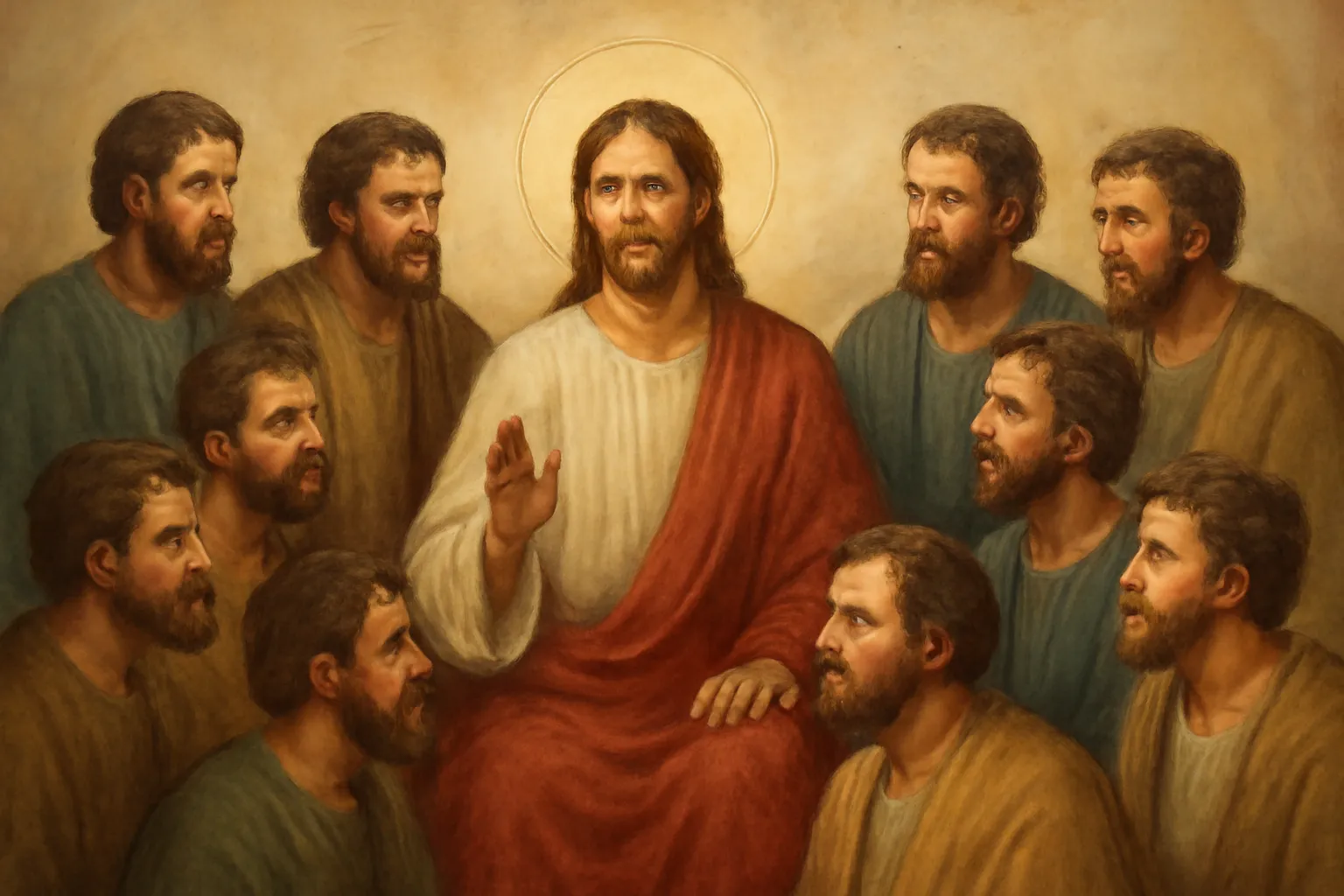
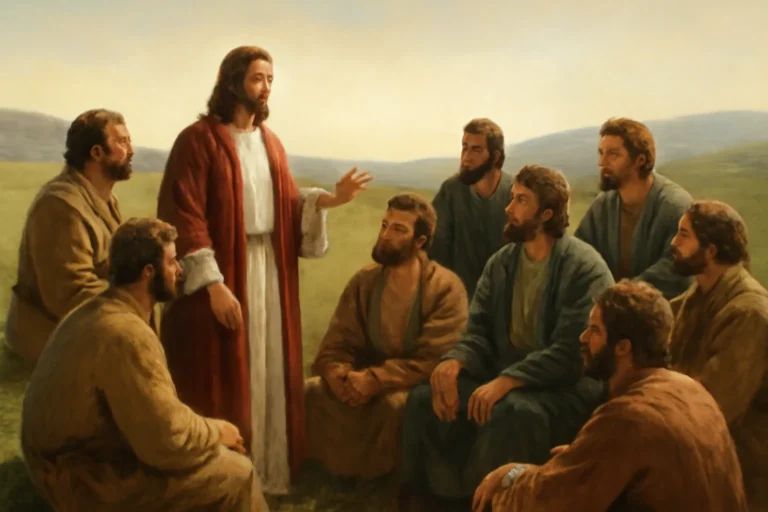
Who were the Twelve Apostles? This question invites a careful look at a group that stands at the center of the New Testament narrative. The term apostle denotes a messenger or envoy — someone sent with a particular mission. In the Christian tradition, the Twelve Apostles are the intimate circle chosen by Jesus to witness his life, proclaim the good news, perform signs, and lay the foundations of the early church. Across the four Gospels and the Acts of the Apostles, they emerge as diverse individuals who share a single, transformative calling: to carry forward the message of Jesus after his death and resurrection. This article surveys who the twelve were, how they are named in the biblical texts, the roles they played, and how their story continued after the betrayal of one of their number.
What does the term “Apostle” signify in this context?
In the New Testament, the word apostle carries the sense of “one who is sent.” While many disciples followed Jesus during his ministry, the Twelve are distinguished by a special commissioning and a distinctive mission. They are portrayed not only as learners but as witnesses and messengers with authority to teach, heal, and proclaim the coming of God’s kingdom. The distinction between the twelve and other followers is meaningful for understanding early Christian leadership, community life, and mission strategy. Authority and witness are two recurring themes that define their identity as a unique apostolic band. Throughout church history, the Twelve have served as a symbol of unity, diversity, and continuity in the apostolic succession and in the church’s mission to all nations.
Who were the Twelve Apostles? Names at a Glance
Traditionally, the following twelve individuals are identified as Jesus’ closest followers who were commissioned to carry the gospel to the world. Note how some names appear with multiple forms or identifications in the gospel texts, reflecting variations in early Christian naming traditions.
Simon Peter — also called Peter or Cephas; a fisherman from Galilee who becomes a leading figure among the Twelve.
Andrew — Peter’s brother; one of the first disciples to encounter Jesus and a consistent advocate for bringing others to him.
James, son of Zebedee — part of the inner circle with Peter and John; brother of John.
John — James’s brother; often identified as the “Beloved Disciple” in the Gospel of John; author of Johannine writings in tradition.
Philip — a thoughtful questioner who seeks clarity about Jesus and the Father; plays a role in introducing others to Jesus.
Bartholomew — typically listed among the Twelve; in some lists identified with Nathanael in the Gospel of John.
Nathanael — often associated with Bartholomew in tradition; seen by some scholars as the Nathanael mentioned in John’s Gospel, noted for sincere faith when Jesus reveals his knowledge.
Matthew — also called Levi in the Gospels; a former tax collector who becomes a proclaimer of Jesus, traditionally credited with the Gospel of Matthew.
Thomas — known for doubt and subsequent confession; often called “Didymus” (the Twin) in Greek; associated with missionary traditions in various regions.
James, son of Alphaeus — sometimes called James the Less or James the Minor; a less-documented member of the Twelve.
Simon the Zealot — also called Simon the Cananite; identified by his likely background or political zealot tradition; emphasizes the diverse backgrounds of the Twelve.
In many lists, one name is conspicuously absent after a dramatic event: Judas Iscariot, the one who betrays Jesus. The narrative then explains that a replacement was needed to restore the group to twelve. Consequently, Matthias is chosen in Acts to take Judas’s place, preserving the symbolic and administrative number of the Twelve for the church’s witness and mission.
Biographical sketches: brief portraits and the roles of the Twelve
Peter — The Rock and the Leader
Peter stands out in the New Testament as a front-line figure who steps forward in moments of crisis and opportunity. As a Galilean fisherman turned leader, he becomes the primary spokesperson among the Twelve, especially after Jesus’ Resurrection. The Gospels recount Peter’s bold declaration of faith, his threefold denial during Jesus’ arrest, and his later restoration. In Acts, Peter is at the center of the young church’s preaching on Pentecost and in the emergence of the early Christian community. His leadership is often framed with the imagery of being the “rock” upon which the church is built, a symbol (in Christian tradition) of authority, stewardship, and pastoral care. Peter’s journey highlights the tension between human imperfection and divine commissioning, a recurring theme in apostolic witness.
Andrew — The Connector and Evangelist
Andrew is frequently remembered for his role as a bringer: he introduces others to Jesus, including his own brother Peter. In the gospel narratives and later tradition, Andrew models a missionary spirit that emphasizes initiating relationships and opening doors for others to encounter Jesus. He is portrayed less as a public leader and more as a catalyst for encounter, hospitality, and dissemination of the message. This relational approach to mission underscores a core dimension of the apostolic task: inviting people into a growing circle of faith and discipleship.
James (son of Zebedee) — The Inner Circle
James, together with his brother John and Peter, forms a privileged inner circle within the Twelve. His presence at pivotal moments—such as the Transfiguration and the Agony in the Garden—emphasizes the close, firsthand experience of Jesus’ life and mission. James’s later traditional martyrdom marks an early, dramatic chapter in the church’s history and testifies to the cost of discipleship for some of Jesus’ closest companions.
John — The Theologian and Witness
John is often depicted as the Evangelist among the Twelve, animated by a strong emphasis on love, truth, and eternal life. Traditional Christian thought attributes to him the Gospel of John, the three Epistles, and Revelation, though modern scholarship recognizes a more complex editorial history. John's portrayal as the “Beloved Disciple” shapes a distinctive spiritual voice within the apostolic witness, highlighting intimate faith, divine revelation, and the presence of Christ in the world.
Philip — The Seeker of Answers
Philip asks pointed questions that move from curiosity to action. His exchanges with Jesus reveal a practical path from inquiry to faith, demonstrating that genuine discipleship involves learning, discernment, and following in response to Jesus’ invitation. In broader tradition, Philip is associated with mission work and the expansion of the church beyond familiar settings, reinforcing the worldwide scope of the apostolic mission.
Bartholomew — The Faithful Witness
Bartholomew is a figure whose historical footprint is sometimes linked with Nathanael in the Gospel of John. Whether Bartholomew and Nathanael are two names for the same apostle or represent a pair with a shared identity, the tradition consistently presents him as a participant in the Twelve who bears witness to the life and teachings of Jesus. Bartholomew’s reputation emphasizes sincerity, directness, and steadfast faith in the face of various challenges faced by the early church.
Nathanael (Bartholomew) — The Honest Seeker
Nathanael is sometimes treated as a distinct figure or identified with Bartholomew in different lists. In John’s Gospel, Nathanael’s response to Jesus is notable for its candid initial skepticism, followed by recognition of Jesus as the Son of God. This arc—from doubt to faith—resonates with readers as a model of personal transformation within the apostolic community and hints at the diverse ways people respond to Jesus’ message.
Matthew — The Tax Collector and Gospel Author
Matthew, who is also called Levi in the Gospels, left his tax-collecting career to follow Jesus. He is traditionally credited with composing the Gospel of Matthew, a text that emphasizes Jesus as fulfillment of Jewish prophecy and his reach to Gentile audiences. Matthew’s life illustrates a dramatic turn from a settled post in society to a calling that places him at the center of a community formed around the teachings of Jesus.
Thomas — The Skeptic Who Becomes a Faithful Witness
Thomas is remembered for his initial doubt about the Resurrection, which leads to a memorable profession of faith upon seeing Christ’s wounds. This moment has often been read as a sign of honest inquiry and eventual conviction. In traditions outside the canonical documents, Thomas is associated with missionary activity in distant regions, expanding the geographic imagination of the apostolic mission and illustrating the universality of the gospel call.
James (son of Alphaeus) — The Quiet Contributor
James the son of Alphaeus, sometimes called James the Less, is a figure who tends to be less prominent in the narrative spotlight. Yet his presence among the Twelve reflects the breadth of the apostolic witness and the unity of purpose that sustains the early church when leaders or voices vary in prominence. The traditional memory of this James highlights the value of steady, faithful contribution to community life and mission.
Simon the Zealot — The Diversity of Backgrounds
Simon the Zealot (also called Simon the Cananite) represents one of the more intriguing social and political backgrounds among the Twelve. The inclusion of a person associated with zeal for national restoration underscores the breadth of the apostolic circle and the way Jesus gathers people from different walks of life into a common mission. Simon’s presence signals that the gospel message addresses a wide range of social and political realities, not only religious concerns.
Judas Iscariot is remembered primarily for the role he plays in the passion narrative: the betrayal that leads to Jesus’ arrest. The drama surrounding Judas’s act and its consequences is a solemn reminder of human frailty and the high cost of discipleship. The story culminates in his replacement by Matthias, demonstrating the early church’s commitment to maintaining a faithful witness and a complete apostolic number for the mission ahead.
Matthias — The Replacement Apostle
Matthias enters the apostolic narrative after Judas’s betrayal. In Acts 1, the remaining disciples select him by prayer and casting lots to restore the number to twelve. Matthais’s role is to carry forward the apostolic witness with integrity, joining the others as they bear witness to Jesus’ life, death, and resurrection. This moment also illustrates a practical aspect of church leadership—procedures for maintaining continuity and unity in the mission.
What Was the Mission of the Twelve?
The Twelve Apostles were not merely a historical roster; they embodied the mission entrusted by Jesus to proclaim the Gospel, heal the sick, and make disciples of all nations. The gospel narratives describe several central tasks that define their work, including calling people to follow Jesus, teaching, and spreading the good news about the Kingdom of God. After Jesus’ death and Resurrection, their witness becomes the seedbed for the Christian church’s expansion across regions and generations. The apostles’ ministry is characterized by several recurring themes:
Proclaimers of the Gospel: They are sent to announce that Jesus is the Messiah and to invite all people into a renewed relationship with God.
Witnesses of the Resurrection: They bear credible testimony to Jesus’ death and resurrection, providing foundational evidence for the Christian faith.
Missionaries and Church Builders: They travel, preach, heal, and establish Christian communities that would endure beyond their lifetimes.
Bridge Builders Across Cultures: They navigate Jewish and Gentile contexts as the gospel is preached beyond Galilee and Judea.
Founders and Guides of Early Leadership: Their decisions and leadership help shape early church practice, doctrine, and organization.
Why Is the distinction between the Twelve Apostles and other disciples important?
In the New Testament and in early Christian tradition, a distinction is drawn between the Twelve and other followers. The Twelve are singled out because they were specifically chosen for a distinctive apostolic mission with a unique authority and responsibility to witness to Jesus’ life and message. Other followers—such as women who supported Jesus’ ministry or additional male and female disciples who joined later—played vital roles in the emerging movement, yet the Twelve occupy a special place in the narrative of the church’s origin. This distinction helps explain why the Church has often talked about apostolic succession, the continuity of teaching, and the transmission of authority from the earliest times to later generations.
Geography and Backgrounds: a patchwork of people united by a shared mission
The majority of the Twelve hailed from Galilee or nearby areas. They came from varied walks of life, reflecting a broad cross-section of Second Temple society. Some were fishermen, one was a tax collector, and others appear to be tradespeople or ordinary workers. The diversity among the Twelve demonstrates a central theme of the Christian proclamation: God calls ordinary people to participate in an extraordinary purpose. The geographic spread of their ministry, including journeys into Judea, Samaria, and beyond, helps explain how the early church began to form a transregional movement with global ambitions.
Legacy and impact: how the apostles shaped the early church and its memory
The legacy of the Twelve Apostles extends far beyond the first century. Their eyewitness testimony to Jesus’ life, crucifixion, and resurrection underpinned the earliest creeds and preaching. Their example inspired the formation of communities, the distribution of leadership, and the development of baptism and teaching practices. The narrative arc—from a betrayal that tests the group to the replacement of Judas by Matthias—also communicates resilience, fidelity, and continuity in the faith community. Across Christian traditions, the Twelve are honored as foundational witnesses who model courageous mission, communal life, and steadfast faith in the face of hardship.
Variations in naming and traditions: how different manuscripts reflect the same story
Scholars note variations in how the Twelve are named in the New Testament and how names may reflect different cultural or linguistic circles. Some lists align differently, and certain figures are identified with multiple designations in various gospel accounts. For example, the pairing of Bartholomew with Nathanael in different traditions underscores how early Christians preserved diverse memories of the same apostolic witness. Similarly, James and Judas appear in parallel accounts with variations in epithet or familial association. These naming variations illustrate the richness and complexity of the early church’s memory and highlight how communities preserved faith narratives in ways that resonated with their own contexts.
Timeline of key moments involving the Twelve
Calling of the first disciples (Peter and Andrew) along the Sea of Galilee (Matthew 4:18-22; Mark 1:16-20).
Peter’s confession of Jesus as the Messiah and Jesus’ grant of leadership (Matthew 16:13-20).
Transfiguration with Peter, James, and John (Matthew 17:1-9).
Gethsemane episode where Jesus prays and the inner circle (Peter, James, John) witness his distress (Matthew 26:36-46).
Resurrection appearances and the commissioning of the apostles to proclaim the gospel (Luke 24:36-49; John 20).
Pentecost and the empowerment of the church through the Holy Spirit (Acts 2).
The selection of Matthias to replace Judas and the continuing apostolic mission (Acts 1:15-26).
Conclusion: The Twelve as a model for mission and community in the church
The question “Who were the Twelve Apostles?” invites a pilgrimage into a narrative that blends individual stories with a shared mission. The Twelve were a diverse group, each bringing different gifts, temperaments, and experiences to a common purpose: to bear witness to Jesus, to teach, to heal, and to establish communities of faith that would endure beyond their lifetimes. Judas’s betrayal and Matthias’s replacement remind readers that faith communities must grapple with failure while preserving fidelity to the core calling. The enduring legacy of the Twelve — exemplar leaders, faithful witnesses, and foundational builders of the church — continues to shape Christian thought, art, liturgy, and mission to this day. By studying who the Twelve were and what they did, readers gain insight into how early Christians understood their own mission, how they organized themselves as a community, and how that mission has persisted through the centuries into the present day.








Leave a Reply