12 Apostles Names of Jesus: Complete List and Quick Facts
12 Apostles Names of Jesus: Complete List and Quick Facts
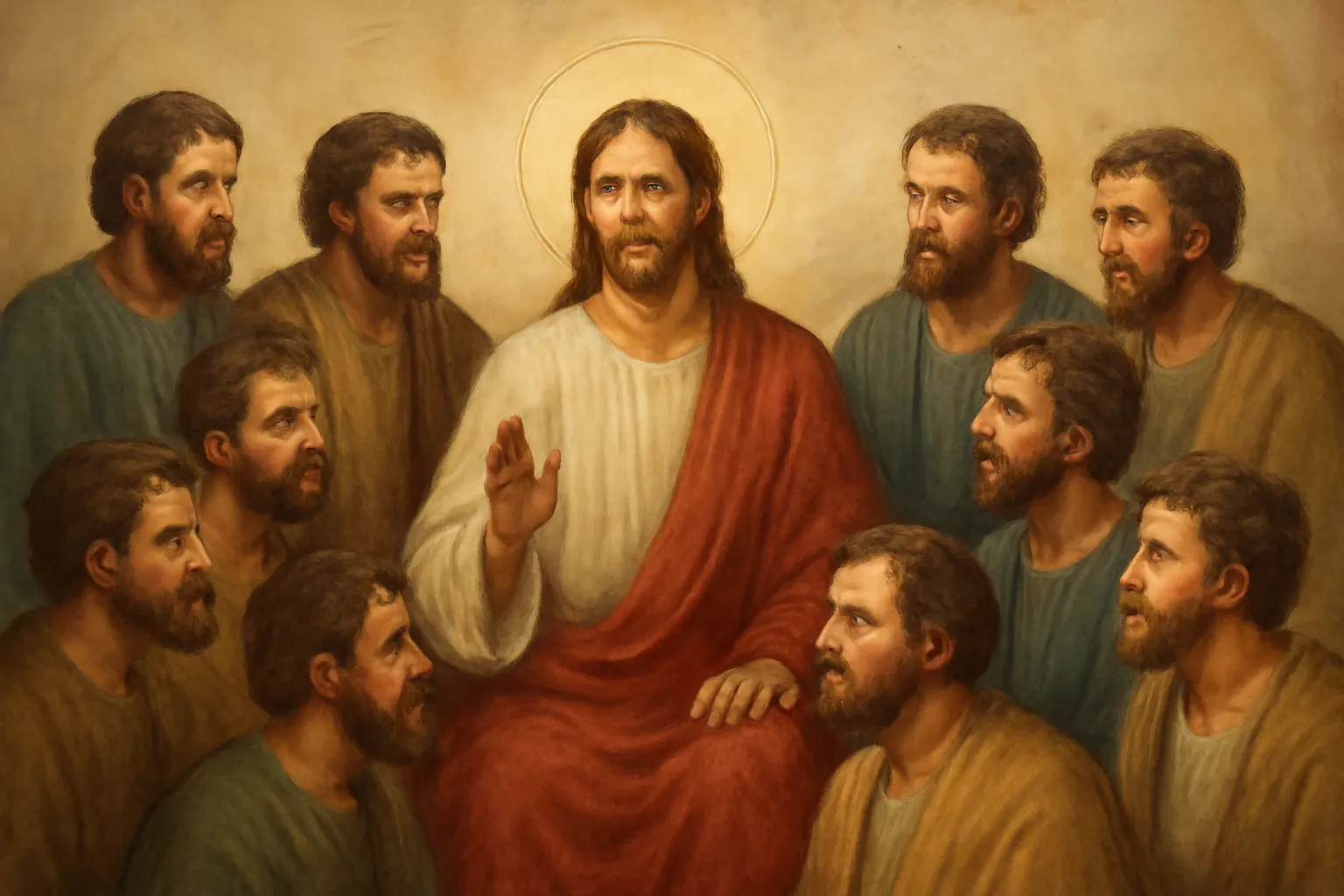
The story of the Twelve Apostles is a foundational thread in Christian history. These men were chosen by Jesus of Nazareth to learn from him, to travel with him, and to spread his teachings after his ministry on earth. In biblical tradition, the group is often called the Twelve, the Twelve Disciples, or simply the Apostles. Over time, scholars and readers have come to know them not only by their primary names but also by a variety of nicknames, alternate spellings, and by the roles they played in the early Church. This article provides a comprehensive complete list of the 12 apostles and offers quick facts to help readers understand who these figures were, how they were named across the Gospels, and what their contributions meant in early Christian communities.
The canonical lists of the twelve appear in multiple New Testament passages (notably in the Gospels of Matthew, Mark, and Luke, and in Acts 1). The order and the exact naming vary slightly, but the core group remains the same. Here is a standard presentation of the complete list, followed by notes on naming variants and a discussion of the replacement of Judas Iscariot later in Acts.
Simon Peter (often called Peter, sometimes Simon), a fisherman who becomes a leading figure among the apostles.
Andrew, Peter’s brother, also a fisherman and one of the first disciples called by Jesus.
James, son of Zebedee, part of Jesus’ inner circle along with his brother John.
John, the son of Zebedee, often identified as the author of the Gospel of John and several other New Testament writings.
Philip, known for his questions and curiosity about Jesus’ teachings.
Bartholomew, traditionally identified with Nathanael in the Gospel accounts.
Thomas, often called Didymus (the Greek for “twin”); famous for his initial doubt and later confession of faith.
Matthew, the tax collector Levi who becomes the author of the Gospel according to Matthew.
James, son of Alphaeus, a less prominent follower about whom fewer biographical details survive.
Thaddaeus, also known as Judas (son of James), sometimes labeled Lebbaeus or Jude in various translations.
Simon the Zealot, a figure whose political associations are noted in Luke’s Gospel.
Judas Iscariot, the apostle who ultimately betrays Jesus; his place in the original twelve is discussed in early Christian writings, and in Acts 1 another apostle, Matthias, is chosen to replace him after the Resurrection.
It is important to note a historical nuance: in Acts 1, after the Resurrection, the early Church chooses Matthias to fill the vacancy left by Judas Iscariot. This is why some lists of “the Twelve” differ slightly depending on whether they reflect the pre- or post-betrayal composition. Most teaching materials present the final arrangement with Judas replaced by Matthias when describing the complete apostolic college for the era immediately following Pentecost.
Names, Variants, and Variations Across the Gospels
Across the New Testament, the names of the twelve apostles are sometimes presented with variants. These variations reflect the languages of the original texts (Greek and Aramaic), as well as different naming conventions and traditions that circulated in early Christian communities. Here are the key name variants you’ll encounter in biblical summaries and study guides.
Simon Peter — also called Peter and Simon; sometimes linked to the name Cephas in Aramaic and early Christian writings.
Andrew — the brother of Peter; appears as a dedicated apostle and evangelist in several Gospel accounts.
James (Zebedee) — often distinguished as James the Greater to differentiate him from James, son of Alphaeus.
John — the brother of James; traditionally associated with the Gospel attributed to John and with the Johannine Epistles.
Philip — sometimes described in early sources as one who brings Nathanael to Jesus.
Bartholomew — commonly identified with Nathanael in John’s Gospel; some traditions treat Bartholomew as a family or surname rather than his given name.
Thomas — also known as Didymus; his famous doubt and subsequent confession are central to his portrayal.
Matthew — known as Levi in the synoptic Gospels, reflecting his status as a former tax collector.
James (Alphaeus) — sometimes called James the Less in apocryphal or later tradition, to distinguish him from James of Zebedee.
Thaddaeus — also written as Jude or Lebbaeus in some manuscripts; the name varies by tradition and translation.
Simon the Zelotes (Zealot) — highlighted by his designation of political affiliation; some lists call him Simon the Canaanite.
Judas Iscariot — the betrayer; several textual traditions preserve different spellings and etymologies for Iscariot.
For readers studying scripture, it can be helpful to associate each name with its role or background (fisherman, tax collector, zealot, etc.). These background details are not merely biographical; they often inform the way each apostle is portrayed in the Gospel narratives. For example, the inner circle frequently features Peter, James, and John, while others are shown in more peripheral roles. Understanding the different names also helps in cross-referencing passages that refer to the same person under a different label.
Quick Facts by Apostle: A Snapshot
To help readers grasp who each apostle was and what they contributed to early Christian history, this section offers concise, accessible facts for every member of the twelve. Each entry highlights a couple of notable moments, the background occupation, and the lasting significance in biblical and historical contexts.
Peter — Fisherman turned church leader; often acts as the spokesperson among the apostles; receives the keys to the kingdom in Matt 16:19; denies Jesus three times during the Passion narrative but is restored after the Resurrection (a powerful example of forgiveness and leadership).
Key symbol: keys
Role: Primary leader and preacher in the early church
Andrew — Peter’s brother; introduced others to Jesus; participates in the feeding of the crowd and other mission activities; considered a bridge-builder who invites others into the Christ movement.
Key theme: evangelistic outreach
James (Zebedee) — part of the inner circle; witnessed the Transfiguration and the Garden of Gethsemane closely with Jesus; killed early in Christian tradition, signaling a strong witness to faith.
Key note: early martyrdom
John — the "disciple whom Jesus loved"; associated with the Gospel of John and the Johannine letters; his writings emphasize love, truth, and eternal life.
Key theme: intimate relationship with Jesus
Philip — engages Jesus with questions that broaden understanding; involved in the feeding narrative and in bringing others to Jesus.
Key note: inquiry and finding faith
Bartholomew — identified with Nathanael in the Gospel of John; often seen as a figure who embodies candor and openness to Jesus’s identity.
Key attribute: initial skepticism overcome by faith
Thomas — famous for doubt and eventual proclamation of faith upon seeing the risen Christ; his trajectory emphasizes the journey from doubt to conviction.
Key moment: declaration of faith after the Resurrection
Matthew — a former tax collector who pens a gospel; his transformation embodies the call to repentance and inclusion of outsiders into the faith community.
Key contribution: Gospel of Matthew
James (Alphaeus) — a less prominent figure; tradition places him in the broader network of early church leadership; he represents the more numerous but less described members of the apostolic circle.
Key note: faithfulness in a less-documented role
Thaddaeus — also Jude or Lebbaeus in various texts; sometimes considered the patron of difficult problems and questions within the early church.
Key idea: intercession for seekers of guidance
Simon the Zealot — named for his likely political zeal; the presence of a zealot among the apostles reflects the diverse political and social backgrounds within the early Christian community.
Key note: reminder of diversity in the apostolic mission
Judas Iscariot — the apostle who betrays Jesus; his actions set in motion the Passion narrative; he is later replaced by Matthias in Acts 1 to preserve the number of twelve.
Key learning: consequences of betrayal and the hope of restoration through leadership continuity
This "quick facts" format shows how each man contributed in a unique way to the story of Jesus and the early church. When reading the Gospels, you may notice that some names appear more prominently than others, but each apostle’s story adds a piece to the larger mosaic of faith, mission, and community.
Theological and Historical Context: Why the Apostles Matter
The twelve apostles were not only witnesses to Jesus’s life and teaching; they also became foundational figures for the early Christian community. Their experiences—calling Jesus, following him, witnessing miracles, receiving a commission to go out to all nations—form the core narrative of how the movement spread from a Judean milieu into a global faith community. Several themes recur across the apostolic narratives:
Foundational Call and Mission
Each apostle was called at a different moment in the Gospel accounts, yet all shared a common calling: to learn from Jesus and then to proclaim his message. This dual emphasis on discipleship (following Jesus) and mission (sharing Jesus’s message) became the hallmark of the apostolic vocation.
Witness and Authority
The apostles are presented as primary witnesses to Jesus’s life, death, and resurrection. Their authority—especially in preaching, performing acts in Jesus’s name, and guiding early communities—laid the groundwork for church authority structures that would develop in the subsequent centuries.
Conflicting Details and Harmonization
The New Testament presents the same group under a variety of labels and with some different orderings. This has led scholars to discuss how harmonization works among the Gospels and how later Church tradition interpreted the roles of each apostle. The presence of synonyms and alternate names (for example, Bartholomew vs. Nathanael, or Matthias replacing Judas Iscariot) reflects the complex literary environment of early Christian writings as well as the diverse communities that preserved and circulated these texts.
Matthias: The Replacement of Judas
After the betrayal of Jesus, the apostolic circle faced a vacancy. The Acts of the Apostles records the process by which the early Christians chose a successor to maintain the integrity of the twelve as a symbolic and ministry group. The process involved prayer, the casting of lots, and the selection of Matthias, who joined the band of apostles to replace Judas Iscariot.
This episode is instructive for understanding how the early church treated the missing apostolic role: not simply a matter of filling a seat but preserving a particular symbolic and functional balance among the founders who would carry the gospel forward. Because of this replacement, some modern readers refer to the “twelve” as a continuing tradition rather than a fixed roster at all times, depending on the historical moment in view.
When studying the apostles’ list, you may also encounter discussions about the identity of Bartholomew and Nathanael, or whether Judas is counted in a given tradition. These conversations illustrate how the stories evolved as Christian communities formed, settled on doctrinal boundaries, and compiled their theological narratives.
Common Questions and Misconceptions
If you’re exploring the 12 apostles for the first time, you’ll likely run into a few questions that commonly appear in study guides and classroom discussions. Here are some of the most frequent queries along with brief clarifications.
Are there really 12 different people, or do some names refer to the same person? The twelve distinct individuals are named, though some names are used interchangeably in different Gospel traditions (for instance, Nathanael and Bartholomew may refer to the same person in different contexts).
Why is Judas Iscariot replaced by Matthias? To maintain the symbolic number of twelve, which carried a special meaning for the community and its mission, Matthias was chosen after a period of prayer and discernment following Judas’s betrayal.
What is the significance of the various nicknames? Nicknames and alternative spellings reflect the linguistic and cultural diversity of the early Christian world and help modern readers connect the Gospel texts with historical memory.
Did all apostles leave Galilee to preach abroad? While some traveled widely and became prominent in different areas, others appear in the narratives with a more localized ministry, underscoring the breadth and variety of early Christian mission.
These questions show that the apostolic group was not a static or monolithic body but a dynamic collection of people from varied backgrounds who shared a common purpose: to testify to Jesus’s life, death, and resurrection, and to establish communities that would carry that testimony forward.
Practical Takeaways for Readers and Students
For students, educators, or curious readers, the study of the twelve apostles offers several practical benefits:
Historical literacy: A clearer sense of the early church’s formation and its geographic and cultural reach.
Literary comprehension: Understanding how different Gospel writers present the same figures helps in cross-reading and interpretation.
Thematic connections: The varied backgrounds of the apostles highlight themes such as call, doubt, faith, leadership, and the inclusivity of the gospel message.
Character study: Each apostle’s story provides unique insights into perseverance, transformation, and mission in the Christian tradition.
If you are preparing a lesson or a reading plan, consider pairing a biographical snapshot of each apostle with a short passage from the Gospels or Acts that features that apostle. This kind of pairing can help learners notice how each figure contributes to the broader narrative arc.
Conclusion: The Enduring Legacy of the Twelve
The story of the twelve apostles is more than a list of names; it is a window into the process by which a movement began and grew. From fishermen and tax collectors to zealots and questioners, the apostles represent a spectrum of social backgrounds, beliefs, and personalities. Together, they helped shape the core message of Christianity and established a framework for church life that influenced generations of believers. Whether you study the names as a catalog, or you explore the narratives for the insights they offer about faith, leadership, and courage, the legacy of the 12 apostles remains a vital part of religious education and historical inquiry.
For readers seeking a quick yet thorough reference, the Complete List above, the Variant Names notes, and the Quick Facts by Apostle section provide a compact but comprehensive toolkit to understand who these figures were and why they matter in both biblical contexts and in the broader story of Christian faith.








Leave a Reply