Disciples with Jesus: A Comprehensive Guide to Their Calling, Teachings, and Legacy
Across the four Gospels, the figure of the disciple emerges as the primary human partner in the ministry of Jesus. This article explores the broad world of disciples with Jesus, including the original circle known as the Twelve Apostles, other learners who followed him, and the enduring impact of their stories and teachings. By examining their calling, their shared teachings, and their legacy, we gain insight into how a small group became a world-changing movement. This guide emphasizes the diversity of the terminology—“disciple,” “follower of Christ,” “learner,” “apostle”—and explains how these terms reflect different roles within the same spiritual journey.
What It Means to Be a Disciple with Jesus
To be a disciple with Jesus is to commit to a path of apprenticeship, transformation, and mission. In biblical usage, a disciple is someone who learns from a teacher, emulates the teacher’s values, and participates in the teacher’s work. When applied to Jesus, this term carries three intertwined dimensions:
Learning from Jesus’ words, actions, and interpretations of God’s will.
Following Jesus in everyday life—putting his commands into practice and allowing his example to guide decisions.
Participating in the mission he announces, including preaching good news, healing, and forming a new community.
Across the gospel accounts, the disciples with Jesus are depicted as a varied group. Some are fishermen who leave their nets behind (the call of Simon Peter and Andrew, for example), while others are tax collectors or laborers in different trades. Beyond the Twelve, women and men also accompany Jesus, support his ministry, and carry his message forward after his death and resurrection. This breadth matters because it shows that the early movement drew from many walks of life and that leadership within the early church would someday reflect that diversity.
Calling and Selection: How the Followers Entered the Way
The initial moments when people become disciples with Jesus are defined by a language of invitation and response. Two core patterns recur in the stories:
The calling by invitation—Jesus actively invites people to follow him, and they respond with trust and action.
The call to leave behind—followers must reorient their priorities, often leaving livelihood or family expectations to pursue the mission.
Key episodes of the calling include:
Simon Peter and Andrew casting their nets when Jesus says, “Follow me, and I will make you fish for people.” This moment marks the first public invitation into a new kind of family and work.
The call of James and John, who leave their father Zebedee in the boat to join Jesus on a path that will intertwine familial bonds with a spiritual vocation.
The calling of Matthew, the tax collector, who immediately hosts Jesus at his table and becomes a bridge between the covenant community and the broader society.
Beyond the core four, Jesus gathered a circle that included additional learners who would become integral to the early movements. These people were not merely passive spectators; they participated in decisions, witnessed miracles, and helped transmit Jesus’ message to new communities. The pattern of calling also foreshadows later understandings of apostolic authority and the responsibility to teach, heal, and disciple others.
The Core Group: The Twelve Apostles
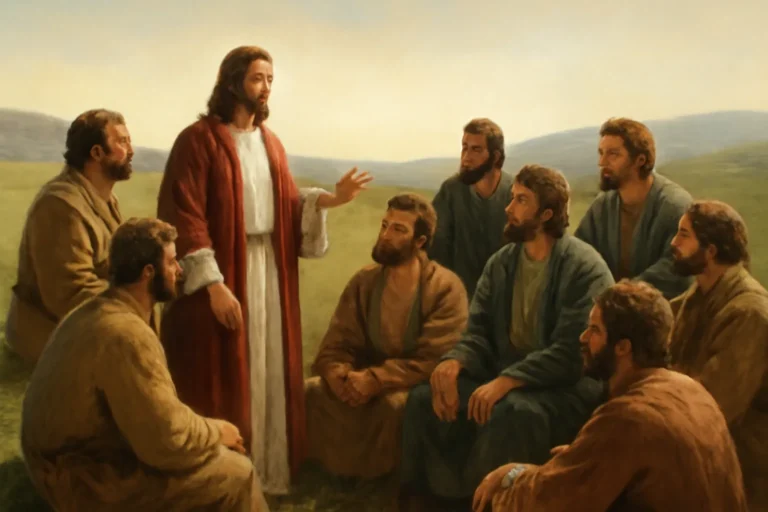
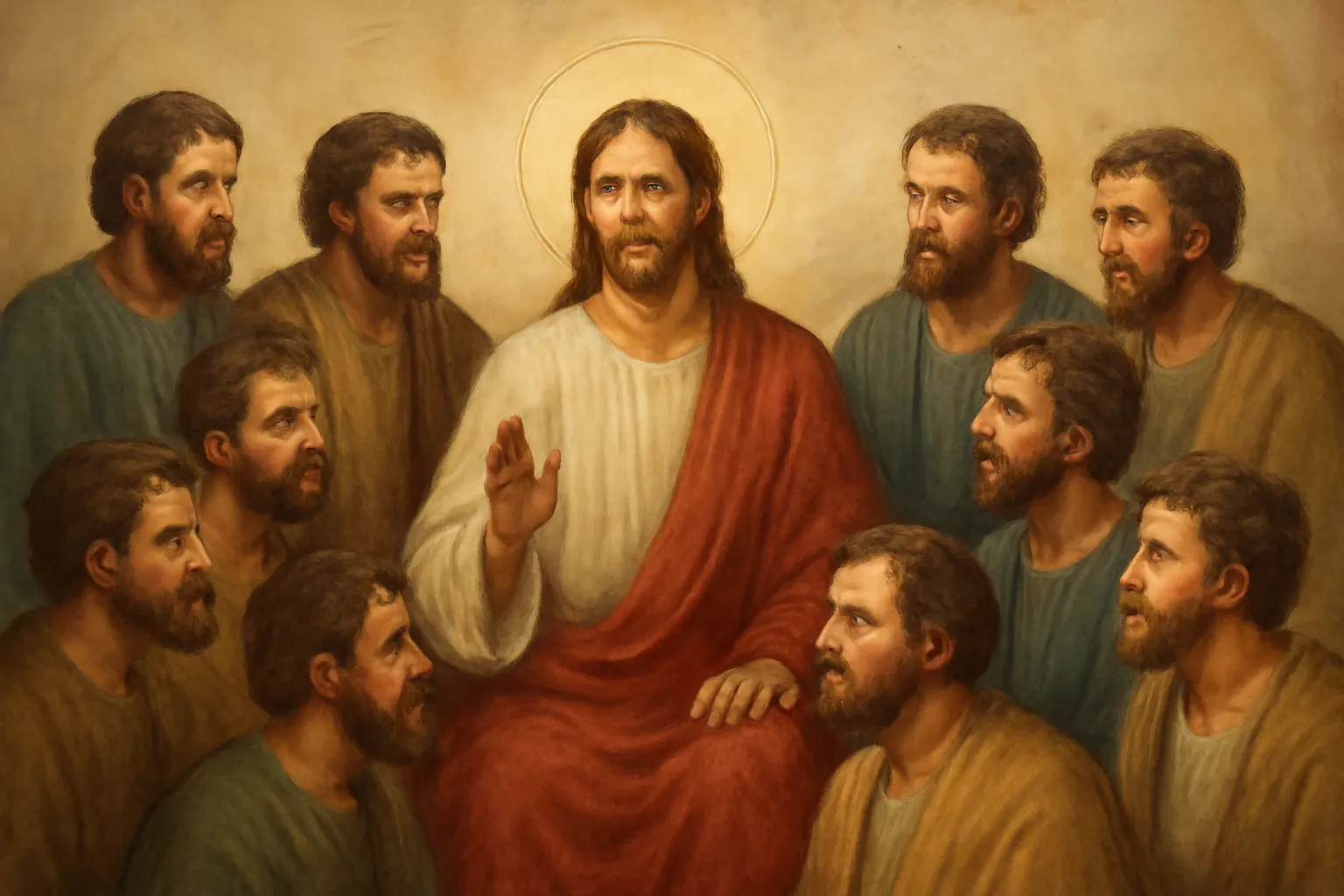
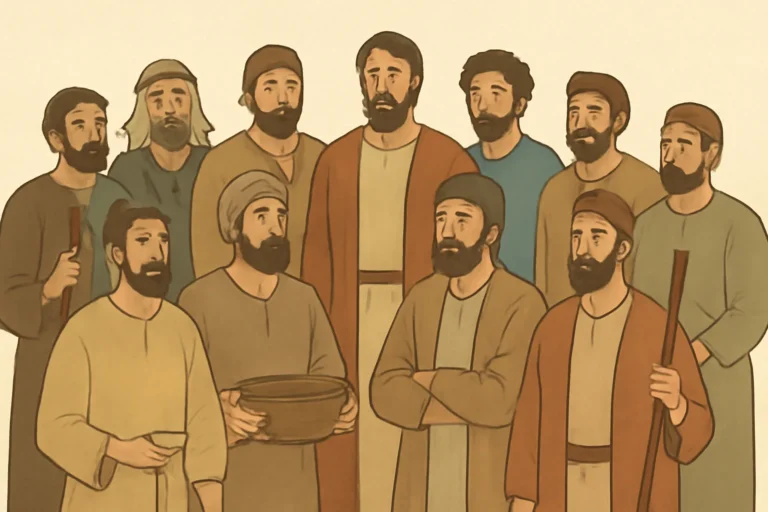
The centerpiece of the early movement was the Twelve Apostles, a circle chosen by Jesus to share in his ministry in a special way. These men were entrusted with teaching, preaching, and bearing witness to the events of Jesus’ life, death, and resurrection. They would become foundational figures in the formation of the Church, and their stories are told across the Gospel narratives and the book of Acts.
Within this section, you’ll find short profiles of each member, highlighting their name, role, and notable moments. The term apostle distinguishes the inner circle from the broader group of disciples, yet the two concepts are deeply connected: all apostles were disciples, but not all disciples were apostles.
Peter
Peter (also known as Simon) emerges early as a leader among the fishermen who follow Jesus. He gives bold confessions of faith and plays a pivotal role in the early Church after the Resurrection. His trajectory—from impulsive fisherman to steady shepherd—illustrates a path of growth, humility, and responsibility.
Andrew
Andrew, Peter’s brother, introduces others to Jesus, including his friend Philip. He is portrayed as a connector who helps expand the circle and bring new voices into the movement.
James (son of Zebedee)
James and his brother John form a close pairing that accompanies Jesus through key moments in the Gospel accounts. James’s leadership in the early church is acknowledged, and his example reflects a willingness to stand with Jesus even amid challenges.
John
John is depicted as a beloved disciple who offers rich spiritual reflections in the Gospel of John and in the letters that bear his name. His writings emphasize love, truth, and the intimate relationship between the Father, the Son, and the community of believers.
Philip
Philip engages Jesus in questions about how to see the Father and the nature of revelation. His interactions highlight a quest for understanding and an invitation to deeper faith.
Bartholomew
Bartholomew (often identified with Nathanael in the Gospel of John) represents those who approach Jesus with sincerity and openness to the surprising ways God works in the world.
Thomas
Thomas is remembered for his honest doubt and insistence on seeing evidence. His journey reflects the healing of skepticism through encounter, experience, and testimony.
Matthew
Matthew (the tax collector) contributes a perspective shaped by his past profession and his fresh commitment to the kingdom. He is often linked to the Gospel that bears his name, which emphasizes Jesus’ encounter with various kinds of people and the inclusion of outsiders into the divine invitation.
James (son of Alphaeus)
James (the son of Alphaeus) is less prominent in the Gospel narratives, yet his inclusion signals the breadth of this group and the diverse backgrounds of the followers of Jesus.
Judas (Judas Iscariot)
Judas Iscariot is known for betraying Jesus, an event that reveals the tragic dimensions of human freedom and the complexity of faith journeys within the community. His presence in the original circle also frames questions of loyalty, conscience, and leadership under pressure.
Simon the Zealot
Simon the Zealot represents a strand of political hope that collided with the radical, nonviolent, God-centered mission that Jesus carried. His participation shows how a diverse set of motivations could become harmonized under a shared call to follow Christ.
Matthias (the successor to Judas)
After the Resurrection and the departure of Judas, the early community selects Matthias to replace him, ensuring that the apostolic witness remains whole. Matthias’ inclusion marks the continuity and governance of the movement as it moves toward Pentecost and mission beyond Jerusalem.
Other Followers and Women in Jesus’ Ministry
While the Twelve Apostles occupy a formal leadership role, the narrative of disciples with Jesus extends well beyond those twelve. Women, lay followers, and broader groups contributed to the ministry in meaningful ways. Their presence highlights several important themes: the inclusivity of the Jesus movement, the practical support required for mission, and the witness of female leadership in early Christian communities.
Mary Magdalene is often highlighted as a devoted follower who witnesses the crucifixion and is among the first to encounter the risen Christ. Her role underscores the courage and fidelity that characterize many who walk with Jesus.
Martha and Mary (the sisters of Lazarus) reflect different personalities and modes of discipleship—one focused on service and hospitality, the other on contemplation and knowledge.
Salome and other women accompany Jesus in his travels, sometimes providing financial or logistical support that makes the itinerant ministry possible.
The presence of these additional learners and supporters expands our sense of who can be considered a disciple with Jesus, showing that the movement was a vibrant community with many gifts and roles. The stories of these figures also invite readers to consider what it means to be a faithful learner in today’s world, where leadership often requires collaboration, hospitality, and steadfast witness.
Teachings and Practices of a Jesus-centered Community
The teachings of Jesus are the heart of the discipling process. They function as both instruction and invitation: instruction about what it means to live as a human being in alignment with God’s purposes, and invitation to participate in a way of life that redefines power, status, and success. For the disciples with Jesus, the training ground was daily life—listening to parables, observing healing, and learning how to respond to questions with wisdom and compassion.
Parables and Teachings
One of the distinctive features of Jesus’ method with his learners is the use of parables. These short stories use everyday scenarios to reveal deeper truths about the kingdom of God. Parables invite reflection, challenge assumptions, and encourage the disciples to interpret meaning in community. The central messages often revolve around repentance, mercy, humility, faith, and trust in God’s plan, rather than human power or social status.
Prayer and Relationship
Jesus models a life of prayer for his followers, teaching them how to pray and what posture to adopt in the presence of God. The Our Father (the Lord’s Prayer) has become a foundational element of Christian prayer precisely because it distills dependence, worship, and petition into a concise framework. The disciples with Jesus learn to engage in transparent conversation with God, recognizing divine sovereignty while bringing their needs and concerns before the Father.
The stories of healings, exorcisms, and other miraculous signs reinforce the credibility of the mission. The disciples watch as Jesus demonstrates compassion for the marginalized, defender of the vulnerable, and friend to sinners. Through witnessing these acts, they begin to understand the breadth of God’s mercy and the scope of their own vocation: to extend that mercy to others through words, deeds, and shared life.
Ethics, Community, and Identity
Within the teaching framework, the community cultivated a distinctive ethics: love of neighbor, care for the poor, reconciliation, integrity, and fearless honesty before God. The identity of disciples with Jesus is shaped through shared meals, mutual support, and accountability, forming a counter-cultural community that invites outsiders to join the fellowship of the kingdom.
From Local to Global: The Mission of the Disciples
Jesus commissions his followers to move beyond the margins of a single region and into the world. The Great Commission (Matthew 28:18-20) captures the sending of the disciples to teach and baptize all nations. This moment marks a turning point: a local movement becomes a worldwide mission, with the early Church taking up the mantle of witness and service in fresh cultural contexts.
Key elements of this global impulse include:
The authority of Jesus entrusted to his followers, enabling them to proclaim the gospel with spiritual power and moral authority.
Explicit instruction to make disciples of all nations, emphasizing universal invitation and inclusion.
Mentoring, leadership development, and the establishment of communities that could sustain mission across generations and continents.
As generations of Christians have reflected on this sending, communities of disciples with Jesus have sought to balance fidelity to the gospel with cultural relevance—finding ways to translate ancient wisdom into new languages, arts, and social structures while preserving the core message of God’s kingdom.
Legacy and Impact: The Disciples’ Enduring Influence
The influence of the disciple network extends beyond the events of Jesus’ lifetime. Through their witness, writings, and the communities they formed, they helped shape a movement that would become the church and, eventually, a global civilization of faith, learning, and service. The legacy of these learners includes several enduring threads:
Scriptural Foundations: The Gospels and other New Testament writings preserve the teachings, parables, prayers, and letters of those who walked with Jesus. These texts continue to guide belief, worship, and daily conduct for countless people today.
Ecclesial Structures: Early communities developed leadership patterns, rites, and governance systems that allowed believers to worship, teach, and care for one another across generations and geographies.
Theological Reflection: The experiences of the disciples prompted theological reflection on the nature of Christ, the resurrection, the Holy Spirit, and the mission of the church in a diverse world.
Ethical and Social Influence: The disciples’ emphasis on mercy, justice, and neighbor love has shaped social ethics, education, humanitarian work, and interfaith dialogue in many cultures.
Modern readers who study the disciples with Jesus often identify several takeaways that remain relevant today:
The call to follow Jesus requires both trust and action, not merely assent to a set of ideas.
True leadership emerges from a posture of service, humility, and willingness to risk for others.
Truth is tested and refined through communal life, accountability, and compassionate engagement with the world’s needs.
The power of community—learning together, praying together, and bearing witness together—sustains mission across time.
Common Misconceptions About the Disciples with Jesus
Several popular assumptions can obscure the historical and theological richness of the subject. Clarifying these misconceptions helps readers grasp the complexity and vitality of the movement.
All disciples were apostles: While the Twelve are often called “the apostles,” there were many more disciples who learned from Jesus and assisted in his ministry. The distinction matters because leadership in the early church grew out of multiple streams of apostolic witness and community.
Discipleship equals perfect faith: The narratives show a spectrum of faith, doubt, courage, and failure. The disciples’ growth is marked by moments of breakthrough and struggle, illustrating how faith can mature through tested experiences.
Women were passive followers: Women in Jesus’ circle played active, influential roles and served as witnesses to the resurrection. Their leadership perspectives broaden the understandings of how the early church understood discipleship and witness.
Disciples only preached to insiders: The mission implied in the Great Commission shows that the disciples were called to reach diverse audiences with the message of God’s kingdom, crossing cultural and geographic boundaries.
Practical Reflections: Lessons for Today’s Discipleship
What can modern readers and faith communities learn from the stories of the disciples with Jesus?
Discipleship as a lived vocation: Following Jesus is not simply a belief; it is a way of life that shapes choices, relationships, and community engagement.
Learning through doing: The disciples learned by participating in ministry—sharing in work, facing challenges, and discerning truth in community.
Inclusivity in leadership: The early movement demonstrated that leadership emerges from a range of gifts and backgrounds, inviting diverse voices into shared mission.
enduring witness: The stories and teachings of the disciples invite ongoing witness in education, charity, art, and public life, encouraging people to translate gospel principles into contemporary action.
Conclusion: The Living Tradition of the Disciples with Jesus
The narrative of disciples with Jesus is a living tradition that has shaped communities, cultures, and personal lives for two millennia. From the initial calling of fishermen and tax collectors to the emergence of a global church, the journey of these learners reveals a compelling arc: a small, diverse group responds to a radical invitation, grows through instruction and shared life, and becomes a transgenerational movement that continues to speak, heal, and transform. Whether one approaches the subject from historical study, theological reflection, or spiritual practice, the central message remains clear: a life rooted in following Jesus can become a life oriented toward love, justice, and the common good. As readers today engage with the stories of the disciples, they are invited to reflect on their own callings, their commitments to learning, and their participation in the ongoing mission of the church and the world.








Leave a Reply