A Devotional Commentary on Psalm 23: The Shepherd Who Leads and Comforts
Psalms 23 · King James Version
Quick Answer: This commentary on psalm 23 reveals God as the faithful Shepherd who provides rest, guidance, restoration, and courage. Even in the valley of deep danger, the psalmist’s fear is replaced by trust because God is present. The Shepherd also prepares a table and promises lasting goodness and mercy for everyday life and eternity.
Psalms 23 (King James Version)
“The LORD
is my shepherd; I shall not want.
He maketh me to lie down in green pastures: he leadeth me beside the still waters.
He restoreth my soul: he leadeth me in the paths of righteousness for his name’s sake.
Yea, though I walk through the valley of the shadow of death, I will fear no evil: for thou
art with me; thy rod and thy staff they comfort me.
Thou preparest a table before me in the presence of mine enemies: thou anointest my head with oil; my cup runneth over.
Surely goodness and mercy shall follow me all the days of my life: and I will dwell in the house of the LORD for ever.”
Historical background of this psalm (psalm 23 devotional commentary)
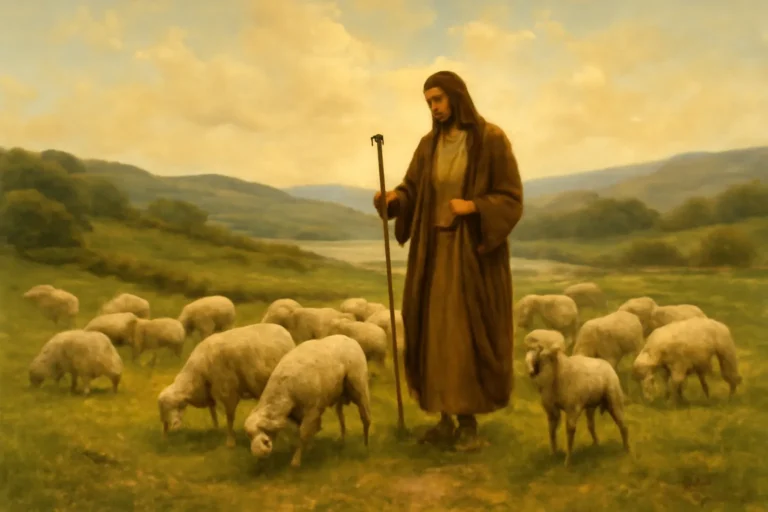
Psalm 23 comes from Israel’s long experience with shepherding, travel, and worship. In the ancient Near East, shepherds were responsible not only for feeding sheep but also for leading them through changing terrain—dry valleys, rocky paths, and seasonal pastures. Sheep were vulnerable; therefore, protection and guidance were essential. The imagery of “still waters” and “green pastures” would resonate as signs of safe, well-directed care.
The psalm also functions as a worship song used in personal devotion and communal life. Its movement—from provision (pastures, waters) to restoration (renewing the soul), to courage in danger (the shadow of death), to a meal in the presence of enemies—creates a spiritual storyline. In Israel’s worship culture, “the LORD” language signals covenant trust: God is not an abstract idea but the living presence who shepherds His people.
Because the psalm is short yet emotionally complete, it became a common text for times of grief, uncertainty, and transition. Its steady cadence reflects how believers often pray: beginning with God’s character, confessing fear honestly, and ending with confident hope in God’s faithfulness.
Hebrew nuance in key phrases (reflection on psalm 23)
Psalm 23 is written in Hebrew, and several phrases carry vivid, bodily meaning. The line describing God leading “beside still waters” uses language that emphasizes calmness and safety rather than hurried, chaotic movement. Likewise, the phrase “valley of the shadow of death” conveys not only danger but a dim, oppressive darkness where visibility and control feel impossible.
When the psalm says “restoreth my soul,” the Hebrew idea behind “restore” can include turning back, replenishing, and making whole again—suggesting inner renewal, not merely external relief. Finally, “paths of righteousness” presents guidance as a concrete route: God does not only correct morals in the abstract; He leads people in a way that aligns with His name and faithful purposes.
Overall, the Hebrew tone is personal and trusting—God’s care is intimate, directional, and sustained.
The Shepherd’s provision: “I shall not want” (explanation of psalm 23)
Psalm 23 begins with a confident identity statement: “The LORD is my shepherd.” This is more than metaphor; it is a declaration of relationship. In the ancient shepherding world, the sheep’s life depended on the shepherd’s attentiveness. By applying that image to God, the psalmist expresses trust that God is active, responsible, and near.
“I shall not want” does not mean life will be painless or that every desire will be immediately satisfied. Instead, it points to deep needfulness being met—spiritually, emotionally, and ultimately for the believer’s good. When the Shepherd is God Himself, the soul lacks what truly matters. Many Christians discover this especially during seasons when circumstances do not change quickly, yet confidence in God’s care steadies the heart.
The first major movement of the psalm emphasizes provision: green pastures and still waters. “Green pastures” suggests nourishment, abundance, and rest. “Still waters” suggests safety and refreshment—water that does not threaten to sweep away, but calm enough to restore. Together, these images teach that God’s guidance includes moments of rest, not only burdensome labor. Spiritual life is not sustained only by striving; it is also sustained by receiving what the Shepherd gives.
As you read this opening, consider your own “want” list. What do you believe you cannot live without? The psalm gently challenges whether the deepest hunger in your heart is for possessions, or for God’s presence. True sufficiency begins when God becomes the One you look to—not merely the One you pray to.
Guidance and restoration: “paths of righteousness” (study guide for psalm 23)
After provision comes direction and renewal. The psalm states that the Shepherd “leadeth me” beside still waters and also “restoreth my soul.” This order matters. Rest is not just a feeling; it is part of God’s method. When the soul is depleted, God restores it—turning it back toward life.
“Restoreth my soul” implies more than comfort; it points to healing within. The believer may carry guilt, discouragement, fatigue, or spiritual numbness. In such cases, the Shepherd does not ignore the soul’s condition. He addresses it. Restoration includes the quiet work of renewing hope, realigning priorities, and strengthening faith so that the heart can move forward again.
Then the psalm turns to purpose: “he leadeth me in the paths of righteousness for his name’s sake.” Righteousness here is not presented as a burden that proves religious performance. It is guidance that flows from God’s character and reputation. God leads “for his name’s sake,” meaning His actions are tied to who He is—faithful, holy, and trustworthy. When believers follow God’s way, they are not earning His love; they are responding to it.
This phrase also reminds readers that moral guidance is often pastoral. The Shepherd does not only correct; He leads. He provides a path. In daily life, “paths” could mean habits, disciplines, Scripture-shaped decisions, and relationships formed under God’s lordship.
A useful question for reflection: Where are you seeking direction right now? The psalm encourages prayerful alignment. Ask the Shepherd to restore what is dry, and to lead you toward righteousness that reflects His name.
Courage in the valley: fear replaced by presence (reflection on psalm 23)
The psalm does not shy away from danger. It moves from serene images to an overwhelming one: “Yea, though I walk through the valley of the shadow of death, I will fear no evil.” Faith is not portrayed as denial of danger. Instead, it is portrayed as confidence that fear does not get the final word.
The phrase “shadow of death” is striking. Shadows are not the substance itself, but they still distort perception and chill the heart. Many believers experience valleys that feel like the shadow—threats, sickness, grief, uncertainty, and the sense that control has vanished. The psalmist’s realism helps the reader: God’s people can face terrifying seasons without pretending they are not terrifying.
Why is the psalmist able to say “I will fear no evil”? The reason is not personal bravery; it is divine companionship: “for thou art with me.” God’s presence is the foundation of courage. When God is near, the believer’s fear is not erased by wishful thinking; it is subdued by relationship.
The psalm also mentions “thy rod and thy staff.” These instruments symbolize protection and guidance. The rod can represent authority and defense; the staff can represent support, reaching out to lift or direct. Together, they suggest that the Shepherd neither abandons nor merely watches from a distance. He acts to keep His flock safe and on the way.
This portion of the psalm teaches a theology of suffering: God is present in the valley, not only in the pasture. The goal is not always immediate rescue, but steadfast trust during the passage. When you walk through your own shadowed valleys, you can pray the psalmist’s confidence: “Lord, you are with me; lead me through.”
A table in the conflict: provision that outlasts enemies (psalm 23 devotional commentary)
In the middle of threat, God’s care becomes visible in a surprising way: “Thou preparest a table before me in the presence of mine enemies.” This image shifts the setting. The valley is not the end of the story; it becomes the doorway to unexpected provision.
To prepare a table in the presence of enemies implies courage and sovereignty. Food is a symbol of life, fellowship, and sustained provision. The psalmist is not merely surviving; he is receiving. The Shepherd’s generosity is not hidden. It is so confident that it extends into conflict.
Furthermore, the psalm says, “thou anointest my head with oil; my cup runneth over.” Oil in biblical symbolism can represent consecration, blessing, and honor. To be anointed is to be marked for God’s care. “My cup runneth over” suggests abundance overflowing—again, not necessarily wealth, but the fullness of God’s grace meeting needs beyond what the moment demands.
This verse challenges a common spiritual assumption: that God’s favor must remove obstacles. Here, favor is experienced even while enemies remain nearby. The point is not that enemies are imaginary, but that their power is limited by the Shepherd’s authority.
For devotional readers, this can be applied in practical ways. When anxiety or opposition presses in, God may still “prepare a table” by granting clarity, comfort, community, wisdom, and daily strength. The table might look like a steady workday, a protected conversation, or a quiet hour of prayer that refreshes the soul.
So the psalm’s logic builds: provision leads to restoration, restoration leads to courageous endurance, and endurance leads to God’s overflowing blessing. The Shepherd writes a long story, and the believer is invited to trust the ending.
Goodness, mercy, and lasting home: the psalm’s closing hope (study guide for psalm 23)
The conclusion of Psalm 23 anchors everything in God’s continuing faithfulness: “Surely goodness and mercy shall follow me all the days of my life.” The word “surely” emphasizes certainty. The psalmist’s confidence is not fragile optimism; it is trust in God’s character.
“Goodness and mercy” are not fleeting emotions. They are covenant traits. They follow the psalmist—like attendants, companions, and guardians moving behind and beside him. This idea relieves the reader of the burden to manufacture security. The believer does not have to chase goodness and mercy; God has promised that they will pursue, keep pace, and remain available.
“All the days of my life” expands the horizon. Psalm 23 is personal, but not only momentary. It speaks to the length of discipleship: life includes seasons of joy and seasons of difficulty, but God’s faithfulness spans them all.
Finally, the psalm ends with an eternal destination: “and I will dwell in the house of the LORD for ever.” The shepherd theme culminates in home. Sheep are gathered into safety; worshipers dwell with God. The psalmist’s trust extends beyond the present valley into everlasting fellowship.
This closing transforms how believers view death and suffering. Even when the psalm acknowledges the “shadow of death,” it refuses to let death define the end. The Shepherd’s care is ultimately an invitation to live with God permanently.
In reflection, ask: What does it mean for you that God’s care has a forever dimension? It means the believer can face uncertainty with hope, endure trials with courage, and practice gratitude even before the full story becomes visible. The psalm does not only soothe fear; it secures the future.
How to Apply This Today (or similar, natural)
Use Psalm 23 as a daily “shepherding prayer.” First, begin with identity: affirm that the LORD is your Shepherd, not merely your Helper. Second, name where you need restoration: if your soul feels dry, ask God for renewal before you ask for solutions. Third, when fear rises, rehearse God’s presence—turn the psalm’s promise into a sentence you can pray in real time. “Lord, you are with me.”
Fourth, look for your “paths of righteousness.” This could mean choosing truth over compromise, seeking forgiveness, speaking with gentleness, or taking a next faithful step even if it’s not glamorous. Fifth, practice gratitude in conflict. Consider where God may be “preparing a table” for you—provision in small forms: strength to work, wisdom for relationships, peace during stress, or community support.
Finally, let the last verse shape your outlook. Write down one line—“goodness and mercy will follow me all the days of my life”—and review it during hard moments. Psalm 23 is not only a comfort; it is a training for trust over time.
Related Bible Passages
John 10:11-15
Jesus identifies Himself as the Good Shepherd, linking the psalm’s shepherd imagery to God’s saving presence.
Isaiah 40:11
God is pictured as a shepherd who gently leads and carries His people, echoing Psalm 23’s guidance and care.
Romans 8:38-39
These verses teach that nothing can separate believers from God’s love, reinforcing the psalm’s confidence that mercy and goodness follow.
Frequently Asked Questions
What is the main message of psalm 23 devotional commentary?
The main message is that the LORD shepherds His people personally and faithfully. Psalm 23 moves from provision and restoration to courage in danger, then ends with God’s goodness, mercy, and eternal home. The comfort comes from God’s presence and active care, not from circumstances alone.
How should I understand the valley of the shadow of death in an explanation of psalm 23?
The “shadow” points to frightening seasons where fear feels unavoidable. The psalm acknowledges real danger, yet it teaches that courage comes because God is with you. You do not walk alone; the Shepherd’s rod and staff symbolize protection and guidance through the hard passage.
Does the study guide for psalm 23 mean believers will never lack anything?
Not necessarily. “I shall not want” means your deepest needs—spiritual security, guidance, and sustaining grace—are met by God as Shepherd. You may still experience hardship, but God’s care ensures that ultimate provision and purpose will not fail.
How can reflection on psalm 23 help me during a hard week?
Pray it slowly and act on its steps: ask for restoration, trust God’s presence when fear rises, and look for God’s “table” in small provisions. Journal one fear and one faith sentence, then choose one righteous path you can take today, however small.
A Short Prayer
Shepherd of my soul, thank You for leading me to rest and for restoring what is weary within. When I walk through shadows, keep me aware of Your presence. Guide my steps in righteousness, and give me courage to trust You in conflict. Prepare a table before me with grace I cannot manufacture. Let goodness and mercy follow me, until I dwell with You forever. Amen.
Key Takeaway: God shepherds you through provision, restoration, and presence—so fear cannot have the last word and His goodness leads you to home.