A Devotional Commentary on Psalms 23: God as Our Shepherd
Psalms 23 · King James Version
Quick Answer: This commentary on psalms 23 highlights God’s personal care: He leads, restores, and guides His people through danger and fear. The psalm presents provision, protection, and a lasting home with the Lord. As you read it devotionally, let it reshape your view of suffering, obedience, and hope—so that trust becomes steadier than anxiety.
Psalms 23 (King James Version)
“The LORD
is my shepherd; I shall not want.
He maketh me to lie down in green pastures: he leadeth me beside the still waters.
He restoreth my soul: he leadeth me in the paths of righteousness for his name’s sake.
Yea, though I walk through the valley of the shadow of death, I will fear no evil: for thou
art with me; thy rod and thy staff they comfort me.
Thou preparest a table before me in the presence of mine enemies: thou anointest my head with oil; my cup runneth over.
Surely goodness and mercy shall follow me all the days of my life: and I will dwell in the house of the LORD for ever.”
Psalms 23 shepherd comfort in Israel’s pastoral world
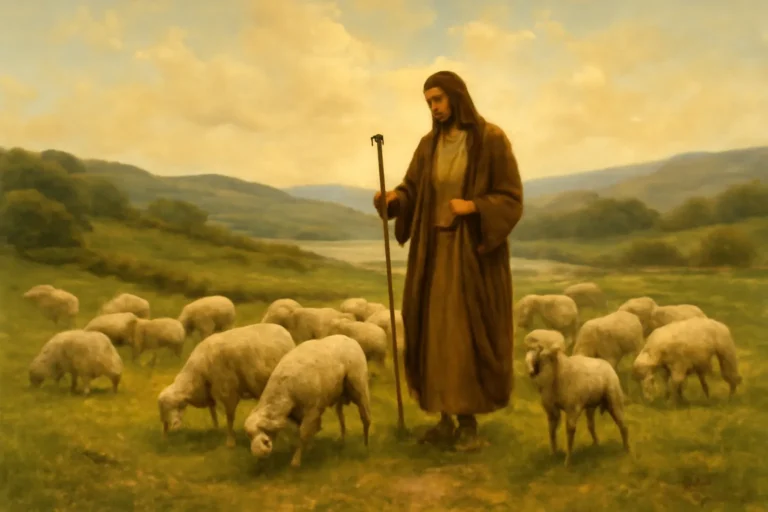
Psalm 23 comes from a tradition deeply familiar with sheep herding in the ancient Near East. Shepherds in Israel were responsible not only for finding pasture and water, but for protecting flocks from danger, guiding them through terrain, and staying close enough to rescue lost or vulnerable sheep. Psalm poetry often uses everyday imagery to express spiritual realities, and “shepherd” language would resonate immediately: it evokes provision (pasture, water), guidance (paths), and protection (a rod and staff). The psalm’s movement also fits a traveler’s rhythm through life—beginning with care in safe places, moving into wilderness or threat (“valley” imagery), and concluding with a vision of ongoing fellowship and honor. The psalm’s imagery of a prepared table and anointing also reflects hospitality practices and covenant-like favor. In a culture where identity and survival depended on community and daily provision, the statement “The LORD is my shepherd” functions as both confession and prayer: God is not distant; He is active in everyday needs and long-term dwelling.
Hebrew nuance behind “paths of righteousness”
In Psalm 23, the phrase “paths of righteousness” carries more than moral correctness; it conveys a way of life that is right, ordered, and trustworthy—like a safe route through a dangerous landscape. Hebrew often uses “paths” to describe conduct that can be followed, not merely principles to be known. The “for his name’s sake” clause further suggests that God’s guidance is connected to His character and reputation: He leads in a manner consistent with who He is. While readers may focus on individual moral effort, the psalm emphasizes God’s role in directing and restoring the person who trusts Him. The tone is devotional and relational—God shepherds His people into a life that aligns with His steadfastness.
God my shepherd Psalm 23 reflection: a relationship, not a theory
Psalm 23 begins with a personal claim: “The LORD is my shepherd.” This is not primarily an abstract idea about God’s guidance; it is a confession of belonging. The possessive language matters. The psalmist is not describing a shepherd who works for someone else, but a shepherd who is personally accountable for the welfare of his flock. That pastoral imagery establishes the whole devotional posture of the poem. If the LORD shepherds, then needs are not random; they are met with purpose. The promise “I shall not want” does not imply a life without pressure or limitation. Instead, it means that ultimate provision—what is truly needed for faithfulness and survival—will not be withheld from those under the Shepherd’s care.
In the flow of the psalm, the shepherd’s work is both gentle and directive. He makes His people lie down in “green pastures,” a picture of rest that follows care. He leads beside “still waters,” emphasizing safety and calm rather than frantic searching. Then He “restoreth” the soul, indicating that the shepherd’s attention reaches beyond external conditions to inner weariness—discouragement, spiritual fatigue, and the kind of depletion that makes a believer lose steadiness.
Devotionally, this opening invites you to ask where you have been acting as if God’s care is uncertain. The psalm reassures you that the LORD’s shepherding includes restoration and leading, not just comfort after you have already given up. Trusting God as Shepherd reshapes the heart’s expectations: rest is possible, guidance is real, and need does not get the final word.
Psalms 23 meaning for believers: restoration and righteous guidance
After speaking of rest and water, Psalm 23 moves to restoration: “He restoreth my soul: he leadeth me in the paths of righteousness for his name’s sake.” This is a crucial transition. The shepherd does not only provide pleasant scenery; He brings renewal where the heart has been damaged. “Restoreth my soul” suggests that the believer’s inner life can be worn down by sin, fear, grief, or disorientation. The LORD’s shepherding answers those inward losses with renewal.
The second line—“he leadeth me in the paths of righteousness”—highlights that restoration has direction. God’s care is not merely therapeutic; it is guiding. “Paths” imply movement and practice: daily choices, obedient steps, and moral alignment that follows God’s character. The psalm does not portray righteousness as self-made achievement; rather, it is something the Shepherd “leads” into. That changes how believers interpret spiritual formation. You are not left to grit your teeth and invent a stable life. You are guided, corrected, and trained by the Shepherd who knows where safe ground lies.
“For his name’s sake” is also a grounding phrase. God’s guidance is connected to His reputation—He leads in a way that remains faithful to who He is. That means righteousness in this psalm is not random rules; it is the path that reflects God’s covenant love and trustworthy holiness. In times of confusion, the psalm invites you to look for guidance rather than merely for escape.
As you read devotionally, consider where your “paths” need alignment. Are you trying to solve spiritual depletion with distraction? Psalm 23 teaches a different method: come under the Shepherd’s leading, and allow restoration to become direction.
Valley of shadow of death: Psalms 23 shepherd comfort in fear
The psalm’s most well-known section addresses danger directly: “Yea, though I walk through the valley of the shadow of death, I will fear no evil: for thou art with me; thy rod and thy staff they comfort me.” The language assumes real walking, real terrain, and real threats. The “valley” imagery communicates vulnerability—low ground where visibility is limited and where fear naturally rises. Yet the psalmist does not say, “I will not enter danger.” He says, “Though I walk through,” indicating that the presence of threat does not cancel the presence of God.
The key phrase is “for thou art with me.” Comfort in Psalm 23 is relational before it is emotional. The Shepherd’s presence is the foundation that makes fear less dominant. The rod and staff deepen the picture: the rod can signify authority and protection; the staff can signal guidance and support. Together they show that God’s care includes defense and direction in the same moment.
In devotional terms, this teaches that courage is not the absence of fear—it is the refusal to let fear govern your interpretation of reality. The psalmist recognizes that “evil” can surround and that death’s shadow can loom. Still, the Shepherd’s “withness” changes the outcome of fear. Even when you cannot control circumstances, you can trust companionship.
Theologically, this also keeps faith anchored. If God leads through valleys, then suffering does not always indicate abandonment. Sometimes it is the place where trust becomes visible, where dependence is clarified, and where the soul learns to lean on the Shepherd rather than on safety.
Practically, you can read this portion as permission to bring honest fear to God without surrendering hope. The Shepherd does not demand pretending; He comforts with His presence and His protecting care.
Prepared table and overflowing cup: God’s provision amid opposition
Psalm 23 turns from valley danger to the image of honor and provision: “Thou preparest a table before me in the presence of mine enemies: thou anointest my head with oil; my cup runneth over.” This shift is not escapism; it is victory imagery. A table in the presence of enemies suggests that God’s provision is not fragile. The psalmist eats and is cared for while surrounded by threats, implying that God’s kindness can be experienced even when circumstances remain contested.
The “anointest my head with oil” adds a ceremonial and covenant tone. In biblical life, oil often marks blessing, consecration, and recognition. It can symbolize being set apart and dignified by God, not by public opinion. If the Shepherd anoints the person, then the person’s identity does not collapse under pressure.
“My cup runneth over” communicates abundance—not only in quantity but in the overflowing sense of more grace than the moment requires. The psalmist is not claiming that hardship disappears overnight; rather, he testifies that God’s goodness is capable of exceeding the limits of what would be expected from a purely human perspective.
This section is especially important for readers who experience conflict, opposition, or spiritual warfare. Psalm 23 does not teach that enemies will always vanish. It teaches that God can still prepare provision “before” them. That means prayer and trust are not naive; they are confident responses to a Shepherd whose care can reach into hostile environments.
Devotionally, the prepared table also invites gratitude. Even in partial valleys, God can still “feed” your soul with steadiness, courage, and grace. The goal is not denial of enemies, but celebration of God’s presence stronger than the enemies’ influence.
Goodness and mercy follow: dwelling in the LORD forever
The psalm closes with an enduring assurance: “Surely goodness and mercy shall follow me all the days of my life: and I will dwell in the house of the LORD for ever.” The language of “follow” is striking. Goodness and mercy are not occasional visitors; they trail behind the psalmist as he walks. This implies that even when life is hard, God’s character remains active. Goodness meets needs; mercy addresses failure and undeservedness. Together they form a steady companionship.
“All the days of my life” expands the horizon from current circumstances to the whole span of existence. The psalmist’s hope is long-term. It is not based solely on present relief, but on the reliable pattern of God’s steadfast love.
Finally, “dwell in the house of the LORD for ever” provides the ultimate destination. The psalm uses “house” language to describe belonging and stable fellowship, not temporary access. This is the end of the shepherding story: God is not only a guide for temporary survival, but a host for eternal communion. Readers often hear Psalm 23 in funeral contexts because the valley imagery is strong. Yet the final line is more than consolation for death; it is a promise of lifelong and everlasting relationship with God.
Devotionally, you can treat these final verses as an anchor prayer. When you are tempted to interpret your future as uncertain, Psalm 23 says goodness and mercy follow. When you feel like you are wandering without a home, the psalm says you will dwell.
In practical faith, this ending calls for perseverance. If God’s goodness and mercy are trailing you, then each day—whether joyful or painful—can be walked with hope rather than dread.
How to Apply This Today: walk as one shepherded by the LORD
Begin by speaking Psalm 23 back to God as personal prayer, not just reflection. If you “lie down” in green pastures only when life feels easy, you miss the psalm’s training: allow God to restore your soul first, then let that restoration produce righteous direction. Practically, identify one “path” where you need guidance—an ethical decision, a relationship boundary, or a spiritual discipline—and ask God to lead you there.
When fear rises, use the psalm’s pattern: connect fear to God’s presence (“thou art with me”) instead of letting fear interpret the whole situation. Name the valley you are walking through, then ask for the shepherding ministry of the rod and staff—protection and direction. Finally, practice gratitude in the middle of opposition. Look for small “tables” God prepares: strength for a conversation, wisdom for a job decision, grace to forgive, or comfort during prayer. Confidently expect goodness and mercy to follow you in the days ahead, and keep choosing trust that aligns with God’s character.
If you feel spiritually depleted, do not rush into self-repair. Return to the Shepherd by prayer, Scripture, confession, and worship—means that make room for restoration and renewed desire for righteousness.
Related Bible Passages
John 10:11-14
Jesus describes Himself as the good shepherd who gives life and knows His sheep, echoing Psalm 23’s trust in God’s protective care.
Isaiah 40:11
The LORD is pictured as a shepherd who tends His flock gently, reinforcing the tenderness and guidance theme of Psalm 23.
Romans 8:38-39
God’s unbreakable love assures believers that nothing can separate them from God, aligning with Psalm 23’s hope for lasting dwelling.
Frequently Asked Questions
What is the core message of a devotional commentary on Psalm 23?
Psalm 23 teaches that the LORD shepherds His people through rest, restoration, and guidance. Even in danger, God’s presence dispels fear. The final assurance is that goodness and mercy follow for life, leading to eternal dwelling with God.
How does Psalms 23 shepherd comfort apply when life feels like a valley?
Psalm 23 does not deny valleys; it addresses them directly. Comfort comes from God’s “withness,” along with His protection and direction (rod and staff). Practice naming your fear to God and choosing obedience as God leads you through.
What does ‘paths of righteousness’ mean in the meaning of Psalm 23 for believers?
It refers to God’s guiding way of life—an ordered route believers can follow. In Psalm 23, righteousness is something the Shepherd leads into, not merely something achieved alone. Trusting God’s character fuels steady obedience.
Why does Psalm 23 end with ‘the house of the LORD for ever’?
The psalm’s ending expands hope beyond present circumstances to eternal communion with God. It assures believers that God’s shepherding leads to lasting belonging, not temporary relief. That eternal horizon strengthens perseverance day by day.
A Short Prayer
LORD, You are my Shepherd. Restore my soul when I grow weary, and lead me in the paths of righteousness. Walk with me through every valley of fear and keep me from surrendering to evil. Prepare a table for me even when opposition surrounds me, and let Your goodness and mercy follow me all my days. Teach me to trust Your presence, until I dwell with You forever. Amen.
Key Takeaway: Psalm 23 assures the trusting believer that the LORD’s shepherding presence delivers restoration, guidance, and enduring hope through every valley.