Calculating Passover Dates: A Practical Guide to Jewish Holiday Timelines
The determination of Passover dates lies at the intersection of liturgical traditions and calendar science. This guide aims to demystify how the date of Pesach (the Jewish festival of freedom) is set each year, how to translate the Hebrew calendar into the Gregorian calendar, and how to understand the practical implications for communities around the world. Whether you are planning travel, education, or personal observance, grasping the underlying rules can help you navigate holiday timelines with confidence.
Foundations of the Hebrew Calendar
To calculate Passover dates, you first need a working sense of how the Jewish calendar is structured. The Hebrew calendar is a lunisolar calendar: months are based on the lunar cycle, while years are adjusted to stay aligned with the solar year so that festivals occur in their proper seasons. A few core concepts shape every calculation:
Months alternate between 29-day months and 30-day months. The common year comprises 12 months; a leap year adds an extra month, Adar II, making 13 months in that year.
The Metonic cycle spans 19 years, with leap years occurring in years 3, 6, 8, 11, 14, 17, and 19 of the cycle. This ensures that the calendar eventually aligns with the solar year so that spring festivals remain in their proper season.
The year length can vary: common years are typically 353–355 days, while leap years are 383–385 days. This variability is essential when you are translating Hebrew dates into the Gregorian calendar for a given year.
Rosh Hashanah, the Jewish New Year, anchors the civil year and drives the later calculation of festival dates. The rules that constrain when Rosh Hashanah can occur are known as dehiyyot (postponements or deferrals), and they influence the shape of the entire year.
Understanding these foundations helps you see why Pesach falls in March or April on the Gregorian calendar and how the 15th day of Nisan becomes the central anchor for the festival.
What makes Passover unique
Passover is a multi-day festival with distinct phases. In the land of Israel, it lasts seven days; in the diaspora (outside Israel), it lasts eight days. The first and last days are typically observed as full holiday days (Yom Tov), while the intervening days (Chol HaMoed) have semi-festival status focusing on specific observances and permitted work. The central dates to know are:
The festival begins at erev Pesach (the evening before 15 Nisan), traditionally marked by candle lighting and a festive atmosphere in homes and synagogues.
15 Nisan marks the official start of Pesach in the Hebrew calendar. The observances on this day differ slightly depending on whether you are in Israel or the diaspora.
In Israel, the festival runs for seven days, ending on 21 Nisan. In the diaspora, Pesach ends on 22 Nisan, making an eight-day span with two additional Yom Tov days at the start and the end in many communities.
Where you live affects the practical calendar: the number of days, the exact day parts for the Seder, and the public holiday schedule. Yet the astronomical and calendrical rules that generate Pesach remain constant across communities, with local tradition shaping the ritual calendar rather than the date itself.
Key principles for determining the date in the Gregorian calendar
Translating 15 Nisan into a Gregorian date involves a few essential steps. Here are the concepts and workflow you’ll typically encounter when you plan an observance, a teaching session, or a calendar reminder:
Hebrew-Gregorian conversion: Convert Hebrew dates to Gregorian dates using a reputable algorithm or library. The conversion hinges on the Hebrew calendar’s year, month, and day values as well as time-of-day conventions for the onset of each day.
Determining the Hebrew year: Identify the Hebrew year in which 15 Nisan falls. The Hebrew calendar is governed by a continuous count of days, but the year can be 353–385 days long depending on leap status and month lengths.
Accounting for diaspora differences: Decide whether you are aligning with Israel (7-day Pesach) or diaspora practice (8-day Pesach). This affects the counting of days and the designation of Yom Tov vs Chol HaMoed.
Festive structure: Plan for the destruction of leaven and the Seder nights, which are anchored to the first two nights (in the diaspora) or to the first night only in Israel, depending on tradition. The structure informs which days are Yom Tov and which days are Chol HaMoed.
In practice, many people rely on established calendars or software, but an understanding of these principles helps you interpret the results and adapt to variations across communities.
Methods for determining the date in the Gregorian calendar
There are several practical approaches to finding the Passover date for a given year. Each method has its use cases, from quick planning to rigorous study or programming. Here are the main approaches you can take:
Official calendars and announcements: National or community calendars publish the dates for Pesach year by year, reflecting local practice (Israel vs diaspora) and municipal observances. This is the simplest and most reliable method for planning.
Online conversion tools: Reputable Hebrew calendar converters let you input a Hebrew year and month and receive the corresponding Gregorian dates. These tools typically implement the full calendar rules and dehiyyot behind the scenes.
Printed Hebrew calendars: Traditional wall calendars and desk calendars in many communities provide long-range planning. They usually indicate Shabbat and festival dates, including Pesach.
Programming libraries: For developers or educational projects, libraries such as Hebrew calendar modules for JavaScript, Python, or other languages let you compute 15 Nisan and convert to Gregorian dates, including the Seder nights and Chol HaMoed days. This is especially useful for building classroom software or personal planners.
Spreadsheet formulas: Some people maintain calendars in spreadsheets with built-in Hebrew date conversion or by linking to external services. This approach can be powerful for custom dashboards or family planning.
Regardless of method, it’s important to verify the interpretation of the dates against local tradition. A date might be the same in two calendars, but the observed practice (two days of Yom Tov at the start vs one day) can differ by community.
Algorithmic approach: how a calculator can derive Pesach
For readers who enjoy the mechanics or want to implement a calculator themselves, here’s a high-level outline of an algorithmic approach to derive Pesach and the related Nisan dates. This is intended as a conceptual guide and should be paired with established rules or tested libraries for production use.
The Metonic framework and year classification
Begin by determining whether the Hebrew year is a leap year and what kind of common year it is. In a simple description:
Identify the year in the 19-year Metonic cycle. If the year is in the set {3, 6, 8, 11, 14, 17, 19} within the cycle, it is a leap year and includes Adar II.
Compute the length of the year based on leap status and month lengths. A leap year has 383–385 days; a common year has 353–355 days.
Use this information to determine the location of 1 Tishrei (Rosh Hashanah) in the absolute day count, setting the stage for the year’s layout.
The molad and postponement rules (dehiyyot)
A traditional algorithm uses the molad (the mean conjunction) of Tishrei to anchor the year. The molad is expressed in days, hours, and parts. After calculating the raw molad, several dehiyyot are applied to ensure the calendar adheres to fixed constraints. The most prominent rules are:
The Molad Zaken postpones Rosh Hashanah if the molad occurs at or after noon.
The Lo Adu Rosh rule forbids Rosh Hashanah from falling on Sunday, Wednesday, or Friday.
Additional postponements may be applied if the calculation would place Rosh Hashanah in an impossible configuration or would create an inconsistent year length.
Once the correct Rosh Hashanah date is established for the year, you can determine the length of that year and, consequently, the timing of the following months, including Nisan.
From Tishrei to Nisan: counting months and days
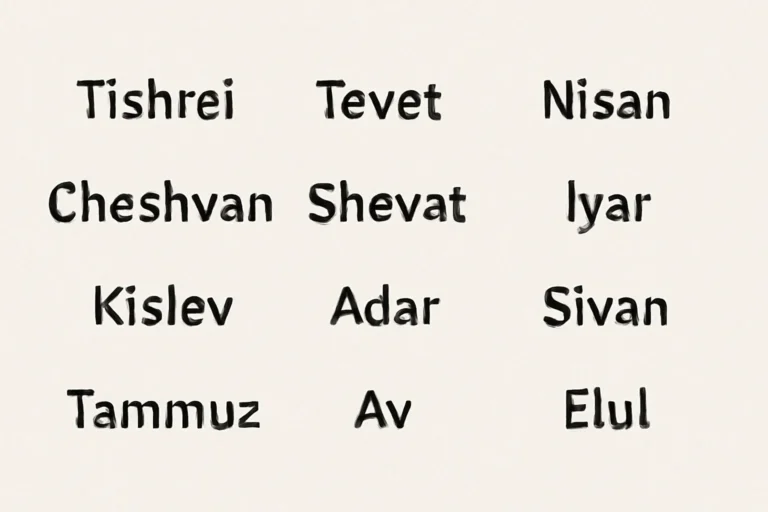
With the year length known and Rosh Hashanah set, proceed to map forward through the year to reach Nisan, the month in which Pesach begins. The Hebrew calendar uses the sequence of months that includes Cheshvan and Kislev, whose lengths can vary to adjust the overall year length. As you count:
Track month lengths (29 or 30 days) according to whether the year requires extra days to align with the solar year.
Identify the position of the month Nisan, which in the civil year follows Tishrei and several other months depending on the leap status.
Find 15 Nisan within that month. This date marks the start of Pesach in the Hebrew calendar.
To translate this into a Gregorian date, you must combine the date of 15 Nisan with the established mapping of the Hebrew year to the Gregorian calendar, which is precisely what a calendar algorithm or library provides.
Practical tools for calculators and planners
In modern practice, most people rely on technology to convert Hebrew dates to Gregorian dates and to determine the exact schedule of Pesach across years. Here are practical tools and strategies you can use:
Hebrew calendar libraries: Use a robust library in your preferred programming language to compute 15 Nisan and the Seder nights. These libraries incorporate the full rules, including leap years and dehiyyot, ensuring accurate conversions year after year.
Hebcal and similar services: Public services provide both online conversion and data feeds for dates of Jewish holidays, including Pesach. They are especially useful for event planning, education, and publishing.
Spreadsheet integrations: For personal planning, you can link to online converters from a spreadsheet or embed simple date lookups. This approach is convenient for family calendars and school timetables.
Educational tools: When teaching about calendars, you can build exercises that ask learners to convert a Hebrew date to Gregorian, or to determine whether a year is leap and how that affects Pesach scheduling.
Whether you are a developer, teacher, student, or family organizer, these tools empower you to plan effectively while honoring the festival’s timing and traditions.
Different observance patterns: Israel vs the Diaspora
The practical effect of calendar rules becomes most visible in the way Passover is observed in different communities. The two primary patterns are:
Israel: Pesach lasts seven days, beginning with the first day of 15 Nisan and ending on the 21st or 22nd Nisan depending on day counts and the local tradition. The first and last days are Yom Tov, and there is a mid-week focus on Chol HaMoed for the days between.
Diaspora: Pesach lasts eight days, with two Yom Tov days at the start and two at the end in many communities. The Seder nights for the first two days (in some traditions) are observed, and the intervening Chol HaMoed days are a mix of work and observance. This pattern affects travel plans, school calendars, and synagogue scheduling.
These differences do not change the underlying date of 15 Nisan itself; they reflect how that date translates into a seven- or eight-day festival season and how the ritual calendar is distributed across days.
Common scenarios and practical considerations
Understanding dates is most helpful when you’re preparing or teaching. Here are frequent scenarios and how to approach them:
Planning a Seder: If you’re hosting or coordinating a Seder, know that the first Seder night occurs on the first night of Pesach. In the diaspora, the second Seder night is also recognized in some communities, depending on local custom. Check your community’s practice and align invitations, recipes, and resources accordingly.
Travel and logistics: Many travelers schedule visits to family around the festival period. Since Pesach moves through March and April over the years, travel plans should be flexible, and accommodation should be booked with the festival’s public observances in mind (no work restrictions on Yom Tov days, when applicable).
Education and programming: Schools and religious programs often arrange curricula that reflect the festival’s timeline, emphasizing the days of Yom Tov versus Chol HaMoed. Understanding which days are festival days helps plan field trips, guest speakers, and public programs.
Community calendars: If you’re maintaining or publishing a calendar for a synagogue, school, or community center, indicate the diaspora pattern (8-day Pesach or 7-day Pesach) and mark the Yom Tov days. This helps ensure clarity for attendees and participants from different backgrounds.
While the rules are stable, certain edge cases and historical evolutions color how dates are perceived in different communities:
Calendrical reform and tradition: While the Hebrew calendar is highly standardized today, historical communities sometimes observed different practices. Modern communities rely on fixed rules and published calendars that conform to the consensus global standard, ensuring consistency across markets and continents.
Shmita and agricultural calendar: Some calculations may intersect with agricultural cycles and the Sabbatical year. In practice, the main festival dates, including Pesach, remain unaffected, but scholars and community leaders sometimes discuss how agricultural considerations relate to broader calendrical cycles.
Time-of-day conventions: The precise time when a day begins (sunset) is relevant for when Erev Pesach ends and when Shabbat and other days begin. In calendar calculations, the day is often considered to begin at sunset, affecting candle-lighting times and Seder schedules.
To make sense of the year’s timeline, imagine the year starting at Rosh Hashanah and continuing through the other months, with months turning 29 or 30 days and one leap month appearing in leap years. From this point, the calculation identifies when 15 Nisan falls. Once 15 Nisan is established, you can outline the festival’s span from erev Pesach through the concluding days. In short, the steps are:
Determine if the year is leap or common; identify if Adar II exists in that year.
Compute the length of the 12 or 13 months for that year, then locate 1 Tishrei using the molad and postponement rules.
Count forward through the year to locate Nisan, then identify 15 Nisan.
Convert 15 Nisan into the corresponding Gregorian date for your locale, taking into account Israel vs diaspora observance patterns.
Annotate the festival’s span, including Yom Tov days and Chol HaMoed periods, to produce a complete timeline for planning and celebration.
With this framework, you can approach each year’s dates with a consistent method, whether you’re computing dates by hand for study or coding a calendar tool for a classroom or community center.
Glossary and quick-reference terms
Familiarize yourself with these terms as you navigate Passover calculations and Jewish calendar discussions:
Nisan: The Hebrew month in which Passover begins; 15 Nisan is the date of Pesach.
Pesach / Passover: The festival celebrating freedom, observed for seven or eight days depending on locale.
Adar II: The leap-month in leap years, inserted to keep the calendar aligned with the solar year.
Molad: The mean conjunction of the Moon—the basis for when a new Hebrew month begins in calendar calculations.
Dehiyyot: Rules that postpone Rosh Hashanah and influence the entire year's layout.
Lo Adu Rosh: A key postponement rule that restricts Rosh Hashanah from falling on Sunday, Wednesday, or Friday.
Chol HaMoed: The intermediate days of festival weeks during Pesach when work is allowed but with some restrictions and special observances.
Yom Tov: Festival days when work is prohibited and special rituals are observed.
Eriv Pesach / erev Pesach: The evening before Pesach begins, a time of preparation and candle lighting.
Putting it into practice: a sample planning workflow
Whether you are building a family calendar, teaching a class, or preparing a community event, here is a straightforward workflow you can apply year after year:
Check the current Hebrew year status: leap or common, and identify whether Adar II is present.
Use a reliable calendar tool to fetch the date of 15 Nisan for your locale and tradition.
Note the start of erev Pesach (the evening before 15 Nisan) and mark the days of Yom Tov vs Chol HaMoed according to local practice.
Plan associated activities: Seder nights, synagogue services, school programs, and family gatherings.
Publish or share the timeline with stakeholders, including any diaspora-specific observances that may apply to some participants.
By following this practical approach, you’ll be well-equipped to manage Passover timelines in a way that respects tradition while leveraging modern planning tools.
To deepen your understanding or to implement calculation tools, consider exploring:
Official calendars from national or community authorities that publish Pesach dates and practice patterns.
Public Hebrew calendar libraries and APIs—great for developers building educational apps or personal planning tools.
Academic texts on the lunisolar calendar and the Metonic cycle, which provide historical context for why and how the calendar is arranged as it is.
Educational materials that illustrate Nisan and Passover rituals, enabling students to connect dates with observances and rituals.
Equipped with the concepts and methods outlined in this guide, you can confidently calculate and interpret Passover dates, understand their broader significance within Jewish timelines, and plan effectively for both personal and communal needs.
In summary, the process of calculating Passover dates blends ancient calendrical rules with contemporary planning tools. By knowing the structure of the Hebrew calendar, the role of Adar II in leap years, and the distinction between Israel and the Diaspora observances, you gain a practical capacity to translate a date like 15 Nisan into a clear, usable Gregorian date for any given year. This fusion of tradition and technology empowers communities to celebrate Passover with accuracy, meaning, and shared purpose.




Leave a Reply