When Is the Next Jewish Jubilee Year? Dates, Significance, and What It Means
When Is the Next Jewish Jubilee Year? Dates, Significance, and What It Means
The concept of a Jewish Jubilee year—known in Hebrew as Yovel—is one of the most ancient and enduring ideas in biblical law. It appears in the book of Leviticus as a great reset: the land must rest, ancestral property should be returned, and people who are enslaved within the community should be freed. Today, however, there is no universally observed Jubilee in any formal religious framework, and no widely agreed-upon date for the next Jubilee year in the modern world. This article examines what the Jubilee means, how it is calculated in theory, why it is not currently observed in practice, and what it could signify for individuals and communities if a future Jubilee year were to be recognized or observed in some form. We will use variations of the phrase “when is the next jewish jubilee year” to address different angles and questions people commonly ask.
What is the Jubilee year in Jewish law and tradition?
The Jubilee year is a biblical institution described primarily in Leviticus 25. It is the culmination of seven cycles of seven years each, known as the shmita cycle. In biblical terms, the sequence goes like this: each seventh year is a Shmita year, a sabbatical year when the land is to lie fallow and certain agricultural practices are limited. After seven such cycles, the fiftieth year—the Yovel or Jubilee—is proclaimed with the sound of the shofar, and a broad set of measures is enacted for that year.
Among the main elements described in the biblical text, several stand out as the core provisions of the Jubilee:
The land is to be returned to its original family allotments, restoring ancestral property to its owners.
Israelites who have become financially distressed or who have become enslaved must be released, and they may return to their extended families.
All agricultural production is to be treated as holy, with a divine emphasis on fairness and redistribution rather than accumulation.
A proclamation of liberty echoes across the land, signaling a reset in social and economic arrangements for the year.
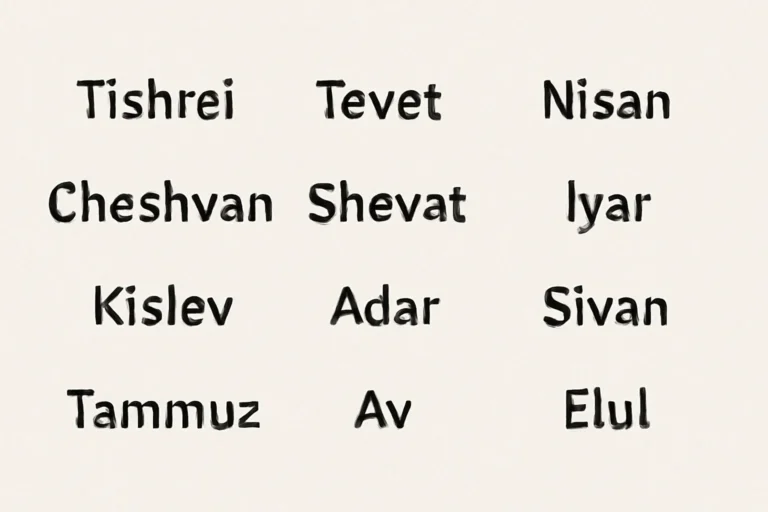
In practice, the Yovel is described as beginning on Yom Kippur, the Day of Atonement, in the 50th year (the year of the Jubilee). The biblical instruction says to sound the horn on the Tenth day of the Seventh Month, which is the tenth day of Tishrei—the month that contains Yom Kippur. Thus, the Jubilee year is traditionally tied to the calendar of the Jewish year in the land of Israel, and it is intimately connected with the idea of atonement, restitution, and communal restoration.
How the Jubilee is calculated: the theory behind the 50-year cycle
Seven cycles of seven years: the shmita framework
The Jubilee rests on the framework of seven cycles of seven years, totaling 49 years. Each seventh year, the community observes Shmita, a sabbatical year during which agricultural activities are restricted. The idea is that after the completion of seven cycles, the land rests for a full year and a reset occurs for society.
According to Leviticus, the 50th year is marked by a number of dramatic actions—land returns to families, slaves are freed, and debts may be forgiven. The language emphasizes a radical correction of social and economic imbalances that can arise over time. The proclamation of liberty and the restoration of property are the central motifs that give the Yovel its name and its moral weight.
Exact timing versus symbolic timing
The biblical text provides a concrete signal for the Jubilee year—the shofar blast on Yom Kippur of the 50th year. But there are important caveats when we translate ancient ritual into modern practice:
The Jubilee presupposes a functioning political and religious system in the land of Israel, including a Temple-era framework and a measure of centralized ownership of land. After the destruction of the First and Second Temples, the physical mechanisms for implementing a true Jubilee became impracticable.
Counting the years for the Jubilee requires a precise reckoning of the shmita cycle and the calendar, which in turn depends on the creation of or interpretation of a consistent anchor for the cycles. Over the centuries, rabbinic authorities have debated the method and the feasibility of continuing the cycles without a Temple or a unified agricultural system in the land.
In the Jewish diaspora, the practical instruments for full Jubilee observance—land redistribution, release of enslaved individuals, and universal debt cancellation—do not exist in the same form as in biblical times. This has led most modern scholars and communities to treat the Jubilee as a theological and ethical ideal rather than a calendar event that can be enacted today.
Historical and contemporary perspectives on observing the Jubilee
Historically, there is no record of a Jubilee being fully observed in the post-Temple era. The Temple’s destruction created a vacuum in which the precise fulfillment of the Yovel’s legal requirements could not be enacted. Over the centuries, Jewish communities have discussed the possibility of reconstituting or adapting the Jubilee in a modern context, but there is no consensus agreement on how—or even whether—the Jubilee could be implemented today.
In modern times, several related practices have continued or evolved:
The practice of observing the Shmita year in Israel, which influences agricultural law and public policy for that seventh year, though it is not framed as a Jubilee year itself.
Scholarly and rabbinic discussion about whether certain Jubilee-like gestures—such as debt relief within communities or charitable relief programs—could be considered spiritual or ethical stand-ins for the Jubilee’s spirit, even if the full biblical mechanism is not activated.
Interest in the social justice dimension of the Jubilee: many writers and religious thinkers emphasize the Jubilee’s message of rest, restoration, and rebalancing of social structures as a source of inspiration for contemporary economic and environmental ethics.
Is there a next Jubilee year in the modern era?
Many readers want a concrete answer to the practical question: When is the next Jewish Jubilee year? The straightforward response in most traditional halakhic (Jewish legal) circles is that there is no agreed-upon next Jubilee year to observe in the contemporary calendar. The reasons are historical, legal, and logistical, and they reflect a broader understanding of the Jubilee as a ritual that presupposed a functioning Temple economy and a land-related ownership system that no longer exists in the same form.
Still, there are several angles worth exploring for those curious about the possibility of a future Jubilee or about what such a year would entail if it were to be reinterpreted for today:
The halakhic stance: can we determine a next Jubilee?
Across Jewish legal authorities, the consensus is that there is no unanimous or practical method to declare a next Jubilee date in the absence of a rebuilt Temple and a reestablished framework for land ownership and agriculture in the land of Israel. In other words, while the principle of the Jubilee exists in Scripture, its operationalization requires conditions that are not currently present. This has led to the common position that the Jubilee year, as a calendar event with actionable consequences, cannot be invoked today in the same way it was in ancient times.
The exceptionally cautious view: deferment and interpretation
Some scholars and rabbinic authorities suggest that even if one could identify a theoretical Jubilee year in the distant future, it would be contingent upon significant political and religious developments—such as the reinstitution of a capable land-ownership system in Israel or the reestablishment of a ritual mechanism that binds the calendar to the land. In this sense, the question of when will the next Jubilee occur becomes a question about the future of Jewish sovereignty, religious practice, and our ethical orientation toward land and debt.
Proposals and discussions in modern Jewish thought
In contemporary Jewish discourse, the Jubilee is often invoked not as a date on a calendar but as a conceptual template for social justice. Some thinkers propose that the spirit of the Yovel—restoration, release, and redistribution—can inspire present-day policies around economic inequality, environmental stewardship, and community-based debt relief. In this sense, the Jubilee becomes a continual ethical project rather than a fixed, date-specific ritual.
Understanding the practical implications for today
Even without a fixed date for the next Jubilee, the Jubilee's theological and ethical resonances can illuminate how people think about property, labor, and justice in the modern world. Here are some meaningful ways to engage with the Jubilee concept in today’s context:
Property and stewardship: The Jubilee’s emphasis on returning land to original families invites reflection on fair land use, sustainable farming, and responsible stewardship of natural resources in a modern nation-state.
Debt and mercy: The idea of debt cancellation in the Jubilee offers a lens for considering social safety nets, financial reform, and charitable relief programs aimed at reducing systemic inequities.
Rest and reset: The sabbatical rhythms embedded in the Jubilee cycle encourage cycles of rest, renewal, and recalibration in both personal life and communal structures.
Liberty and dignity: The liberty proclamation resonates with contemporary civil rights discourse, reminding communities to protect human dignity and restore social balance.
What could the next Jubilee year mean if it ever happened?
If in some future scenario a form of Jubilee were to be enacted, several possibilities could emerge depending on how such a transition is interpreted and implemented. It might involve:
A symbolic or partial Jubilee that emphasizes social justice goals like debt relief within a voluntary or charitable framework, rather than a full legal restoration of ancient property rights.
A reconfiguring of agricultural laws in the modern state of Israel to honor ecological sustainability and shared stewardship of land, perhaps through incentives for rest periods for farmland and regenerative farming practices.
A communal dialogue about restitution and reconciliation, focusing on ethical obligations within families, communities, and nations, rather than a literal return of property to the original owners from biblical times.
What to expect in a hypothetical scenario
In a hypothetical Jubilee year, many practical questions would arise: Would there be a legal framework for property restitution in a modern economy? How would debt forgiveness be implemented in a globalized financial system? What role would religious and civic authorities play in overseeing such a transformative process? While this is speculative, the questions themselves illuminate the central values of the Jubilee: justice, mercy, and the restoration of human dignity.
For readers who want to explore the Jubilee more deeply, here are avenues to study and reflect on the topic, without assuming a current, imminent next Jubilee year date:
Read the biblical core: Leviticus 25 (the primary Jubilee text) and accompanying passages in Leviticus 27 and related sections that discuss property valuations and sacred years.
Explore rabbinic literature: the Mishnah and Talmud discuss Shevi'it (the seventh year) and related laws, as well as interpretive debates about how to count years in the absence of a Temple.
Study modern commentaries on the social and ethical dimensions of the Jubilee, focusing on themes of land, debt, and liberty in contemporary settings.
If you are curious about the practicalities and the meaning of a potential future Jubilee, consider these guiding questions:
What is the anchor year? Do biblical scholars or rabbinic authorities propose a recognized starting point for counting the cycles in the modern era?
What could be observed today? Are there symbolic practices or charitable initiatives that could mirror the Jubilee’s spirit without requiring a rebuilt Temple or a drastic overhaul of property laws?
What is the ethical aim? Is the focus on debt relief, land stewardship, social equality, environmental justice, or a combination of these?
What institutions would lead? Which religious, civic, or academic bodies would be responsible for guiding such observances, and how would they coordinate with government policy?
Even though there is no universally acknowledged date for the next Jubilee year today, the Jubilee remains a powerful symbol in Jewish thought and broader cultural discussions of justice. Its enduring significance rests on several pillars:
Restoration of the vulnerable: The Jubilee emphasizes releasing those in financial distress and restoring families’ livelihoods, which resonates with modern concerns about inequality and poverty.
Return to rightful ownership: The idea that land should not be permanently monopolized by a few introduces a challenging perspective on ownership, privilege, and community responsibility.
Ethical reset: The call for a break from the rent-and-accumulate cycle invites people to rethink how wealth, land, and power are distributed and used.
Spiritual renewal: The Jubilee links social justice with sacred time, a reminder that ethical behavior toward others is an essential part of religious life.
To address different audiences and purposes, people often phrase the question in multiple ways. Here are some common variations you might encounter, along with brief clarifications:
“When is the next Yovel?” A question framed in Hebrew terms that points toward the same biblical year, but may reflect a community’s specific liturgical or rabbinic tradition.
“What is the next Jubilee date in Israel’s calendar?” A targeted query that acknowledges the land-centered aspect of the Jubilee and the contemporary importance of Israeli agricultural and legal frameworks.
“Is there a future Jubilee that can be observed today?” A practical question about whether any form of Jubilee observance could be instituted under present conditions.
“How would a Jubilee work in today’s world?” A broader inquiry into the ethical, economic, and ecological implications if a Jubilee were to be reinterpreted for modern life.
Whether or not there is a fixed next Jubilee year in the foreseeable future, the Jubilee’s core ideas can continue to guide personal and communal conduct. It challenges communities to consider questions of debt, justice, land stewardship, and social responsibility. It invites spiritual reflection about time, rest, and the obligation to repair broken social orders. In that sense, the Jubilee endures as an ideal—one that can inform ethical action today even if the precise year is not known or agreed upon.
The Jubilee is a biblical year of restoration, proclaimed in the 50th year after seven cycles of seven years, and it begins with the shofar on Yom Kippur in that year.
Observing a true Jubilee in the modern era is not presently practical or universally accepted, given the absence of a Temple-based framework and the complex realities of modern land tenure and debt systems.
Nevertheless, the Jubilee’s ethical message—restoration of land to families, freedom for those in servitude, and a cancellation of debt—continues to inspire discussions about social justice, environmental stewardship, and economic equity today.
For readers who want to explore further, consider reading the biblical text alongside classical commentaries, then examine how modern Jewish thinkers apply the Jubilee’s values to current issues. If you are part of a community in Israel or abroad, discussions about Shmita (the seventh-year rest) and related practices can offer practical avenues to engage with themes of rest, renewal, and social responsibility in the present day.







Leave a Reply