Megiddo in Biblical History: Its Role in Scripture and Archaeology
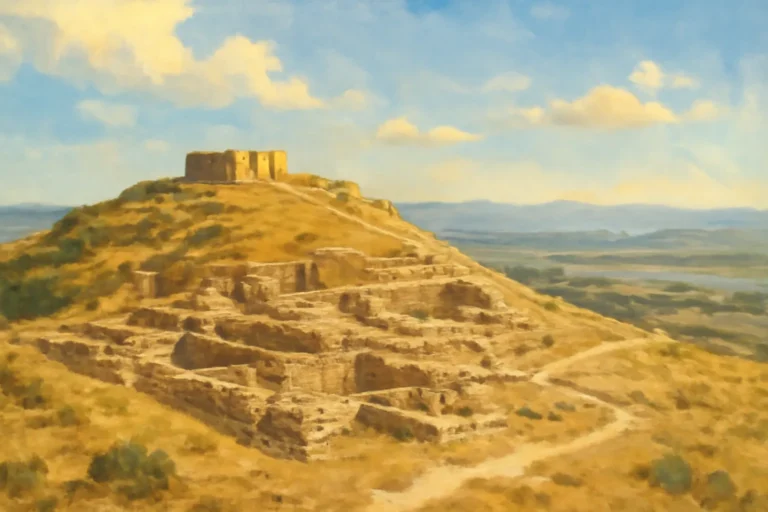
Megiddo, also known as Tel Megiddo or Har Megiddo in Hebrew, sits on a windswept hill overlooking the fertile Jezreel Valley in northern Israel. This site, sometimes called the plain of Esdraelon in ancient texts, is one of the most intensively studied locations in biblical archaeology. Its long, multi-layered occupation—spanning the Bronze Age through Byzantine times—offers a remarkable laboratory for understanding how cities in the ancient Near East were built, fortified, and governed, and how their stories intersect with biblical memory. The name variations themselves reflect a deep history: Megiddo is the common form in Hebrew and English, Tel Megiddo signals the tell or mound that preserves layers of city life, and Har Megiddo emphasizes the hilltop name used in biblical months and prophecies. The site’s strategic position on a chokepoint between the coast and the Jordan Valley helped ancient powers project control across the region.
The significance of Megiddo goes beyond its impressive tell. It embodies a crossroads of commerce, military strategy, and religious memory. Its elevated location overlooks key routes that connect the Mediterranean littoral to inland plains, and it guards routes that caravans and armies used to pass between Egypt, Phoenicia, Aram-Damascus, and the heartland of Canaan. In the pages that follow, we will survey how Megiddo appears in Scripture, how archaeologists read its remains, and what the site teaches about the longue durée of biblical history.
The Jezreel Valley, a broad, fertile corridor, has long served as a natural highway in the Levant. Because Megiddo sits at one end of this corridor, it controlled the approaches to the valley from the coastal plain and from the eastern hills. The site also guards access to the rich agricultural lands around the valley and to the neighboring hill country, where several city-states and tribal centers competed for dominance. In ancient times, the ability to hold Megiddo meant holding a gatekeeper position on a network of routes that historians now call the Via Maris—the Great Way that linked Egypt with Mesopotamia and Anatolia.
In practical terms, the city’s fortifications, water supply, and monumental architecture reveal a society accustomed to siege, alliance, and multiethnic exchange. Its water system, a subterranean tunnel carved to bring fresh water into the city, is widely regarded as a masterpiece of urban planning designed to sustain a population during prolonged attacks. The Megiddo water tunnel and the adjacent cisterns demonstrate a centralized authority capable of mobilizing labor and resources for ambitious public works.
Megiddo in Biblical Narrative
The biblical corpus treats Megiddo as a city of imperial weight and symbolic significance, appearing in contexts ranging from dynastic campaigns to prophetic imagery. Its name survives in Hebrew as Har Megiddo, literally the “Mount of Megiddo,” even when the city itself is not on a mountain but on a commanding mound. The site is tied to at least two major strands of biblical history: the imperial-era campaigns of Egyptian and Near Eastern powers in the late second millennium BCE, and the monarchic and post-monarchic narratives of Israel and Judah in the first millennium BCE.
The Bronze Age Campaigns and the Egyptian Record
In the Bronze Age the city appears in the broader record of Egyptian power in Canaan. Ancient inscriptions and the comparative chronology suggest that a major campaign conducted by Thutmose III and his successors culminated in a battle near Megiddo around the 15th century BCE. This event, often treated as one of the earliest extensively documented military engagements in the region, is reflected in the Egyptian annals and in the excavated stratigraphy that shows a fortified city prepared for siege and relief. The Megiddo narrative in this era is less about a single house-to-house combat and more about the projection of a centralized authority into a contested landscape, with Megiddo acting as a fulcrum of power, logistics, and diplomacy.
The Iron Age, the Israelite Monarchy, and the Solomonite Debate
As the scriptural timeline moves into the Iron Age, Megiddo sits within the political contests of the Israelite and northern Canaanite polities. The Northern Kingdom era, including the era associated with Solomon and later kings, is reflected in monumental architecture, administrative installations, and fortified complexes. A centerpiece of this period is the so-called Solomon’s Stables, a sprawling structure whose date and function have been the subject of scholarly debate. Proponents view it as evidence for centralized royal activity in the late 10th century BCE, while others resist a single-dynasty dating, arguing instead for a broader Iron Age complex that served multiple administrative purposes. Regardless of the precise dating, the stables and the adjacent royal architecture underscore Megiddo’s role as a major political and religious center in the region.
The narrative evidence in the Hebrew Bible sometimes presents Megiddo in a frame of military caution—the site repeatedly figures into strategy, frontiers, and the broader theme of secure borders for the people of Israel. The biblical authors use Megiddo to illustrate the tenuous balance between alliance and conquest, between local autonomy and imperial suzerainty. Across the Iron Age, the site’s fortifications and layout reveal communities that lived with the shadow of larger empires and still carried out vibrant local governance, religious practice, and economic exchange.
Armageddon and Eschatology: The End-Time Connection
In Christian eschatology, the name Armageddon has secured a lasting cultural resonance. The term is a translation of the prophetic phrase Har Megiddo from the New Testament book of Revelation, which identifies a final, climactic battle between cosmic forces of good and evil. While the biblical text does not describe the modern world’s politics or geography, it anchors apocalyptic expectation to a real place with a storied past. The association of Armageddon with the Jezreel Valley and its strategic crossroads has shaped centuries of theological reflection, artistic interpretation, and popular imagination.
Theologically, the link between Megiddo and the end of days has invited varying readings: some traditions treat Armageddon as a literal future conflict; others interpret it symbolically as a victory of justice and divine sovereignty over history’s powers. Scholars emphasize that Revelation’s use of Har Megiddo leverages the memory of a real place to convey universal themes—judgment, renewal, and the ultimate triumph of righteousness. In biblical exegesis, Megiddo thus becomes a linguistic and conceptual bridge between ancient history and prophetic expectation.
Archaeology at Tel Megiddo: Excavations, Methods, and Milestones
The archaeological project at Tel Megiddo is a story of long-term, multi-disciplinary work that has changed our understanding of ancient Near Eastern urbanism and biblical history. Early expeditions in the early 20th century began mapping the tel and recording visible walls and gates. The most influential modern program was led by Gottlieb Schumacher in the early 1900s, followed by the pivotal field seasons organized by Yigael Yadin in the 1960s and later decades. These projects introduced stratigraphic excavation, systematic recording of architecture, and a careful integration of textual sources with material remains.
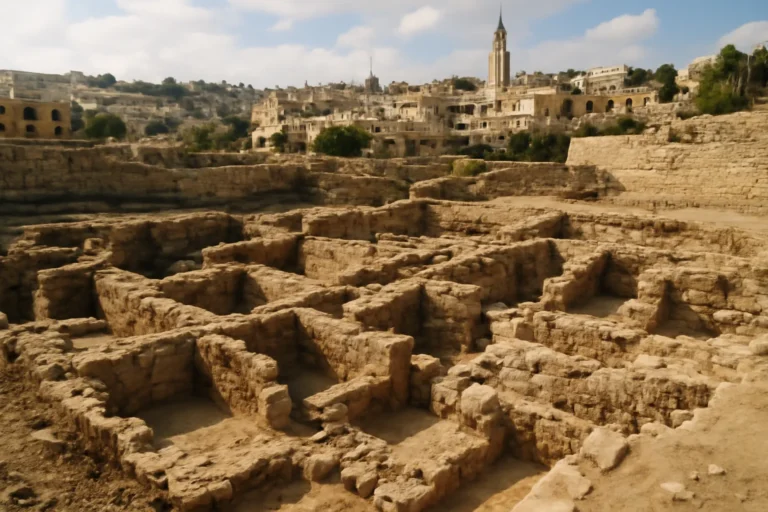
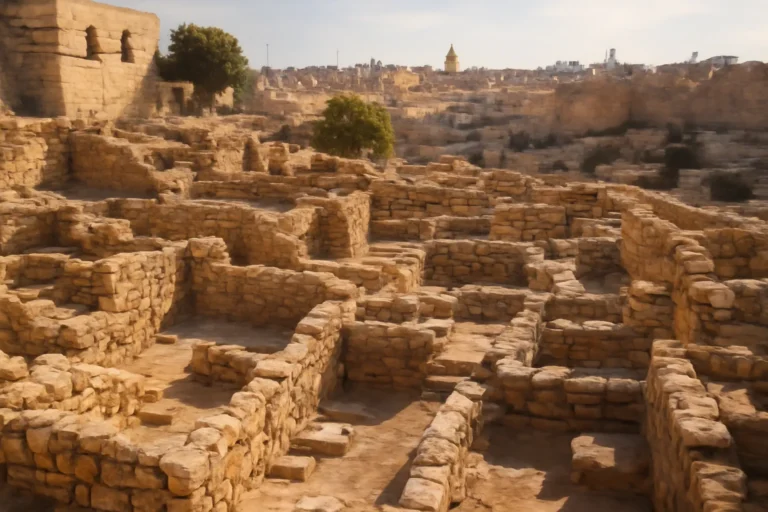
The Megiddo excavations yielded a wealth of material culture—ceramics, inscriptions, architectural fragments, and complex infrastructures—that trace a diachronic arc from the Bronze Age through the Roman and Byzantine periods. A hallmark of the site is the ability to correlate a tall sequence of occupation with a layered architectural program: gates built and rebuilt, defense walls expanded, and public buildings remodeled across centuries. The work at Megiddo is a touchstone for how field archaeology can illuminate biblical history without collapsing it to a single narrative.
Early 20th century surveys and rescue-type excavations that established the basic stratigraphy of the site.
Mid-20th century to the present: systematic, multi-season excavations with robust methodology, including stratigraphic layers corresponding to the Late Bronze Age, Iron Age I and II, and later periods.
Interdisciplinary endeavors, incorporating architecture, hydrology, fire layers, and paleobotany/paleozoology to reconstruct daily life and warfare.
The city gate complexes, which reveal innovations in fortification and urban design over time.
The Megiddo water system, a subterranean conduit that allowed water access during sieges, demonstrating sophisticated planning and engineering.
The monumental royal complex and the adjunct Solomon’s Stables, which illuminate the political economy of the Iron Age kingdom and its religious life.
Large storage facilities and workshop areas that attest to a bustling, integrated economy.
Hundreds of ostraca (inscribed pottery sherds) and decorative elements (including the famous Megiddo Ivories), which give us a window into administration, ritual, and trade networks.
The Chronology of Occupation at Megiddo: A City Across Time
The stratigraphy of Tel Megiddo reveals a chronicle of occupation that reflects broader Near Eastern history. The site preserves distinct layers that correspond to major cultural and political shifts, allowing archaeologists to calibrate biblical narratives against independent material evidence.
Bronze Age I–III: Early urbanization in the Levant, with robust fortifications and elite residences. The presence of administrative records and elite cultic rooms hints at religious and political life on a regional scale.
Late Bronze Age: A period of flourishing trade networks, monumental constructions, and close contact with Egyptian and Levantine polities. The remains show a city that was integrated into a wider network of diplomacy and conflict.
Iron Age I–II: A transition toward a more centralized political structure with developing Israelite identity. The megastructures, fortifications, and the large public complex signal state organization and ritual life.
Persian to Hellenistic periods: New building programs and changes in material culture reflect the broader imperial context of the Achaemenid and Hellenistic eras.
Roman and Byzantine phases: The site continues to be occupied and modified, integrating it into the provincial networks of the Roman and late antique world.
Megiddo in Biblical History: Architectural Reminders of a Sacred Landscape
The material culture of Megiddo corroborates biblical questions about urban governance, temple or cultic spaces, and the role of royal authority. The combination of monumental architecture, water engineering, and administrative rooms points to a city that functioned as a hub of power in the region. In the biblical frame, Megiddo is both a real city and a symbol of the contested sovereignty of Israel and its neighbors in the land promised to the patriarchs. The discovery of public works, such as water conduits and large storage facilities, aligns with descriptions of fortified centers that could withstand sieges and supply troops during campaigns recorded in the biblical tradents.
The Megiddo Water System: Engineering and Defense
Among the most iconic manifestations of Megiddo’s ingenuity is its underground water system. The water tunnel—a long, carefully carved channel running from a cistern to a location outside the fortifications—represents a response to siege warfare that is rare for its scale and sophistication in the Levant. This feature, together with vertical shafts and surface reservoirs, demonstrates how the city’s leaders invested in secure water supply as a core element of military strategy. The ability to sustain residents during a siege would have extended the city’s endurance and increased its strategic value during campaigns by major powers.
Megiddo’s Monumental Architecture: Gates, Palaces, and Administrative Centers
The built landscape of Tel Megiddo includes multi-phase gates that reveal evolving defensive concepts and ritual spaces that hint at ceremonial life. The site’s palatial and administrative compounds, sometimes interpreted as royal or quasi-royal in function, illustrate how a complex bureaucracy supported the city’s external diplomacy and internal governance. The combined evidence from the gate complexes and the administrative buildings contributes to a broader understanding of how Iron Age polities operated in the southern Levant.
Megiddo’s Cultural Layer Cake: Artifacts and What They Tell Us
The artifact assemblage from Megiddo spans a broad range of material culture. Among the most striking are the ivory pieces from late Bronze Age contexts, which testify to long-distance exchange networks and the presence of high-status goods in the city. The ceramics, metalwork, and imported wares reveal a city deeply embedded in the commercial and cultural circuits of the ancient Near East. In this sense, Megiddo is not only a military stronghold but also a cosmopolitan center where artisans, merchants, scribes, and priests interacted with travelers and rulers from across the region.
Megiddo in Comparative Perspective: Biblical History and Archaeology in Dialogue
The story of Megiddo shows how archaeology can illuminate, but not exhaust, biblical history. Texts describe campaigns, dynastic ambitions, and apocalyptic expectations; archaeology provides a tangible record of the city’s physical development and social complexity. Some biblical episodes—such as the campaigns of mighty kings or the arrival of foreign powers—are echoed in the strata of Megiddo, offering a cross-check between textual tradition and material evidence. Other biblical moments are more difficult to localize, reminding us that sacred memory often transcends the precise geographic and political borders that archaeology seeks to chart.
Megiddo as a Case Study for Biblical Urbanism
In the broader field of biblical archaeology, Megiddo serves as a crucial case study for how a single site can illuminate several themes: the development of urban planning in the Iron Age Levant, the methods by which states mobilized labor for large public works, and the interplay between religious life and political legitimacy. The city’s monumental architecture and long sequence of occupation show a society that was not merely reacting to external threats but actively shaping its own destiny in a contested landscape. As scholars compare Megiddo with other hilltop cities and plains centers, a clearer portrait emerges of how kingdom centers in ancient Israel and its neighboring polities sustained themselves over centuries.
Contemporary Significance: Education, Tourism, and Scholarship
Today, Megiddo stands as a dynamic hub for education and pilgrimage. The site attracts researchers, students, and visitors who come to study the layers of history visible in the tell, to imagine the sounds of chariots on the gates, and to reflect on the way a single location can carry multiple voices from different eras. For scholars, Megiddo remains a living archive, where new excavations, new dating methods, and new interpretations continually refine our understanding of biblical history. For readers and believers, it is a tangible reminder that the past can illuminate the present—and that the language of the Bible remains deeply connected to real places where history unfolded.
Key Takeaways: The Meaning of Megiddo in Biblical History
Megiddo marks a strategic hub at the crossroads of major ancient routes, making it a focal point for imperial competition and local administration.
The site’s multiple occupation layers illuminate how urban centers in the Levant adapted to changing political landscapes—from Egyptian influence in the Bronze Age to Israelite and then Hellenistic/Roman authorities.
The water system is a standout example of ancient engineering that undergirded siege resilience and urban sovereignty.
Archaeological discoveries, including the Solomon’s Stables, the gate complexes, and the Ivory artifacts, provide a material counterpoint to the biblical narrative and invite careful, context-aware readings of scripture.
The usage of Har Megiddo in the New Testament as Armageddon links a real historical site to a potent eschatological symbol, illustrating how memory and prophecy interact across centuries.
In sum, Megiddo embodies a unique convergence of geography, history, and faith. Its story—told through stone, water, and memory—continues to inform our understanding of how ancient peoples built cities, waged campaigns, commemorated their gods, and imagined a future shaped by the past. For students of scripture and scholars of archaeology alike, Megiddo remains a powerful reminder that history, when studied with care, can enrich the meaning of sacred texts and sharpen our awareness of the human story across time.