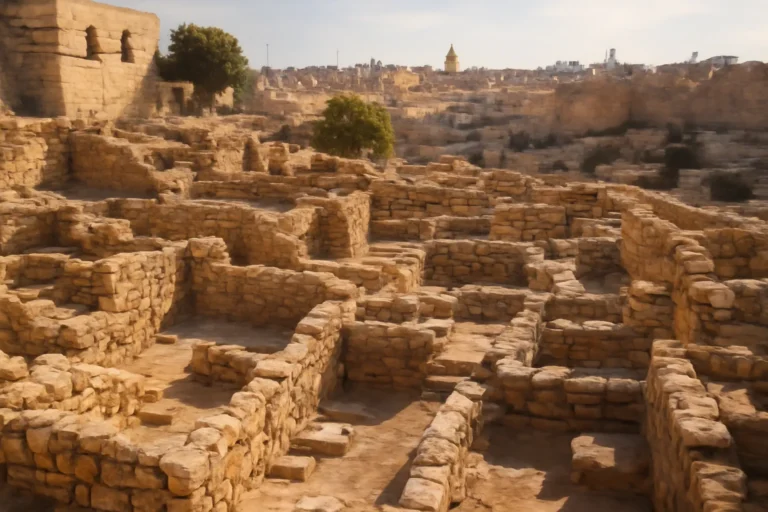
The Capernaum archaeological site sits on the northwestern shore of the Sea of Galilee (also known as Lake Tiberias), a setting that has attracted visitors and scholars for generations. This expansive complex, often described as an archaeological park, preserves a remarkable sequence of layers that reveal how a small fishing village in ancient times evolved into a focal point of religious, commercial, and social life in the Galilee. Today’s visitors come to study a mixture of Roman-period houses, a monumental synagogue that was used for worship and study, and a first-century dwelling reputed to be associated with the Apostle Peter. The phrase Capernaum archaeological site can refer to the physical ruins, the broader historical landscape, or the ongoing scholarly work that interprets these remains for modern audiences.
Located near the bustling road corridor between the cities of Tiberias and Nazareth, the old town that once hummed with fishermen, traders, and pilgrims now offers an accessible window into daily life in antiquity. The site’s significance stretches beyond tourism: it provides key context for understanding the region’s religious and social dynamics during the late Second Temple period, into late antiquity, and through the early centuries of Christian tradition. When people visit this spot, they encounter not only the stones of ancient builders but also a narrative about how communities reform and reconfigure sacred spaces over time.
A Historical Perspective: From Village to Cultural Landmark
The history of the Capernaum archaeological landscape begins with a modest Galilean village that thrived because of its location along the Sea of Galilee’s fishing routes and trade networks. The name Capernaum itself—often rendered as Kfar Nahum in Hebrew—speaks to a settlement with a long memory, a place where generations of residents left residues that later archaeologists would carefully excavate and interpret. For many visitors and students, the most arresting aspect of the site is the way it layers different centuries in a single view: Roman-era houses with their domestic rooms, a later-era synagogue bearing stylistic hallmarks of Jewish religious architecture, and Christian-era modifications that hint at a dramatic reimagining of the space.
The historical importance of Capernaum arises from its role as a regional hub in the Galilee and as a site associated with the early Christian movement. In biblical tradition, the town appears in the Gospels as a place where Jesus taught in the synagogue and performed miracles. The mapping of this narrative onto physical remains at the Capernaum archaeological site provides a tangible link between sacred texts and material culture, and it invites visitors to consider how cities in the ancient world could host multiple layers of meaning—economic, religious, and social—within a single radius.
Over time, the urban fabric of Capernahum transformed as political power shifted and communities reorganized their religious life. The Roman period left behind a distinct set of architectural forms—hewn stone blocks, straight streets, and public spaces—that later communities repurposed or superseded. In the centuries that followed, Christians of different generations constructed churches, basilicas, and other edifices that overlapped with the earlier Jewish and secular remains. Today’s archeological record preserves these strata in a way that scholars can analyze, compare, and teach about the city’s evolution from a modest village into a site of ongoing religious memory.
What You Can See: Core Features and Their Meanings
The Ancient Synagogue: A Landmark of Local Faith
The most iconic feature of the Capernaum ruins is the ancient synagogue, a monumental structure built in late antiquity atop or near older foundations. The synagogue is not only a place of worship; it is a civic and educational space where residents met to study scripture, discuss laws, and exchange news. The architectural language of the synagogue—massive basalt blocks, a rectangular plan, and a prominent doorway—speaks to the public nature of the building and its role as a community center. For visitors, the synagogue offers a stark contrast with the later Christian additions to the site, highlighting how sacred space in this locale shifted from a house of study to a house of worship for a broader audience.
The House of Peter: A First-Century Dwelling and Early-Christian Narrative
Among the most debated discoveries at the Capernahum archaeological complex is the structure widely described as the House of Peter. This dwelling, dating to the 1st century CE, is believed by many scholars to have hosted Jesus and his disciples or to have served as a place where early Christian communities gathered. The remains of this house were later enveloped by Christian builders who constructed a church-like space above and around it, creating an unmistakable physical memory of the apostolic association. Though interpretations vary and some aspects remain debate among researchers, the consensus is that the site presents a compelling case of continuity and transformation: a domestic space repurposed as a sacred site, a pattern echoed across the broader archaeology of the region.
Other Structures and Artifacts: Everyday Life in an Ancient Town
Beyond the synagogue and the House of Peter, the ruins at Capernaum include a variety of domestic rooms, lanes, and public spaces. Excavations reveal kitchen areas, courtyards, and storage rooms that illustrate how people lived, cooked, and traded in daily life. The stone-cutting technologies, plaster finishes, and architectural proportions reveal a community skilled at building in durable, locally available materials. In addition, the archaeological record preserves objects such as pottery shards, coins, and inscriptions that help researchers date layers of occupation and trace changes in economic life, trade connections, and cultural exchange. The site’s artifact assemblage is a valuable resource for understanding how a small settlement integrated into wider networks of the eastern Mediterranean world.
Excavations: Unfolding the Past Through Methodical Discovery
The reporting and interpretation of the archaeology of Capresnahaum have been shaped by systematic excavations conducted over several decades. The excavation program at this site matured during the 20th century, as teams from Israeli institutions and international partners sought to document, preserve, and interpret the visible remains while preserving the fragile stratigraphy that lies below the surface. Excavators used careful stratigraphic methods to distinguish living floors, building phases, and later modifications. The work has produced a mosaic of findings that scholars continually reassemble in order to reconstruct a plausible history of the site and to test connections between the material record and textual sources from ancient authors.
A Timeline of Major Phases
20th century foundations—Initial surveys and surface mapping to identify the main structural footprints and to plan for later dig work.
1960s–1970s—Systematic excavations uncover the synagogue, the House of Peter, and several domestic quarters. These years mark the transition from scavenging discoveries to controlled, multi-season campaigns.
1980s–1990s—Refined stratigraphic mapping, more precise dating, and the delineation of public and sacred spaces within the tell. More inscriptions, if any, come to light and help anchor the site in broader regional chronology.
21st century—Ongoing conservation work within the framework of a national park; interpretation centers and visitor facilities are developed to provide on-site education for tourists and researchers alike.
The excavation strategy at the Capernaum archaeological site typically combines careful trenching with non-invasive survey methods to protect the integrity of the strata. One enduring challenge is distinguishing the various rebuilding events that created the visible layering. Because the site has been occupied and re-occupied across centuries, archaeologists must decipher which features belong to everyday life and which are the result of religious remodeling or public works. Conservation priorities also guide how much of the site is exposed for public view versus kept in controlled conditions to prevent weathering and deterioration.
In modern times, the Capernaum archaeological site has been integrated into a managed park that aims to balance accessibility with the preservation of fragile features. The governance approach often emphasizes both the protection of stonework and the interpretive opportunities for visitors. As you walk the site, you will encounter well-marked routes, informational placards, and designated viewing platforms that help you appreciate the scale and intent of each structure without compromising its longevity. The park structure also supports educational programs for schools and tourists who wish to deepen their understanding of the area’s layered past.
Visiting the Capernaum Archaeological Site: Tips for a Meaningful Visit
Planning a visit to the Capernaum ruins requires a little preparation to maximize your understanding and enjoyment. The site is often visited as part of a broader itinerary in the Galilee, so timing, transportation, and nearby attractions are important considerations. Below are practical tips designed to help first-time visitors, seasoned travelers, and scholars alike experience the space with insight and care.
Best Time to Visit and Seasonal Considerations
The climate around the Sea of Galilee can be hot in the summer and fairly mild in spring and autumn. For many travelers, spring (March–May) and autumn (September–November) offer ideal conditions for outdoor exploration, with moderate temperatures and comfortable walking weather. Early mornings or late afternoons tend to be quieter, allowing visitors to study the stones and the layout with lower crowds. Winter visits are possible but may require extra layers and caution for slick surfaces after rain.
How to Get There and Where to Start
Access to the capernaum archaeological site is easiest from major Galilee hubs such as Tiberias or Nazareth. If you are driving, follow local signage toward the coastal area and the national park entrance. Public transportation options exist, but schedules can be infrequent, so it is wise to coordinate with a tour operator or local transit planners if you prefer to use buses. A typical plan is to begin at the visitor center or the main gate, where you can receive a map, learn about current exhibits, and pick up audio guides or guided-tour options.
What to See and How to Pace Your Visit
A thorough tour should include several core elements: the ancient synagogue, the remains of the House of Peter, and the overall architectural setting of the tell. It is also worth examining the adjoining public spaces, such as courtyards and lanes that reveal how daily life was organized. The layout of the site often makes it possible to compare the household spaces with the public religious spaces, offering a tangible demonstration of how private and communal life intersected in antiquity. If time allows, extending your visit to nearby water-front viewpoints or other Galilean sites helps create a broader frame for understanding the region’s history.
Practical Advice for a Comfortable Visit
Wear sturdy walking shoes suitable for uneven stone surfaces.
Bring water, sun protection, and a hat, especially in warm months.
Guided tours can offer rich context; ask about the on-site interpretive programs and whether there are opportunities to visit less-visible zones with a guide.
Check official sources for opening hours, seasonal closures, and any permits or entry fees.
Respect the preservation rules: do not touch fragile walls or carved features; stay on defined paths.
Integrating the Visit: Nearby Sites and Regional Itineraries
The Galilee region presents a rich tapestry of related destinations that complement a day at the Capernaum archaeological site. Many travelers couple this site with visits to Tabgha, Magdala, and the Sea of Galilee’s western coast. Each location offers its own window into ancient life and early Christian heritage, allowing you to assemble a layered itinerary that covers religious history, ancient trade networks, and natural beauty. For those interested in a broader scholarly experience, reading about the regional archaeology helps frame what you see in Capernahum as part of a larger, interconnected story.
Educational and Scholarly Context: Why This Site Matters
The Capernaum archaeological site is frequently studied not only for its architectural features but also for the way it illuminates cultural transitions in the Galilee. The combined presence of an early-Christian site and a Jewish settlement in the same locale underscores how communities negotiated identity, space, and memory in the ancient world. Through careful analysis of building phases, one can trace the dynamic between continuity and change: a place that adapted to new religious currents while retaining its everyday character. For students, researchers, and history enthusiasts, Capernahum offers a compact laboratory in which to observe the interplay of religion, daily life, and public space across centuries.
Preservation, Ethics, and the Responsibility of Visiting
As with many archaeological zones, the responsibility for preserving the Capernaum ruins rests with both the managing authorities and with the visitors who come to learn. Ethical tourism involves staying on designated routes, not disturbing the artifacts, and following the guidance of park staff. It also means appreciating that some structures may be partially exposed or unstable, and recognizing that ongoing conservation work is necessary to safeguard the site for future generations. By choosing to visit with an awareness of preservation, travelers can support the long-term integrity of the archaeological park and its interpretive mission.
Additional Resources and Ways to Learn More
Readers who wish to deepen their understanding of the Capernaum archaeological site can consult a range of resources ranging from academic monographs to visitor-oriented guides. In addition to on-site placards and interpretive materials, reputable museum and university publications frequently feature updated analyses of the synagogue, the House of Peter, and other components of the ruins. Online portals operated by national authorities and cultural institutions provide maps, artifact catalogs, and context about the broader Galilee region’s archaeology. If you are assembling a research-friendly itinerary, consider contacting local archaeology programs or relevant heritage organizations to obtain curated reading lists and recommended readings that align with your interests.
Key Takeaways: Understanding the Capernahum Archaeological Landscape
The value of the Capernaum archaeological site lies in its power to narrate a story of continuity, change, and layering that characterizes many urban centers in the ancient world. By examining the central features—the synagogue and the House of Peter—alongside ancillary domestic spaces, visitors gain a sense of how a single place could function as a hub for worship, trade, family life, and memory across centuries. The site’s evolution—from a small village to a magnet for pilgrimage and study—offers a compelling case study in how sacred geography is built, challenged, and reinterpreted over time.
Plan a Thoughtful Visit: Quick Reference
Target a combination day that pairs the Capernaum ruins with other nearby sites along the Sea of Galilee for a full contextual experience.
Schedule a guided tour if you want deeper historical narratives and architectural explanations tied to the visible remains.
Prepare for uneven surfaces and shade variations; bring water and sunscreen during sunnier months.
Respect the site’s boundaries and take care with fragile or exposed stones; photography is usually allowed, but always follow posted guidelines.
In sum, the Capernaum archaeological site is more than a collection of ruins. It is a narrative of urban life in a borderland region, a bridge between Jewish and early Christian history, and a living classroom for anyone curious about how cities shape memory across generations. From the imposing silhouette of the ancient synagogue to the intimate traces of a 1st-century dwelling believed to be associated with Peter, this site invites sustained reflection, careful study, and a sense of wonder about the human past. Whether you are a student of archaeology, a devotee of biblical history, or simply a traveler drawn to landscapes where land and legend meet, Capernahum’s remains offer a vivid invitation to explore, interpret, and imagine.