Shevat in the Jewish Calendar: Meaning, Dates, and Significance
Shevat in the Jewish Calendar: Meaning, Dates, and Significance
In the Jewish calendar, Shevat (often rendered Shvat) is the eleventh month of the year in the civil count and a key reference point for agricultural and liturgical life. While it is not among the most widely celebrated months in terms of ritual holidays, it carries enduring meaning for ecology, agriculture, and the Jewish relationship to the land. The month begins after the fastidious days of Tevet and leads into the late winter season, with Tu BiShvat—the 15th of Shevat—standing out as a defining observance. This article explores the meaning of Shevat, its dates, and its significance within Jewish tradition and modern life.
The name Shevat is part of the traditional set of Hebrew month names that were adopted from older Near Eastern (primarily Babylonian) calendars. In Hebrew, the month is written שבט, commonly transliterated as Shevat or Shvat. The month’s name is inseparably tied to the historical habit of naming months by their position in the annual cycle as well as by their cultural-historical roots. In many discussions about the calendar, the term Shevat is used interchangeably with Shvat, though both refer to the same time period on the Hebrew calendar. While the exact etymology of the root behind the word is a scholarly topic with various theories, what is clear is that Shevat designates a fixed point in the yearly cycle and is not merely an abstract date on a page. The month’s name is part of a calendar system that has preserved ancient patterns while adapting to Jewish religious life across centuries.
Where Shevat sits in the year and its seasonal context
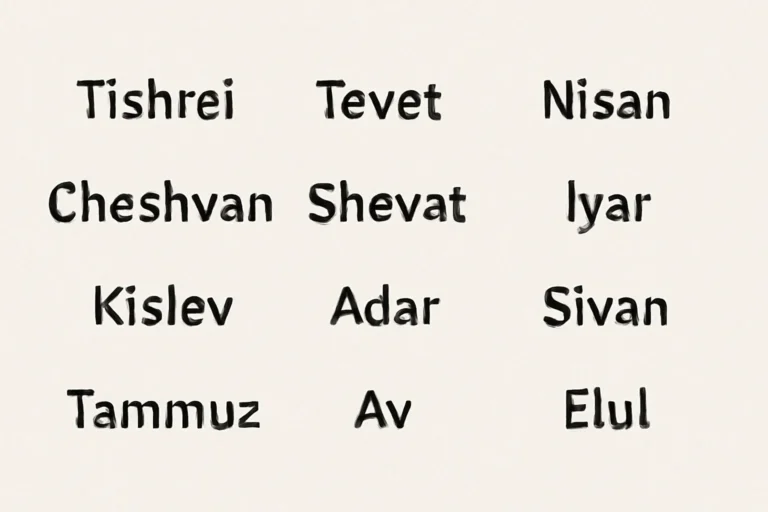
In the canonical sequence of the Hebrew calendar, Shevat comes after Tevet and before Adar (or Adar I in a leap year). This places Shevat squarely in the middle of winter in the northern hemisphere, and it often coincides with the coldest and wettest days of the season in Israel. The climate of the land of Israel during this period is a meaningful backdrop to the month’s character: rain may still be frequent, hills are green after the rains, and the natural world is in a phase of quiet, patient growth. The agricultural calendar of the Jewish people has long anchored itself around these seasonal rhythms, and Shevat functions as a marker within that cycle.
Two everyday observations help illuminate Shevat’s seasonal significance:
Winter resilience: The month embodies a time when the land is nourished by rainfall, and trees are in a state of dormancy or low activity, awaiting the spring. This season of patience connects to broader Jewish life, which often finds meaning in restraint and preparation.
Agricultural timing: The month marks a transition point for farmers and fruit-bearing trees; although fruit ripening and harvests become more visible in late winter and spring, the cycle that leads to later abundance is underway during Shevat. This is especially significant in the agricultural laws and customary practices tied to the land of Israel.
Dates and lengths: how long Shevat lasts and how Tu BiShvat is fixed
Some readers may wonder about the duration of Shevat and how its dates map onto the Gregorian calendar. A few essential facts help here:
Length of the month: In the fixed Jewish calendar, Shevat always has 30 days. It does not vary in length as some other months do (Cheshvan and Kislev can vary, but Shevat does not).
Placement: The month begins after the 1st day of Tevet and ends just before Adar. In a leap year, when Adar I and Adar II exist, Shevat remains the eleventh month, still followed by Adar I (30 days) and Adar II (29 days).
Relation to the solar year: Because the Hebrew calendar is lunisolar, its months drift relative to the Gregorian calendar by about one month every few years. Consequently, Shevat typically falls in January or February in the Gregorian calendar, with Tu BiShvat—the 15th of Shevat—occasionally landing in late January or early February depending on the year.
Tu BiShvat: The New Year for the Trees
The centerpiece of Shevat for many Jews around the world is Tu BiShvat, the 15th of Shevat, known in Hebrew as Tu BiShvat (where “Tu” stands for the number 15 in Hebrew, formed by the letters Tet-Vav). This date is traditionally celebrated as the Rosh Hashanah La'Ilanot, the New Year for the Trees. It marks a turning point in the agricultural cycle because it is used in the Torah and later halachic writings to determine certain agricultural obligations and the growth cycle of fruit trees, particularly in the land of Israel.
Rosh Hashanah La'Ilanot is a concept with deep roots in Jewish law and agrarian life. The Talmud and later scholars explain that this date is relevant for counting the age of trees for purposes such as tithes and other agricultural duties. The precise legal implications can vary by the type of fruit and the agricultural practice, but the overarching idea is that Tu BiShvat acts as a seasonal milestone for the natural world, a moment when the community recognizes that the land’s fruit-bearing potential is reset in a new cycle.
Over the centuries, Tu BiShvat has evolved from a simple agricultural marker into a vibrant occasion for eco-spiritual reflection and communal celebration. Modern practices vary by community, but several core elements recur:
Tree planting and environmental action: Alongside the agricultural symbolism, Tu BiShvat is widely associated with planting trees and caring for the environment. In Israel and Jewish communities worldwide, tree-planting campaigns, park restorations, and ecological education are common expressions of Tu BiShvat ethos.
Tu BiShvat Seder (in some communities): A contemporary and revived practice of holding a Tu BiShvat Seder has gained popularity since the 20th century, drawing inspiration from kabbalistic and modern ecological themes. The seder centers on eating fruits and drinking wine or grape juice, arranged in a symbolic progression that mirrors spiritual and physical nourishment.
Fruit-forward meals and dietary focus: Traditional observances emphasize consuming fruit, especially fruit associated with the land of Israel. Dried fruits, fresh seasonal fruits, and fruit-based dishes are common, with the menu sometimes including symbolic categories that reflect the four levels of the soul or the four types of fruits, depending on the community’s tradition.
Education and reflection: Tu BiShvat provides an opportunity for environmental education, ecological ethics, and a renewed appreciation for the interconnectedness of humanity and nature.
In addition, the day has different cultural resonances in various communities. Some Jewish communities emphasize the spiritual dimension of the trees and the land, while others highlight social justice and sustainable living as modern extensions of the holiday’s themes. The flexibility of Tu BiShvat allows it to function as a bridge between ancient agricultural law and contemporary commitments to the environment.
Other notable dates, observances, and themes in Shevat
Beyond Tu BiShvat, the month of Shevat carries a quieter weight in the liturgical and cultural calendar. While there are no major biblical or rabbinic holidays anchored specifically to Shevat aside from Tu BiShvat, the month intersects with several themes worth noting:
Rosh Chodesh (the new month): Depending on the lunar cycle, the 1st day of Shevat can coincide with Rosh Chodesh, the new month, and a day of holiday-like observances for some communities. When this occurs, prayers and seasonal customs accompanying Rosh Chodesh provide an additional layer of meaning for the day.
Shabbat and seasonal readings: In many years, the Shabbat closest to Tu BiShvat is an occasion for special readings or thematic messages about nature and renewal, even though there is no formal Hakafah or liturgical obligation tied strictly to the month.
Historical and liturgical associations: Some rabbinic sources reflect on wintertime themes—perseverance, longing for spring, and gratitude for rain—in comforting and poetic ways, reinforcing a link between human effort and the land’s vitality.
Rosh Hashanah La’Ilanot: Agricultural and legal dimensions
The Rosh Hashanah La'Ilanot status of Tu BiShvat carries practical implications for agricultural laws and religious obligations. Although not a public holiday, the date is the basis for determining when fruit trees’ cycles are measured for certain mitzvot. A few important points:
Orlah and Maaser: In halachic terms, the age of a tree is used to determine whether its fruit is permissible and whether tithes must be separated. While the rules of Orlah apply to trees in their first three years, and Maaser (tithes) apply to others, Tu BiShvat serves as a traditional yardstick for the year’s agricultural accounting. This is part of the broader structure of how the land of Israel is engaged with through the agricultural commandments.
fruit tithe cycles: Some authorities describe Tu BiShvat as the point at which certain cycles of fruit tithe are reset for the coming agricultural year. Practically, farmers in Israel and scholars who study the land’s laws use the date as a reference point for planning and ritualizing harvest obligations.
Ecological and ethical implications: In modern readings, Rosh Hashanah La'Ilanot has been adapted to emphasize environmental stewardship and sustainable practices, turning a traditional agricultural marker into a modern framework for caring for the land, biodiversity, and responsible farming.
Tu BiShvat in the modern Jewish world
Today, Tu BiShvat has grown beyond a purely agricultural marker into a holistic celebration of nature, renewal, and responsibility. Its observance challenges communities to reflect on the relationship between people and the land, to celebrate trees and forests as vital ecosystems, and to consider how climate, water, and soil health affect future generations. Several modern expressions illustrate this expansion of meaning:
environmental education: Many Jewish day schools, synagogues, and youth movements incorporate Tu BiShvat education into curricula, using the day to teach about plant biology, ecology, and sustainable farming, alongside traditional religious themes.
tree-planting drives: In Israel, as well as in many diaspora communities, Tu BiShvat is a prime time for tree-planting campaigns, often organized by municipal authorities, parades, NGOs, and youth groups. This aligns with the biblical and rabbinic emphasis on the land’s renewal post-rainy season.
eco-kosher and agricultural literacy: Modern Jewish life on Tu BiShvat frequently includes discussions about sustainable agriculture, responsible water use, and the ethical dimensions of food production—topics that resonate with many who are seeking to connect religious practice with contemporary environmental concerns.
cultural and artistic expressions: Music, poetry, and art projects centered on trees, fruit, and nature are common during Tu BiShvat in many communities, echoing the broader Jewish cultural creativity that often accompanies the holiday.
Practical guidance for learners and curious readers
For people seeking to observe Tu BiShvat or simply understand Shevat in context, here are practical notes and suggestions that capture the month’s spirit while providing actionable guidance:
Mark the date: Check the Hebrew calendar for the exact date of 15 Shevat (Tu BiShvat) in a given year. While the date typically falls in late January or February, the precise Gregorian date shifts because of the lunisolar system.
Plan a Tu BiShvat observance: Consider a small tree-planting activity, a nature walk, or a seder-like gathering focused on fruits and ecological stewardship. If possible, incorporate a moment of gratitude for rain, soil, and the trees that sustain us.
Prepare a fruit-forward menu: Include a variety of fruits—especially those tied to Israel’s land, such as citrus, dates, pomegranates, olives, and stone fruits when in season. Dried fruits, nuts, and fruit-based snacks are also fitting.
Learn about agricultural law: For those inclined toward rabbinic study, Tu BiShvat can be a gateway to learning about the agricultural mitzvot, the Maaser system, and how lands in Israel are ritually connected to the yearly calendar.
Engage with community: Many synagogues and community centers hold Tu BiShvat programs, including environmental workshops, nature education for children, and discussions about how Judaism intersects with environmental ethics.
Frequently asked questions about Shevat and Tu BiShvat
Below are concise answers to common questions readers often have about this month and its hallmark day:
What is the main holiday in Shevat? The main date is Tu BiShvat, the 15th of Shevat, celebrated as the New Year for the Trees and a festival of fruit and renewal.
Why is Tu BiShvat significant? It marks an agricultural milestone in the land of Israel, with Halakhic and ecological implications, and it has evolved into a modern celebration of environmental responsibility.
Does Shevat always have 30 days? Yes. In the Hebrew calendar, the month Shevat consistently contains 30 days, regardless of whether other months vary in length.
How do people typically observe Tu BiShvat today? Observances range from tree-planting campaigns and nature-centered education to Seder-like gatherings and family meals focused on fruit and renewal.
Is Tu BiShvat a biblical holiday? It is not one of the biblical festivals; it originates in rabbinic tradition as the New Year for the Trees, later enriched by Kabbalistic and modern ecological interpretations.
Variations on nomenclature and semantic breadth
When discussing Shevat, you will encounter several variants and phrases that refer to the same time period or its ideas. To help readers recognize these variations, here are examples of semantic breadth commonly used in texts and conversation:
Shevat and Shvat as interchangeable spellings for the eleventh month of the Hebrew calendar.
The phrase month of Shevat or the Shvat month to describe the time frame in annual discussions of the calendar.
15 Shevat or 15th of Shevat to denote Tu BiShvat, the holiday’s calendar date.
Rosh Hashanah La'Ilanot as the technical term for Tu BiShvat’s agricultural significance, sometimes translated as the New Year for the Trees.
References to the season’s context—winter in Israel, the rainy season, or ecological stewardship—to capture the month’s broader symbolic resonance.
Throughout Jewish history, the months of the calendar have served as anchors for ritual life, agricultural cycles, and even political and social rhythms. Shevat is no exception. Its primary religious influence today stems from Tu BiShvat, but the month’s presence in liturgy, education, and environmental ethics continues to shape how Jewish communities think about renewal and responsibility. In modern Israel, the environmental dimension of Tu BiShvat aligns with national and international conversations about sustainability, water management, afforestation, and ecological resilience. In the diaspora, Tu BiShvat serves as a platform for learning about the land of Israel, for charitable activity around nature and youth education, and for family ritual that emphasizes gratitude for nature’s cycles and the responsibilities they entail.
Shevat, as a month and as a season, stands at a crossroads of tradition and modern life. It embodies the rhythm of winter, the anticipation of spring, and the enduring bond between the Jewish people and the land. The 15th of Shevat, Tu BiShvat, crystallizes this intersection into a day of trees, fruit, and renewal—a reminder that the care we give to the natural world is an essential expression of spiritual and communal life. By recognizing the meaning of Shevat and embracing the modern observances that accompany Tu BiShvat, individuals and communities can cultivate a deeper sense of responsibility, gratitude, and hope for the flora, fauna, and soil that sustain us today and into future generations.








Leave a Reply