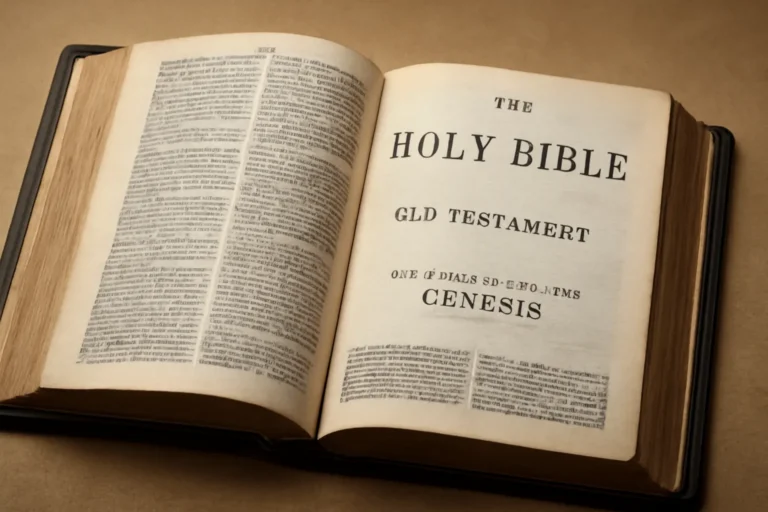
What is the King James Bible Authorized Version 1611?
The King James Bible, commonly abbreviated KJV, is the translation commissioned by King James I of England and published in 1611. It is also known as the Authorized Version, reflecting its intended status as the official Bible for the Church of England. This edition became one of the most influential literary and religious works in the English-speaking world, shaping both faith and language for centuries. In everyday contexts, people refer to the work as the AV1611, the Authorized Version 1611, or simply the 1611 edition. Its enduring legacy rests not only on its theological fidelity for many readers but also on its linguistic beauty, readability, and profound cultural impact.
In this article, we explore the history, the distinctive characteristics, and the significance of the King James Bible in its original 1611 form, as well as its ongoing influence in modern times. We also consider how later revisions and modern editions relate to the 1611 text and its reception across denominations and cultures.
History: the origins, production, and early reception
Origins and motivation
The project that produced the Authorized Version emerged from a long English tradition of Bible translation. Preceding translations, such as the Great Bible (1539) and the Bishops’ Bible (1568), provided foundations and precedents, yet many contemporaries believed these earlier texts could be improved for accuracy, accessibility, and ecclesial usefulness. The Authorized Version was conceived to resolve perceived inconsistencies and disagreements in previous English translations and to provide a translation that could be read aloud in churches. In 1604, at the Hampton Court Conference, King James I authorized a new translation project to be undertaken by a panel of scholars. The aim was to produce a Bible that would be faithful to the original languages while using natural English that could be read publicly and understood by congregations around the realm.
Commission and committees
Historically, the project brought together fifty-four scholars who worked in six committees, distributed across major English centers: Oxford, Cambridge, and Westminster (London) formed three of the principal groups. The work was carried out over several years, with the translators consulting the best available Hebrew and Greek texts of their day and applying established translation rules to render the text into clear and dignified English. The process was collaborative, but it also manifested the translators’ shared aims: to maintain doctrinal integrity, to preserve literary cadence, and to create a Bible that would be accessible to lay readers as well as clergy.
Textual basis and method
The King James Version drew heavily on the Textus Receptus for the New Testament and on the Masoretic Text for the Old Testament, with assistance from available early manuscripts and textual variants. The translators engaged in a formal, text-focused method that valued fidelity to the source languages, while also accommodating English idiom and rhythm. Their approach is often described as a blend of formal equivalence (trying to stay close to the wording of the original languages) and dynamic considerations for readability in English audiences of the period. The project’s rules—laid out in its preface—emphasized accuracy, dignity, and congregational usefulness, rather than novelty or flamboyant language.
Publication and first edition
The first edition of the Authorized Version was printed in 1611 by Robert Barker, a royal printer. The edition was richly produced, with a dense typography and a number of features that reflected its status as a ceremonial and scholarly text. It included the order of the books, the divisions into chapters and verses, cross-references, marginal notes, and a system of typographic devices intended to guide the reader. The Apocrypha—the additional books included in the Latin and some early English Bibles—were set in a separate section within the same volume in the original 1611 edition, reflecting the Protestant stance of the Church of England at the time. The 1611 edition also presented a form of the text that modern readers can recognize: the language is richly ceremonial and poetically resonant, with memorable cadences and a grand, ceremonial tone.
Initial reception was mixed in some quarters, but the King James Bible soon gained widespread use in Anglican worship, education, and public life. Its influence grew as ministers and lay readers embraced its dignified language and authoritative presentation. The edition quickly became the Bible most read in English households and churches, becoming an emblem of national identity for many English-speaking communities. In the centuries that followed, it circulated widely in the British Empire and beyond, helping to standardize a form of English that would have a lasting cultural ripple across literature, education, and public life.
Speaking to the future: revisions and ongoing life
As the Authorized Version aged, scholars and printers produced revisions to correct typographical errors, update spelling, and improve readability while attempting to preserve the dignity of the original text. The most consequential and widely adopted revision occurred in 1769, undertaken by Benjamin Blayney at Oxford University, which produced a standardized text that became the basis for most modern KJV editions. This revision did not alter the core translation but corrected typography, spelling, punctuation, and marginal notices, and it refined capitalization and the treatment of italics. Over time, other editions and printings emerged, including Oxford University Press editions, as well as various publisher-specific iterations used in homes, churches, schools, and libraries around the world.
Characteristics: what makes the King James Bible stand out
The 1611 edition is renowned for its majestic diction, rhythmic parallelism, and enduring cadence. The translators balanced reverence with readability, producing a text that could be chanted in churches and studied by scholars, while also making an enduring impact on the English language. The cadence and parallel structures found in many passages—such as the Psalms, the prophetic oracles, and the Gospel narratives—contributed to the literary status of the work. The vocabulary includes archaisms that have since become classic markers of early modern English, and some phrases or turns of expression have become entrenched in everyday speech and literary allusion.
Typography and paratext
In the 1611 edition, typography and paratext were carefully considered to aid comprehension and reverence. The volume often employs the long s form in places where modern readers would see an ordinary ‘s’ in many fonts. The translators used italics to indicate words supplied by the translators for grammatical completeness or for readability, a device that helps readers identify decisions of the translators rather than direct quotes from the original languages. Additionally, the marginal notes and cross-references offered readers alternatives and clarifications, inviting study and comparison with other biblical passages. Across generations, these features contributed to a sense of serious scholarly work alongside devotional reading.
Because the AV1611 relied on contemporary textual resources, some phrasing reflects choices that modern textual criticism would treat differently. Yet the translators aimed to reflect the underlying Hebrew and Greek texts as faithfully as possible while preserving the dignity of English expression. Some readers notice variations in passages that have produced debate in biblical scholarship—textual variants that arise from differences among manuscripts or from interpretive choices. The presence of these variants in marginal notes and in some later printings emphasizes the dynamic relationship between the original languages and the English translation, inviting readers to engage with the text in a thoughtful, historical context.
Apocrypha, marginalia, and canonical status
The original 1611 edition included the Apocrypha as a separate section within the same volume, reflecting the historical status of those books in some Christian traditions of the era. In many Protestant editions that followed, the Apocrypha was removed or placed in a separate volume, while the canonical status of the Apocrypha remained a matter of doctrinal preference among different churches. The Authorized Version nonetheless provided marginal references, cross-references, and notes that shaped readers’ understanding of how biblical books relate to one another within a cohesive narrative.
One notable feature of the AV is its established system of chapter divisions and, increasingly in later printings, verse divisions that modern readers take for granted. While the concept of chapters originated earlier in medieval Latin and subsequently in other vernacular Bibles, the 1611 edition helped standardize how readers navigate the Bible. The familiar verse numeration—while not introduced by the translators themselves—became an essential tool for memorization, study, and public reading, shaping biblical literacy in English-speaking communities for centuries to come.
Influence on worship and pedagogy
Beyond its textual features, the Authorized Version shaped worship practices and educational methods. The cadence and phrasing of the KJV made it a natural choice for sermons, liturgy, and classroom instruction. Teachers and preachers often relied on this text to convey doctrinal and ethical teaching with a voice that audiences found authoritative and memorable. The cadence of the KJV also had a profound impact on English-language poetry, drama, and prose, helping to shape a style of expression that remains recognizable in the canon of English literature.
Significance: why the King James Bible matters
Religious and ecclesial impact
The 1611 Authorized Version quickly became the standard Bible for the Church of England and, by extension, for many Protestant communities around the world. Its authority—assessed by its alignment with established texts, its formal language, and its suitability for public reading—made it a touchstone for faith and practice. The KJV facilitated a shared liturgical culture and a common scriptural vocabulary that helped unify diverse regional churches under a common English Bible. For many believers, the King James Version 1611 was more than a translation; it was a spiritual instrument that shaped doctrine, piety, and the interpretation of Scripture across generations.
Linguistic and cultural impact
In addition to its religious significance, the King James Bible profoundly influenced the development of the English language. Its cadence, vocabulary, and rhetorical patterns enriched English literature and speech, contributing idioms and phrasing that persist in modern English. Many scholars regard the AV 1611 as a pivotal moment in the history of English prose, comparable in cultural breadth to major works of poets and playwrights. This translation helped standardize spelling and grammar in a period of rapid linguistic evolution, making the Bible a reference point in education, publishing, and everyday life.
Legacy and modern editions
Today, readers frequently encounter the KJV in two broad forms: the historical 1611 edition with its distinctive typography and marginalia, and the modernized revisions that preserve the translation’s wording while updating spelling and punctuation for contemporary readers. The most influential modern revision is the 1769 Blayney edition, which established a stable text used by publishers worldwide. Contemporary KJV Bibles often retain the traditional layout, while some modern printings incorporate improved readability features, such as larger font sizes, improved punctuation, and helpful introductions. The enduring appeal of the Authorized Version is evident in its continued presence in worship programs, academic study, and private devotion across many denominations and cultures.
Global reach and reception
As European powers explored and settled different continents, the King James Bible traveled with missionaries, settlers, and traders, becoming a foundational text in many languages and communities beyond the British Isles. Its influence extended to the Americas, Africa, Asia, and Oceania, where settlers and indigenous communities encountered the AV 1611 through mission efforts, schools, and printing presses. In some contexts, the King James Bible became deeply interwoven with national or local identities, and its phrases appear in works of politics, law, and cultural memory. The text’s enduring authority is not simply a matter of orthodoxy; it is a phenomenon of cultural transmission that carried English-language biblical interpretation into diverse environments over centuries.
Modern scholarly assessment
In contemporary scholarship, the King James Version is studied for its linguistic artistry, translation method, and historical context. Scholars often examine the 1611 text through critical editions, comparison with earlier and later manuscripts, and analysis of how the translators resolved linguistic challenges. Such work helps readers understand the translation’s strengths and limitations, while acknowledging the AV1611 as a landmark achievement in the history of biblical translation. For many, the modern KJV remains a living text—read and studied not only as a relic of the past but as a continuing source of spiritual reflection and literary inspiration.
How to approach reading the King James Bible Authorized Version 1611
Recognize the historical context
Approaching the 1611 edition with an awareness of its historical setting helps readers appreciate its language and purpose. The vocabulary, syntax, and rhetorical devices reflect early 17th-century English and the broader aims of a churchly project. Reading notes, study Bibles, and introductory essays can provide helpful context about the translators’ goals, textual sources, and the debates surrounding early modern Bible translation.
Understand the cadence and idioms
The cadence of the Authorized Version can be challenging for modern readers due to its archaisms and syntactic structures. It is common to encounter sentences with multiple dependent clauses, archaic pronouns (such as thee, thou, ye), and a formal sense of solemnity. Taking time to savor the rhythm and exploring modern glosses or annotations can enhance comprehension without diminishing the sense of beauty that is characteristic of this edition.
Use supplementary resources
Many readers benefit from parallel resources. A modern English translation alongside the KJV or a KJV study Bible can help bridge vocabulary gaps and illuminate historical references. Marginal notes and cross-references in study editions often point readers to related passages, enabling a holistic understanding of biblical themes and intertextual connections.
Appreciate the apparatus that accompanies it
Part of what makes the 1611 edition distinctive are its paratextual elements—the prefaces by the translators, the list of translational rules, the marginal notes, and the cross-references. These features show the careful thought given to how readers would interpret the text and how the translators envisaged the Bible’s public reading within the church. When possible, consulting the translator’s preface and the rules of translation offers valuable insight into the textual philosophy behind the work.
Discover the broader family of editions
In addition to the original 1611 AV, the lineage includes the 1769 Blayney revision, other 17th- to 19th-century printings, and modern KJV Bibles. Some readers encounter revision footnotes or modern spellings, while others explore facsimile editions that reproduce the 1611 typography and layout. Each edition carries a thread of the same translation while presenting it through different editorial choices that respond to changing reading audiences.
Summary: the lasting value of the King James Bible Authorized Version 1611
Historical importance: The AV1611 represents a milestone in the English translation tradition and in the broader project of making Scripture accessible to English-speaking readers.
Linguistic influence: Its cadence and phrasing deeply shaped English prose, poetry, and idiom, with phrases and rhythms still recognizable today.
Ecclesial role: It served as the standard Bible for churches and educative programs for centuries, guiding worship, preaching, and moral instruction.
Scholarly interest: The translation project is studied for its method, textual choices, and historical context, revealing insights into early modern biblical scholarship.
Legacy in modern editions: While revisions have refined its text, the 1611 edition remains a touchstone for those who value traditional language and historical form.
Today, the King James Bible continues to be read, studied, and cited across a wide spectrum of English-speaking communities. Its enduring presence in liturgy, literature, education, and personal devotion testifies to its remarkable achievement as the Authorized Version of 1611. Whether consulted for devotional reading, scholarly study, or cultural literacy, the KJV offers a window into a pivotal moment in religious history and a lasting contribution to the English language.
In sum, the Authorized Version 1611—the King James Bible—is more than a translation. It is a historical artifact, a linguistic instrument, and a living text that continues to invite inquiry, reflection, and appreciation across generations and around the world.