The 1611 King James Version Bible, often called the Authorized Version, stands as a watershed in the history of English-language sacred literature.
This edition is not merely a translation; it is a cultural milestone that shaped generations of religious practice, literary style, and public discourse. In discussions about the 1611 KJV Bible, scholars and readers alike refer to a text that became a standard bearer for clarity, cadence, and dignity of expression in English.
Across centuries, references to KJV 1611 Bible or the 1611 KJV Bible appear in scholarly articles, sermons, and popular culture. These variations in naming—the 1611 edition of the King James Bible, the King James Version of 1611, or the 1611 King James Version Bible—all point to a single historical artifact with a living legacy. In this article, we will trace the origins, the textual decisions, the publication history, and the lasting significance of this influential translation.
Origins and Commission: How the 1611 KJV Came to Be
The journey toward the 1611 KJV Bible began with a desire for a reliable English translation that could be read and used within the Church of England. In 1604, a meeting at Hampton Court initiated what would become one of the most ambitious translation projects in history. The goal was not merely to reproduce existing English Bibles but to produce a single, majestically phrased, biblically faithful English text that would stand the test of time.
A total of about fifty-four scholars and linguists were commissioned to work in several committees. The translators were drawn from a broad spectrum of Anglican scholars, including notable figures such as Lancelot Andrewes and other leading theologians and linguists of the era. Their aim was to balance fidelity to the original languages with readable English that would serve public worship, private study, and theological reflection.
The process of collaboration was as important as the product. The translators consulted earlier English Bibles—such as the Tyndale Bible, the Coverdale Bible, the Bishop's Bible, and the Geneva Bible—and they compared those texts against the original Hebrew and Greek manuscripts. The result was a translation that sought authority and fluent prose without sacrificing doctrinal precision or readability.
Hampton Court Conference (1604) laid the groundwork for the project
54 scholars participated across several committees
The translators drew on earlier English Bibles for wording and idioms
The aim was an Authorized Version that would be publicly usable in church and school
Textual Basis and Translation Philosophy
The translation team approached their task with a respect for the original texts while also acknowledging the needs of public proclamation and private devotion. The Old Testament primarily followed the Masoretic Text—the standard Hebrew text that scholars had long used as the basis for English renderings. For the New Testament, the translators relied on the Textus Receptus (the "Received Text"), a Greek text that had been used by several earlier English translations.
In practice, the translators did not simply replace words from Hebrew and Greek into English. They made careful decisions about syntax, cadence, and diction to produce a version that could be read aloud in churches and studios alike. They also incorporated the best of contemporary scholarship and previous English translations, while preserving a sense of solemnity and theological depth that readers associate with the Bible.
The project was not a sterile philological exercise; it was a devotional undertaking designed to provide a text suitable for worship, instruction, and scholarship. The translators also faced the practical realities of 17th-century printing and dissemination, which influenced decisions about spelling, punctuation, and typographical layout. The result was a text that, in its original printing, presented a traditional yet dynamic English rendering of the sacred scriptures.
Key textual sources and influences
Masoretic Text (Old Testament base)
Textus Receptus (New Testament base)
Earlier English Bibles such as the Tyndale, Coverdale, Geneva, and Bishop's Bibles
Consultation of early translations for idiom and phrasing
Publication History and Editions
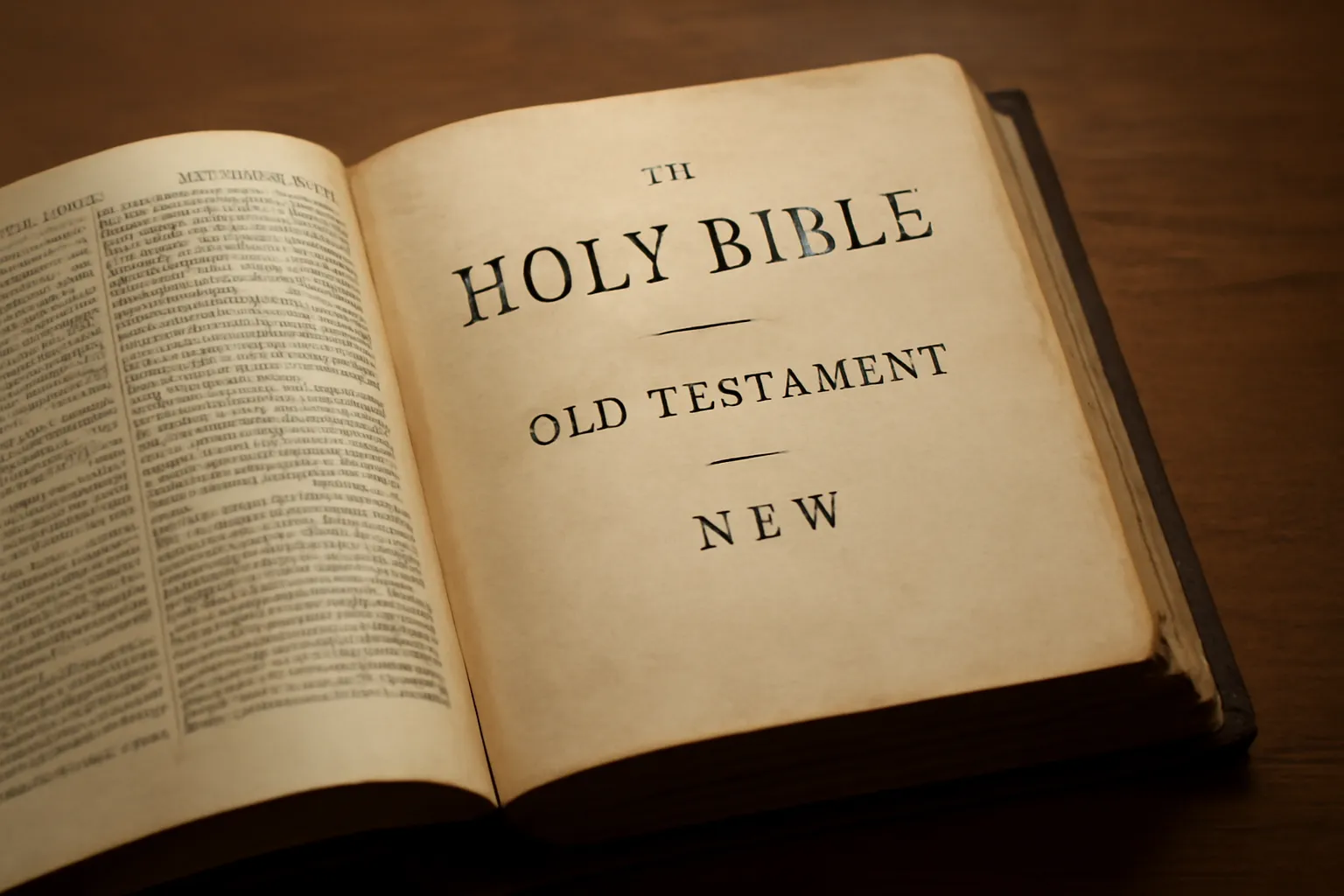
The 1611 KJV Bible was first printed in 1611 by printers in London. The initial edition featured a double-column type layout, with chapter and verse numbers already in place—features that would help readers navigate the text with ease. The first edition is renowned for its ornate title page and its careful typography, but it also included some marginal notes and textual apparatus that informed print readers about translations and textual decisions.
One notable aspect of the early printing was the inclusion of the Apocrypha in many English Bibles of that period. The 1611 edition would be printed in two forms: a larger, more ceremonial "Authorized Version" with the Apocrypha and a more streamlined edition used for public worship that sometimes omitted the Apocrypha. Over time, printers and publishers in various regions produced different variants of the 1611 King James Version, leading to a range of text arrangements and marginal notes.
The long-term influence of the 1611 edition extended beyond the contents alone; it established a durable standard for English Bible typography. In later centuries, the Cambridge edition of 1769 and other revisions helped standardize spelling, punctuation, and capitalization, shaping modern printings of the King James Version and contributing to its continued usage in churches and homes around the world.
Important milestones in publication history
First printing (1611) in London, with two-column layout and the Apocrypha
1769 Cambridge edition standardized spelling and punctuation for modern readers
Subsequent printings continued to refine typography and marginal notes
Adaptations and revisions for modern languages and denominations, while honoring the original text
The 1611 KJV Bible is celebrated not only for its faithful translation but also for its distinctive literary style. The translators often preserved or echoed the rhetoric and cadence of the original languages, producing a prose that resonates with many readers today. Pronouns like thou and thee and a ceremonial diction give the text a solemn, almost liturgical character that has influenced English prose broadly.
Several notable features characterize the KJV, including:
Archaisms that have become words and phrases rooted in English usage
Elegant, parallelism-driven cadence in many passages
Printed punctuation and typography designed to aid public reading aloud
Widespread use in education, literature, and worship that extended beyond strict religious contexts
The 1611 edition balanced literal translation with a readable style. This balance helped the King James Version become a literary monument as well as a devotional text. The text has also served as a catalyst for the study of biblical languages and for the development of English prose styles in the modern era.
Legacy and Significance
The impact of the 1611 KJV Bible extends well beyond theology. It is frequently cited as a foundational influence on the development of modern English literature, rhetoric, and public speaking. The cadence and phrasing found in the King James Version provided a shared linguistic reference that shaped writers, poets, and orators for generations.
In religious communities, the 1611 edition became a standard for teaching and worship. Its accuracy, solemnity, and majestic tone inspired reverence and provided a common text for ecumenical study and cross-denominational preaching. The Authorized Version gained acceptance not only in the Church of England but also in Protestant churches worldwide, contributing to a broad, enduring transnational culture of biblical literacy.
Contemporary scholarship continues to explore the history and textual transmission of the 1611 KJV Bible to understand how the translators’ decisions affected later translations and how the version has been received across different languages and cultures. Researchers examine marginal notes, textual variants, and printer changes to reconstruct the experience of early readers and to appreciate the craftsmanship behind the original edition.
Influence on language, culture, and education
Influence on English vocabulary and phraseology
Impact on art, music, and literature through cadences and idioms
Role in the development of public discourse and oratory traditions
Model for subsequent biblical translations and translation ethics
Scholarly Debates and Modern Relevance
Even as the 1611 KJV Bible continues to be celebrated, scholars debate certain textual choices and translation decisions. Some critics point to the limitations inherent in relying on the Textus Receptus for the New Testament or the Masoretic Text for the Old Testament, given advances in manuscript discovery and linguistic research since the seventeenth century. Others emphasize that, while modern critical editions highlight textual variants, the 1611 edition remains a robust and spiritually meaningful text for many readers.
In the contemporary landscape, readers often encounter comparisons between the 1611 KJV Bible and more recent translations that reflect updated manuscript evidence or different philosophical approaches to translation. Still, the enduring value of the King James Version lies in its storied history, its theological weight, and its rich, resonant language that resonates across generations.
For scholars and lay readers alike, this raises practical questions: How should one approach a text rooted in historic philology and devotional practice when engaging with modern scripture scholarship? How can a reader appreciate the historical context and linguistic artistry of the 1611 edition while also understanding the results of two- or three-century textual criticism? These questions do not diminish the value of the 1611 KJV Bible; they invite ongoing study, reflection, and dialogue about biblical interpretation.
Common questions about the 1611 edition
What makes the 1611 edition distinct from other English Bibles?
How did the translators handle archaic language while preserving clarity?
What are the main textual bases for the Old and New Testaments?
Why did later printings update spelling and punctuation?
Variations and Modern Readings
Today, readers might encounter several labels for the same text: the 1611 King James Version Bible, the KJV 1611 Bible, or simply the Authorized Version. All of these refer to the same foundational artifact, though modern printings often reflect revisions intended to improve readability and consistency. The 1769 Cambridge edition is especially influential, as it systematized spelling, punctuation, and typography in a way that makes the text more accessible to contemporary readers while preserving the core translation.
In addition to the official revisions, many publishers produce study Bibles, facsimiles, and annotated editions of the 1611 edition that include marginal notes explaining translator choices, offering historical context, and highlighting textual variants. These resources help readers understand how the KJV text evolved and how scholars interpret its language.
For readers seeking a bridge between the old and the new, there are editions that preserve the cadence of the original 1611 KJV Bible while providing modern spelling and typography. These editions can be valuable for devotional reading, memorization, or literary study, while still linking readers to the historical lineage of the King James Version.
Why the 1611 King James Version Remains Important Today
The lasting significance of the 1611 KJV Bible rests on several interwoven factors: its historical context, its linguistic artistry, and its durable role in shaping religious life and public discourse. The combination of theology, language, and culture makes the King James Version a touchstone for researchers, clergy, and lay readers who seek to understand the English-speaking world's biblical heritage.
In terms of education and literacy, the 1611 edition contributed to a shared cultural vocabulary. Phrases from the KJV have become culturally ingrained in idioms and literary references, which means the text is not only a religious document but also a living piece of the English literary canon.
Finally, the 1611 KJV Bible stands as a model of collaborative scholarly effort in a pre-differences era. The translators worked across rival boundaries in an effort to produce a text meant for broad reception and enduring use. That collaborative spirit—grounded in scholarship, piety, and public service—continues to inspire modern translation projects around the world.
Conclusion: The Enduring Value of the 1611 Edition
The 1611 KJV Bible is more than a historical document. It is a living gateway to a tradition of English biblical interpretation that has informed countless sermons, works of literature, and scholarly debates for centuries. Whether you encounter the KJV 1611 Bible in a pew, in a library, or on digital platforms, you are engaging with a text that embodies a remarkable convergence of linguistic artistry, theological depth, and historical continuity.
As readers explore the 1611 edition—and as they navigate the differences between this classic translation and modern English Bibles—there is an invitation to appreciate the care, discipline, and spiritual seriousness that the translators brought to their work. The Authorized Version remains a foundational reference point for scholarship, worship, and the ongoing conversation about how best to render ancient texts for contemporary audiences.








Leave a Reply