Devotional Commentary on Mark 11:12-14: The Hungry Fig Tree and Jesus’ Warning
Mark 11:12-14 · King James Version
Quick Answer: This commentary on Mark 11:12-14 highlights Jesus’ hunger, His search for fruit, and the fig tree’s emptiness. The lesson is not merely about agriculture, but about spiritual reality: religious appearance without fruit is judgment-worthy. Jesus’ words—warning that “no man” will eat from it—signal urgency for repentance and living faith that produces visible obedience.
Mark 11:12-14 (King James Version)
“And on the morrow, when they were come from Bethany, he was hungry:
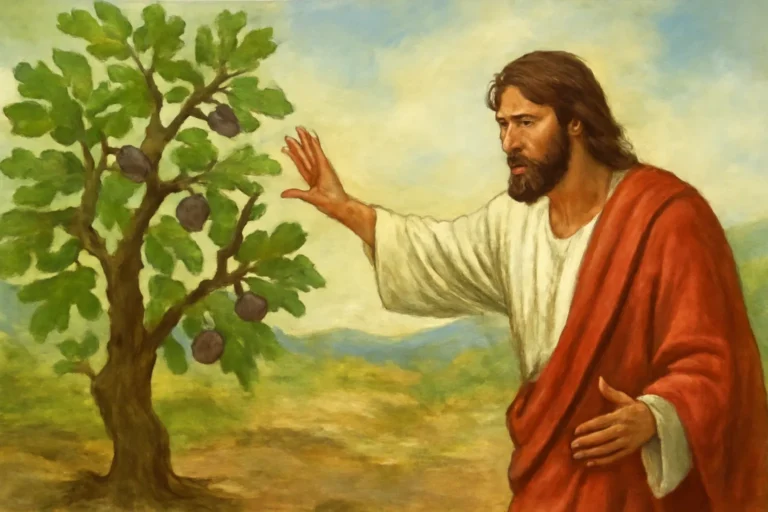
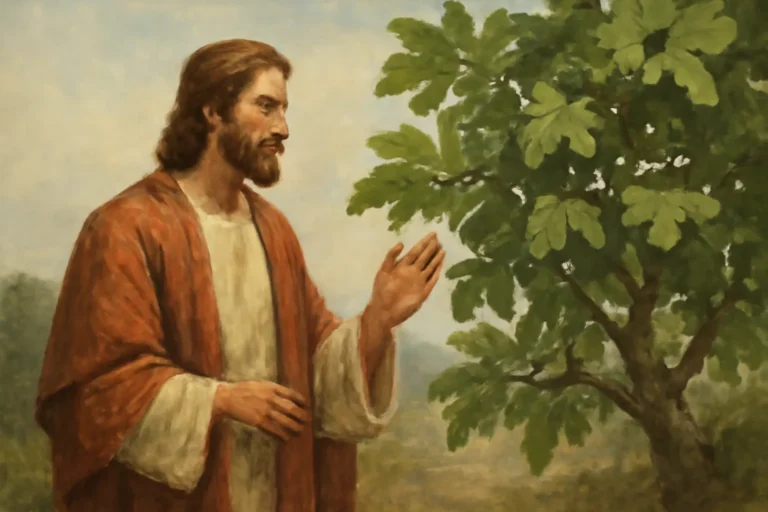
And seeing a fig tree afar off having leaves, he came, if haply he might find any thing thereon: and when he came to it, he found nothing but leaves; for the time of figs was not
yet.
And Jesus answered and said unto it,
No man eat fruit of thee hereafter for ever. And his disciples heard
it.”
Fig trees, seasons, and covenant expectations in Mark 11:12-14
In first-century Palestine, fig trees were a common symbol of provision and spiritual expectation. While the full harvest came later, figs could be seen in different stages depending on the season and local climate. By the time Jesus approaches “afar off” and finds leaves only, the setting suggests a tree that appears healthy and promising but fails to deliver the fruit its leaves would normally lead one to expect.
Mark places this incident on the road after Jesus has come from Bethany, connecting it to His approach to Jerusalem and the temple setting that follows in the narrative. The fig tree functions within a broader prophetic tradition where Israel’s relationship with God is sometimes portrayed through agricultural imagery—fruitfulness, covenant faithfulness, and accountability.
The cultural weight of “leaves” matters: foliage could give the impression of life and expectation, yet leaves without fruit communicate emptiness. In that environment, Jesus’ search is not random. It echoes a deeper critique of what looks religious but lacks the genuine outcomes that God desires.
Therefore, Mark’s account is both public and symbolic. Jesus’ actions and words occur in a way that His disciples would remember, understand, and carry into their proclamation. The event becomes a living parable for a community nearing God’s judgment yet tempted to rely on appearance rather than obedience.
Nuance of “time of figs was not yet” and Jesus’ searching tone
In the Greek text, Mark’s phrasing emphasizes that the “season/time” for figs had not yet arrived. The point of this detail is not to excuse the tree, but to sharpen the contrast between outward growth and the lack of expected fruit. The tree shows leaves from a distance, creating an expectation that something edible could be found, yet when Jesus reaches it, there is “nothing but leaves.”
Mark also presents Jesus’ approach as intentional: He comes “if haply” He might find something. That language conveys purpose in seeking, not blind chance. The incident is therefore both observational and prophetic—Jesus examines what appears alive, then reveals that life without fruit is spiritually hollow.
Finally, when Jesus pronounces the lasting consequence, the wording communicates permanence (“for ever”): the problem is not a temporary shortage but a judgment-like verdict on that fruitlessness. Mark’s tone throughout is sober and instructive rather than dramatic for drama’s sake.
A searching Jesus: hunger, distance, and the expectation of fruit (Mark 11:12-14)
Jesus’ hunger opens the scene with human reality: “he was hungry.” This matters because the event is not merely a theatrical sign. Mark frames Jesus as one who truly seeks, who notices what is visible, and who approaches with purpose. When He sees the fig tree “afar off” having leaves, He comes with the intention of finding something thereon—any sign of fruit.
The tree’s appearance creates the initial expectation. In the ordinary rhythms of agrarian life, leaves can indicate the tree’s active state. Yet when Jesus comes to it, there is “nothing but leaves.” Mark then clarifies the timing: “for the time of figs was not yet.” This detail prevents the reader from missing the sharper spiritual contrast. The point is not simply that the tree fails to produce out of season; rather, it highlights the theme of emptiness beneath outward signs.
In the symbolic reading, the fig tree becomes a picture of religious life that can be impressive to outsiders—full of activity, visible spirituality, and public credibility—yet lacking the “fruit” that God seeks. Jesus’ movement from seeing to coming to finding reveals a pattern: God does not only look at what people display; He examines what they actually produce.
Notice also that Jesus announces the result directly to the tree, and then “his disciples heard it.” The disciples are not spectators to an accidental botanical event. They are being taught. Mark’s placement of this incident before the temple narrative signals that fruitfulness and holiness are not optional extras; they are the point of approaching God.
Thus, Jesus’ hunger becomes more than appetite—it becomes a spiritual metaphor for the divine search for what is real. The disciples would later recognize that the demand for fruit is tied to repentance, faith, and genuine obedience.
“No man eat fruit of thee for ever”: warning, judgment, and mercy (Mark 11:14)
Jesus’ verdict—“No man eat fruit of thee hereafter for ever”—is severe. It communicates that this emptiness is not going to be indulged. The tree is not portrayed as having the potential to fruit later; the word “for ever” carries the weight of final judgment.
Yet to understand the warning properly, it helps to view it in the flow of Mark’s message. Jesus is approaching Jerusalem where the temple worship should have represented God’s presence. But the issue is fruit—what worship produces. If religious life is all leaves (appearance, claims, rituals) but no fruit (obedience, mercy, justice, faithfulness), then it is not neutral. It becomes spiritually barren and accountable.
The severity is also pedagogical. Jesus speaks audibly to the disciples, ensuring they learn. The curse is not merely for the tree; it becomes an illustration for those who witnessed it—especially those who would soon see conflict around the temple and authority. Mark is training the reader: pay attention to what Jesus calls “fruit,” because God’s evaluation is not superficial.
At the same time, Jesus’ action is not senseless cruelty. It reflects a righteous refusal to sanctify hypocrisy. The warning has a mercy-like function: if fruitlessness is not confronted, it will spread. In that sense, the pronouncement is both judgment against emptiness and a call for urgent response.
For devotional readers, this verse presses a personal question: Are we producing outcomes consistent with faith? Or are we content with religious “leaves”—busy activity, religious talk, and outward markers—while neglecting the inner transformation God seeks?
Mark 11:12-14 thus teaches that God expects fruit that matches revelation. When the revealed life fails to bear fruit, consequences follow.
How to Apply This Today: moving from religious leaves to living fruit
First, examine what you “look like” spiritually versus what you actually “produce.” Leaves can be real activities—church attendance, worship involvement, Bible knowledge, even service. But Jesus’ warning invites a deeper inventory: Do these practices result in repentance, humility, integrity, forgiveness, and compassionate action?
Second, treat God’s search as personal. Jesus approached with intentionality. This means God is not distant from your life; He notices patterns of barrenness and invites you to respond. Ask: Where am I performing rather than transforming? What habit, attitude, or compromise keeps me from bearing fruit?
Third, respond quickly. The scene includes timing—“the time of figs was not yet”—yet the tree’s emptiness is still exposed. Spiritually, delays do not always excuse. If the Lord is prompting you to repent, don’t postpone. Fruitfulness is cultivated, but it also requires willingness today.
Fourth, measure fruit by its reliability. In Scripture, fruit is often seen in steadfast character and loving obedience, not only in intense moments. Choose one concrete practice this week that reflects fruit: a reconciliatory conversation, a decision to tell the truth when it costs, consistent generosity, or prayer that changes your temperament.
Finally, pray for grace to become fruitful. God desires not just visible religion, but a life that answers His presence with obedience.
Related Bible Passages
Matthew 3:8
John the Baptist links repentance with “fruits” of a changed life, matching the theme of real outcomes rather than mere appearance.
John 15:5
Jesus teaches that abiding in Him produces lasting fruit, offering the positive counterpart to barren leaves.
Romans 6:22
Paul describes a fruit-language in sanctification—God’s work leading to holiness—clarifying what fruitful living looks like.
Frequently Asked Questions
What does the fig tree incident in Mark 11:12-14 mean?
The fig tree illustrates spiritual barrenness. Jesus looks for fruit and finds only leaves, then pronounces a judgment-like warning. The takeaway is that outward religious appearance without genuine obedience and repentance is unacceptable to God.
Is Jesus cursing the fig tree unfairly because “the time of figs was not yet”?
Mark includes that timing detail to heighten the contrast between what appears promising (leaves) and what is actually present (no fruit). In the symbolic sense, the lesson is about emptiness in faith—religion that does not deliver the fruit God seeks—rather than about normal farming seasons alone.
How does this relate to the temple events that follow in Mark 11?
Right after this sign, Mark moves toward conflicts around the temple and worship. The fig tree functions like a warning: God expects worship to produce fruit—faithfulness, righteousness, and obedience—not just outward show.
What is a devotional response to Mark 11:12-14?
Practically, examine your life for “leaves” that may be masking unrepented sin or neglected obedience. Then take a concrete step toward fruit this week—humility, reconciliation, integrity, and consistent prayer—trusting that abiding in Christ leads to lasting change.
A Short Prayer
Lord Jesus, You searched for fruit and revealed emptiness that looked alive. Forgive us for times we trusted appearance over obedience. Create in us a living faith that produces honest repentance and visible love. Make our worship bear fruit in our words, choices, and relationships. Teach us to respond promptly to Your voice, and keep us abiding in You. Amen.
Key Takeaway: God looks beyond outward religious signs to the fruit of real obedience, and He warns that barrenness will not be tolerated.