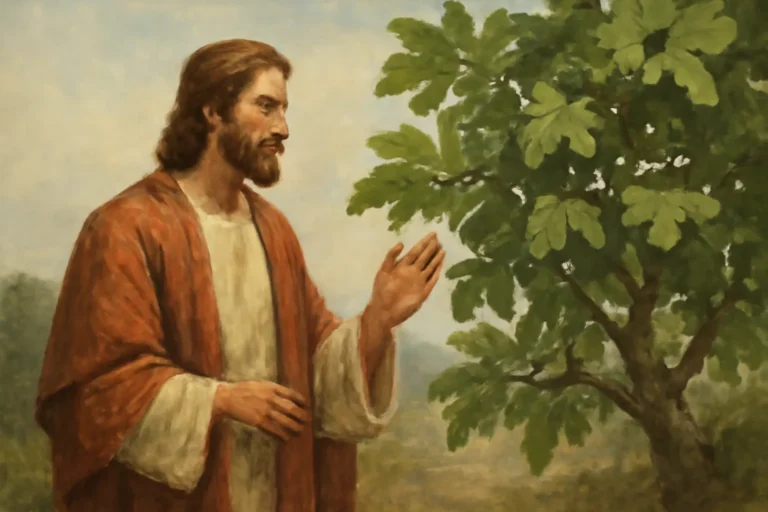
Commentary on Luke 13:1-9: Repentance, Mercy, and the Fig Tree
Luke 13:1-9 · King James Version
Quick Answer: This commentary on luke 13 1-9 shows Jesus correcting the assumption that tragedy proves someone’s “superior” sin. He calls hearers to repent because judgment is real and unavoidable. Then, through the fig tree parable, He teaches that God’s patience is purposeful—meant to lead to fruit—not endless delay.
Luke 13:1-9 (King James Version)
“There were present at that season some that told him of the Galilaeans, whose blood Pilate had mingled with their sacrifices.
And Jesus answering said unto them,
Suppose ye that these Galilaeans were sinners above all the Galilaeans, because they suffered such things?
I tell you, Nay: but, except ye repent, ye shall all likewise perish.
Or those eighteen, upon whom the tower in Siloam fell, and slew them, think ye that they were sinners above all men that dwelt in Jerusalem?
I tell you, Nay: but, except ye repent, ye shall all likewise perish.He spake also this parable;
A certain
man had a fig tree planted in his vineyard; and he came and sought fruit thereon, and found none.
Then said he unto the dresser of his vineyard, Behold, these three years I come seeking fruit on this fig tree, and find none: cut it down; why cumbereth it the ground?
And he answering said unto him, Lord, let it alone this year also, till I shall dig about it, and dung
it:
And if it bear fruit,
well: and if not,
then
after that thou shalt cut it down.”
Luke 13:1-9 in its first-century world: tragedy, suffering, and repentance
In Jesus’ day, people often tried to interpret suffering as a sign of divine approval or disapproval. When disasters occurred, rumors circulated quickly, and public discussions about “who deserved what” were common. Luke reports two incidents that drew attention: the Galileans whose blood Pilate mingled with their sacrifices, and the eighteen whose lives ended when a tower in Siloam fell. Such events were shocking, and they created pressure to explain them with simplistic moral conclusions.
Pilate’s rule was marked by tensions with various groups in Judea, including unrest in Galilee. Sacrifices were central to Jewish worship, so the mention of blood mingled with sacrifice would have been especially offensive and frightening. Likewise, the fall of a tower in Siloam would have been remembered as a sudden, uncontrollable catastrophe in Jerusalem.
Against this backdrop, Jesus challenges the instinct to label victims as uniquely sinful. He redirects attention from blame toward accountability: everyone stands under God’s call to repentance. The broader setting matters because Jesus is not only answering a question about specific tragedies; He is forming the conscience of His hearers so they interpret events rightly and respond faithfully before it is too late.
Original nuance: repentance and the “likewise perish” warning
The passage centers on Jesus’ call to repentance (the idea of a decisive turn—away from sin and toward God). In the Greek-speaking context of the New Testament, repentance is more than feeling sorry; it is a change of direction that affects how one lives. Jesus’ repeated “except ye repent” frames repentance as the boundary between mere survival and real spiritual safety.
When Jesus says, “ye shall all likewise perish,” the language conveys not only physical death but the seriousness of judgment. The emphasis is not that every tragedy has a one-to-one explanation, but that moral responsibility is universal. The tone is pastoral and urgent: God’s warnings are meant to awaken, not to crush.
Correcting a dangerous assumption: tragedy is not proof of personal guilt
Luke 13:1-5 begins with people bringing Jesus reports about the Galileans whose blood Pilate mingled with their sacrifices, and about eighteen killed when a tower fell in Siloam. In both cases, the events were catastrophic and public. But the question behind the report is just as important: “Were these victims worse sinners than others?”
Jesus answers directly: “Suppose ye…?” and then, “I tell you, Nay.” His response refuses a simplistic theology of suffering where calamity becomes a scoreboard for who is most guilty. That refusal matters, because it can easily lead to two spiritual errors. First, it tempts the observer to become morally superior—comforted by the belief that “God is clearly punishing those people.” Second, it can numb the observer’s own urgency, replacing repentance with speculation.
Jesus redirects the focus. Instead of asking, “Who caused this?” or “Who deserved it most?” He presses a deeper question: “Are you prepared to meet God?” The warning is blunt and personal: “except ye repent, ye shall all likewise perish.” The point is not that victims were necessarily innocent in a moral sense, but that tragedy is not a reliable method for sorting people into spiritual categories. God’s call reaches beyond the victims to the living hearers.
This section teaches that repentance is not only for obvious sinners. Jesus includes “ye all,” emphasizing that everyone is vulnerable without God’s mercy and transformation. The right response to tragedy is not cold judgment toward others, but courageous self-examination before God.
Jesus’ call to repentance: urgency without presumption
The phrase “except ye repent” forms the heartbeat of Luke 13:1-5. Repentance is presented as the necessary alternative to perishing. That means the issue is not whether people can make clever explanations, but whether they will turn.
Notice the structure of Jesus’ teaching. He does not deny God’s justice, but He denies the crowd’s inference that suffering automatically identifies the worst offenders. Then He uses the tragedies as a springboard to speak about universal accountability. In other words, Jesus treats these events as an alarm clock rather than an answer key.
Repentance in this context is urgent and communal as well as individual. Jesus speaks to “them,” yet His words carry an invitation to every listener who hears and recognizes their need for God. The urgency does not aim at panic; it aims at spiritual clarity. Jesus is forming a heart that will not hide behind distance—“I’m not like them”—but will ask, “Lord, what needs to change in me?”
This urgency also protects compassion. If tragedies cannot be used to brand victims as uniquely sinful, then believers are free to mourn, support the hurting, and respond with humility rather than superiority. Jesus’ warning becomes a pathway to empathy and obedience.
Finally, Jesus’ call assumes that repentance is possible. He speaks as a Savior addressing people who can respond. Even when judgment is real, mercy is offered now. That balance—seriousness with opportunity—prepares the audience to hear the parable that follows.
The fig tree parable (Luke 13:6-9): patience with a purpose
After addressing tragedy and repentance, Jesus “spake also this parable.” The story is simple: a man has a fig tree planted in his vineyard. He comes seeking fruit and finds none. He instructs the dresser of the vineyard, “cut it down; why cumbereth it the ground?” The question is practical and financial, but it carries spiritual weight.
The vineyard represents God’s care and provision. The fig tree stands for a life or community entrusted with opportunity. Fruit symbolizes the visible results of spiritual reality—faith expressed in obedience, not merely religious words. When no fruit is found, the owner’s decision is not arbitrary; it is aligned with purpose. A fig tree exists to bear figs. Likewise, God’s gift of time and grace has a goal.
Yet the parable also highlights mercy. The dresser pleads, “Lord, let it alone this year also, till I shall dig about it, and dung it.” Instead of immediate destruction, there is additional time paired with intentional cultivation. Digging and dunging suggest active care: deeper work in the soil, renewed nourishment, renewed chances to grow.
This is crucial for interpreting “God’s patience.” Patience is not God ignoring fruitlessness. It is God working to make fruit possible. The extension of time is still a warning: “if it bear fruit, well: and if not, then…thou shalt cut it down.” The mercy offered is real and urgent, but it is not indefinite.
So Luke 13:6-9 teaches that God’s patience is meant to lead to change. When people refuse to repent, patience becomes a heavier testimony against them. But when people respond, God’s delay becomes a mercy that nurtures real fruit.
Fruit that follows repentance: how to respond to Jesus’ warning
Jesus connects repentance to fruit. The earlier section calls people to turn from sin; the parable illustrates what God looks for after time is granted. Together they show that repentance is not just a moment of remorse. It is a new direction that results in a changed life.
Fruit does not mean earning salvation by performance. Rather, it means that genuine faith bears visible evidence. The fig tree owner searches for fruit—so God searches for outcomes that match the calling. In this way, “fruitfulness” functions like confirmation: not perfect achievement, but a life genuinely oriented toward God.
The gardener’s work also implies that change is not purely self-generated. God’s “digging” and “dunging” picture His ongoing involvement—discipline, instruction, seasons of difficulty, and the cultivation of habits that promote spiritual growth. However, the parable never lets the hearer escape responsibility. The tree either bears fruit or it does not. The “this year also” underscores that there is a time for response.
Therefore, Jesus’ teaching balances two truths. First, do not presume spiritual superiority based on how others suffer. Second, do not postpone repentance based on the length of God’s patience. Tragedy should drive us to examine ourselves, and mercy should drive us to grow.
If you feel the pressure of the warning, it is not only meant to expose failure but to awaken hope: God is willing to cultivate. The question is whether we will cooperate with His work and produce fruit.
How to Apply This Today: repent, resist blame, and pursue fruit
First, resist the urge to explain every tragedy by accusing the victims. When you hear about someone else’s loss, practice humility. Ask, “What does God want to change in me?” Compassion grows when we stop treating other people’s pain as a certificate of our own goodness.
Second, respond to Jesus’ urgency with personal repentance. Set aside time this week to name specific sins you have excused—habits, attitudes, or neglect of God. Repentance becomes concrete when it leads to action: confess, seek prayer, make restitution where needed, and take steps to remove temptations.
Third, pursue fruit with intention. If the fig tree needed cultivation, so do we. Choose one “digging” practice: deeper Scripture reading, consistent prayer, serving someone in need, or joining accountability. Fruit often grows through faithful routines, not sudden bursts of motivation.
Finally, interpret God’s patience as an invitation, not a delay button. When you sense conviction, treat it as God’s mercy. The “this year also” reminds us that grace creates opportunity—opportunity that can still be refused.
In short: let tragedy soften your heart, let mercy motivate your change, and let repentance become visible fruit in your daily life.
Related Bible Passages
Romans 2:4-5
Paul teaches that God’s kindness leads to repentance, and warns that rejecting that kindness only increases judgment.
2 Peter 3:9
Peter explains that God is patient because He desires repentance, yet the promise of God’s timing remains serious.
Matthew 7:16-20
Jesus says trees are known by their fruit, connecting genuine faith with observable results.
Frequently Asked Questions
What is the main lesson from Luke 13:1-9 about tragedy and sin?
Jesus teaches that suffering is not a reliable way to judge who is “more sinful.” Instead of blaming victims, His listeners must look inward. The real question is whether you will repent, because judgment is coming for everyone without repentance.
How does the parable of the fig tree explain God’s patience in Luke 13:6-9?
The fig tree receives time, cultivation, and care before it is cut down. That means God’s patience is purposeful: it gives space to produce fruit. If there is no fruit, the warning remains real.
Does Jesus mean we should never discuss other people’s wrongs after disasters?
Jesus discourages assuming that tragedy proves someone’s unique guilt. It’s appropriate to acknowledge sin and pursue righteousness, but you must avoid using catastrophe as evidence to claim superiority. Let repentance be your response.
What does “unless you repent, you will all likewise perish” call us to do now?
It calls for immediate, personal turning to God. Repentance includes confession, changed habits, and new obedience. Waiting “until later” misunderstands urgency—God’s warning is meant to awaken you to hope and action.
A Short Prayer
Lord Jesus, when we see tragedy, teach us not to blame or to feel superior. Turn our eyes inward and grant us true repentance. Cultivate our hearts as the gardener cultivated the fig tree—dig where we are hardened, nourish where we are dry, and help us bear fruit worthy of your mercy. Give us the courage to respond today, before time runs out. Amen.
Key Takeaway: Jesus calls you to repent now—refusing blame of others and seeking God’s mercy that produces real fruit.