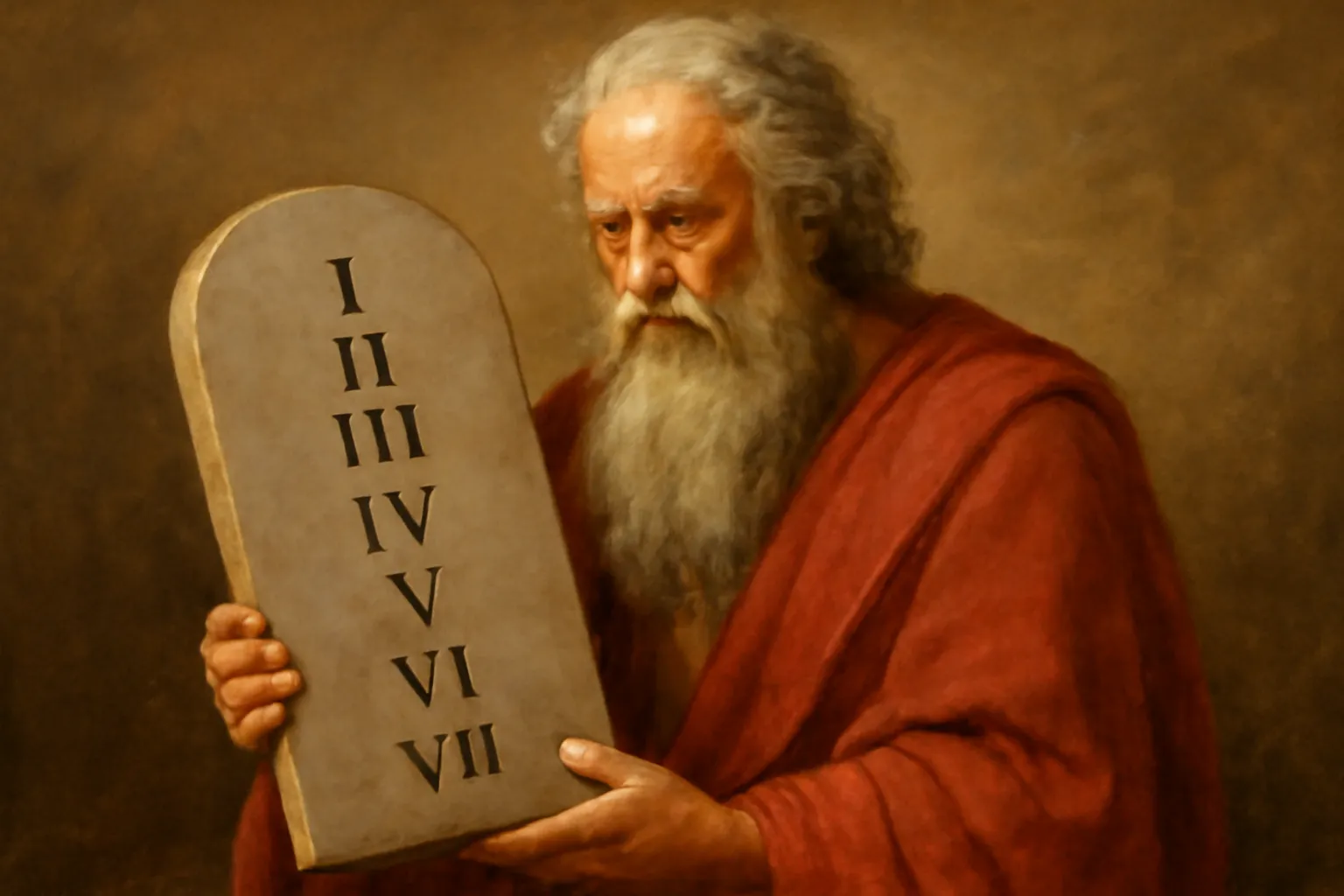
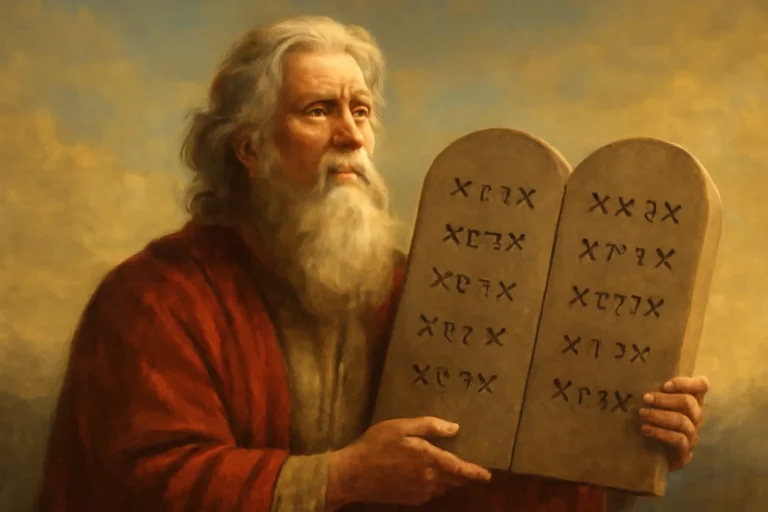
A Devotional Commentary on Exodus 20:1–17 and the Ten Commandments
Exodus 20:1-17 · King James Version
Quick Answer: This commentary on exodus 20 1 17 explains the Ten Commandments as God’s covenant instructions for worship and daily life. They begin with exclusive loyalty to the LORD, protect God’s name and the rhythm of rest, honor family order, and safeguard love for neighbor through justice and truthfulness. The law reveals God’s holiness and exposes the heart’s need for grace.
Exodus 20:1-17 (King James Version)
“And God spake all these words, saying,
I
am the LORD thy God, which have brought thee out of the land of Egypt, out of the house of bondage.
Thou shalt have no other gods before me.
Thou shalt not make unto thee any graven image, or any likeness
of any thing that
is in heaven above, or that
is
in the earth beneath, or that
is in the water under the earth:
Thou shalt not bow down thyself to them, nor serve them: for I the LORD thy God
am a jealous God, visiting the iniquity of the fathers upon the children unto the third and fourth
generation of them that hate me;
And shewing mercy unto thousands of them that love me, and keep my commandments.
Thou shalt not take the name of the LORD thy God in vain; for the LORD will not hold him guiltless that taketh his name in vain.
Remember the sabbath day, to keep it holy.
Six days shalt thou labour, and do all thy work:
But the seventh day
is the sabbath of the LORD thy God:
in it thou shalt not do any work, thou, nor thy son, nor thy daughter, thy manservant, nor thy maidservant, nor thy cattle, nor thy stranger that
is within thy gates:
For
in six days the LORD made heaven and earth, the sea, and all that in them
is, and rested the seventh day: wherefore the LORD blessed the sabbath day, and hallowed it.
Honour thy father and thy mother: that thy days may be long upon the land which the LORD thy God giveth thee.
Thou shalt not kill.
Thou shalt not commit adultery.
Thou shalt not steal.
Thou shalt not bear false witness against thy neighbour.
Thou shalt not covet thy neighbour’s house, thou shalt not covet thy neighbour’s wife, nor his manservant, nor his maidservant, nor his ox, nor his ass, nor any thing that
is thy neighbour’s.”
Exodus 20 devotion: Israel’s covenant at Sinai
Exodus 20 records a defining moment after Israel’s deliverance from Egypt. Freed from bondage, the people are brought to Sinai where God establishes His covenant identity and moral order. The Ten Commandments function as foundational terms of relationship: they show who God is (the LORD who delivered them) and how a redeemed community should live. In the ancient Near East, rulers often issued laws to shape society; however, Israel’s law is presented as God speaking directly—revealing holiness, not merely governance. The sequence matters: worship comes first, then community life, then inward attitudes that can undermine outward behavior. Sabbath instruction also reflects the rhythm of creation and God’s ownership of time. The commands are not random rules; they form an integrated way of life that protects worship, family, and social justice. Because God ties the commandments to deliverance, obedience is framed as grateful response to grace rather than a path to earn freedom. That covenantal context helps readers hear these words not only as standards, but as God’s guidance for a people learning how to belong to Him.
Hebrew nuance in “Remember,” “Jealous,” and “Covenant seriousness”
Several key terms in Exodus 20 carry covenant weight. The command “Remember” (Hebrew often used for intentional recollection and practice) implies the Sabbath is not optional tradition but a deliberate, lived rhythm. The LORD is described as a “jealous God,” meaning His concern is protective and exclusive—He will not share His rightful devotion with competing loyalties. When the text warns that the LORD “will not hold him guiltless” who takes His name in vain, it emphasizes moral accountability before God, not a casual slip of speech. “In vain” points to treating God’s name as empty—used without truth, reverence, or alignment with God’s character. Overall, the tone is firm and relational: God’s commands address both outward actions and the heart’s posture toward Him.
The Prologue of Obedience: Delivered people must worship the Deliverer
Exodus 20 begins with God speaking His identity and purpose: “I am the LORD thy God, which have brought thee out of the land of Egypt.” The commandments are not introduced as a cold legal code; they are grounded in redemption. That ordering shapes how believers interpret obedience. Since God has acted first, the Ten Commandments respond to grace. Worship is therefore not merely what Israel does in public, but who they remember God to be. The first command—“Thou shalt have no other gods before me”—addresses the heart’s ultimate allegiance. In a world filled with competing spiritual powers, Israel is commanded to treat the LORD’s claim as exclusive and primary.
The next command prohibits making graven images or likenesses that attempt to control the divine. This is not simply an artistic regulation; it’s a spiritual boundary. God is not a being to be domesticated into a religious object. When worship is reduced to visible symbols, the danger is that people begin to follow what they can manage instead of the living God who speaks and judges. The LORD’s “jealous” description underscores that worship is covenant loyalty—He protects relationship by demanding fidelity. This also explains the warning and the promise language: the law describes real consequences across generations, while mercy is offered to those who love Him and keep His commandments.
Reverence, Time, and Holiness: God’s name and the Sabbath rhythm
The command not to take the LORD’s name in vain teaches that God’s character matters in speech. Names in Scripture often represent the person’s reality; to use “the name of the LORD” carelessly is to treat God’s presence as if it were controllable or irrelevant. It can include dishonesty, false oaths, or religious talk that masks unholy living. The heart issue is reverence: whether a person’s words match God’s truth.
Then comes the Sabbath command, “Remember the sabbath day, to keep it holy.” Sabbath is both command and gift. It interrupts relentless striving and trains the community to trust God as Creator and Sustainer. The text grounds Sabbath in creation: in six days the LORD made heaven and earth and rested the seventh day, then blessed and hallowed it. So Sabbath is not only about rest for workers; it is about worshipful alignment with God’s pattern. Israel learns that time belongs to God, not to productivity or economic pressure.
Notably, the Sabbath instruction extends beyond the individual: it includes family members, servants, livestock, and even the “stranger that is within thy gates.” This means Sabbath holiness builds a humane community. It protects the vulnerable from being consumed by labor expectations. In Christian reflection, Sabbath becomes a continual reminder that God is worthy of trust—people can stop working to prove worth, because God has already established His authority over time and life.
Love in Community: Family honor, justice, and truth before God
After worship and sacred time, Exodus 20 addresses social life. “Honour thy father and thy mother” presents family as a foundational structure for stability and long-term blessing. In an ancient society where family identity determined support and survival, honoring parents is closely tied to gratitude and continuity. It also implies a moral order: children are responsible for recognizing authority and caring for those who nurtured them.
The commands “Thou shalt not kill,” “Thou shalt not commit adultery,” “Thou shalt not steal,” and “Thou shalt not bear false witness against thy neighbour” protect essential goods: life, marital faithfulness, property and livelihood, and truth. These are not merely external behaviors; they guard relationships. To break them is to cause harm that spreads beyond the immediate act. The law therefore supports a community where trust can exist.
The progression is notable: God moves from worship-exclusive devotion, to reverent speech, to sacred time, and then to relational ethics. That sequence reveals that spirituality without love is incomplete. A society that dishonors God’s name may also tolerate injustice; similarly, a people who keep Sabbath as ritual but ignore truth and neighbor-love will have missed the heart of obedience. God’s covenant intention is integrated holiness—worship and ethics are inseparable.
The Heart’s Boundary: “Thou shalt not covet” as inward obedience
The final command—“Thou shalt not covet thy neighbour’s house… wife… manservant… maidservant… ox… ass… any thing that is thy neighbour’s”—targets desire. Coveting is not always visible; it can remain secret while still producing resentment, injustice, and eventual harm. This command reveals that God’s law is not only concerned with outward actions but with inward motives.
Coveting begins as dissatisfaction with God’s provision and dissatisfaction with the goodness of another person’s life. It turns neighborly love into comparison and turns gratitude into grasping. That is why the list includes possessions and people: covetousness can seek to obtain what belongs to another, undermine another’s security, or steal honor and affection.
In devotional terms, this command exposes the heart as the battleground. If killing, adultery, stealing, and lying are the fruit, coveting is the root. God confronts the root so that the fruit can be healed. The law therefore functions as both guide and mirror. It reveals what true holiness looks like—contentment shaped by trust in God. It also teaches readers to seek help beyond mere behavioral restraint, because the heart naturally drifts toward self and away from God.
How to Apply This Today: Worship first, then let your week and heart align
Start with loyalty: ask what “competing gods” you give priority to—money, approval, habit, fear, or ideology. Replace substitution with reverent trust in the LORD. Next, evaluate speech: do you use God’s name or spiritual language honestly, or casually? Choose truthfulness and reverence in your conversations.
Consider how you practice time. Sabbath principles can reshape your week even if you do not keep the command in the same way Israel did. Set aside real rest and worship; protect others (family, household, even workers) from being consumed by constant labor. Sabbath thinking teaches that your worth is not your output.
Then apply relational commands. Treat family honor seriously: support aging parents, respect home authority, and speak with integrity. Guard your commitments—marriage and close friendships are trust structures worth protecting. Practice honesty in work and relationships, refusing shortcuts that would amount to stealing or false witness.
Finally, bring coveting into the light. When you catch yourself envying someone’s success or possessions, pause and pray: “Lord, give me gratitude and contentment.” Replace comparison with prayer for your neighbor. Exodus 20 helps you see that obedience is not only behavioral—it is a renewed heart.
Related Bible Passages
Matthew 22:37-40
Jesus summarizes the commandments as love for God and neighbor, showing Exodus 20’s worship-and-ethics unity.
Romans 7:7
Paul points to the command against coveting to explain how the law exposes inner desire and sin.
Hebrews 4:9-10
The New Testament connects Sabbath rest with spiritual assurance, encouraging believers to rest in God’s work.
Frequently Asked Questions
What is the main message in a ten commandments commentary on Exodus 20:1–17?
The main message is covenant obedience that begins with God’s deliverance. Exodus 20 teaches that worship must be exclusive and reverent, sacred time shapes trust, and love for neighbor is protected through justice, faithfulness, honesty, and even guarding the heart against coveting.
How does the command against coveting relate to the other commandments?
Coveting is the inward root behind many visible sins. While “do not kill” or “do not steal” address actions, “do not covet” addresses desire—resentment and grasping that can eventually produce harmful behavior. God calls for healing at the heart level.
Does Exodus 20 mean Sabbath is only about not working?
No. Not doing ordinary work is part of it, but the command also “keeps holy” the day by honoring God as Creator and trusting His rhythm for life. Sabbath is worshipful rest that builds humane community and counters relentless striving.
How should Christians use God’s law described in Exodus 20 today?
Christians can treat these commands as both mirrors and guides: they reveal God’s holiness and expose the need for grace, while still directing daily worship, honest speech, faithful relationships, and contentment. Ultimately, obedience flows from trusting the LORD, not trying to earn redemption.
A Short Prayer
Lord, thank You for delivering Your people and for speaking with clarity about true holiness. Teach us to worship You with exclusive loyalty, to honor Your name with reverent truth, and to trust Your rhythm of rest. Create clean hearts within us, so our desires match Your will and our relationships reflect Your love. Help us obey not to earn freedom, but because You have already rescued us. In Jesus’ name, amen.
Key Takeaway: Exodus 20 reveals that redeemed people show gratitude to God through reverent worship, holy time, and neighbor-loving integrity that reaches down to the heart.