Commentary on Exodus 20:12: Honoring Father and Mother
Exodus 20:12 · King James Version
Quick Answer: In this commandment, God calls His people to honor their father and mother, treating them with respect, gratitude, and obedience within the bounds of God’s will. The promise attached—“that thy days may be long upon the land”—highlights the social and spiritual well-being that flows from a family life shaped by covenant faithfulness. This is more than manners; it is discipleship in everyday relationships.
Exodus 20:12 (King James Version)
“Honour thy father and thy mother: that thy days may be long upon the land which the LORD thy God giveth thee.”
Exodus 20:12 meaning in Israel’s covenant community
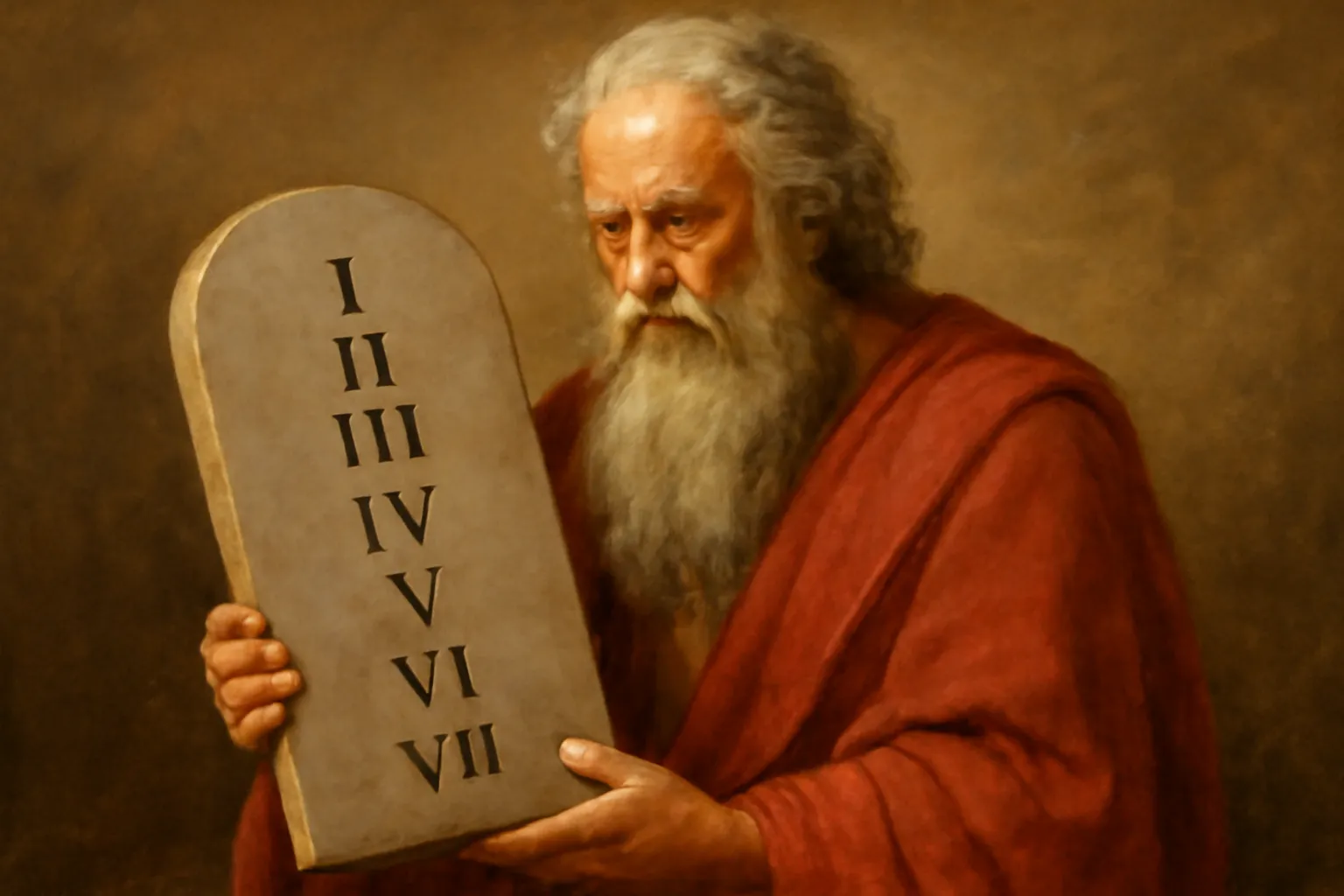
Exodus 20 introduces the Ten Commandments at a moment when Israel is being formed into a holy nation under God’s covenant. In that setting, “honor” was not private sentiment; it shaped the health of the entire community. Families were the basic unit of life—economically, socially, and spiritually. Parents provided instruction, protection, and inheritance, while children were expected to respond with respect and loyalty. In a society where survival depended on extended kin networks, dishonoring one’s parents could destabilize households and therefore harm the wider community.
The command also reflects God’s moral order for a people living in a land that must be governed by more than political strength. Israel’s obedience was meant to mirror God’s character and sustain covenant blessing. The promise of long days “upon the land” connects personal conduct to communal stability: when households honor parents, they model faithfulness, reduce conflict, and encourage wise guidance. Thus, Exodus 20:12 functions as a foundational command, anchoring the commandment table in everyday relational faithfulness—starting in the family and extending outward into society.
Hebrew nuance behind the idea of “honor”
The key word in Exodus 20:12 is translated “Honour,” pointing to more than polite behavior. In Hebrew, the concept carries weight: it involves giving proper regard, recognizing authority, and reflecting that respect in actions. Honor can include obedience when appropriate, financial and practical support when needed, and speaking well rather than tearing down. The word also suggests a posture of acknowledgment—treating parents as God’s appointed source of formative care.
Because the command is written as part of covenant law, the “honor” expected is steady and relational, not occasional. It is directed toward parents as a trusted responsibility within God’s order. At the same time, biblical wisdom elsewhere balances honor with fidelity to God’s truth; honoring does not mean ignoring wrongdoing or surrendering conscience where God is calling for obedience.
The command to honor father and mother as covenant faithfulness
A “commentary on exodus 20 12” must begin with the command’s placement. In the Ten Commandments, God is not only regulating worship and public life; He is also establishing how His people should relate inside their homes. The family is where moral instincts are trained—where children learn respect, truthfulness, responsibility, and dependence on God. Therefore, honoring parents is not a background detail; it is a public, covenant-shaped responsibility.
Honoring begins with recognizing that parents are not merely biological relatives. In a biblical framework, they are instruments through whom God ordinarily provides care, teaching, and guidance. Children honor by receiving instruction, respecting the role of authority, and expressing gratitude for provision and correction. This honoring also carries an obligation to care for parents in later seasons—showing that respect is demonstrated through time, not only in youth.
Importantly, honor is not limited to emotional warmth. One can honor with truthfulness, even when hearts are conflicted, by acting with restraint, integrity, and respect. Likewise, the command’s covenant setting suggests that honor has consequences: it preserves the order God wants in a society. Where homes are marked by honor, children often grow into adults who respect rightful authority, care for the vulnerable, and contribute to peace. Where honor collapses, bitterness spreads and community life suffers.
In this way, Exodus 20:12 becomes a cornerstone for the remaining commandments. If a person cannot honor those nearest—those God has used to form them—how will they honor God’s authority or respect others with the same seriousness?
What “long days upon the land” promises—and what it does not
The promise attached to the command—“that thy days may be long upon the land”—has often been misunderstood as a simple guarantee of physical longevity for every individual who obeys. A more faithful reading observes that biblical “blessing” frequently includes stability and well-being, not immunity from hardship. God’s covenant with Israel was corporate: He promised that a nation aligned with Him would experience life with strength, safety, and continuity.
In Israel’s context, the land was tied to God’s gifts and covenant faithfulness. When families honor parents, households tend to become more ordered, instruction becomes effective, and conflicts decrease. Wise guidance can shape how communities handle justice, resources, and relationships. As a result, the “days” of a people can be longer in the sense of endurance, peace, and flourishing.
Furthermore, the command is not merely about avoiding punishment; it trains love and reverence. Honor reshapes the heart. Over time, it produces qualities that are beneficial for life: self-control, respect for authority, gratitude, and the ability to live at peace with others. These are not merely religious ideals; they function as the infrastructure of stable community.
Even so, Scripture shows that righteous people may still face suffering. Therefore, Exodus 20:12 is best approached as a covenant principle: God’s order promotes flourishing, though life in a fallen world still includes trials. The promise calls us to align ourselves with God’s design for family life, trusting that His wisdom is protective and restorative.
Honoring parents in faith when relationships are imperfect
Modern readers often wrestle with the question: what if a parent is unkind, abusive, neglectful, or spiritually indifferent? Exodus 20:12 still calls for honor, but honoring cannot be reduced to enabling harm or pretending injustice never happened. Biblical honor is fundamentally about recognizing roles and practicing reverence—without surrendering safety, truth, or accountability.
Honoring can look like refusing to retaliate, speaking with respect where possible, and maintaining a measure of integrity in family interactions. It can also include taking responsibility for practical care—especially in seasons where a parent is elderly or vulnerable. Even when one must set boundaries, honor may be expressed through calm speech, lawful care, and a refusal to become bitter.
At the same time, Scripture elsewhere teaches that God’s authority stands above all human authority. If a parent demands what God forbids, or forbids what God commands, the believer must remain loyal to God. In such cases, honor becomes complicated—but it does not disappear. One can honor by not escalating, by seeking reconciliation when it is safe, and by pursuing help and guidance when harm exists.
A devotional study of Exodus 20:12 therefore invites self-examination: Are we honoring through resentment and sarcasm? Are we withholding help out of anger, or are we providing care while refusing harmful patterns? The command aims to form a community where love and justice coexist—honor paired with truth.
How to Apply This Today
Start with a simple, concrete definition of honor: treat your parents with respect in speech and action, and show willingness to care for them. This might include calling or visiting regularly, listening without interrupting, helping with practical needs, and offering gratitude for specific ways they have shaped you. If you live far away, honor can be expressed through consistent contact and thoughtful support.
Second, practice “honor with truth.” If there are unresolved issues, speak kindly but clearly. Avoid cruel statements, public humiliation, and chronic blaming. If reconciliation is not safe or realistic, you can still choose honorable behavior—boundaries with respect, cooperation in necessary tasks, and refusal to repay wrong with wrong.
Third, examine your home rhythms. Honor is often learned before it is demanded. Encourage children to speak respectfully, follow reasonable instructions, and express appreciation. In turn, commit to being the kind of parent who deserves honor: patient, truthful, and willing to guide with wisdom rather than temper.
Finally, pray for a long view. God’s promise points to life shaped by His order. As you honor your parents, you are not only healing a relationship—you are participating in a pattern that builds stability in your family and peace in your community.
Related Bible Passages
Deuteronomy 5:16
This repeats the command in Moses’ covenant teaching, reinforcing that honoring parents is foundational to Israel’s covenant life.
Ephesians 6:1-3
Paul applies the command to believers and connects it with the promise, showing continuity of God’s moral intention.
1 Timothy 5:4
Paul instructs believers to care for family members, illustrating that honor includes practical support for aging parents.
Frequently Asked Questions
What does Exodus 20:12 meaning teach about honoring parents?
Exodus 20:12 meaning emphasizes that honor is more than emotion; it is respectful action. It includes receiving guidance, speaking well, and providing practical care. The command grounds family relationships in God’s order, helping individuals and communities flourish as they follow covenant faithfulness.
Is there a promise of long life for everyone who obeys the command to honor father and mother?
The promise in Exodus 20:12 highlights covenant blessing and stability, especially for God’s people in the land. Scripture shows believers may still face hardship, so the command is best seen as a principle that promotes well-being and enduring community life, not an automatic guarantee of immunity.
How can I honor my parents if our relationship is damaged?
Honor can be expressed through respectful speech, responsible boundaries, and practical care when appropriate. You can refuse harmful patterns while still treating your parents with dignity. When safety or accountability is needed, seek guidance so honor does not become denial of harm.
How does this command relate to modern family life and caregiving?
Honoring parents today often looks like consistent contact, listening, helping with needs, and supporting them in later years. It also includes building a home culture where respect is practiced daily—so children learn honor as a way of life, not only a rule.
A Short Prayer
Lord, teach us to honor those You have placed in our lives. Give us wisdom to show respect with truth, patience in conflict, and practical care where it is needed most. Protect our families from bitterness and disorder, and shape our homes into places where Your covenant values grow. Where relationships are painful, lead us toward wise boundaries and faithful love. Make our days fruitful under Your goodness. Amen.
Key Takeaway: Honoring father and mother is covenant faithfulness expressed in respectful speech and practical care, cultivating stability and blessing within God’s design for family life.