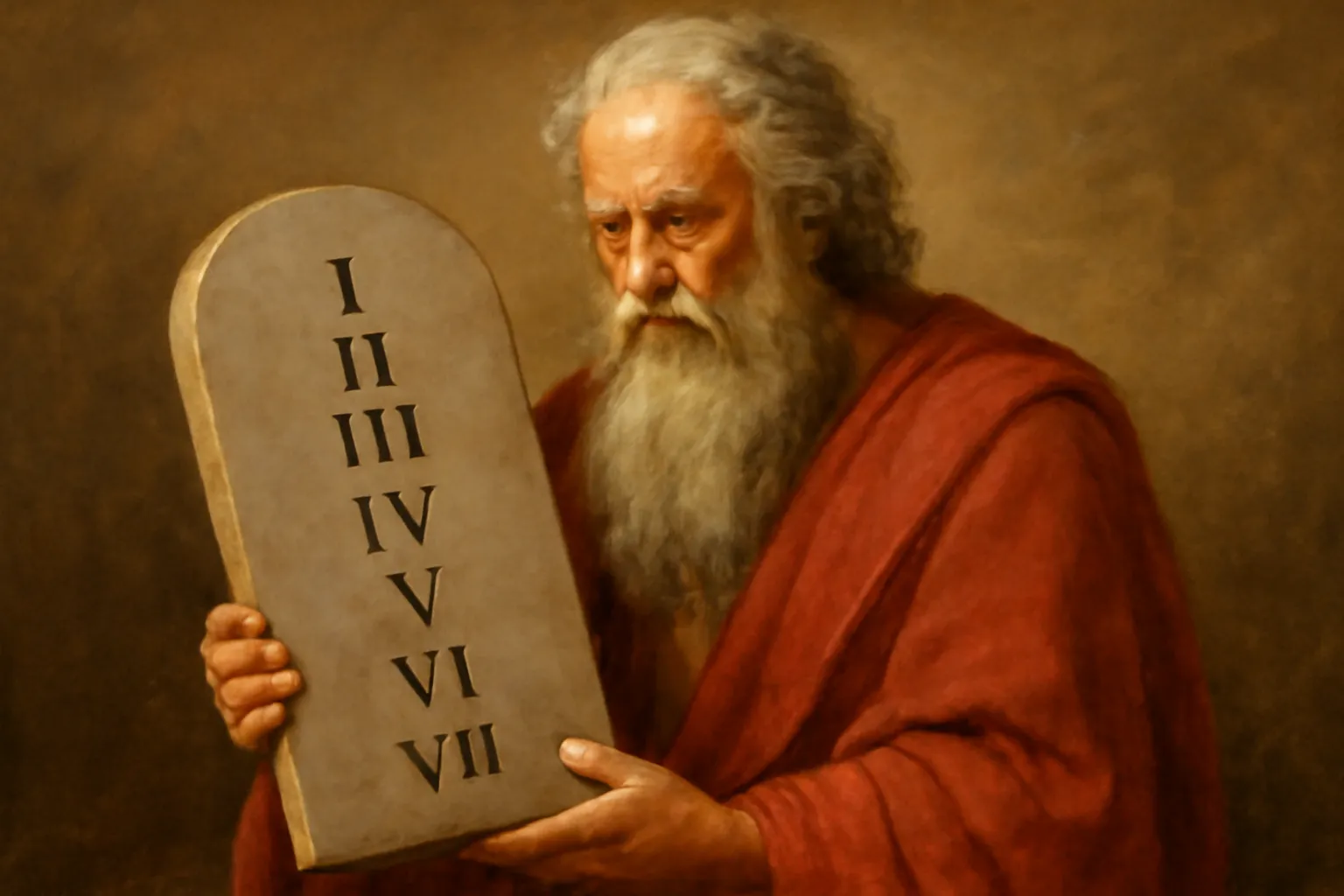
Devotional Commentary on Exodus 23: Justice Without Bribery, Mercy, and Rest With God
Exodus 23 · King James Version
Quick Answer: This commentary on exodus 23 highlights God’s concern for truth in courts, fairness to the vulnerable, mercy even toward enemies, and protection of strangers. It also teaches holy rhythms—feasts three times a year—and a weekly pattern of rest, plus humane justice in daily life and land care. Together, these commands show a worshipful, socially responsible faith.
Exodus 23 (King James Version)
“Thou shalt not raise a false report: put not thine hand with the wicked to be an unrighteous witness.
Thou shalt not follow a multitude to
do evil; neither shalt thou speak in a cause to decline after many to wrest
judgment:
Neither shalt thou countenance a poor man in his cause.
If thou meet thine enemy’s ox or his ass going astray, thou shalt surely bring it back to him again.
If thou see the ass of him that hateth thee lying under his burden, and wouldest forbear to help him, thou shalt surely help with him.
Thou shalt not wrest the judgment of thy poor in his cause.
Keep thee far from a false matter; and the innocent and righteous slay thou not: for I will not justify the wicked.
And thou shalt take no gift: for the gift blindeth the wise, and perverteth the words of the righteous.
Also thou shalt not oppress a stranger: for ye know the heart of a stranger, seeing ye were strangers in the land of Egypt.
And six years thou shalt sow thy land, and shalt gather in the fruits thereof:
But the seventh
year thou shalt let it rest and lie still; that the poor of thy people may eat: and what they leave the beasts of the field shall eat. In like manner thou shalt deal with thy vineyard,
and
with thy oliveyard.
Six days thou shalt do thy work, and on the seventh day thou shalt rest: that thine ox and thine ass may rest, and the son of thy handmaid, and the stranger, may be refreshed.
And in all
things that I have said unto you be circumspect: and make no mention of the name of other gods, neither let it be heard out of thy mouth.
Three times thou shalt keep a feast unto me in the year.
Thou shalt keep the feast of unleavened bread: (thou shalt eat unleavened bread seven days, as I commanded thee, in the time appointed of the month Abib; for in it thou camest out from Egypt: and none shall appear before me empty:)
And the feast of harvest, the firstfruits of thy labours, which thou hast sown in the field: and the feast of ingathering,
which is
in the end of the year, when thou hast gathered in thy labours out of the field.
Three times in the year all thy males shall appear before the Lord GOD.
Thou shalt not offer the blood of my sacrifice with leavened bread; neither shall the fat of my sacrifice remain until the morning.
The first of the firstfruits of thy land thou shalt bring into the house of the LORD thy God. Thou shalt not seethe a kid in his mother’s milk.
Behold, I send an Angel before thee, to keep thee in the way, and to bring thee into the place which I have prepared.
Beware of him, and obey his voice, provoke him not; for he will not pardon your transgressions: for my name
is in him.
But if thou shalt indeed obey his voice, and do all that I speak; then I will be an enemy unto thine enemies, and an adversary unto thine adversaries.
For mine Angel shall go before thee, and bring thee in unto the Amorites, and the Hittites, and the Perizzites, and the Canaanites, and the Hivites, and the Jebusites: and I will cut them off.
Thou shalt not bow down to their gods, nor serve them, nor do after their works: but thou shalt utterly overthrow them, and quite break down their images.
And ye shall serve the LORD your God, and he shall bless thy bread, and thy water; and I will take sickness away from the midst of thee.
There shall nothing cast their young, nor be barren, in thy land: the number of thy days I will fulfil.
I will send my fear before thee, and will destroy all the people to whom thou shalt come, and I will make all thine enemies turn their backs unto thee.
And I will send hornets before thee, which shall drive out the Hivite, the Canaanite, and the Hittite, from before thee.
I will not drive them out from before thee in one year; lest the land become desolate, and the beast of the field multiply against thee.
By little and little I will drive them out from before thee, until thou be increased, and inherit the land.
And I will set thy bounds from the Red sea even unto the sea of the Philistines, and from the desert unto the river: for I will deliver the inhabitants of the land into your hand; and thou shalt drive them out before thee.
Thou shalt make no covenant with them, nor with their gods.
They shall not dwell in thy land, lest they make thee sin against me: for if thou serve their gods, it will surely be a snare unto thee.”
Exodus 23 Bible commentary in its covenant setting
Exodus 23 comes as Moses leads Israel to live as a covenant people after God’s deliverance from Egypt. The nation is being formed not only for worship but also for everyday community life—how disputes are handled, how power is used, and how the weak are protected. In the ancient Near East, law was often tied to the influence of elites; weaker people could easily be silenced. Against that background, Exodus 23 stresses courtroom integrity (“false reports,” “wresting judgment,” and “gifts” that blind the wise). The passage also includes agricultural and social rhythms: Sabbath rest for people and animals, periodic land-rest so the poor can eat, and festivals that remember God’s saving acts. These are not random regulations; they train Israel’s loyalty to God in both public ethics and private habits. Even Israel’s military and territorial plans are framed through obedience: God warns them not to adopt the practices of surrounding nations, because religious compromise becomes a moral trap. Thus, Exodus 23 blends worship, justice, and mercy into one covenant identity.
Hebrew law tone: truth, impartial judgment, and covenant loyalty
Exodus 23 is written in Hebrew with a commanding, covenantal tone: “thou shalt” language reflects moral instruction meant to shape an entire society, not merely individual feelings. Several themes recur with strong ethical force—truthfulness in speech, straightness in judgment, and refusal of corrupt influence. When the text warns against “wresting judgment,” the idea is not disagreement over preferences but the deliberate twisting of a case away from justice. Likewise, the concern about gifts is not about generosity; it targets bribery that distorts judgment. The language also uses practical examples—an enemy’s animal lost, or help required when an opponent’s burden is at risk—to show that obedience is measured by concrete compassion. Overall, the Hebrew style is direct and moral, portraying obedience as faithful alignment with God’s character.
What Exodus 23 teaches about justice, speech, and bribery
Exodus 23 begins by addressing the courtroom and the tongue. “Thou shalt not raise a false report” and “put not thine hand with the wicked” confront two ways people undermine justice: spreading untruth and aligning with those who promote wrongdoing. The law also warns Israel not to “follow a multitude to do evil.” In other words, majority approval is not a substitute for righteousness. Even if many people support a corrupt cause, God’s standard remains higher than social pressure. The command not to “speak in a cause to decline after many” exposes a subtle temptation: speaking strategically to lose on purpose—tailoring testimony so the outcome shifts away from justice.
The passage then targets partiality in judgment: “Neither shalt thou countenance a poor man in his cause” and “Thou shalt not wrest the judgment of thy poor.” These lines hold together fairness and compassion. The law does not authorize favoritism toward poverty; instead, it forbids using poverty as a reason to manipulate outcomes. Justice must protect the poor from oppression, while also requiring unbiased integrity from judges and witnesses.
Finally, Exodus 23 forbids accepting gifts: “the gift blindeth the wise, and perverteth the words of the righteous.” This is a spiritual diagnosis as well as a legal one. Bribery doesn’t just buy an outcome; it disorders perception. God’s law aims at the heart behind speech—so witnesses speak truth, judges remain clear-minded, and the innocent are not harmed by manipulated proceedings.
Mercy to enemies and compassion for strangers
A striking feature of Exodus 23 is that it refuses to limit love to friends. The commands about lost animals show practical compassion even toward an enemy. If “thine enemy’s ox or his ass” is found “going astray,” Israel must “surely bring it back.” If the enemy’s burden is heavy and the opportunity is present to help, God says, “thou shalt surely help.” This does not mean approving the enemy’s hostility; it means practicing moral goodness that does not depend on the opponent’s attitude. Justice and mercy belong together.
The passage then makes compassion toward strangers a covenant requirement: “thou shalt not oppress a stranger: for ye know the heart of a stranger, seeing ye were strangers in the land of Egypt.” Israel’s identity as former refugees becomes the foundation for ethical empathy. Because they remember what it felt like to have no power and limited security, they are responsible to avoid repeating that harm to others.
This combination—helping the enemy, protecting the stranger—reveals God’s aim: a society where vulnerability is not exploited. The law trains Israel to treat life as accountable to God’s character. Notice also the internal link to worship: obedience in daily relationships safeguards worship integrity. If a community is marked by exploitation, it cannot truly honor the God who delivered them.
Exodus 23 meaning for believers: rest, feasts, and godly boundaries
Exodus 23 connects justice with worship rhythms. The weekly pattern is clear: “Six days thou shalt do thy work, and on the seventh day thou shalt rest;” the purpose extends beyond personal relief—“that thine ox and thine ass may rest” and “the stranger, may be refreshed.” Rest is portrayed as a mercy that touches the whole community.
The law also applies rest to the land. After six years of sowing, the seventh year is to “let it rest and lie still,” “that the poor of thy people may eat.” This teaches that provision is not ultimately produced by exhausting labor but received as blessing from God. Land-rest breaks the cycle of permanent pressure and encourages generosity.
The festivals reinforce memory and worship: “Three times thou shalt keep a feast unto me in the year,” including unleavened bread linked to deliverance from Egypt, the harvest and firstfruits, and the ingathering at year’s end. Worship therefore is not merely ritual; it is remembrance that forms gratitude.
Finally, the passage insists on spiritual boundaries: “make no mention of the name of other gods.” Israel must not blend worship practices with surrounding influences. God warns that disobedience and idolatry would become “a snare,” turning their own history of deliverance into a pathway of spiritual compromise.
Obedience to God’s angel and the call to reject harmful alliances
Exodus 23 presents guidance for Israel’s journey: “I send an Angel before thee, to keep thee in the way… and to bring thee into the place which I have prepared.” God’s protection is not accidental; it is covenantal. The command is to “Beware of him, and obey his voice.” The reason is sobering: the angel “will not pardon your transgressions,” meaning God’s guidance does not excuse persistent wrongdoing.
The promise, however, is equally clear—if they obey, God will act on their behalf: “I will be an enemy unto thine enemies.” God’s presence is not only comforting; it is strategic. The law therefore addresses the temptations of fear, impatience, and compromise. Israel is not told to force outcomes instantly. Even the driving out of nations is described as gradual—“By little and little I will drive them out”—to avoid desolation.
The final warning addresses alliances: “Thou shalt make no covenant with them, nor with their gods.” God is concerned not merely with political safety but with spiritual contamination. Partnerships with idolaters were likely to pull Israel into syncretism and moral compromise.
In a devotional sense, this portion reminds believers that obedience protects both the soul and the community. God’s guidance leads into the future He has prepared, but it requires trust expressed through refusing harmful spiritual ties.
How to Apply This Today: justice, mercy, rest, and worship boundaries
Start with truthful speech and integrity in influence. If you participate in decisions—work, church, community—refuse to exaggerate, slant facts, or “go along” with wrongdoing because others support it. Ask, “Am I seeking justice, or am I trying to shape the outcome for advantage?”
Practice mercy in everyday ways. Exodus 23’s animal-and-burden commands translate into helping people who are not currently “on your team.” You may not endorse someone’s harm, but you can still do good: return what you find, assist fairly, and treat opponents with respect. This aligns your character with God’s heart.
Protect the vulnerable. Do not exploit “the poor” through neglect or manipulation, and do not ignore those with less power—customers, tenants, coworkers, immigrants, or anyone treated as disposable. Let your decisions reflect impartial care.
Adopt rhythms of rest that refresh others. Whether you observe a Sabbath pattern or simply build weekly pauses, treat rest as mercy for family and even those who serve you. Finally, keep worship boundaries strong: avoid blending God’s ways with whatever your culture calls “normal” but God calls harmful. Obedience is not restriction; it is freedom to live under God’s care.
Related Bible Passages
Proverbs 17:15
God values justice even when it is inconvenient, paralleling Exodus 23’s refusal to distort judgment.
James 2:1-4
James warns against favoritism and oppression, echoing Exodus 23’s balance of fairness toward all.
Matthew 5:44
Jesus teaches love for enemies, consistent with Exodus 23’s command to help an enemy’s animal or burden.
Frequently Asked Questions
How does a commentary on exodus 23 explain God’s view of justice?
Exodus 23 presents justice as truthful, impartial, and protected from manipulation. It forbids false reports, majority-driven evil, and “wresting” judgment. It also condemns bribery that blinds wise people, showing that justice is as much about the heart behind testimony as it is about legal outcomes.
What does Exodus 23 teach about helping enemies and strangers?
The passage requires practical mercy: return a lost enemy’s animal and help when an enemy’s burden is at risk. It also commands protection of strangers because Israel remembers being strangers in Egypt. The lesson is that compassion is covenant loyalty shown in real situations, not sentiment reserved for friends.
What is the meaning of the rest and feast commands in Exodus 23?
Rest and feasts train Israel to trust God as provider and ruler. Weekly rest includes animals and refreshes the stranger, and land-rest provides food for the poor. The festivals remember deliverance and God’s ongoing provision, linking worship to daily life.
Why does Exodus 23 warn against covenants with other gods?
Because spiritual compromise becomes a moral trap. God warns Israel not to make covenant ties with surrounding nations or serve their gods. The concern is that mixing worship practices blurs loyalty, turning worshipful obedience into idolatry-driven snares that harm the community.
A Short Prayer
Lord, purify my speech and my decisions. Help me refuse false reports, reject bias and bribery, and practice fairness even when it costs me. Teach me mercy toward those who oppose me, and compassion for those with little power. Give me rhythms of rest that honor You and refresh others. Keep my worship wholehearted and my boundaries clear. Amen.
Key Takeaway: Exodus 23 calls God’s people to live worshipfully—through truthful justice, merciful compassion, and rest that reflects God’s character.