Iyyar Month Meaning: Origins, Significance, and Key Dates in the Hebrew Calendar
The month of Iyyar (often spelled Iyar or Ayar in various transliterations) is a pivotal period in the Hebrew calendar. Nestled between the springtime energy of Nisan and the early-summer anticipation of Sivan, Iyyar carries a distinct blend of seasonal renewal, religious rhythm, and communal memory. In this article we explore the Iyyar month meaning from its ancient origins to its modern observances, its seasonal context, and the key dates that anchor it in Jewish timekeeping. By tracing the lineage of the month’s name, its agricultural associations, and its role in ongoing liturgical cycles, readers gain a fuller picture of how this Hebrew month contributes to personal and communal meaning.
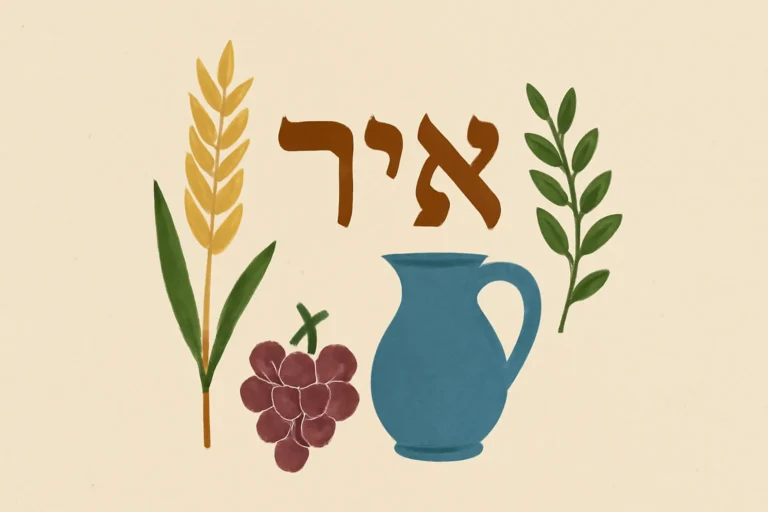
The Iyyar month meaning is closely tied to the history of the Hebrew calendar, in which the month’s name survives from older calendars that the Jewish community adopted and adapted. The modern Hebrew name אייר is the Hebrew rendering of a name that scholars trace back to the ancient Near East. In the historical records, the month corresponds to a Babylonian or Mesopotamian time frame known as Ayāru (also seen as Aiaru in Akkadian and related languages). When the Hebrews encountered or adopted the lunar-solar cycles of Mesopotamian neighbors, the month names were carried into the Hebrew calendar with adjustments to Hebrew phonology and orthography. Thus, the Iyyar month meaning includes both linguistic continuity and calendar migration, reflecting a broader pattern of calendar culture in the ancient world.
In practice, the name was adapted to Hebrew pronunciation and pronunciation variants emerged over centuries. You will often see spellings such as Iyyar, Iyar, or Ayar in English-language sources and scholarly works. Each variation points to the same underlying time frame: a particular lunar month that sits in the middle of spring for much of the Jewish world. The etymology is less about a literal translation and more about a cultural memory—an anchor that helps Jewish communities connect the present month to a long trajectory of timekeeping, ritual, and communal life.
Historical placement within the calendar
Within the Jewish calendar, Iyyar is the second month in the religious year (counting from Nisan) and the corresponding second month in the civil calendar (if Nisan is treated as part of the religious year, which many communities do). This dual perspective means that Iyyar serves as a bridge: it follows Passover’s renewal but precedes the late-spring gearing toward Shavuot and the early-summer pace of Sivan and beyond. The Iyyar month meaning thus carries a sense of transition—between liberation and realization, memory and fulfillment, and the ongoing work of spiritual growth that unfolds across the Omer period.
Seasonal context and agricultural imagery
In the northern hemisphere, Iyyar meaning is deeply connected to springtime and the agricultural cycle. The month often sits in a window of warming climates, budding flora, and the gradual awakening of the land after the rains of late winter and early spring. This seasonal backdrop is more than decorative; it helps shape the spiritual and liturgical atmosphere of the month. The imagery of budding, renewal, and new beginnings resonates with the recurring themes of freedom, growth, and responsibility found in Jewish liturgy and daily practice.
For communities in Israel, the seasonal texture of Iyyar is reinforced by the climate and landscape—the hills green, orchards flowering, and the agricultural calendar ramping up for harvests. Diaspora communities, writing and worshiping in different climates, still reflect the same seasonality in their readings, prayers, and calendar awareness. The Iyyar month meaning therefore encompasses both geography and human perception: a universal sense of springtime energy tempered by local weather, soil, and agricultural activity.
Seasonal symbolism and spiritual resonance
Scholars and commentators often read Iyyar as a period that invites renewal and intentionality. The month is not a standalone festival; it is part of a longer arc—from the liberation narrative of Passover to the covenantal encounter of Shavuot. In communities that emphasize the counting of the Omer, the early weeks of Iyyar form a reflective bridge: the soul seeks readiness for revelation, while the body and community prepare through practices of study, prayer, and acts of kindness.
What makes Iyyar month meaning particularly resonant is how it participates in ongoing religious rhythms. The month is deeply integrated with the counting of the Omer, the recitation of prayers that accompany that count, and the gradual approach to Shavuot, the festival of giving the Torah. While the exact holidays and commemorations can shift depending on the year and how the lunar cycle lines up with the solar year, the fundamental logic remains clear: Iyyar is a month of anticipation, discipline, and spiritual cultivation.
Counting the Omer during Iyyar
The Omer (the counting from Passover to Shavuot) begins on the eve of the second day of Passover and continues for 49 days, crossing from Nisan into Iyyar and onward into Sivan. This means that portions of the Omer are observed during the Iyyar month, with specific days of the count falling within this calendar window. For those who practice or study the Omer, this gives Iyyar a unique role: it houses some of the most introspective days of the season as communities prepare for the revelatory moment of acquiring the Torah.
In addition to the practical counting, various liturgical insertions, selichot, and Psalms may be highlighted during this period in different communities. The month’s rhythm invites students, families, and congregations to reflect on themes of growth, responsibility, and communal gratitude as the calendar moves toward Shavuot.
Kabbalistic and liturgical associations
In Jewish mysticism and liturgical life, each month can be connected to particular midot (character traits) or sefirot (divine emanations). While these associations can vary by tradition, Iyyar is commonly linked with growth, mercy, and renewal. The spiritual work of this month often emphasizes compassion, healing, and the cultivation of inner resources to support communal life. In practice, that means sermons, study sessions, and prayers during Iyyar that underscore mercy, kindness, and practical acts of social support.
Key dates and focal moments in Iyyar
While the Hebrew calendar is lunar-solar and subject to annual adjustments, there are several fixed or highly regular touchpoints that commonly occur in Iyyar. Below is a curated list of meaningful dates that can fall in this month, with explanations about their nature and how they are observed in diverse communities.
Lag BaOmer — 18 Iyyar
The most widely recognized and celebrated date within Iyyar is Lag BaOmer, which falls on the 18th day of the month. This holiday commemorates the destruction of the Second Temple and marks a break in the mourning practices of Sefirat HaOmer for many communities. In Israel and in Jewish communities around the world, Lag BaOmer is often celebrated with outdoor gatherings, lighting of bonfires, music, and parades. It is a day of joy and family celebration, particularly for children, who look forward to picnics, outdoor games, and community bonfires. The Lag BaOmer tradition provides a luminous mid-month milestone within the broader calendar framework of Iyyar.
Rosh Chodesh Iyyar — the start of the month
Every Hebrew month begins with Rosh Chodesh, the new moon festival. In Iyyar, Rosh Chodesh can be observed on one or two days depending on the specific year and the tradition followed. In the Diaspora, it is common for Rosh Chodesh to be observed on two days when the month begins on or near a Sunday, whereas in Israel the celebration might be confined to a single day. The exact observance often includes special Psalms, Torah readings, and abbreviated services in synagogues, along with a festive mood in households that honor the new month. The phrase Rosh Chodesh Iyyar thus marks the ceremonial starting line for the month and invites communities to set intentions for the weeks ahead.
Yom HaZikaron and Yom HaAtzmaut: occasional overlaps with Iyyar
In some years, the national commemorations and celebrations in Israel—namely Yom HaZikaron (Memorial Day for the fallen) and Yom HaAtzmaut (Independence Day)—can fall in or near Iyyar. The exact dates shift with the Hebrew calendar’s alignment to the Gregorian year and with leap-year adjustments. When these days occur during Iyyar, communities may observe an intensified blend of solemn remembrance and national celebration, often with observances that emphasize resilience, communal memory, and gratitude. Other years, these holidays occur in adjacent months, yet the proximity to Iyyar remains a reminder of the seasonal rhythm that links memory and renewal in Jewish public life.
Omer timing during Iyyar
As noted, the Omer counting spans the period from Passover toward Shavuot and passes through Iyyar in many years. The exact days of the Omer that fall within Iyyar depend on the calendar for that year, but the overall structure remains: the early part of the Omer often occupies a portion of Iyyar, providing a daily reflection of spiritual growth that corresponds with the month’s sense of renewal.
Other date-specific notes
Rosh Chodesh observances may include special prayers and customs, with variations across communities.
Some years see late-spring farm and harvest planning in Israel, with agricultural calendars aligning with Iyyar activities.
Across the diaspora, Iyyar may be marked by special study programs, communal meals, or family observances tied to the Omer and to the broader theme of renewal.
Meaning in daily life: spiritual and cultural dimensions
The Iyyar month meaning extends beyond liturgical invariants to influence daily life, family rituals, and communal expectations. For many Jews, this period is a bridge between Passover’s dramatic liberation and the covenantal revelation associated with Shavuot. Practically, this means a month that is often chosen for learning, introspection, and acts of kindness as a form of ongoing redemption—one that integrates memory with action.
In education and home life, families may emphasize values such as growth, mercy, and responsibility during Iyyar. The month’s framework invites people to assess how they can contribute to their communities, whether through study, charitable work, or helping neighbors. The idea of renewal—echoed in the agricultural cycle and in the Omer’s cultivation of inner traits—becomes a practical guide for personal development and collective healing.
From a literary perspective, poets and liturgists often use the imagery of spring and new life to illuminate the Iyyar month meaning. Verses about blooming flowers, returning rains, and the generosity of the earth align with themes of renewal and redemption that pulse through the month’s observances. The result is a holistic sense that Iyyar is a time to tend one’s inner garden as diligently as one tends a field outside the home.
Variations in practice across communities
Because Jewish practice is rich with regional and denominational diversity, the way Iyyar is observed can vary significantly. Orthodox communities may emphasize the Omer and Rosh Chodesh with particular liturgical motifs; Reform and Conservative communities might foreground social justice, study, and interfaith dialogue within the month’s framework. Still, the shared core remains: a period of renewal, hospitality, and a careful examination of how memory informs action.
Iyyar in the diaspora and in the Land of Israel
The experience of Iyyar differs in Israel and in the diaspora mainly because of calendar drift, climate, and local observances. In Israel, the month often coincides with lush landscapes, agricultural events, and national holidays on the civil calendar that are anchored to the Hebrew date. In diaspora communities, the same month is encountered through the lens of synagogal schedules, school calendars, and community programming that adapt to local climates and institutional rhythms. Yet the Iyyar month meaning remains universal: it is a time to honor spring’s vitality while continuing the ongoing work of memory and growth shared by Jewish communities around the world.
In Israel, Lag BaOmer is widely celebrated in public spaces and outdoor settings, reinforcing a sense of national and communal joy within the springtime frame.
In the diaspora, congregations may schedule Omer-related lectures, study sessions, and charitable campaigns that emphasize the practical aspects of growth and kindness during Iyyar.
Both contexts value the rhythm of Rosh Chodesh as a signal to begin new monthly cycles, emphasizing continuity in the calendar and in life.
These cross-cultural patterns enrich the broader understanding of the Iyyar month meaning, illustrating how a single month can carry both local color and universal themes—springtime vitality, spiritual refinement, and communal memory—across diverse geographic and cultural landscapes.
Practical engagement: how to observe and reflect during Iyyar
For readers seeking actionable guidance, the following suggestions can help translate the Iyyar month meaning into daily practice. The goal is to align personal action with the month’s themes of renewal, study, and mercy.
Track the calendar: Note when Rosh Chodesh Iyyar occurs and plan small observances—prayers, reflections, or a communal meal—to honor the new month.
Engage with the Omer: If you observe the Omer, incorporate a daily or weekly study plan that ties to the day’s introspective focus, using it as a framework for personal growth during Iyyar.
Learn about Lag BaOmer: If Lag BaOmer falls in Iyyar, participate in community activities, bonfires (where allowed), and family gatherings to celebrate the sense of light breaking through the season.
Connect memory and action: Reflect on the month’s memory themes—liberation, covenant, and shared responsibility—and choose a concrete act (donating, volunteering, or aiding a neighbor) that embodies renewal.
Study and discussion: Organize or join a study session about springtime symbolism in Jewish liturgy, or about the historical development of the Iyyar month meaning in different communities.
By weaving practical acts with devotional or study-oriented pursuits, individuals can experience a tangible sense of renewal that mirrors the broader symbolic significance of Iyyar.
Linguistic and semantic breadth: variations on the theme of Iyyar
To appreciate the full semantic breadth of the iyyar month meaning, it helps to notice how the term is used in different contexts. You will encounter spellings like Iyar, Iyyar, or Ayar, each carrying the same month but reflecting transliteration choices. In some scholarly works, the name is connected explicitly to the ancient Mesopotamian calendar, while in more contemporary Jewish practice it is treated as a standard month name within the Hebrew calendar. In printed prayer books and online resources, you may see both native Hebrew forms and Latinized forms, illustrating how the month’s identity travels across languages and communities.
Beyond just spelling, the concept of Iyyar invites a variety of interpretive angles. Some teachers emphasize its role as a bridge month—connecting the memory-work of Passover with the covenantal moment of revelation. Others highlight the month’s agricultural overtones, focusing on patience, stewardship, and the care of the land. Still others frame Iyyar as a period of social renewal—an invitation to renew commitments to family, neighbors, and common welfare. These multiple perspectives demonstrate how a single month can carry layered meanings that respond to different times, places, and spiritual aspirations.
In liturgy and art
Artists, poets, and liturgists often draw on the imagery of spring and renewal to interpret Iyyar. Hymns, psalms, and prayers that evoke growth, light, rain, and the blossoming of trees frequently find resonance with the month’s mood. This artistic dimension—though not a formal halakhic requirement—helps communities express the month’s meaning in ways that engage heart, intellect, and shared memory.