Jesus in Capernaum Ministry: A Deep Dive into His Teaching and Miracles in Galilee
Jesus in Capernaum Ministry: A Deep Dive into His Teaching and Miracles in Galilee
The town of Capernaum, perched on the northwest shore of the Sea of Galilee, becomes a central stage for
one of the most influential chapters of the Galilean ministry. In the gospel narratives, this village
functions not merely as a backdrop, but as a living hub where teaching, miracles, and personal encounters with Jesus intertwine to shape the early Christian understanding of who the Messiah is
and what his arrival means for the people of Galilee and beyond. This article offers a comprehensive exploration of the ministry in Capernaum, focusing on how Jesus’ words in the synagogue, his healings and exorcisms, his conversations with
inquirers, and his calls to discipleship unfolded in a context that combined faith, expectation, and controversy.
Setting the Scene: Capernaum in the Galilean Landscape
To understand the significance of Jesus in Capernaum's ministry, it helps to situate the town within first-century
Galilee. Capernaum was a bustling fishing village, a gateway for trade and travel along the lake, with a population that
included fishermen, farmers, merchants, and a mix of Jewish residents under Roman oversight. The geography mattered:
the Sea of Galilee provided both livelihood and a vivid metaphor for Jesus’ invitation to call people to a new
kind of catching—not fish, but followers of the Kingdom of God.
In the gospel accounts, Capernaum becomes a base for Jesus’ itinerant work in northern Israel. He teaches in the local
synagogue, travels to nearby villages, and returns to this harbor town again and again. For readers and listeners, the
town functions as a microcosm of Galilean life—an intersection of tradition, religious expectation, and the emerging
understanding of Jesus’ unique authority.
Teaching in the Synagogue: Authority in a Capernaum Context
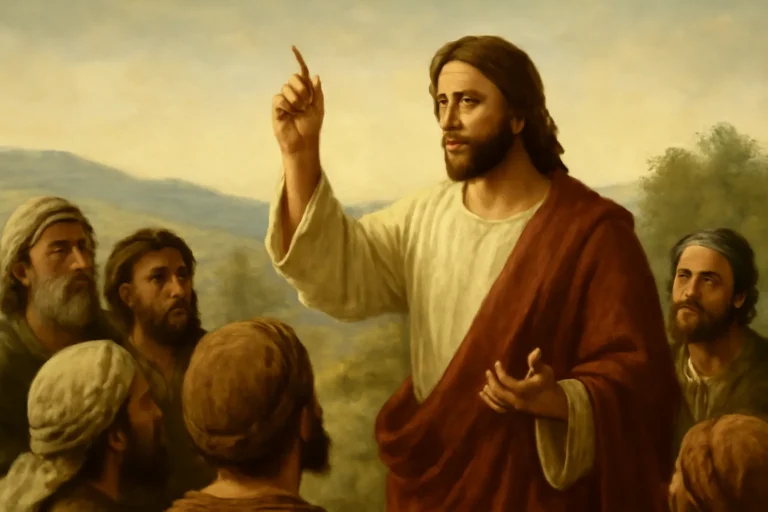
One of the striking features of Christ’s teaching in Capernaum is the way people respond to his authority. In
the synagogue scene, Jesus speaks with an authority that astonishes those who hear him. He does not merely quote
traditions; he interprets them in light of his own mission, announcing the arrival of a reign of God and the
fulfillment of scriptural expectation. The reaction in the crowd ranges from awe to alarm, and this tension becomes a
throughline for the entire ministry in this town.
The synagogue discourse in Capernaum often centers on a dual message:
Affirmation of Jesus’ authenticity as a teacher and healer in a culture steeped in rabbinic authority.
Challenge to the community to respond with faith, repentance, and trust in God’s present action through him.
For readers, this teaching moment foregrounds several important themes that recur in later ministry: the novelty of Jesus’
authority, the immediacy of the Kingdom, and the call to a responsive faith that goes beyond mere assent to a living
trust in God’s salvific work through the Son.
Healing and Exorcism: Miracles in the Capernaum Arena
The ministry in Capernaum is extraordinarily marked by demonstrations of power. Through acts of healing and
exorcism, Jesus reveals the in-breaking of God’s reign and demonstrates the compassion that lies at the heart of his
mission. The accounts in Mark, Luke, and Matthew present a coherent picture of a healer whose mercy meets people in
their deepest needs—bodily ailment, spiritual oppression, and social vulnerability.
Healing in the Synagogue: Deliverance from a Disturbing Spirit
In one of the early synagogue episodes, a man possessed by an unclean spirit confronts Jesus. The encounter is not
merely a show of power; it is a confrontation with the forces of darkness and a proclamation of Jesus’ identity as
the One who brings true liberty. The crowd witnesses a discernible pattern: Jesus speaks with authority, the
unclean spirit recognizes him, and the people respond with a mix of fear and wonder.
This moment is emblematic of the way exorcism in the Capernaum setting functions within a larger message: the
arrival of God’s kingdom implies liberation from what binds people, whether illness, spiritual oppression, or
fear-driven habits. The miracle then becomes not only a sign but a catalyst for faith and a deeper trust in Jesus’
mission.
Peter’s Household: Healing the Mother-in-Law and the Many Who Sought Healing
The home of Peter, a fisherman who will become a central figure among the disciples, becomes a hub for healing in
Capernaum. Jesus heals Peter’s mother-in-law of a fever, and the release ripples outward as many others bring
their sick to him. The setting underscores a theme that recurs in the gospel narrative: the physical healing
accompanying spiritual restoration, and the way in which hospitality and faith interact to open doors for God’s
mercy.
The pattern often follows: Jesus listens, the afflicted request relief, and faith—woven into the actions of
friends and family—becomes the channel through which healing comes. In Capernaum, this pattern shows the central
role of community in encountering the divine physician and the compassionate, hands-on approach that characterizes much
of his ministry.
The Roof Drop: Paralyzed Friends, Forgiveness, and Healing in a Home
One of the most memorable episodes in Capernaum is the healing of a paralytic whose friends lower him through a roof
to reach Jesus. In this narrative, faith and persistence become the conduits for mercy. Jesus first speaks
a word of forgiveness and then issues a healing command: rise, take up your mat, and go home. The public reaction
centers on wonder at Jesus’ authority to forgive sins, a claim that triggers debate about the nature of forgiveness and
faith among witnesses.
This incident has a layered significance: it portrays the relationship between physical restoration and spiritual
reconciliation, it highlights the role of community faith in bringing people into contact with Jesus, and it
foreshadows the ongoing tension between Jesus’ powerful acts and the growing opposition he faces from religious
authorities.
Centurion’s Faith: Healing the Servant from a Distance
In a narrative that travels beyond the borders of Capernaum to a nearby context, the centurion’s servant is healed by a
simple word from Jesus, despite the distance. This story is frequently placed in the Galilean setting around Capernaum
and demonstrates a strikingly different model of faith. The centurion’s recognition of Jesus’ authority—“Only speak the word,
and my servant will be healed”—is celebrated as exemplary faith. It is a powerful reminder that genuine trust in Jesus’
power can surpass customary expectations about proximity and ritual status.
When considering Jesus in Capernaum’s ministry in light of the centurion tale, readers notice a bridge between
Israel’s faith landscape and a broader, sometimes gentile-tinged openness to God’s mercy. The narrative invites readers to
reflect on what kind of faith truly pleases God: a faith that recognizes Jesus’ authority and acts with humility and
dependence, even across social boundaries.
Beyond individual healings, the ministry in Capernaum features discourses that reveal Jesus’ core message about
the Kingdom of God and the shape of true discipleship. The townsfolk hear parables, exhortations, and clarifying
statements that press listeners to a decisive response. In this setting, Jesus teaches with an immediacy that makes
his listeners confront their own beliefs, patterns, and loyalties.
Faith and repentance emerge as central themes. The miracles function not as magical displays but as signs that
point toward a transformative relationship with God. In Capernaum, the healing stories are inseparable from Jesus’
exhortations to trust, surrender, and participate in God’s mission through faith and obedience.
The Call of the First Disciples: A New Beginning in Galilee
The fishermen called from the shores of the Sea of Galilee become emblematic figures in the Capernaum chapter of Jesus’
ministry. In parallel accounts across the Synoptic Gospels, Jesus invites Simon Peter, Andrew, James, and John to leave
their nets and follow him. The call is not simply an invitation to a new career; it is an invitation to adopt a new
identity as “fishers of people.” This moment anchors the development of a community around Jesus that will carry the
movement outward from Capernaum toward the broader Galilean region and into the shaping events of the gospel story.
The narrative of the calling highlights a fundamental dynamic: obedience to Jesus’ call often involves leaving one’s
familiar work and security to participate in a mission whose scope is larger than personal gain. In the context of Jesus in Capernaum’s ministry, this call signals the beginnings of a shared venture that would become a
hallmark of the early Christian movement.
Communication, Controversy, and Community Response
The events surrounding Jesus in Capernaum reveal a community divided in its response to his message. Some witness
astounding miracles and respond with awe, while others demand signs, question his authority, or resist a message that
challenges established religious categories. This dynamic shows up in several ways:
Acclaim from those who recognize healing as a sign of divine presence and mercy.
Rejection or suspicion from voices who see Jesus as threatening or disruptive to the status quo.
Curiosity from observers who seek to understand what his authority means for their own lives and for the future of
their community.
The interactions in Capernaum also reveal how Jesus responds to questions and opposition: with teaching that clarifies his
mission, compassionate healing that demonstrates mercy, and calls to faith that require a reorientation of priorities.
Miracles as Signs: Theological Significance in the Galilean Context
In the broader arc of the gospel message, the miracles performed in Capernaum carry theological significance
that goes beyond individual episodes. They function as signs that:
Announce the proximate presence of the Kingdom of God in the person and work of Jesus.
Reveal Jesus’ compassion for the afflicted and his authority over supernatural forces and disease.
Invite faith and trust as essential responses, rather than passive spectatorship.
For readers, these miracles invite reflection on what it means to live under God’s rule and how communities respond when
the divine inbreaking disrupts familiar routines and structures. The Capernaum episodes thus serve both as
historical anchors for the narrative and as theological invitations to belief and transformation.
From Capernaum to the Wider Galilee: The Movement Expands
The ministry centered in Jesus in Capernaum becomes a launching point for broader Galilean activity. After his
time in Capernaum, Jesus travels to other towns and villages, teaching, healing, and proclaiming the same
emphases about repentance, faith, and the Kingdom. Yet the resonance of his Capernaum ministry shapes how people view
him in subsequent events: as a teacher with unparalleled authority, as a healer who meets human need, and as a
figure who calls forth disciples to join him in a mission that goes far beyond the boundaries of a single village.
The geographical center of gravity shifts, but the imprint of this Galilean base remains visible in the gospel
narratives. The experience of faith in Capernaum—whether through the healing of the paralytic, the centurion’s servant,
or the casting out of demons—becomes a touchstone for understanding how Jesus relates to the needs of real people in a
real place.
Theological and Practical Takeaways from the Capernaum Episodes
Readers today can glean several enduring lessons from the way Jesus operated in this Galilean town. These takeaways
include:
Authority and compassion: Jesus combines power with mercy, showing that authority is rooted in love for human beings.
Faith as a response: The faith demonstrated by individuals and communities becomes a vehicle for
healing and transformation.
Discipleship as invitation: The call to follow Jesus is not an end in itself but a passage into a life
shaped by mission and service to others.
Public and personal dimensions: The ministry in Capernaum operates in both public spaces (synagogues, streets)
and intimate settings (homes, private conversations), illustrating how the kingdom intersects with everyday life.
Preserving the Memory: Why Capernaum Continues to Matter
The biblical episodes from this Capernaum-centered ministry endure as more than historical narratives. They invite
readers to consider what it means to encounter Jesus in one’s own community: to recognize a message that unsettles
complacency, to respond with faith, and to participate in a movement of healing and hope that extends beyond the
individual to the church and the world. The hometown of many early disciples thus becomes a classroom for
recognizing the presence of God in the ordinary — a reminder that transformative events often occur where people
live, work, and seek meaning.
Additional Context: Parallel Accounts and Cross-Gospel Harmony
The episodes described above are not confined to a single gospel tradition. While the core events—synagogue teaching,
healings in Peter’s house, the paralytic lowered from the roof, and the healing of the centurion’s servant—are shared
across Mark, Matthew, and Luke, each gospel writer emphasizes different textures
and implications. This cross-gospel harmony helps readers develop a richer understanding of Jesus’ ministry in Capernaum, as
it appears from multiple perspectives:
Mark emphasizes immediacy, authority, and the sequence of connected miracles that reveal Jesus’ identity.
Matthew highlights the fulfillment dimension, presenting Jesus as the one who embodies and completes Hebrew
scripture, with Capernaum serving as a lens for prophetic continuity.
Luke foregrounds mercy and inclusive faith, often tracing the reactions of diverse groups in the town and the
broader Galilean region.
Together, these accounts create a composite portrait of a ministry marked by decisive teaching, compassionate healing,
and a challenging invitation to faith that resonates across communities and generations.
Reflections for Modern Readers
Although set in a far-off time and place, the lessons from Jesus in Capernaum’s ministry speak to contemporary
readers in meaningful ways. Communities today can draw from the example of:
Openness to encounter God in familiar places: churches, homes, marketplaces, and synagogues all echo
Capernaum’s blend of public ministry and private mercy.
The integration of faith and action: belief is not purely an intellectual assent but a living fidelity that seeks
the well-being of others through acts of healing, advocacy, and care.
The humility of discipleship: the invitation to follow Jesus calls us beyond our comfort zones into a shared
mission of service, even when it disrupts ordinary routines.
A Rich Tapestry: Names, Places, and Themes in the Capernaum Narrative
The story of Jesus in Capernaum weaves together a tapestry of people, places, and motifs that recur across the
gospel tradition. Figures like Simon Peter, Andrew, James, and John become central to the movement, while places such as
the synagogue, Peter’s house, and the streets near the harbor anchor the episodes in a tangible geography. Theologically,
the recurring motifs of healing, forgiveness, faith, and authority invite readers to engage with both the historical
memory and the spiritual significance of Jesus’ work.
Closing Thoughts: The Capernaum Chapter as a Gateway
The episodes from this Galilean town offer a powerful lens for understanding the core dynamic of Jesus’
ministry: God’s reign is breaking in, and human response—marked by faith, trust, and obedience—becomes the essential
doorway to experience and participate in that reign. The Capernaum-centered ministry is not a closed chapter
but a gateway to a broader story that invites every reader to consider how Jesus’ words and deeds challenge, heal,
and transform communities today.
Key Episodes to Remember
Teaching in the synagogue with authoritative instruction.
Healing of Peter’s mother-in-law and the subsequent wave of healings.
The paralytic lowered through the roof and the forgiveness of sins enacted in healing.
The centurion’s request and Jesus’ pronouncement about faith across distance and boundary.
The calling of the first disciples and the birth of a new community in Galilee.
In sum, the ministry of Jesus in Capernaum, also described as the Capernaum-based mission, stands as a cornerstone for
understanding his broader work in Galilee and his ongoing relevance for readers who seek a living encounter with
the message of the gospel. The teaching, miracles, and responses of this period remain a luminous node in the Gospel
narrative, inviting ongoing study, reflection, and dialogue about what it means to live under God’s mercy and
authority in today’s world.
For further study, readers may compare parallel passages across the Gospels and explore historical maps of first-century
Galilee to visualize how Capernaum functioned as a hub in the ministry of Jesus. By examining synoptic parallels, you can
trace how the same episodes are presented with different emphases, enriching your understanding of the multifaceted
character of Jesus’ Galilean ministry and its enduring impact on Christian faith and practice.



Leave a Reply