Forty Days After Resurrection: Key Post-Resurrection Events and Meanings
Forty Days After Resurrection: Key Post-Resurrection Events and Meanings
In Christian tradition, the period known as the forty days after the Resurrection marks a decisive hinge between the empty tomb and the mission of the church. It is a time when the risen Jesus makes his presence tangible, speaks with his followers, and equips them for the work that lies ahead. Although scholars debate the exact sequence of every encounter, the overarching pattern is clear: the Lord is not merely alive in a distant sense; he appears, teaches, reassures, and commissions his followers, guiding a movement that will carry his message to all nations. This long arc of the forty-day window—often described using a variety of phrases such as forty days after the resurrection, the forty-day period following the Resurrection, or simply the post-resurrection days—still resonates in preaching, theology, and devotional life today.
Scope and significance of the forty days after the Resurrection
What makes this span noteworthy is not only the number forty itself but the content that unfolds within it. The period functions as a bridge: from the surprise of the empty tomb to the empowerment of the church. It is a time of proofs and teachings, a period during which the risen Jesus demonstrates continuity and transformation of his followers’ expectations. In many Christian calendars, the events of the next forty days culminate in the feast of the Ascension, which marks Jesus’ return to the Father and the launching point for the church’s mission in the world.
Within the biblical narrative, the elongated interval provides space for a number of essential themes. It is a window in which the disciples move from fear or doubt toward confident testimony. It is a period in which the community learns to recognize that the resurrection is not a private marvel but the root of public proclamation, moral transformation, and spiritual empowerment. The language of the period—“he appeared to them,” “he spoke about the kingdom of God,” “he opened their minds to understand the scriptures”—emphasizes that the risen Jesus is not merely a symbol but a living presence who guides, instructs, and commissions.
Key post-resurrection appearances: an outline of the encounters
To grasp the arc of this period, it helps to map the major appearances and settings. What follows is a concise guide to the varied scenes during the forty days after the Resurrection, with emphasis on how each scene contributes to the larger narrative of transformation and mission.
Appearance to Mary Magdalene and the women
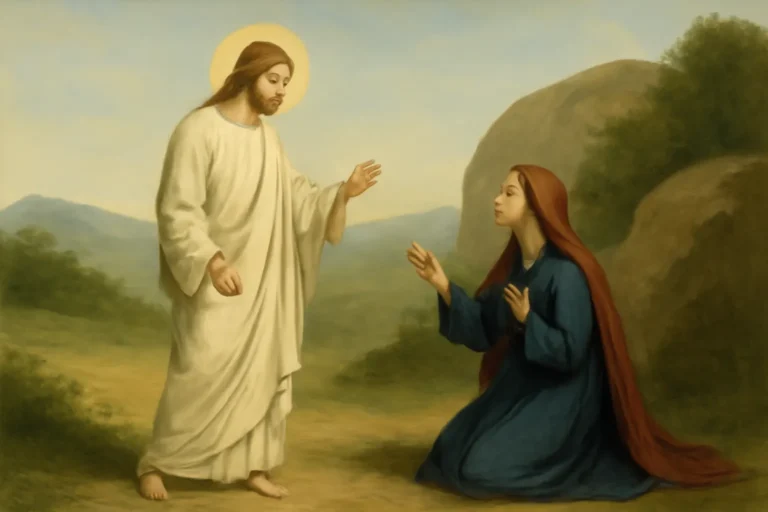
In the earliest moments after the tomb is found empty, Mary Magdalene and a group of women are the first witnesses to the Resurrection. Their experiences disrupt ordinary life and invite the male disciples to consider the possibility that Jesus has moved beyond the tomb. The episodes involving women underscore themes of fidelity, courage, and the breaking of social expectations, while also introducing the practice of witness that becomes central to the church’s life. The message they carry—an announcement that the Lord is risen—sets the tone for the communal reception of the news in the days that follow.
Appearances in Jerusalem: the disciples gathered and dispersed
Several post-resurrection appearances occur in the city where disruptions and fears were strongest. The risen Lord meets the disciples in spaces such as the upper room, speaks peace over their frightened hearts, and reassures them with living proof of his wounds. These encounters serve to calm anxiety, restore trust, and reorient the followers toward their ongoing witness. The emphasis is not merely on seeing the risen Jesus, but on recognizing him as the one who binds the broken-hearted and authorizes a mission beyond Jerusalem.
On the road to Emmaus: open scriptural revelation
One of the most evocative post-resurrection scenes unfolds on the road to Emmaus, where two travelers discuss the events of the day. In this journey, Jesus himself walks beside them yet their eyes are kept from recognizing him at first. He then expounds the scriptures—from Moses to the prophets—revealing how the Messiah’s sufferings and exaltation fulfilled the divine plan. The moment of recognition occurs at the breaking of bread, illustrating that common worship and shared meals are central to grasping the risen life. The Emmaus narrative highlights the indispensability of scriptural interpretation and the intimate act of hospitality in the post-resurrection era.
Thomas and the disciples: faith, doubt, and eyewitness authority
Another notable post-resurrection encounter involves Thomas, whose initial doubt about the Resurrection is transformed by direct contact with the risen Jesus. The Lord’s invitation—“put your finger here, see my hands; reach out your hand and put it into my side”—serves as a powerful reminder that belief in the risen Christ rests not only on sensory evidence but on the authority of those who have witnessed him. Yet the text also challenges readers to move beyond mere signs toward a living trust that sustains the church’s mission, even when not all questions are immediately resolved.
Appearances by the Sea of Galilee: restoration of vocation
After the initial chapters of the post-resurrection story, the disciples are drawn back to the sea where Jesus commissions them anew. The encounter by the shore includes the famous “breakfast on the beach,” where the risen Jesus speaks words that reaffirm vocation, forgiveness, and the call to “feed my sheep.” This setting emphasizes the continuity between Jesus’ earthly ministry and the renewed mission of his followers, who now carry forward with the Spirit’s power. The fishing scene becomes a symbol of readiness to work in the world with God’s provision and guidance.
The final appearances and the command to wait in Jerusalem
Across these fortieth-day chapters, there are additional meetings that reinforce the transformation from fear to mission. A recurring motif is instruction about the kingdom of God, with reminders that the mission will unfold in stages. Before the Ascension, Jesus reminds the disciples to await empowerment from on high, preparing them for a new era in which their witness will reach Judea, Samaria, and the ends of the earth. The sequence culminates not simply in an appearance but in a directive: to stay faithful, be witnesses, and trust the Father’s timing.
The Great Commission, the Ascension, and the mission horizon
Among the most pivotal moments of the forty-day window is the transition from personal encounters to corporate sending. The Great Commission, found in Matthew’s Gospel, explicitly charges the disciples with making disciples of all nations, baptizing them, and teaching them to observe all that Jesus has commanded. This commission marks the turning point from a localized miracle story into a global mission, defining the church’s identity as an evangelizing, disciple-making community. In the Acts narrative, the sequence continues with the Ascension, a visible departure that signals readiness for the Spirit’s arrival at Pentecost. The ascension is not abandonment but a transition: Jesus is returning to the Father so that the Spirit can come, enabling a church that testifies with courage and wisdom in every context.
The movement from eyewitness encounters to mission work characterizes the lifetime after the Resurrection in a distinctive way. The risen Jesus authorizes and empowers a band of witnesses who will eventually become a worldwide movement. The forty-day window thus serves as both a theological pedagogy and a practical blueprint: the church learns to proclaim the good news with authority, to offer forgiveness through the Spirit, and to bear witness in word and deed to the reality of new life in Christ.
The symbol and the theology of the number forty
The number forty carries weight in biblical literature that extends beyond a literal count of days. It often signals a period of testing, preparation, or transition that culminates in a new phase. During the forty days after the Resurrection, the disciples undergo a transformation that equips them for leadership in the post-resurrection church. Several theological strands emerge from this framing:
Preparation for mission: A sustained period of teaching and experience refines their understanding of the mission and the nature of the kingdom Jesus proclaimed.
Validation and commissioning: The arc moves from witnessing to being commissioned to carry the message to every nation.
Reconciliation of doubt and belief: The variety of responses—from fear to faith, from doubt to trust—models the spiritual journey of believers.
Embodied presence to spiritual empowerment: The initial tangible presence of the risen Jesus transitions toward a Spirit-filled presence that empowers the church’s life and witness.
In broader biblical symbolism, the number forty often aligns with times of testing and renewal—think of the forty years in the wilderness, the forty days of Jesus’ fasting, and other scriptural episodes. The forty days after resurrection fits this pattern as a liminal period that shapes the church’s identity and destiny.
Historical and liturgical impact: shaping memory and practice
The forty-day arc provides a rich template for how early Christian communities remembered and practiced their faith. Liturgically, the period informs the sequence of feasts and commemorations that follow the Resurrection. In many traditions, Ascension Thursday is observed forty days after Easter, marking the culmination of the post-resurrection period. The subsequent interval leading to Pentecost—ten days to ten days?—highlights a shift from personal appearances to a Spirit-enabled mission that characterizes the earliest church’s life.
Historically, the emphasis on the post-resurrection appearances helped early believers articulate a theology of presence: Jesus is not a distant memory but a living reality who stands with his people, speaks into their situations, and empowers them to bear witness in a pluralistic world. The narrative context also fostered a spirit of unity among diverse groups of believers who would later become the church’s global community.
Diversity of perspectives: how different Christian traditions emphasize the forty-day period
Across Christian traditions, the forty days after the Resurrection are understood and celebrated with nuance. Some highlights:
Catholic and Orthodox perspectives: Emphasis on the continuity of resurrection faith with liturgical life, the significance of the Ascension as part of Christ’s victory over death, and the canonical sequence that grounds sacramental life and mission.
Protestant perspectives: Focus on the spread of the gospel, the authority of Scripture in understanding the risen Christ, and the centrality of the Great Commission as the church’s ongoing mandate.
Ecumenical reflections: Shared attention to the witnesses’ varied responses—fear, faith, doubt, and courage—and how these responses model the spiritual journey of believers in a diverse world.
In all these traditions, the core message of the forty-day period remains a combination of presence, teaching, and mission. The risen Jesus is essentially a teacher and a sender; his appearances are not merely about proof but about commissioning and empowerment for a life shaped by the gospel.
The lived legacy: from first witnesses to global mission
The events of the forty-day window have had a lasting impact on how Christians understand vocation, community, and the meaning of transformation. The early church’s memory of these days helped crystallize the conviction that the resurrection is the decisive act that redefines human existence, offering hope, forgiveness, and a new basis for relationship with God. This period thus becomes a model for spiritual formation: a rhythm of encountering the risen Christ, listening to his teaching, receiving a renewed sense of purpose, and stepping out in obedience to a mission that extends beyond any single locale.
In biblical exegesis and devotional practice, the forty days after the Resurrection are often invoked as a pattern for discernment and renewal. For believers today, the sequence invites a reflective question: How does one encounter the living Christ in daily life, how does one grow in understanding of the Scriptures, and how does one participate in God’s mission in a complex world? The answer, drawn from the tradition, is not a single method but a disposition of faith: to seek Jesus in Scripture, to recognize him in the breaking of bread, to fellowship with others in love, and to witness with bold humility to the truth of new life in Christ.
Practical reflection and study prompts
Identify the post-resurrection appearances you find most compelling and consider what each scene reveals about Jesus’ identity and mission.
Reflect on the themes of faith and doubt as they appear in the Thomas and Emmaus narratives. How can this inform your understanding of belief and curiosity in your own life?
Explore how the Great Commission shapes contemporary Christian ministry in your tradition or community.
Consider the relationship between presence and empowerment: how does the idea that Jesus is alive affect your approach to prayer, worship, and service?
Study the symbolism of the number forty in Scripture and reflect on how periods of testing or preparation can lead to renewed purpose in current faith communities.
In sum, the forty days after the Resurrection function as a comprehensive catechesis in miniature: they teach who Jesus is, what the risen life implies for discipleship, and how a community is formed to participate in God’s mission in the world. The sequence—from the first witnesses to the prophetic and practical commissioning—remains a foundational pattern for Christian faith: encounter, understanding, empowerment, and sending. The narrative invites readers to see the risen Christ not only as the one who conquers death but as the living Lord who continues to guide, teach, and multiply faithful witnesses across generations and cultures. The days following the Resurrection, in their fullness, point forward to Pentecost and beyond, where the Spirit empowers a diverse body to bear witness with courage, wisdom, and joy to the transformative power of new life in Christ.




Leave a Reply