Ark of the Covenant History: Origins and Significance
The ark of the covenant history stretches across ancient narratives, sacred rituals, and enduring symbolism. It sits at the crossroads of theology, anthropology, and archaeology, inviting readers to explore how a single sacred object became a central emblem for communities, kings, priests, and artists. This article traces the origins, the ceremonial functions, the journeys, and the lasting influence of the Ark of the Covenant, while acknowledging the many interpretations and legends that have grown up around it over two millennia and more.
Origins in sacred texts and the ancient world
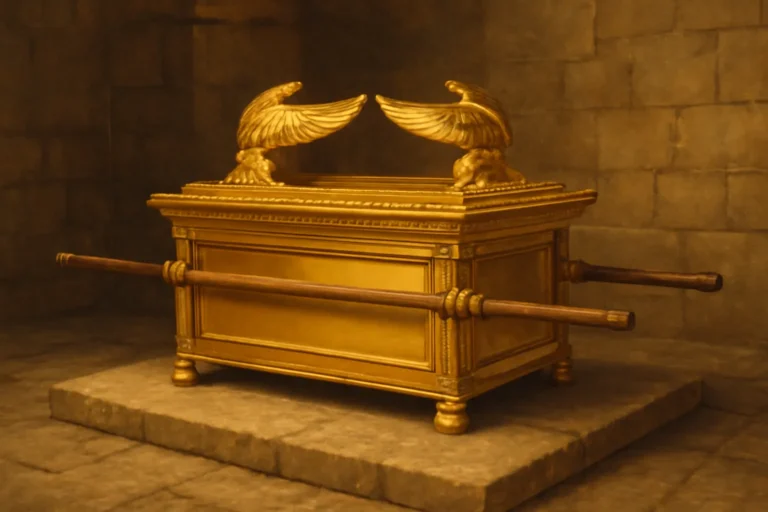
In the core biblical tradition, the Ark of the Covenant is first described as a portable container crafted under divine instruction. According to the biblical account, it was constructed of acacia wood overlaid with gold, seven and a half spans long, its width and height proportioned to a sacred standard. The Ark was designed to hold three sacred objects—one canonical cylinder for the tablets of the Decalogue, a jar of manna, and Aaron’s staff that budded—though the exact inventory varies by tradition and textual emphasis. The cover of the Ark, known as the mercy seat, flanked by two cherubim, functioned as the throne of the divine presence, a place where communication between the heavenly and the earthly realms could occur.
Within this historical arc, the ark history is inseparable from the broader ancient Near Eastern context. Civilizations of the era preserved sacred chests and boxes that bore the weight of law, covenant, and ritual power. Yet the biblical Ark of the Covenant distinguishes itself through its explicit claim to house a living relationship—an ongoing bond between Israel and YHWH. The description of the Ark’s dimensions, materials, and symbolic iconography contributed to a theology in which the Ark was not merely a container but a dynamic locus of divine action and revelation.
The design and ritual function
Mercy seat symbolism: The lid of the Ark served as the place where divine mercy and judgment met, a focal point for offerings and atonement rites.
Cherubim imagery: The two golden cherubim facing each other framed the space where God’s presence was believed to dwell.
Tablet custody: The primary sacred inscription—commonly understood as the tablets of the commandments—anchored the Ark’s authority in the covenant code.
In this light, the Ark is less a static object than a living theological symbol. In Hebrew literature, the Ark embodies the presence of God amid a chosen people, guiding their national and religious life. Its significance extends beyond mere ritual function to questions of leadership, justice, and memory—how a society understood its core commitments and obligations under divine sovereignty.
The Tabernacle and the portable sanctuary
During the wilderness period, the Tabernacle functioned as a movable temple. Its construction followed precise instructions given to Moses on Mount Sinai, including layout, materials, and ceremonial order. The Ark occupied the Most Holy Place inside the Tabernacle, a room sometimes translated as the Holy of Holies, where only the high priest could enter—and only on designated occasions, such as the Day of Atonement. The Ark’s placement inside the Tabernacle signified not mere storage but a localized, tangible manifestation of the divine covenant among the people of Israel.
Key features of this era include:
The Ark’s function as a portable presence, accompanying the people through the desert and into the land they were promised.
The ritual cycle around the Tabernacle that enshrined the covenantal relationship as the organizing principle of national life.
The sense that the divine presence could be experienced in the midst of ordinary life, yet mediated through priestly ritual and purity standards.
The journey of the Ark: wilderness wanderings and early campaigns
As the Israelites moved from the Sinai wilderness toward the Promised Land, the ark history involved dramatic episodes that shaped collective memory. The Ark’s presence was credited with miraculous outcomes in certain military campaigns and with cautionary lessons in others. The people believed that the Ark went ahead of them, leading and protecting them as long as they remained faithful to the covenant.
Two episodes stand out in the common narrative:
The crossing of the Jordan and the entry into Canaan, where the Ark’s presence accompanied the priests as the waters parted, enabling a miraculous passage similar in symbol to earlier Red Sea narratives.
Confrontations with fortified cities, where the Ark’s role in the ritual and strategic life of the people intersected with military expectations, ritual purity, and prophetic word.
These stories underscore a broader theme in the ark history: the Ark is not merely a weapon or a relic but a living symbol of a covenantal relationship shaped by obedience, faith, and communal memory. The narrative tradition often links victory or defeat with fidelity to the covenant and with proper observance of the commandments accompanying the sacred object.
The era of judges and kings: the Ark in the temple era begins
With the shift from the tribal confederation to a centralized monarchy, the Ark of the Covenant continued to play a pivotal ceremonial role. The early monarchy in Israel sought to consolidate sacred space, and the Ark’s place in Jerusalem—first perhaps in a tabernacular shrine and eventually within a built temple—became central to state religion and national identity.
Two important strands characterize this period:
The consolidation of the Ark’s status as the symbol around which national liturgy and annual festivals revolved.
The emergence of a rich literary and ritual imagination about how the Ark could be honored, safeguarded, and interpreted within the political life of the monarchy.
David, the Ark, and the dream of a permanent sanctuary
The ascent of King David marks a turning point in the ark history. David took steps to transfer the sacred object from its earlier resting place to Jerusalem, intending to establish a permanent center for worship that would unify the tribes. The famous episode in which the Ark was transported to Zion includes a series of ceremonies, dances, and prayers that celebrated the covenantal bond between God and the people of Israel.
However, the transport was not without tragedy. An incident in which a person touched the Ark to steady it, and died, highlighted the holiness and the delicacy of approaching the divine presence in the prescribed manner. The risks associated with the Ark’s handling underscored the seriousness with which ancient communities approached sacred power and the necessity of ritual purity for those who engaged with the object.
Solomon’s period: the Temple and the ark’s holy of holies
Under Solomon, a grand temple was constructed in Jerusalem, and the Ark occupied the most sacred chamber—the inner sanctuary sometimes known as the Holy of Holies. In this setting, the Ark was more than a container; it was the symbolic throne of the covenant, a focal point for a centralized liturgical culture, and a sign of the divine plan for the nation. The Temple’s architecture and its rites were designed to honor the covenant, to regulate priestly service, and to remind the people of their obligations beneath the divine law.
This era’s imagined splendor contributed to a durable image of the Ark as a treasure of the people, a visible reminder of the covenant’s seriousness, and an emblem of national destiny. Yet even amid this grandeur, the textual tradition leaves space for mystery: the exact fate of the Ark after the Temple’s later disruptions remains a question that many readers have asked for centuries.
Destruction, exile, and the enigmatic fate of the Ark
The history of the Ark of the Covenant took a dramatic turn with the conquests that reshaped the ancient world. The Babylonian destruction of Jerusalem and the Temple in 586 BCE marked a major turning point. The fate of the Ark during the exile is not clearly recorded in the biblical text, leading to a long-standing scholarly and popular curiosity about where the sacred box ended up, if it survived at all.
Scholarly discussions often explore several possibilities:
The Ark was taken into exile with the people and possibly hidden or stored away before the destruction, preserved by priests or temple guardians.
The Ark was removed to a safer sanctuary, perhaps in a region outside Babylon, but its tracks were lost over time.
It was never returned to Judea after the exile and became a symbol of a vanished temple-centric cult.
The historical record offers no definitive answer, which has fueled centuries of speculation. The ark history thus becomes a matter not only of archaeology and textual analysis but also of memory and myth. For many, the absence of the Ark’s physical presence deepens its symbolic power: a reminder of divine sovereignty that transcends a single artifact or place.
Legends, beliefs, and regional traditions about the Ark
Over the centuries, diverse traditions have offered explanations about the Ark’s possible whereabouts and fate. Among the most influential are:
Ethiopian tradition: A long-standing claim that the Ark resides in Axum, guarded in the Church of Our Lady Mary of Zion by a small and closely protected priesthood. This theory has fascinated pilgrims and scholars, though it remains a matter of faith and legend rather than widely accepted historical proof.
Jewish and Christian legends: Various stories place the Ark in hidden chambers, secret tunnels, or protected vaults beneath or near the Temple Mount, awaiting a day when it will reappear.
Other regional theories: Throughout the ancient world, enthusiasts and scholars proposed that the Ark had been moved, hidden, or repurposed in other temples and sacred sites, each reflecting local religious imagination about the power of the covenant box.
These narratives reveal how a sacred object can become a repository for communal memory, identity, and hope. The ark history, in this sense, lives on as much in storytelling as in material history. The enduring question—what happened to the Ark?—continues to provoke curiosity across religious communities and scholarly circles alike.
Theological and symbolic significance across traditions
Beyond its material description, the Ark of the Covenant occupies a central place in theological reflection. Its symbolism extends into both Judaism and Christianity, where it is interpreted in ways that illuminate concepts of covenant, divine presence, and atonement:
Covenant theology: The Ark embodies the binding agreement between God and the people, a tangible reminder of mutual obligations and blessings conditional on fidelity to the law.
Theophany and presence: The Ark is a sign of God’s active presence among the community, especially during liturgical and ceremonial moments.
Prophetic and typological readings: In Christian typology, the Ark is sometimes seen as prefiguring or echoing the coming of Christ, particularly in its role as a mediator of divine mercy and judgment.
Because of its potent symbolism, the ark history has permeated religious art, liturgy, and ethical reflection. It serves as a reminder that sacred artifacts are rarely mere objects; they are anchors for memory, law, and the imagined future of a people.
The Ark in culture, art, and modern imagination
In modern culture, the mystery of the Ark has inspired a broad range of works—from scholarly monographs to blockbuster cinema. The popular imagination has often focused on two aspects: the Ark as a lost treasure and as a symbol of divine power. While fictional narratives—such as adventure storytelling and speculative history—offer thrilling possibilities, they should be distinguished from the careful philological and archaeological scholarship that seeks to understand the Ark’s historical contexts and religious meanings.
The way the Ark shapes ideas of sacred containers in literature and film, prompting questions about what constitutes sacred space and how communities guard their most cherished beliefs.
Influences on visual art, iconography, and ritual design in Jewish and Christian communities concerned with the covenant and its memory.
Influence on museums and exhibitions that present biblical antiquities, ritual objects, and the broader world of ancient sacred architecture.
The Ark as a source of methodological insight
Scholars studying the ark history bring together several disciplines to illuminate how a single object can embody a complex blend of law, ritual, memory, and power. The interdisciplinary approach typically involves:
Textual analysis of biblical and extrabiblical sources to reconstruct the narrative arc and its variations across traditions.
Archaeological and material culture studies that examine the possible forms, construction techniques, and stylistic features associated with sacred chests and their functions.
Theological interpretation that considers how different faith communities read the same symbol in ways that reflect their own concerns and hopes.
By examining the ark history through these lenses, readers gain a better understanding of how religious belief evolves, how sacred objects store collective memory, and how the idea of a divine presence can shape political and social life across centuries.
Key elements to remember about the ark history
For quick reference, here are some core facts and themes that appear repeatedly across the saga of the Ark of the Covenant:
Divine instruction shaped its dimensions, materials, and iconography, underscoring the sacred authority behind its design.
Central location in the Tabernacle and later the Temple tied the Ark to the religious and political heart of the community.
Ritual significance tied to procedures of purification, priestly ministry, and annual atonement rites.
Transmission and transformation across generations, with changes in temple shape, worship forms, and the interpretation of the covenant.
Ambiguous fate in the historical record, which invites diverse traditions and ongoing scholarly debate.
The ark history in a broader historical framework
Placed within the broader history of the ancient world, the story of the Ark of the Covenant reflects how communities understood sacred power, political authority, and collective memory in a volatile era. The Ark’s journey—from the wilderness to the heart of Jerusalem, to its ambiguous status after exile—parallels the trajectories of identity formation, religious reform, and cultural memory that many cultures experience when grappling with a shared sacred past.
In contemporary discussions—whether in theological studies, archaeology, or cultural history—the ark history remains a fertile ground for examining how people relate to sacred artifacts in the present. The ongoing fascination with the Ark, both as a historical object and as a symbol within faith communities, demonstrates how a single vessel can carry multiple meanings across time: a legal document, a memorial of divine encounter, a political emblem, and a reservoir of spiritual longing.
For readers seeking to understand the topic in depth, it helps to keep several principles in view:
Different traditions narrate alternative arcs about the Ark’s whereabouts and status, reflecting diverse theological priorities and cultural memories.
The physical descriptions (materials, dimensions, and iconography) are inseparable from the ritual and liturgical functions attributed to the object.
The Ark’s symbolic weight extends beyond the biblical text, shaping art, literature, and public imagination across centuries.
Ultimately, the arc of the ark history—from its biblical origins as a covenant box to its enduring legacy in religious imagination—offers a compelling case study of how sacred objects function within human communities. They are not mere relics; they are living symbols that help people remember what matters most: the covenant, the divine presence, and the commitments that bind communities together through memory and faith.
As scholars continue to study ancient sources, compare textual traditions, and explore material remains, the ark history remains a dynamic field. Its study helps illuminate how ancient peoples understood their relationship to the divine, how their leaders used sacred symbols to unify a people, and how those symbols continue to resonate in modern religious life and cultural storytelling.