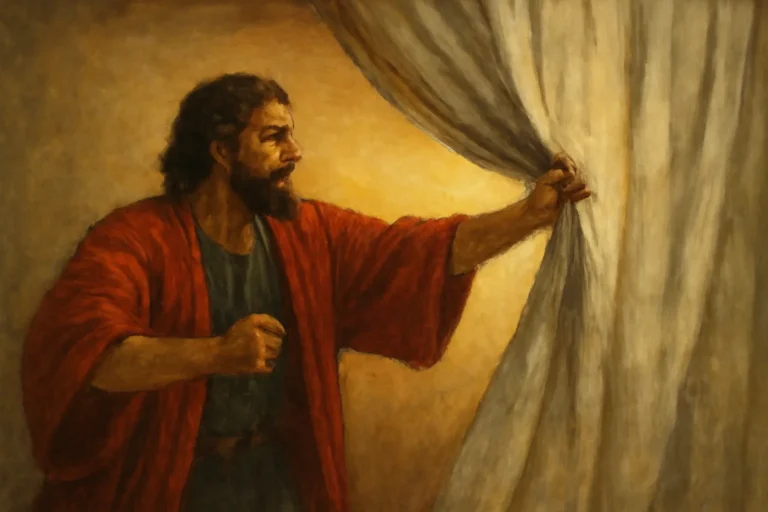
In biblical symbolism, the veil signifies separation between the divine and the human, the concealment of divine mysteries, and the possibility of divine access and union through spiritual revelation. It embodies both divine transcendence and the potential for intimate communion with God.
📖 Key Biblical Occurrences
Reference
Context
Symbolic Meaning
Exodus 26:31
The veil is described as a curtain in the Tabernacle separating the Holy Place from the Most Holy Place.
Represents the barrier between God’s holiness and mankind’s accessibility.
📜 Old Testament Usage
Throughout the Old Testament, the veil primarily appears as a physical barrier within the Tabernacle and Temple, symbolizing the sacred divide between God's holy presence and Israel’s spiritual impurity. Its significance extends to representing broader themes of divine transcendence, divine secrecy, and the need for priestly mediation. The veil emphasizes human limitations in approaching God's holiness and highlights the need for God's intervention for communion, as seen in the rites of atonement and temple worship. The tearing of the veil at Jesus' death underscores the shift from divine concealment to open access through Christ, foreshadowing the new covenant and spiritual unveiled truth.
✝️ New Testament Usage
In the New Testament, the veil takes on a deeper spiritual meaning. It symbolizes the separation caused by sin and the divine mystery now being revealed through Christ's sacrifice. The tearing of the veil in the Temple at Jesus’ crucifixion signifies the removal of barriers between God and humanity, opening direct access to God's presence. Paul uses the metaphor of veils to describe spiritual blindness, while in Hebrews, the veil represents Christ's flesh, through which believers enter into the divine sanctuary. The motif evolves from a physical barrier to an emblem of reconciliation, spiritual insight, and divine intimacy obtained through Christ.
Initially representing divine mystery and separation in the Old Testament, the veil’s symbolism shifts in the New Testament to denote transition from divine concealment to revelation through Christ. It transforms from a literal curtain to a spiritual concept of divine access, inner revelation, and unity. From the primitive tabernacle to Christ's sacrifice, the veil encapsulates the journey from divine mystery to divine intimacy. In Revelation, the idea of unveiling culminates in the full revelation of God's glory, symbolizing complete communion with the divine and the removal of all barriers, both physical and spiritual.
🏛️ Ancient Near East Context
In Ancient Near Eastern cultures like Egypt and Mesopotamia, veils symbolized privacy, sacredness, and social status, often worn by priests and royalty. They also signified the separation between different social or divine realms. Greeks and Romans adopted similar symbols where veils represented modesty, religious piety, or divine authority. These cultural contexts influenced biblical symbolism, where the veil's function of separation, mystery, and reverence was integral to religious rituals and perceptions of the divine sphere.
✡️ Jewish Interpretation
Jewish interpretation views the veil as a symbol of divine holiness and the boundaries of sacred space. Rabbinic traditions see it as representing the Teshuvah (repentance) necessary to approach God's presence. Mystically, the veil signifies spiritual concealment that can be lifted through divine revelation and righteousness. Its tearing symbolizes the opening of divine secrets and the accessibility of God's truth through faith and righteousness, foreshadowing messianic fulfilment and spiritual enlightenment.
✝️ Christian Interpretation
Early Christian interpreters, including the Church Fathers, saw the veil as emblematic of Christ's flesh that was torn for humanity’s reconciliation. It signifies the removal of spiritual barriers and the opening of access to God's presence. The veil's tearing at the crucifixion symbolizes the end of the old covenant and the dawn of new, intimate access to divine grace. It underscores themes of divine mercy, revelation, and the spiritual unveiling of divine truth through Christ’s sacrifice and resurrection.
The veil prefigures Christ Himself, who unites divine holiness and human weakness. His flesh, torn on the cross, becomes the ultimate veil through which believers access divine presence. It also prefigures the Church as the new Holy of Holies, where believers are invited into divine communion. The tearing of the veil symbolizes the removal of spiritual barriers, representing Christ as the ultimate mediator and the gateway to divine fellowship.
⛪ In Worship & Liturgy
The symbol of the veil influences Christian liturgy through the curtain of the sanctuary, often draped or drawn during significant liturgical moments to symbolize reverence and transition between different sacred spaces. In some traditions, the veil is used during liturgical processions or Eucharistic rites to signify the mystery of God's divine presence. Church architecture often incorporates veiled partitions or curtains to evoke reverence and the sacred mystery of divine encounter.
🌍 Modern Cultural Impact
The image of the veil has profoundly impacted art, literature, and popular culture, symbolizing mystery, modesty, and transformation. It appears in wedding traditions, fashion, and storytelling as a metaphor for hidden truths or divine mysteries. Its spiritual symbolism continues to inspire films, novels, and artworks exploring themes of revelation, concealment, and divine-human encounter, maintaining its relevance across diverse cultural narratives.
⚠️ Common Misconceptions
Many assume the veil always symbolizes separation and divine distance; however, in biblical context, it also signifies access and revelation, especially in Christ.
Some think the tearing of the veil was merely a dramatic event; in reality, it symbolized the removal of spiritual barriers, opening a new way to God.
The veil represents divine separation, mystery, and the boundary between God’s holiness and humanity. Its removal signifies access to divine presence through Christ.
Why was the veil torn at Jesus’ death?
The tearing of the veil signified the end of the old covenant and the opening of a new way for believers to access God’s presence directly through Christ’s sacrifice.
Does the veil have a literal or symbolic meaning?
While it was a physical curtain in the temple, biblically, it symbolized divine mystery, spiritual separation, and later, divine revelation and access.
How is the veil related to Christ’s sacrifice?
Christ’s death tore the veil, symbolizing that His sacrifice removes spiritual barriers and grants believers direct access to God’s presence.
✨ Did You Know?
Archaeological findings of ancient temples and synagogues have uncovered actual veils or curtains used in worship, emphasizing their symbolic importance in sacred rituals across cultures and history. The tearing of similar veils in secular contexts often marked important religious or social milestones.