The Betrayal of Jesus by Judas: A Biblical Analysis and Lessons
The story of The Betrayal of Jesus by Judas is one of the most consequential and frequently discussed episodes in the Christian scriptures. It sits at a critical juncture in the Gospel narratives, linking the last days of Jesus with the events that lead to his crucifixion and, ultimately, the Christian claim of resurrection. This article explores the betrayal in its biblical context, examines the motives and dynamics attributed to Judas Iscariot, considers the various theological interpretations across traditions, and draws practical lessons for readers today. By looking at the episode from historical, literary, and theological angles, we can gain a fuller understanding of its enduring significance and the tensions it raises about loyalty, power, money, and destiny.
Historical and Literary Foundations
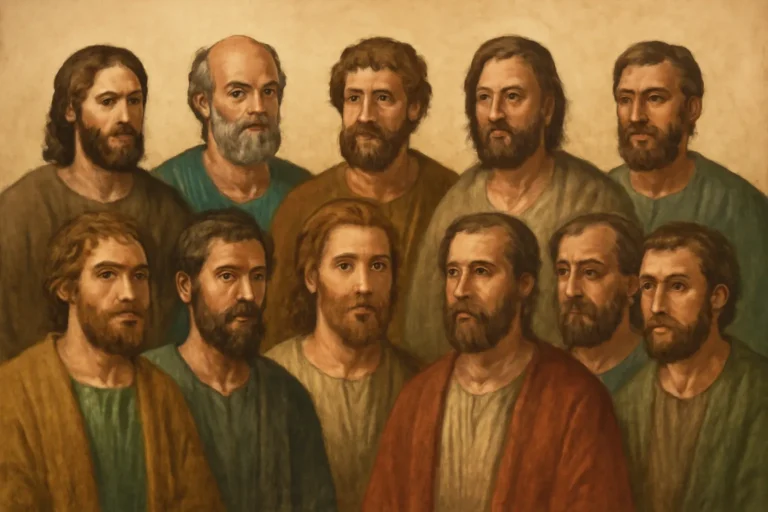
Within the canonical Gospels, the narrative of Judas Iscariot appears as a member of the inner circle, the so-called twelve, who accompanied Jesus during his ministry. The Gospels do not depict Judas merely as a villain but as a character with a complex role within the group. The sources present him as both a trusted custodian of the disciples’ resources and, eventually, as the one who facilitates the arrest of Jesus through a discreet signal. In the account of Matthew, Mark, Luke, and John, Judas is the one who agrees to betray Jesus for a price and then identifies Jesus to the authorities with a kiss, the so-called kiss of betrayal that marks the moment of treachery.
Several textual threads shape the portrayal of this betrayal. First, the act occurs in a setting that emphasizes secrecy and political tension: the night before a Passover festival, in a garden outside Jerusalem (the Garden of Gethsemane), under the watch of temple authorities and Roman power. Second, the sin is not merely disobedience to a moral rule but a rupture within a community that had been formed by Jesus’ teachings and miracles. The betrayal is thus invested with theological significance: it initiates the sequence that leads to Jesus’ trial, crucifixion, and, for Christian readers, his vindication through resurrection.
From a literary perspective, the figure of Judas functions as a foil to Jesus’s own portrayal as faithful teacher and crucified savior. While some scholars emphasize the fidelity of the other disciples—in particular Peter’s own denial—Judas’s act dramatizes the fragility of trust and the fragility of human loyalty in the face of fear, ambition, or disillusionment. The narrative’s structure uses Judas’s betrayal to intensify the drama of the Last Supper, the arrest, and the moral and spiritual questions that emerge for the followers of Jesus and for later readers who grapple with the meaning of fidelity in the face of possible failure.
Historical and textual analysis often begins with the observation that Judas is named among the twelve, a circle charged with stewardship and authority. This inclusion signals that betrayal by someone within the circle would carry a weight far beyond a random act of treachery. In John’s Gospel, Judas is described as the one who keeps the common purse and sometimes pressures Jesus to act in ways that align with material or political interests. Whether this depiction is taken as literal history or as a literary portrayal, it is central to understanding how the betrayal is framed within the Gospel narratives.
The Moment of Betrayal: How Judas Led the Way
The betrayal unfolds through a sequence of actions and signals that have become emblematic in Christian imagination. The Gospel accounts converge on several elements: the decision to betray Jesus for payment, the arrangement with the authorities, and the identifying sign that makes Jesus’s arrest possible—namely, a kiss. This combination of money, secrecy, and a physical sign makes the betrayal both personal and public, intimate in Judas’s relation to Jesus and public in its consequence for the larger community.
Agreement for payment: In Matthew’s account, Judas negotiates a price for betraying Jesus, receiving thirty pieces of silver, a sum that would have substantial economic and symbolic resonance in the ancient world.
Signaling the authorities: Judas’s plan involves a covert signal that would distinguish Jesus from others in a crowded setting, enabling the arrest without mass confusion.
The sign of the kiss: At the moment of identification, Judas greets Jesus with a friendly gesture—a kiss—that masquerades as affection while signaling the shift from disciple to betrayer.
The moment of capture: The betrayal culminates in Jesus’s arrest, which becomes the first step toward trial before the religious authorities and, ultimately, Pilate’s judgment in the passion narrative.
Across the Gospels, the money-and-signaling dynamic is not simply a transactional detail but a symbol of a deeper moral crisis: the way economic concerns, political expectations, and personal vulnerability collide in an act of treachery. The stark contrast between a figure who had shared meals and teachings with Jesus and the act of handing him over to enemies invites readers to reflect on the nature of fidelity, repentance, and accountability.
Motivations and Psychological Dimensions
Understanding the motives behind the betrayal by Judas invites a conversation that ranges from concrete historical analysis to speculative psychological interpretation. The New Testament itself provides hints, but it also leaves room for diverse readings. Some strands of interpretation emphasize greed and material concern, while others highlight political hopes or disillusionment with Jesus’s mission. Still others speak of spiritual warfare, with Satan entering Judas in Luke 22:3 as a dramatic, if contested, narrative motif that frames the act within a cosmic struggle between forces of good and evil.
Greed, Disillusionment, and Political Expectations
One traditional reading centers on the motive of greed and the allure of money. The idea that payment for betrayal could provide a more comfortable life or secure a certain social standing resonates with the Gospel’s portrayal of Judas’s priorities. Yet greed alone cannot fully explain the act, because Judas also seems to be part of a communal mission that Jesus entrusted to the twelve. Therefore, many scholars argue that the betrayal by Judas reflects a more complex blend of personal ambition, conflicting expectations about what the Messiah would do, and a failure to grasp the nature of Jesus’s kingdom.
In addition to economic motives, researchers consider political and social dimensions. Some readers sense that Judas’s hopes for political revolution or for a dramatic demonstration of power clashed with Jesus’s teachings about nonviolence, service, and the spiritual nature of the kingdom of God. In this view, the betrayal arises, at least in part, from a disappointed or frustrated political imagination rather than from simple avarice. The result is a rupture that reveals the chasm between human expectations and the divine plan as it unfolds through the passion narratives.
Intent, Agency, and the Question of Free Will
Another line of inquiry centers on the issue of free will versus predestination in the betrayal. Some theologians emphasize human responsibility: Judas makes a conscious choice to betray Jesus, and his action has consequences for him and for the larger récit. Others suggest that the Gospel writers use Judas’s act to illuminate divine sovereignty and the necessity of the cross within the salvific drama. The tension between Judas’s personal choice and the perceived fulfillment of prophecy invites readers to consider how human decisions participate in God’s overarching plan without excusing wrongdoing.
The brief references in Luke to Satan entering Judas provide a narrative lens for discussing temptation and control. While some readers take this as a literal spiritual intrusion, others understand it as a literary device that dramatizes the depth of Judas’s moral failure. Regardless of interpretive stance, the emphasis remains on the seriousness of the act and the way it exposes vulnerability, complicity, and the risk of misdirected loyalties.
The Theological Grid: Interpretations Across Traditions
Across Christian traditions, the event of the betrayal by Judas has been read through various theological lenses. These interpretations shape how believers understand guilt, responsibility, grace, forgiveness, and the possibility of transformation after grave moral failure. Although there is diversity in emphasis, several common threads recur in Catholic, Protestant, and Orthodox reflections, including the moral gravity of betrayal, the call to repentance, and the insistence that God’s purposes can be fulfilled even through human fallibility.
Predestination vs Free Will
One ongoing debate concerns the relationship between divine sovereignty and human freedom. Some strands of Christian thought emphasize that Judas’s action serves a divine purpose within the plan of salvation, implying a form of predestination or at least a divine permissive will. Others stress the accountability of Judas as a moral agent who bears responsibility for his decision. The tension between these views is not easily resolved, but it invites believers to consider how divine providence and human agency interact in the drama of the passion.
Different Gospel writers foreground particular aspects of the episode. For instance, Matthew emphasizes the cost of betrayal and the fulfillment of prophecies in the Psalms, while Luke accentuates the cosmic framing through the role of Satan and the precise timing of events. John’s Gospel, with its closer focus on Jesus’s relationship with each disciple, offers a unique perspective on how betrayal intersects with loyalty, love, and the imminent departure of Jesus. The divergences among these accounts have prompted centuries of theological reflection about harmonizing the synoptic traditions with the Johannine perspective and about how best to understand the concept of betrayal within the broader narrative of salvation history.
Narrative Techniques and Thematic Patterns
Beyond the historical and theological questions, the betrayal by Judas serves as a powerful literary device within the Gospel narratives. The motif of betrayal, the symbol of money, and the dramatic moment of recognition combine to shape readers’ emotional and ethical response to the story. Several patterns stand out:
Prophetic fulfillment and casting light on the crowd’s role: The betrayal is linked to prophecies and to the complicity of leaders and crowds, highlighting the social dimension of the passion.
Symbolic economics: The price of betrayal, thirty pieces of silver, functions as a tangible measure of moral value and the corrupting potential of wealth.
Identification through a sign: The kiss of betrayal operates as a paradox—the familiar gesture of affection becomes a tool of treachery, underscoring the tension between appearance and reality.
Foreshadowing of crucifixion: The act immediately precedes Jesus’s arrest and trial, intensifying the sense of an impending cross and its theological significance in the Gospel message.
Scholars also note the narrative function of Judas’s character as a lens through which readers confront questions about loyalty, power, and the cost of discipleship. The episode invites modern readers to reflect on the boundaries between faithfulness and failure, and on how communities remember and reinterpret acts of betrayal across generations.
Consequences and Outcomes: Aftermath of the Betrayal
The immediate consequences of the betrayal by Judas are tightly integrated with the passion sequence. The arrest of Jesus triggers a chain of hearings, condemnations, and the eventual crucifixion, which Christians interpret as the pivotal event of salvation history. Yet Judas’s own fate, as described in Matthew and Acts, invites contemplation about remorse, responsibility, and judgment. The aftermath also helps explain why the early Christian community revisited Judas’s action repeatedly as a cautionary tale about the vulnerability of the human heart and the enduring need for repentance, grace, and fidelity to God’s calling.
Remorse and consequences: In Matthew’s account, Judas experiences remorse after realizing he has delivered innocent blood, and he attempts to return the money, which leads to his separation from the temple authorities and his eventual suicide. This tragic arc raises questions about the limits of repentance in certain frames of time and place, while also highlighting the complexity of human guilt.
Jesus’s trials and sentencing: The arrest leads to Jesus’s appearance before the Sanhedrin and Pontius Pilate, setting in motion the chronological path to crucifixion. The betrayal acts as the catalyst for the political and religious processes that culminate in the passion narrative.
Peter’s contrast: In the broader Gospel witness, Peter denies Jesus in a moment of fear, which functions as a counterpoint to Judas’s betrayal. The juxtaposition invites readers to consider the range of responses to pressure—fear, denial, repentance, and restoration.
Matthian replacement: In the aftermath, the early church seeks to restore the fellowship of the twelve by appointing Matthias to replace Judas, signaling the community’s desire to preserve the integrity and wholeness of its leadership despite the fallibility of its members.
From a pastoral perspective, the consequences of the betrayal invite believers to engage with moral vulnerability honestly. The narrative does not sanitize the fact that someone within the inner circle could commit grievous wrong; rather, it invites communities to consider how to respond with accountability, mercy, and fidelity to God’s broader redemptive work.
Lessons and Ethical Reflections
While the betrayal by Judas is a historical and theological episode, it also offers enduring lessons for readers today. Reflecting on this event can inform ethical choices, community life, and a faithful response to failure and grace. The following themes recur across traditions and can inform contemporary Christian practice as well as interfaith moral reflection.
Integrity under pressure: The story reminds communities to foster cultures of accountability, so that leadership remains accountable to shared values and transparent to others who can offer correction in times of trial.
Guarding against romanticized expectations: The crisis reveals how disillusionment with outcomes or methods can tempt followers to abandon a path of nonviolent service and essential humility. A disciplined spiritual life helps maintain fidelity even when outcomes are uncertain.
Concerns about wealth and power: The motif of thirty pieces of silver serves as a warning about allowing money or political influence to distort discernment, loyalty, or allegiance to a higher moral standard.
Understanding remorse and repentance: The narrative encourages careful discernment about the nature and timing of repentance. It distinguishes honest remorse that leads to accountability from remorse that closes in on despair without reconciliation or renewal.
Role of community in healing: Just as Judas’s act tested the twelve, contemporary faith communities are invited to respond with grace, forgiveness, and a recommitment to the mission in the wake of betrayal.
These lessons are not merely moralising; they engage with the deeper question of how a community maintains fidelity to its calling while acknowledging human frailty. They also invite readers to reflect on the nature of betrayal itself: not only as a breach of trust but as a point in the narrative where healing, justice, and grace can emerge from a troubled past.
Judas’ End, Legacy, and the Memory of Betrayal
The memory of the betrayal of Jesus by Judas has haunted Christian imagination for centuries, shaping sermons, art, literature, and ethical discourse. Judas’s end—early tradition often describes him as meeting a grim fate after his act—has been read as a sobering warning about the consequences of choosing a path that undermines communal trust and divine purposes. Yet the story also invites reflection on grace, forgiveness, and the possibility of transformation even amid profound moral failure. In many Christian traditions, the memory of Judas is not celebrated but studied; it is a narrative instrument for exploring the boundaries of repentance, the limits of human strategy, and the power of God’s redemptive plan that unfolds through suffering and sacrifice.
From the perspective of church history and biblical interpretation, Judas’s role is unique not because he alone represents betrayal, but because his actions catalyze the events that the Christian faith understands as the passion and the pathway to resurrection. The legacy of this betrayal endures in liturgy, theology, and devotional life as a reminder of the fragility of loyalty and the extraordinary reach of grace. In honoring the memory of the betrayed Jesus and the community formed by him, readers are called to cultivate fidelity, discernment, and compassion in the face of failure.
Closing Reflections on the Betrayal Narrative
The episode of the betrayal of Jesus by Judas stands at the intersection of history, narrative design, and sacred meaning. It invites readers to consider how a single act of treachery can illuminate broader truths about power, money, and human longing, while also demonstrating how a community navigates the moral complexity of leadership and failure. Across ages and denominations, the analysis of this event continues to provoke thoughtful questions: How do we distinguish loyalty from complicitness? What is the proper response to betrayal within a faith community? And how does the broader arc of biblical redemptive history invite us to trust in a larger plan that transcends human schemes?
By engaging with the betrayal through multiple lenses—historical, literary, theological, and ethical—readers can approach the episode with both honesty and hope. The narrative does not offer a tidy moral, but it does offer a robust framework for reflection on integrity, repentance, and the enduring possibility of grace in the face of human error. In this sense, the betrayal by Judas remains not only a somber memory of failure but also a prompt to renew commitment to truth, mercy, and the transformative power of faith.











Leave a Reply