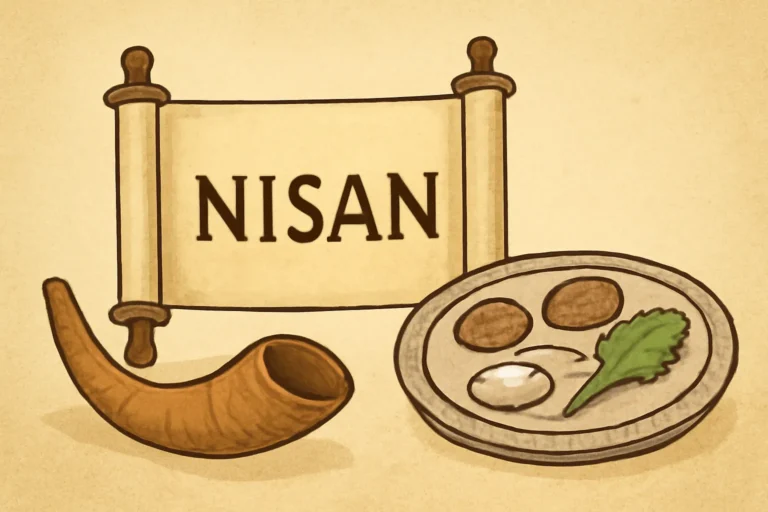
For Christians, the Passover Seder offers a rich tableau for reflection on liberation, sacrifice, and the continuity between ancient Israel and the Christian gospel. The phrase passover seder christian perspective often appears in theological discussions that explore how the biblical exodus narrative, the festival cycle, and the person of Jesus illuminate one another. This article surveys the Passover Seder from a Christian standpoint, tracing its historical development, its core elements, and the ways in which this ancient ritual can inform modern discipleship, worship, and interfaith understanding.
The Passover Seder is a carefully ordered ritual meal conducted during the festival of Passover (Pesach) that retells the story of the Israelites’ liberation from Egypt. The Seder is guided by a scripted framework, traditionally the Haggadah, which translates to “the telling.” The goal is not merely to remember a distant past but to experience a living encounter with God’s saving action in history. Although the forms may vary, the essential rhythm remains recognizable: welcome and purification, the retelling of the Exodus narrative, symbolic foods that invite reflection, shared plenteous meals, and prayers of praise and thanksgiving.
From a Christian perspective, the Seder serves as a bridge between the Old Covenant narrative and the New Covenant realization in Christ. In this view, elements of the Seder become signposts pointing to the life, death, and resurrection of Jesus, while still standing within a Jewish liturgical and historical framework. The practice invites believers to honor the rootedness of the gospel in Jewish tradition while recognizing that fulfillment has come in the person of the Messiah. The phrase passover seder christian perspective thus invites readers to consider how liturgy, symbolism, and biblical interpretation converge across communities of faith.
Historical and Theological Context for Christians
Throughout Christian history, many theologians and church communities have seen the Passover narrative as a prefiguration of Christ. The Last Supper, commonly understood as a Passover meal, has been read in various ways to highlight the continuity between the liberation of Israel and the liberation offered through Jesus. What follows are several key strands that shape the Christian reading of the Seder:
Typology and fulfillment: In Christian interpretation, the events of the Exodus anticipate the redemptive work of Christ, who is often described as the Lamb of God who takes away the sin of the world. The unleavened bread, the bitter herbs, and the cup of blessing become signs pointing beyond themselves to a salvific act accomplished in Jesus.
The Last Supper as Passover: The Gospel accounts of the Last Supper place Jesus within the framework of a Passover meal, which allows Christians to read the institution of the Eucharist as a meal of remembrance and proclamation. In some traditions, the Last Supper is more explicitly read as a continuation of the Seder’s themes of deliverance, covenant, and fellowship.
Continuity with the Church’s celebration of the Eucharist: The New Testament writings, especially in Paul’s letters, connect the memory of Christ’s death and resurrection with worship centered on the bread and cup, echoing Passover imagery of salvation by a sacrificed life and a redeemed people.
Ethical and eschatological horizons: The Seder invites Christians to recall divine justice and mercy, to pursue justice for the oppressed, and to anticipate the fullness of God’s promised redemption in the Kingdom. This adds an ethical texture to the liturgical practice and a hopeful eschatology to the remembering.
Core Elements of the Seder and Their Christian Readings
Many readers associate the Passover Seder with a set sequence and a handful of symbolic foods. While the exact ritual can differ among Jewish families and across churches that host a Seder, Christians who engage with the Seder typically find rich interpretive mileage in several key pieces:
Matzah: The Unleavened Bread
Matzah, the flat, unleavened bread, is central to both Jewish and Christian readings of the Seder. In the Jewish tradition, it commemorates the haste of the Israelites’ departure from Egypt, when there was no time for bread to rise. In a Christian frame, matzah can symbolize the sinless life of Jesus, whose body was given for the salvation of the world. Some Christian readers emphasize that the absence of leaven can signal purity and readiness for God’s work, while others reflect on the universality of God’s invitation to partake in the life represented by the bread beyond ethnic or ritual boundaries.
Maror and the Bitter Herbs: Suffering and Humility
Maror (bitter herbs) memoryfully recalls the bitterness of oppression and slavery. For Christians, the bitter herbs can be a prompt to reflect on the suffering of Christ and the brokenness of humanity that necessitates grace. The Christian Seder often uses this symbol to invite confession, repentance, and humility before God, balanced by gratitude for deliverance.
Karpas: The Green Vegetable and the Hope of Life
The Karpas is typically a green vegetable dipped in salt water. Christians may interpret this as a reminder of life and growth that persists even in hardship, or as a symbol of renewal in the midst of trials. The dipping process also invites participants to reflect on the moment when life springs forth from difficult circumstances, much as springtime and salvation follow the darkest periods in biblical history.
Yachatz involves breaking the middle piece of matzah and setting a portion aside as the afikomen. In many Christian readings, the breaking of bread prefigures the broken body of Christ. The afikomen, hidden and later revealed, can be seen as a sign of mystery and revelation—an echo of the resurrection that Christians proclaim at Easter. This element invites discussions about concealment and fulfillment within salvation history.
The Seder Plate and Symbolic Foods
Many Seder plates carry a collection of symbolic foods, including roasted lamb (where available), greens, a roasted bone, and more. Christians who study the platter often emphasize how each symbol can be a doorway to gospel reflection. The roasted lamb connects with the typology of Jesus as the sacrificial Lamb of God, while greens and other items point to life, fertility, and God’s ongoing provision.
One of the most potent Christian interpretations of the Seder is found in the ritual of the Cups of Blessing, especially the Cup of Redemption. In Jewish practice, four cups are drunk at specific points in the meal, each linked to a biblical promise of redemption in Exodus 6:6–7. For Christians, the Cup of Redemption often becomes a sign of the New Covenant in Christ, a symbol of the forgiveness of sins, a shared meal of fellowship, and a foretaste of the heavenly banquet where the faithful will drink anew with the Lord (as hinted in Luke 22:20 and 1 Corinthians 11:23–26).
Elijah’s Cup and the Expectation of Fulfillment
Many Seder tables include a cup for Elijah, a figure who, in Jewish expectation, will herald the coming of the Messiah. Christians frequently reinterpret Elijah’s role as a forerunner to Christ’s return or as a nod to the broader biblical arc of prophecy and fulfillment. In a Christian lens, Elijah’s Cup becomes an invitation to anticipation, worship, and the readiness of God to move in history.
Hallelu and Zafun: Praise and Hidden Blessings
The sections of the Seder that include songs of gratitude (Hallel) and the hidden, later-discovered piece of matzah (Tzafun) invite Christians to reflect on praise amid mystery and the revelation of God’s work in unexpected ways. The melodies and petitions of Hallel encourage expressions of joy and trust even when the full meaning of salvation remains partially veiled.
The Christian Seder Experience: Variations Across Denominations
Church communities around the world approach a Seder with a spectrum of liturgical styles and theological emphases. While the shared aim is to learn, worship, and grow in faith, the practical outworking can differ significantly. Here are representative patterns and what they emphasize in the Passover Seder Christian Perspective across traditions:
Catholic and Orthodox perspectives: In Catholic and Eastern Orthodox contexts, a Seder may be integrated into a broader catechetical or liturgical event that foregrounds the Eucharist as a fulfillment of Israel’s redemptive story. Some parish communities host a formal Seder as an educational rite, highlighting the connections between the Passover and the Communion table, with careful attention to the distinction between Jewish ritual and Christian sacrament.
Protestant and Evangelical practices: Many Protestant churches use a Seder as a teaching tool for biblical literacy, typology, and mission. A lay-led or pastor-guided Seder may emphasize the links between Exodus imagery and personal salvation, social justice, and the church’s outreach to the marginalized. The emphasis is often on storytelling, Scripture reading, and a celebratory meal that anchors the gospel in historical memory.
Messianic Jewish and bridge-heritage communities: Some congregations blend Jewish liturgical forms with explicit recognition of Jesus as the Messiah. In these settings, readings from the Gospel accounts, references to Jesus’ fulfillment of prophecy, and a re-interpretation of certain symbols (for example, the bread and the cup) appear side by side with traditional Seder elements.
Liturgical and devotional adaptations: Independent churches and ecumenical groups may craft shorter or longer versions of the Seder, including modern prayers, contemporary language, and opportunities for personal testimony. The goal is not to replace Jewish practice but to illuminate Christian faith through a shared ritual frame.
In a Christian reading, the Passover Seder becomes a catechetical and devotional instrument that engages Scripture, liturgy, and prayer. Several scriptural echoes frequently surface in Christian Seder reflections:
Exodus 12 as the primary anchor for memory and gratitude, with Christians highlighting themes of liberation, obedience, and divine protection.
Luke 22:14–20 and 1 Corinthians 11:23–26 as New Testament vignettes that connect the Last Supper with the Passover symbolism of sacrifice and covenant.
Isaiah 52–53 and other prophetic passages that Christians read as foreshadowing the suffering and exaltation of Christ.
Romans 3–8 and Galatians that speak to justification by faith, grace, and the inclusion of Gentiles in God’s redemptive plan, interpreted against the backdrop of Passover symbolism.
In practice, participants may read selected Scripture aloud, sing hymns or psalms of praise, and offer prayers that connect the old covenant memory with new covenant realities. The Seder can thus serve as a robust pedagogy for biblical literacy and spiritual formation, inviting believers to see their faith as a living dialogue between past covenant faithfulness and present gospel witness.
A distinctive feature of the Passover festival is hospitality—the invitation to welcome guests, the poor, and strangers into the feast. In Christian communities that host Seders, this dimension often takes on an ethical urgency. The Christian perspective on the Seder includes:
Hospitality and generosity: Opening the table to others, including those who may not belong to the faith community, echoes the biblical call to hospitality and to sharing one’s bread with the hungry.
Humility and justice: The memory of oppression invites Christians to advocate for the oppressed, to work toward social justice, and to recognize the dignity of every person made in the image of God.
Stewardship and sustainability: Caring for the earth and its resources during the Seder (for example, using fair-trade foods, mindful sourcing of ingredients, and reducing waste) aligns with a broader Christian ethic of stewardship.
These ethical dimensions demonstrate how the Seder is not purely a retrospective ritual but a living invitation to embody the values of liberation, mercy, and communal responsibility in daily life. The Christian Seder thus becomes a catechetical tool for moral formation as well as doctrinal understanding.
For readers considering a home or church Seder, the following practical guidance can help create a meaningful and respectful experience that honors both Jewish heritage and Christian interpretation:
Plan with sensitivity: If possible, invite a Jewish friend or a rabbinic consultant to help shape the service and avoid conflating distinct religious rites. Acknowledge the Seder’s Jewish roots while offering a Christian lens for reflection.
Prepare the liturgy: Use a Seder framework (Kadesh, Urchatz, Karpas, Yachatz, Matzah, Maror, Koreh, Shulchan Orech, Tzafun) as a scaffold, but incorporate Scripture readings, reflections on Jesus as Messiah, and prayers that express Christian faith without negating the Jewish context.
Select symbolism with care: Choose elements that can be meaningfully interpreted in a Christian light (for example, matzah as a sign of faithfulness and sinlessness, the Cup of Redemption as the new covenant) while acknowledging traditional Jewish readings.
Include both liturgical and reflective components: Alternate between readings from Exodus, Gospel accounts, and epistles; allow time for personal testimony, silent reflection, and communal worship songs.
Provide educational resources: Offer a short guide or glossary explaining key terms (Haggadah, afikomen, elijah, koré, and others) to help participants understand the structure and symbolism.
For Christians hosting such an event, it can be useful to provide a short preface: “This Seder is being observed to explore how the Gospel fulfills and deepens the biblical story of liberation. We honor the Jewish identity of the festival while acknowledging the Christian witness to Christ.”
As with any interfaith or cross-denominational practice, questions often arise. Here are some common queries and concise explanations that can help clarify the passover seder christian perspective:
Is it appropriate for Christians to participate in a Jewish Seder? Many Christians participate in a Seder hosted by Jewish friends or in ecumenical settings, as a form of respectful learning. When done with sensitivity and a clear distinction between religious identities, it can be a meaningful encounter with Jewish faith and biblical history.
Does a Christian Seder replace the Eucharist? No. The Christian Seder is typically an additional devotional or instructional event. It may illuminate how Jesus’ life and teachings relate to Passover, but it does not supersede the sacred meal of the church, which remains grounded in the New Testament narrative of Christ’s crucifixion and resurrection.
How do I handle symbols that are uniquely Jewish? Approach with respect and transparency. Explain the Jewish meanings and then offer the Christian readings or reflections that you believe illuminate the symbols for your audience. The goal is understanding, not erasure of the other tradition.
What if some participants are unfamiliar with biblical history? Provide primer readings or a short glossary at the start. Encourage questions and discussion so that the learning environment remains inclusive and accessible.
One of the most constructive outcomes of exploring the Passover through a Christian lens is the opportunity to engage in meaningful ecumenical dialogue. Christians who study the Seder often gain a deeper appreciation for Jewish memory, ritual discipline, and the stubborn fidelity of God to His promises. Conversely, Jewish participants may gain fresh insights into how early Christians interpreted their own sacred scriptures and rituals. The passover seder christian perspective thus becomes a space where faiths can respectfully explore their shared heritage while honoring their distinct identities. This approach can foster greater mutual respect, reduce misunderstandings, and encourage cooperation in works of justice, mercy, and community service.
Those who wish to delve deeper into the theology and practice of the Passover Seder from a Christian perspective may find the following resources helpful. The list is intentionally diverse, spanning historical studies, devotional guides, and practical how-to manuals:
Classic works on Christian typology: Texts that explore how the Exodus narrative anticipates the life of Jesus and the formation of Christian theology.
Liturgical guides for Christian Seders: Practical manuals for planning and leading a Seder that honors Jewish roots while presenting a Christian reading of the symbols.
Biblical commentaries on Luke and Paul: Works that illuminate how the Gospel writers and Paul interpret Passover language and symbolism.
Interfaith resources: Books and articles that encourage respectful dialogue between Jewish and Christian communities about Passover, the Haggadah, and the Seder.
Selected reading recommendations can include works on biblical typology, the history of the Last Supper, and case studies of churches that have integrated Seder experiences into annual programming. Engaging with these resources can help a Christian reader approach the Seder with both reverence for Jewish tradition and fidelity to Christian faith.
In closing, the practice of examining the Passover through a Christian lens—whether described as passover seder christian perspective, or as a broader Christ-centered reading of the Seder—serves several important purposes. It deepens biblical literacy by tracing how God’s saving actions unfold across covenants; it enriches worship by inviting new symbolic layers into familiar liturgical forms; and it strengthens the church’s mission by highlighting liberation, justice, and gratitude. By approaching the Seder with humility, curiosity, and reverence, Christian communities can participate in a dialogue that honors both the historical memory of Israel and the kerygma of the Gospel—the proclamation that in Jesus, the long arc of redemption finds its fulfillment.