Commentary on Galatians 6:1–10: Restoring Meekly, Carrying Burdens, Sowing to the Spirit
Galatians 6:1-10 · King James Version
Quick Answer: This commentary on Galatians 6:1–10 shows how Christians should respond when someone falls: restore with meekness, share burdens, and avoid pride or self-deception. Paul also teaches personal accountability, generosity to teachers, and the spiritual law of sowing and reaping. Finally, believers are called to keep doing good patiently until God brings the harvest.
Galatians 6:1-10 (King James Version)
“Brethren, if a man be overtaken in a fault, ye which are spiritual, restore such an one in the spirit of meekness; considering thyself, lest thou also be tempted.
Bear ye one another’s burdens, and so fulfil the law of Christ.
For if a man think himself to be something, when he is nothing, he deceiveth himself.
But let every man prove his own work, and then shall he have rejoicing in himself alone, and not in another.
For every man shall bear his own burden.
Let him that is taught in the word communicate unto him that teacheth in all good things.
Be not deceived; God is not mocked: for whatsoever a man soweth, that shall he also reap.
For he that soweth to his flesh shall of the flesh reap corruption; but he that soweth to the Spirit shall of the Spirit reap life everlasting.
And let us not be weary in well doing: for in due season we shall reap, if we faint not.
As we have therefore opportunity, let us do good unto all
men,
especially unto them who are of the household of faith.”
Galatians 6:1–10 meaning in its first-century setting
Galatia was a region of diverse communities in the Roman world, and Paul’s letter addresses tensions in the church about identity, law, and faith in Christ. By chapter 6, Paul shifts from theological argument to everyday discipleship: how believers live together when disagreements arise and when sin shows up in real life. In many first-century households and assemblies, public reputation mattered, so Paul’s warnings against pride (“if a man think himself…”) would directly confront social temptations to status and self-justification. At the same time, communal responsibility was expected; people helped one another in practical ways. Paul reframes that instinct spiritually: true restoration happens “in the spirit of meekness,” not with sarcasm or superiority. He also highlights teaching and support, reflecting how early Christian instruction often depended on itinerant teachers and local provision. Finally, Paul uses familiar agricultural imagery—sowing and reaping—to communicate the certainty of God’s moral order. The call to keep doing good fits a community that may have faced fatigue, misunderstanding, or persecution as it tried to remain faithful to the gospel.
Original nuance in Galatians 6:1–10 (tone of restoration and accountability)
A key tone in this passage is the posture of restoration. Paul urges believers who are “spiritual” to restore “in the spirit of meekness.” While the exact Greek terms are not quoted here, the idea centers on gentleness that is strength under control—meekness rather than harshness. Also, Paul’s emphasis on “prove” and “burden” language reflects more than mere emotion; it’s about testing the genuineness of one’s conduct and taking responsibility for one’s own sphere of service. The phrase about God not being “mocked” underscores that divine judgment is not tricked or evaded. In other words, Paul’s language carries moral realism: God’s character and consequences are consistent, and Christian life is meant to be measured by faithfulness rather than appearance.
Restoring the fallen with meekness (Galatians 6:1–2)
Paul begins with a pastoral scenario: “if a man be overtaken in a fault.” The word picture suggests someone taken by surprise—caught in sin, error, or moral failure—rather than someone who has openly planned wrongdoing. That matters because Paul does not prescribe avoidance; he prescribes restoration. The “ye which are spiritual” are not superior Christians in an arrogant sense. Paul’s “spiritual” language points to those living in step with the Spirit, whose response should be governed by the Spirit’s fruit, especially gentleness.
“Restore such an one” is active and relational. Restoration is not only correcting; it involves helping a person return to the right path. Yet Paul places this work inside “the spirit of meekness.” Meekness does not mean weakness or indifference. It means approaching another person with a teachable, humble heart—ready to speak truth without becoming self-righteous. Paul adds a safety guard: “considering thyself, lest thou also be tempted.” This is how meekness stays real. When we remember our own vulnerability, we respond with compassion and caution rather than condemnation.
Paul then moves directly into community responsibility: “Bear ye one another’s burdens, and so fulfil the law of Christ.” “Burdens” includes more than personal inconveniences; it can refer to heavy pressures—spiritual struggles, consequences of sin, fear, or ongoing responsibilities that others cannot carry alone. To “bear” is to share load through prayer, encouragement, help, and practical support. In this way, the church lives out Christ’s law, not as legal compulsion, but as love expressed in action.
Truthful humility and honest self-examination (Galatians 6:3–5)
Next Paul confronts two related dangers: pride and false comparison. “For if a man think himself to be something, when he is nothing, he deceiveth himself.” The deception is self-perception—believing one’s spiritual condition or moral standing is stronger than it truly is. Pride makes restoration impossible because it turns correction into domination.
Paul’s remedy is personal testing: “let every man prove his own work.” The point is not isolation or distrust of the community; it is integrity. Each believer should examine the genuineness of their actions before God—what they do, why they do it, and whether it aligns with the gospel. The result is not self-congratulation, but “rejoicing in himself alone, and not in another.” That is, the Christian’s confidence grows from God’s evaluation rather than from measuring oneself against others.
Then Paul states, “For every man shall bear his own burden.” At first glance this can sound like it contradicts “Bear ye one another’s burdens.” But they refer to different kinds of burden. One is shared: the heavy weight others carry that we can help lift. The other is personal: each person has responsibility before God, including consequences and faithful stewardship of their calling. We cannot transfer accountability to someone else.
Put together, Paul teaches a balanced community ethic: be humble and helpful, yet also honest about your own responsibility. Restoration should never become an excuse to avoid personal change. Likewise, shared support should never erase a person’s need to grow in faithfulness.
Support for teachers, sowing to the Spirit, and perseverance in doing good (Galatians 6:6–10)
Paul continues with practical instruction: “Let him that is taught in the word communicate unto him that teacheth in all good things.” The idea is that those who receive instruction should make provision for the one teaching. This reflects the economics of discipleship in the early church, where teachers and ministers often depended on the community’s generosity. “In all good things” emphasizes sincere, ethical giving rather than reluctant payment.
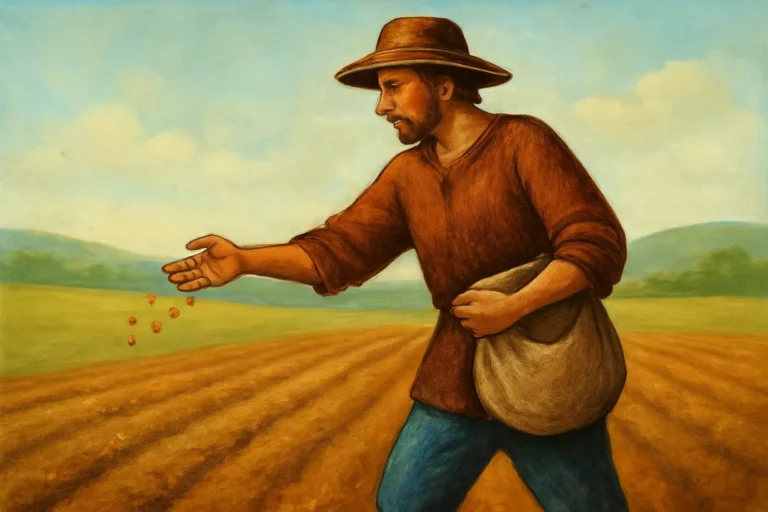
Paul then issues a spiritual warning: “Be not deceived; God is not mocked.” Deception here is thinking you can live one way now and expect a different outcome later. “For whatsoever a man soweth, that shall he also reap.” The logic is moral and spiritual: sowing is deliberate or at least habitual direction of life, and reaping is the eventual harvest.
Paul draws a stark contrast: “he that soweth to his flesh shall of the flesh reap corruption; but he that soweth to the Spirit shall of the Spirit reap life everlasting.” “Flesh” represents life oriented toward sin and self, while “Spirit” represents a life shaped by God’s presence and will. The harvest is eternal: sowing to the Spirit results in “life everlasting.” This is not merely future comfort; it is an invitation to live consistently with the Spirit’s direction.
Finally, Paul gives staying power for discouraged believers: “And let us not be weary in well doing: for in due season we shall reap, if we faint not.” That phrase anticipates delayed results. Faithfulness often looks slow. Therefore, do good steadily—“especially unto them who are of the household of faith.” The church is called to prioritize love for fellow believers while still doing good “unto all men,” showing the gospel’s reach beyond the walls of the community.
How to Apply Galatians 6:1–10 Today
When you notice a believer struggling, start with meekness and truth. Pray first, then speak restoration gently, considering your own susceptibility to temptation. Ask, “What would loving help look like right now?” Avoid public shaming; aim for practical steps toward repentance and renewal.
Practice burden-bearing. Identify one concrete load you can share this week—meals for someone in crisis, time spent encouraging a struggling family, help with ministry duties, or steady prayer support. Don’t forget personal responsibility: continue examining your own work before God. Serve faithfully without needing to prove yourself to others, and measure your integrity by the gospel rather than by comparison.
Support those who teach the Word. If you benefit from instruction, consider how you can “communicate… in all good things” through consistent, sincere giving.
Finally, align your life with the Spirit. Choose daily habits that sow to the Spirit—obedience, prayer, Scripture, repentance, and acts of love. And when doing good feels slow, refuse to faint. Trust God’s timeline: reap “in due season” as you keep sowing.
Related Bible Passages
James 5:19-20
James describes turning someone from error and saving a soul, echoing Paul’s restoration with a view to spiritual recovery.
Romans 12:16-18
Paul’s emphasis on humble living, not being wise in your own eyes, aligns with Galatians 6’s warning against pride and self-deception.
1 Corinthians 3:6-9
Paul uses sowing and reaping imagery to explain God-given growth, supporting Galatians 6’s certainty that God honors spiritual sowing.
Frequently Asked Questions
What does Galatians 6:1–10 teach about restoring someone in sin?
It teaches that believers should restore the fallen with meekness, not with superiority. The goal is to help someone return to the right path while remembering your own vulnerability to temptation. Restoration is truth offered in a Spirit-shaped attitude.
How can we bear one another’s burdens without ignoring personal accountability?
Bearing burdens means sharing real loads through help, encouragement, and prayer. Personal accountability remains because each believer still “bears his own burden” before God—meaning responsibility for growth and faithful choices cannot be outsourced.
What does “sow to the Spirit” look like practically?
Sowing to the Spirit looks like daily obedience to God’s leading—regular prayer, Scripture intake, repentance, and loving actions that reflect Christ. Over time these habits produce a harvest of life that extends beyond present circumstances.
Why does Paul warn, “God is not mocked,” in this passage?
Because outcomes follow sowing. Paul is warning against the idea that you can live for the flesh now and expect spiritual benefit later. God’s moral order is consistent, so habits and intentions matter.
A Short Prayer
Lord, teach us to restore with meekness and to bear one another’s burdens with love. Keep pride far from our hearts, and let us examine our own work honestly. Help us support faithful teachers, sow to the Spirit, and not grow weary in doing good. Strengthen us to trust Your timing for the harvest, and make our lives a testimony of Christ’s law fulfilled in compassion. Amen.
Key Takeaway: God calls His people to respond to sin with meek restoration, share real burdens, and sow to the Spirit with perseverance because the harvest is certain.