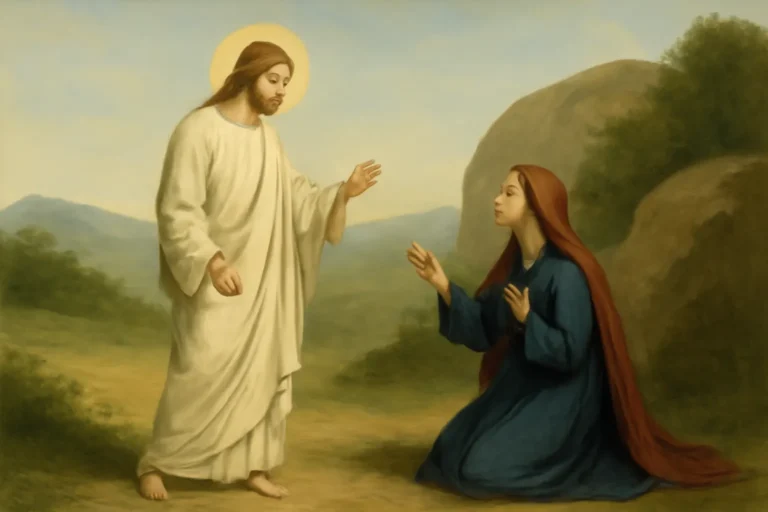
The Empty Tomb symbolizes victory over death and the promise of eternal life. It signifies new beginnings, divine power, and the fulfillment of God's salvation plan through Christ’s resurrection, affirming the hope of renewal for believers.
📖 Key Biblical Occurrences
Reference
Context
Symbolic Meaning
Matthew 28:6
The angel announces to the women that Jesus has risen and the tomb is empty.
Victory over death and the divine affirmation of Jesus’ resurrection.
📜 Old Testament Usage
In the Old Testament, the concept of emptiness or void often precedes renewal, such as in Genesis 1 where darkness and void are followed by creation. The tomb, as a symbol of death, foreshadows the promise of life, but the specific idea of an empty grave becomes prominent post-resurrection in Christian interpretation. The motif of death and subsequent renewal appears in stories like Elijah’s miracle at Zarephath, symbolizing hope beyond despair. Although the Old Testament does not directly reference an empty tomb, the themes of death's defeat and divine power over the grave lay the groundwork for its deeper biblical significance in Christianity, linking death’s finality to God's capacity for new life and renewal.
✝️ New Testament Usage
The Empty Tomb is central to the resurrection narrative, epitomized in Matthew, Mark, Luke, and John. It signifies the culmination of the Gospels’ message that Jesus conquered death, providing a tangible symbol of hope and divine victory. The empty tomb underscores key theological themes such as resurrection, new creation, and the promise of eternal life. Early Christian communities saw it as a powerful sign of Christ's divine authority and the foundation for faith in the resurrection. Its repeated appearance emphasizes the transformative power of Easter and the hope for believers' future resurrection, making it a foundational symbol in Christian theology.
Initially, the tomb represented death and finality; however, in the biblical narrative, it transforms into a symbol of hope, renewal, and divine triumph. From Genesis’s themes of chaos and new beginnings, the symbolism matures through the Old Testament as a foreshadowing of resurrection. In the New Testament, the empty tomb explicitly symbolizes Christ’s victory over death, embodying the promise of new life for all believers. Over time, this symbolism expands from mere physical resurrection to a broader understanding of spiritual renewal, resurrection at the end of times, and the ultimate victory of good over evil. Its evolution reflects a shift from a place of death to a sign of divine promise and eternal hope.
🏛️ Ancient Near East Context
In surrounding cultures such as Egypt, Babylon, Greece, and Rome, tombs and burial sites often symbolized the journey of the soul and the hope for an afterlife. Egyptians viewed tombs as gateways to eternal life, emphasizing preservation and rebirth. Greeks associated tombs with memory and respect, while Roman culture emphasized the honor of ancestors. The concept of an empty tomb as a symbol of victory over death was less prominent outside Jewish-Christian circles but the idea of resurrection and life after death was present in mythologies. These cultural views shaped the biblical understanding of the tomb as a transformative space representing divine power and the promise of life beyond mortal existence.
✡️ Jewish Interpretation
Jewish tradition generally emphasizes resurrection as a future hope rather than immediate expectation. The empty tomb, in Jewish thought, could symbolize divine intervention and God's power to revive life. Some rabbinic literature interprets tombs and graves as places where divine judgment occurs, but the idea of an empty grave is less developed in Judaism prior to Christianity. The resurrection of the dead remains a distant hope in Jewish eschatology, but the empty tomb underscores God's sovereignty and foreshadows the messianic age where death is ultimately defeated.
Church Fathers and Christian theologians see the empty tomb as the ultimate sign of Jesus Christ’s divine power, affirming His resurrection and victory over death. It symbolizes hope, renewal, and the promise of eternal life. Theologically, it signifies that Christ’s resurrection is the first fruits of the general resurrection, demonstrating God's triumph and validating Christian faith. Early Christians viewed it as a confirmation of Jesus’ divine identity and a call to believers to share in His victory. Liturgically, it inspires the celebration of Easter, emphasizing renewal and hope for redeemed creation.
🔗 Typology: Connections to Christ
The empty tomb prefigures Christ Himself as the ultimate victory over death, embodying the promise of resurrection for believers. It typifies the new life offered through Christ’s victory and connects to the Church as His body, signifying the hope of spiritual rebirth and renewal. In typological terms, just as the tomb was empty after Jesus’ resurrection, the believer’s spiritual life is renewed: death is not the end but the gateway to eternal life.
⛪ In Worship & Liturgy
The Empty Tomb is commemorated during Easter and Holy Saturday services, symbolizing resurrection and hope. Churches often depict the empty tomb in stained glass, icons, and Easter processions. It serves as a visual focus for sermons on victory over death and renewal. In liturgical rituals, it reminds the faithful of Christ’s triumph, inspiring renewal of faith and commitment to new life in Christ.
🌍 Modern Cultural Impact
The symbolism of the empty tomb has profoundly influenced Western art, inspiring countless paintings, sculptures, and literature celebrating resurrection, hope, and victory over death. It appears in modern cinema, literature, and popular culture as a metaphor for overcoming despair and embracing new beginnings. The image of the empty tomb has become an enduring symbol of hope in the face of adversity, transcending religious contexts to inspire universal themes of renewal and triumph.
Misconception: The empty tomb simply signifies Jesus’ physical death and burial. Correction: It specifically symbolizes Jesus’ resurrection and victory over death, not just His death itself.
Misconception: The empty tomb is a myth with no historical basis. Correction: While debated, many scholars regard the empty tomb as a historically significant event attested by multiple Gospel accounts and early Christian tradition.
❓ Frequently Asked Questions
What does the empty tomb symbolize in Christianity?
It symbolizes Jesus’ victory over death, resurrection, and the promise of new life for believers.
Is the empty tomb mentioned in all four Gospels?
Yes, the empty tomb is mentioned in Matthew, Mark, Luke, and John, each emphasizing different aspects of the resurrection event.
What significance does the stone rolled away have?
The rolled-away stone signifies the removal of obstacle to resurrection and the divine power that raised Jesus from the dead.
How does the symbolism of the empty tomb relate to Christian hope?
It represents the hope of eternal life and the assurance that death is not the end but a gateway to resurrection with Christ.
✨ Did You Know?
Archaeological discoveries of tombs from the First Century provide insights into burial practices of the time, aligning with descriptions of early Christian tombs. Interestingly, no physical tomb of Jesus has been identified, but early Christian art and inscriptions often depicted the empty tomb as the cornerstone of faith in the resurrection.