The episode of Jesus cursing the fig tree appears in the gospel narratives as a compact, dramatic
moment that raises enduring questions for readers. Why would Jesus curse a plant?
What does a leafy tree with no fruit signify in a story about God’s kingdom, faith, and judgment?
This article surveys the event from Biblical Context, explores its Symbolism,
and extracts Teachings for readers today. We will consider the two primary
gospel accounts—the Gospel of Mark and the Gospel of Matthew—and then engage with the broader
interpretive conversations that have developed over centuries.
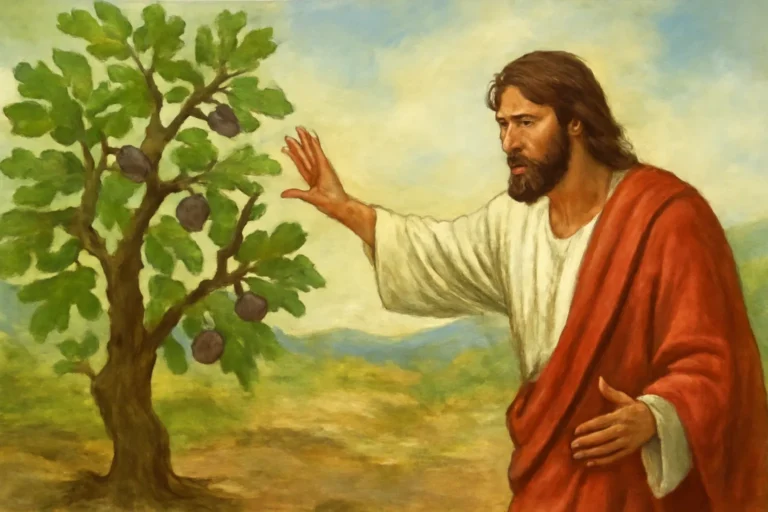
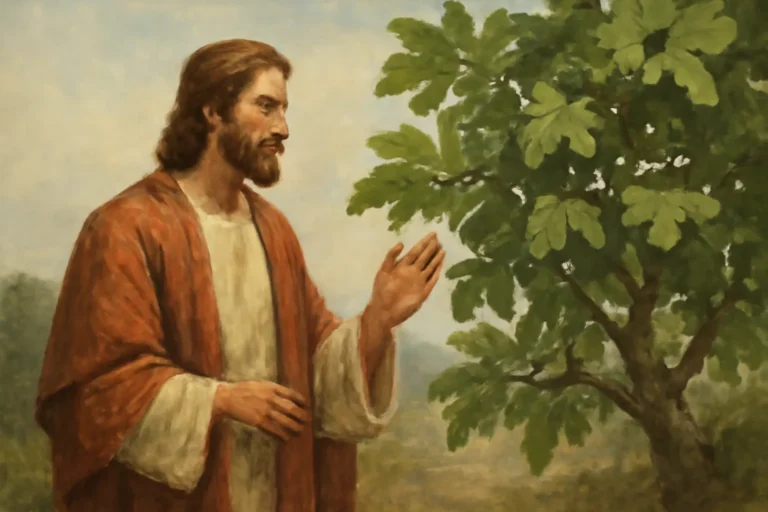
The basic outline is straightforward: on the way from Bethany toward Jerusalem, Jesus encounters a
fig tree that has leaves but no fruit. He curses it, and the tree withers from the roots
(as recorded in Mark 11 and echoed in Matthew 21). The incident is immediately followed by Jesus’s
activities in the Temple, a sequence that scholars and readers have linked in various ways to messages
about judgment, holiness, and fruitfulness in the life of faith.
In what follows, we’ll unpack the question in three parts: the Biblical Context that frames the
event, the Symbolism that many readers find central to its meaning, and the Teachings
that emerge for personal discipleship, communal life, and interpretive reading of the Bible.
Biblical Context
The Setting in the Gospels
The cursing of the fig tree occurs in two closely related gospel narratives. In Mark 11:12–14, the
event takes place as Jesus and his disciples are traveling from Bethany to Jerusalem. The text emphasizes
the timeline of events leading toward the Passion narrative: the next day,
Jesus will cleanse the temple, and the surrounding episodes will foreground the question of
authority, righteousness, and true worship.
In Matthew 21:18–22, a parallel version appears with a slightly different literary
emphasis. Matthew places the episode within his overall argument about Jesus as Messiah who judges
misdirected leadership and invites true fruitfulness. Readers note how the two accounts complement
each other: Mark emphasizes immediacy and action, while Matthew foregrounds the prophetic significance
of Jesus’s deeds in the religious center of Israel.
The Significance of the Fig Tree in Biblical Literature
The fig tree is one of the best-known symbols in the Bible. It is used in various
contexts to speak of Israel, the people of God, and prospects for spiritual fruit.
Several Old Testament passages picture Israel as a fig tree that ought to bear fruit for God (for example,
representative images in prophetic literature). The fig tree thus functions as a literary vehicle to
express expectations about fruitfulness, covenant fidelity, and
the risk of hypocrisy or unseen commitment.
In this sense, the event can be read as part of a larger biblical pattern: God’s people are called to
live in a way that matches their confession of faith. When leaves appear—signaling expectation or
profession—but fruit is absent, the narrative tradition says this discrepancy has consequences.
Chronology, Context, and Theological Interest
Some readers emphasize that the fig tree episode does not occur in isolation. It sits in the larger
storyline of Jesus’s authority, his confrontation with religious authorities, and his teaching about
the true nature of the kingdom of God. The withering of the tree, therefore, is not simply a botanical
incident but a symbolic act that invites reflection on hearts and habits—on what
it means to be truly committed to God in a way that bears fruit rather than merely appearing to do so.
Symbolism
The Fig Tree as Israel: Leaves Without Fruit
A central interpretive lane is to read the fig tree as Israel's leadership and spiritual condition.
In Jewish scripture and prophetic imagination, fig trees often symbolize the people of God and their
relationship to the divine will. When the tree has leaves but no fruit,
it signals an alarming discrepancy: outward signs of life without the essential substance that gives life
its meaning. In this reading, the fig tree’s cursing becomes a prophetic act — a living parable —
about hypocrisy and the danger of relying on ritual forms while neglecting justice, mercy, and faith.
Leaves, Fruit, and the Expectation of Authentic Righteousness
The narrative’s language places emphasis on the relationship between appearance and substance. A tree with leaves suggests a claim to vitality; the absence of
fruit demonstrates an empty or hollow claim. In Jesus’s teaching about the kingdom,
genuine discipleship is measured by its fruitfulness—not merely by what is seen on the surface.
This theme echoes in Jesus’s later teachings about good trees producing good fruit (see related passages in
the Gospels elsewhere) and invites readers to examine whether their own lives bear the fruit of faith in action.
Two Readings: Literal Miracle vs. Symbolic Parable
There are two dominant interpretive lanes. The first preserves a strictly literal reading: Jesus
performs a visible, supernatural action by causing the tree to wither, demonstrating divine power and
signaling judgment on fruitless faith. The second reads the episode as a symbolic, prophetic drama:
Jesus’s act serves as a living parable, illustrating the ultimate fate of a people who profess faith but
do not produce its consequences in their deeds.
Each reading has heuristic value. A literal reading foregrounds the authority and sovereignty of Jesus
and his power over creation. A symbolic reading foregrounds the ethical and spiritual critique of
religious life that emphasizes ritual efficiency over the sacrificial heart of faith.
Connections to the Temple Cleansing and the broader Message
The fig tree episode sits in sequence with Jesus’s Temple cleansing, a movement that
presses against the way worship and commerce have become entangled. Taken together, the episodes invite
readers to consider what true worship looks like when it is animated by justice and compassion, rather than by outward structures or slogans. In this way, the fig tree
becomes part of a broader critique of religious life that is comprehensive and publicly observable.
Teachings and Implications
Faith, Prayer, and the Power of Belief
A key teaching that emerges in the broader Mark-Matthew context is the link between faith, prayer, and the authority of God to act in history. The passage immediately following
the withering of the fig tree contains Jesus’s famous instruction about faith, forgiveness, and the power
of prayer: “Have faith in God. Truly, I tell you, if you say to this mountain, ‘Be taken up and thrown into
the sea,’ and do not doubt in your heart, but believe that what you say will come to pass, it will be done
for you” (paraphrased from Mark 11:22–24). The logical connection between the fruitless fig tree and the
power of faith invites readers to consider what it means to pray with alignment to God’s will.
Judgment on Hypocrisy and the Call to Fruitful Living
A dominant moral in the narrative is a warning against hypocrisy — the danger of acting
religiously without reverence for God and without meaningful impact on the world. The fig tree’s fate
signals that the inner life and the outer life must be coherent: inner faith and outer fruit must align
to reflect the reality of the kingdom. This teaching resonates with Jesus’s broader critiques of religious
leadership that focus on appearance rather than substance.
The biblical frame often uses the metaphor of fruitfulness to describe the moral and spiritual outcomes of
living under God’s rule. In this light, the fig tree episode is not merely punitive but formative:
it invites readers to examine whether they are living in a way that consistently yields love, mercy, and
justice in everyday life. The emphasis on fruitful discipleship becomes a practical criterion
for judging the authenticity of one’s faith, both individually and within a community.
Lessons for Prayer and Community Life
On a communal level, the episode challenges churches and readers to ask: Do our religious practices
produce tangible good in the world? Do our worship and our social concerns reflect a coherent
commitment to God’s kingdom? The response in many Christian traditions is to pursue a life that pairs
worship with justice, mercy, and compassion for the vulnerable.
Variations in Interpretation and Scholarly Debate
Literal miracle interpretation: Jesus curses the tree, and it withers on the spot
or very soon after, demonstrating divine power and personal authority. Proponents argue that this
is a straightforward demonstration of Jesus’s authority over creation as part of the incipient
revelation of his messianic mission.
Symbolic or parabolic interpretation: The withering tree is a prophetic action
that communicates a theological truth about Israel’s spiritual condition at a particular moment in the
narrative. The emphasis is less on the botanical effect and more on the symbolic message about
judgment and the expectation of fruitfulness.
Literary-theological reading: The episode serves multiple purposes within the Gospel
narratives—linking Jesus’s authority, the critique of religious leadership, and the eschatological
horizon of the kingdom of God. The withering acts as a dramaturgical device to shape readers’
understanding of Jesus’s mission.
Temporal and geographical nuance: Some scholars discuss the precise chronology and
the relationship to the Temple activity. While the core message remains, debates about the exact date
or sequencing highlight how gospel writers arranged material to advance their theological aims.
Seasonal and horticultural considerations: Although fig trees in the region often bear
fruit before leaves, the text’s simplicity invites careful interpretation. Some readers note that the
narrative’s symbolic logic is not primarily about horticultural accuracy but about signaling a moral
and spiritual claim.
Points of Consensus and Contentious Issues
It is common ground that the episode is theologically significant for the way it frames
Jesus’s authority and the expectations placed on the people of God. Points of divergence typically concern
whether to read the event as a literal miracle or as a literary and prophetic symbol. Both readings, when
rightly pursued, highlight the broader biblical themes of fruitfulness, authentic
worship, and the judgment of hypocrisy.
Practical Takeaways for Readers Today
Examine the Fruit of Your Life
A practical takeaway is to ask: What does my life produce? Do my beliefs translate into
acts of love, justice, and mercy? The fig tree invites believers to test the consistency between
profession and practice, particularly in environments where faith intersects with power and influence.
A Call to Humble Worship and Honest Self-Assessment
The episode cautions against equating outward signs with real devotion. Authentic worship
involves both reverence for God and ethical living that demonstrates the gospel in daily actions,
not just in ritual or rhetoric.
Faith That Is Attentive to God’s Will
As the narrative connects to Jesus’s teachings on prayer, believers are encouraged to pursue a faith
that is attentive to God’s will and aligned with divine purposes for love, mercy, and the
uplift of the marginalized. Prayer, when rooted in this alignment, becomes a channel through which God
works in and through the believer.
Reading Scripture with Context and Care
Finally, the episode demonstrates the importance of reading biblical passages in their context
and across the broad arc of Scripture. The fig tree story gains depth when connected to the temple
narrative, the prophetic tradition, and the New Testament’s broader discussion of living faith and mission.
Conclusion
The question “Why does Jesus curse the fig tree?” invites a multilayered engagement with
biblical text. Whether one reads the episode as a literal miracle or a symbolic parable, the underlying
message remains compelling: the Bible challenges readers to consider the authenticity of their faith,
the integrity of their worship, and the tangible fruit that faith should produce in love for God and
neighbor. In that sense, the fig tree episode acts as a catalyst for reflection on how belief is
lived out in daily life and community.
By attending to Biblical Context, exploring the rich Symbolism, and drawing
out clear Teachings for personal discipleship, readers can appreciate how a short, vivid
narrative in the gospel accounts continues to shape Christian faith and practice today. The episode
challenges believers to seek a faith that is not just seen in leaves of profession but proven in the
enduring fruit of love, justice, and mercy that characterizes life in the kingdom of God.
If you would like, I can provide a concise glossary of terms (fig tree, fruit, leaves, hypocrisy, judgment),
or supply references for further study across the Gospels and related
biblical literature to deepen your understanding of this pivotal episode.





Leave a Reply