What Are the Ten Commandments? A Clear Guide to Their Meaning
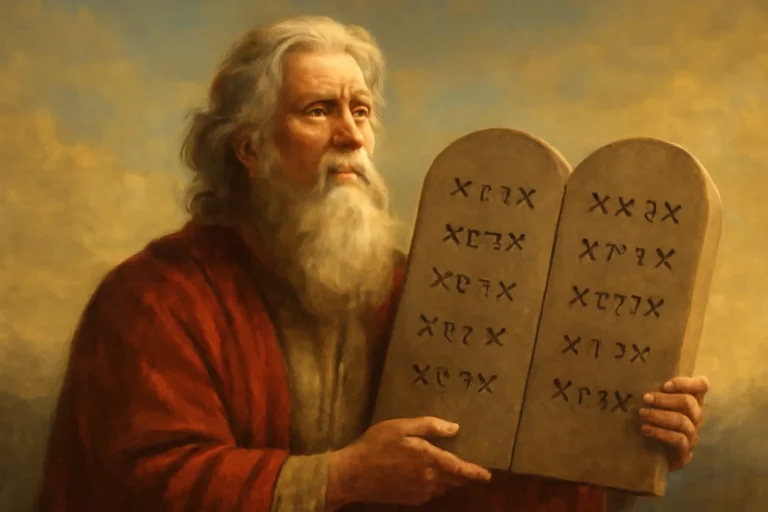
The phrase “the Ten Commandments” is one of the most familiar labels in religious and cultural history. It refers to a compact set of moral imperatives that many traditions describe as a divinely revealed code. In Christian, Jewish, and even some secular contexts, these guidelines are presented as a core part of a larger narrative about how human beings relate to the divine, to one another, and to themselves. They are sometimes called the Decalogue, a Greek term that literally means ten words, underscoring their nature as a concise, interpretive framework rather than a long legal code.
This article offers a clear, structured guide to what the Ten Commandments are, why they matter, and how people read their meaning today. We will explore the historical origins, the central themes that emerge across the commandments, how different traditions enumerate and interpret them, and what this ancient text can still teach us about ethics, responsibility, and community life.
Overview: What exactly are the Ten Commandments?
At its core, the Ten Commandments present a two-part moral vision: first, a reverent relationship with the divine, and second, a set of practical expectations for everyday human behavior. The commandments are often grouped into those two broad categories: duties toward God and duties toward other people. In many traditions, the text is viewed as a covenantal code given by God to the people of Israel, with its authority derived from the sense of a binding agreement that shapes identity, worship, and social life.
How the Ten Commandments are commonly listed
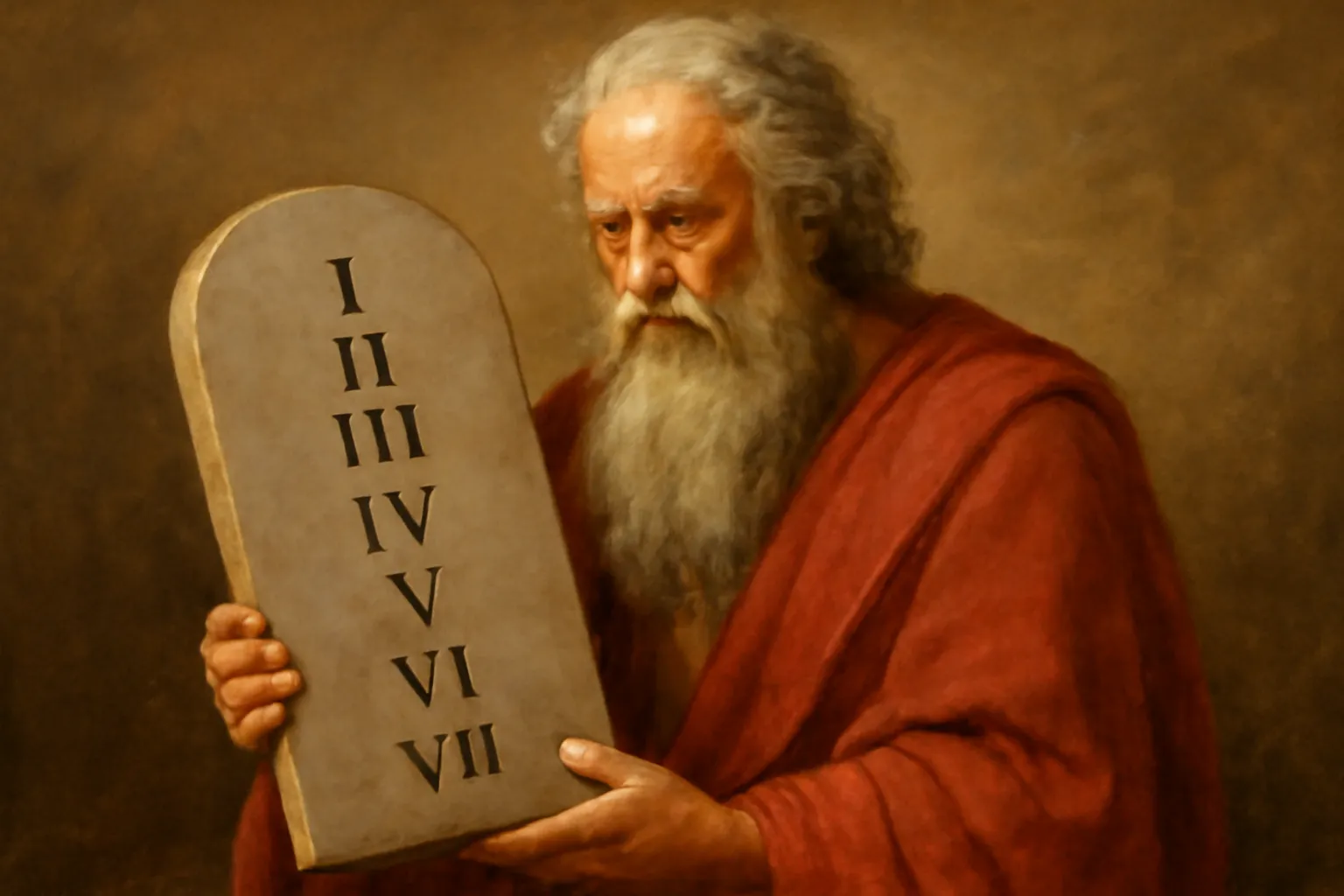
The commandments are most commonly presented as a numbered list of ten items. In many Western Christian and Jewish traditions, they appear as follows (though exact wording and numbering can vary slightly between communities). The list below reflects a widely used Protestant/Orthodox rendering:
You shall have no other gods before Me. This opening command establishes the primacy of the divine in the moral order and frames all following duties in relation to the Creator.
You shall not make for yourself a carved image, nor bow down to them. It addresses the proper object of worship and warns against idolatry, which can distort the relationship between God, people, and the created order.
You shall not take the name of the Lord your God in vain. This command emphasizes reverence for the divine name and the seriousness of speech about sacred realities.
Remember the Sabbath day, to keep it holy. The rhythm of time—setting aside regular rest and worship—plays a central role in communal and personal life.
Honor your father and your mother. The family is recognized as the primary social unit for transmitting values, care, and continuity.
You shall not murder. The sanctity of human life is a foundational moral concern that anchors justice and social peace.
You shall not commit adultery. Faithfulness within relationships frames trust, loyalty, and social stability.
You shall not steal. Respect for another person’s property protects security and fairness in the community.
You shall not bear false witness against your neighbor. Truth-telling and integrity are essential to justice and trust in social life.
You shall not covet your neighbor's house, you shall not covet your neighbor's wife, nor anything that belongs to your neighbor. This closing commandment addresses the inward desires that can lead to external harm, highlighting intention as a crucial aspect of moral life.
It is important to note that there are variations in counting across traditions. Some communities split or merge certain components, and some translate or phrase the commandments with slightly different emphasis. In particular, the way coveting is handled can change the exact wording and the division of the list. In the sections below we explore these variations in more detail, so you can see how the same text is understood in different religious and cultural contexts.
Historical context: Where the Ten Commandments come from
The Ten Commandments are traditionally linked to the story of the Mosaic Covenant, a foundational moment in the Hebrew Bible. According to the biblical narrative, God revealed these commands to Moses on Mount Sinai (also called Mount Horeb in some texts) after the Exodus from Egypt. This event is framed as a pivotal act that establishes both a divine relationship with the people of Israel and a social contract that would regulate worship, ethics, and community life.
The textual placement of the commandments appears in two companion biblical books: Exodus and Deuteronomy. In Exodus 20, the commandments are presented as a direct divine speech to the Israelites gathered at Sinai. In Deuteronomy 5, a retelling emphasizes recollection and exhortation as the Israelites prepare to enter the land. This dual presentation—one in a dramatic theophany and another as a reflective sermon—highlights the enduring tension in ancient law between revelation and interpretation.
Over time, Jewish and Christian interpreters have read the Decalogue as more than a list of prohibitions; they see it as a compact that informs identity, ritual life, ethics, and social order. The ancient context of temple worship, family structure, agriculture, and governance shapes the texture of each commandment. The law is not just a legal code but a moral grammar that helps a community orient itself toward the divine and toward one another.
Key terms and ideas to know
Decalogue — a term from Greek meaning “ten words,” highlighting its compact, telegraphic style.
Law and covenant — the commandments are often viewed as part of a covenantal relationship between God and Israel, implying both obligation and blessing.
Exodus and Sinai — the dramatic setting associated with the revelation of the commandments.
Ethical and spiritual dimensions — the text governs worship, social behavior, and personal motives.
Meanings and themes: What the Ten Commandments are trying to teach
While the exact wording varies, several enduring themes recur across interpretations. These themes illuminate not just how people should act, but who they are supposed to become in relation to others and to the divine.
Relational fidelity — the commandments articulate fidelity to God and to one another, emphasizing trust, honesty, and responsibility within relationships.
Idolatry and misdirected worship — the early commands target the proper object of devotion, warning against worship that displaces or dilutes the sacred.
Holiness in daily life — the sabbath, speech, and behavior are treated as sacred acts that sanctify ordinary life.
Life and dignity — the prohibition against murder and the call to protect the vulnerable reflect a concern for the sanctity of life and the welfare of the community.
Truth and integrity — bearing false witness is a safeguard for justice and social trust.
Property, consent, and social order — respect for others’ property and relationships fosters a stable, cooperative society.
Ethical implications for contemporary life
Today, many readers approach the Ten Commandments not as a rigid legal code but as ethical principles that inform personal choices, public ethics, and civil discourse. The emphasis on truth-telling, fair dealing, and respect for others’ households and communities resonates in debates about human rights, criminal justice, and social responsibility. Readers often ask: How can ancient moral prescriptions translate into modern life with diverse beliefs, cultures, and technologies? The answer many scholars offer is that the commandments invite reflection on motive, intention, and the consequences of actions—questions that remain vital in any era.
Variations in counting and interpretation across traditions
There isn’t a single uniform way to count or interpret the Ten Commandments. Different traditions arrange the ten in slightly different orders and may treat some items as one commandment or two. The differences are not merely academic; they shape how communities teach, memorize, and apply the commandments in worship, law, and daily life.
Two common modes of enumeration
Broadly, there are two well-known ways to count:
Common Protestant and Orthodox numbering — In this approach, the commands are presented as ten distinct statements, with the last commandment addressing covetousness in a single sweep: coveting your neighbor’s house, your neighbor’s wife, and anything else that belongs to your neighbor.
Catholic numbering — Some Catholic traditions either combine or split elements so that the same material can appear under slightly different headings. In practice, the essential ethical messages remain aligned with respect for God, family, community, and property, even if the precise division varies.
Variations in the closing commandment
A notable difference among traditions concerns how coveting is articulated. In many Jewish and Protestant renderings, the final commandment emphasizes covetous desire toward a neighbor’s house, wife, and possessions. Some Christian traditions, however, separate elements of coveting into two distinct commandments or phrase them with emphasis on the neighbor’s family and goods in separate bullets. The result is that each community may teach the same underlying moral insights with a slightly different emphasis in wording.
Why these variations matter for readers
The differences are not about changing moral guidance so much as about how communities remember and explain the same moral horizon. For example, a teaching that stresses covetous desire versus outward acts can influence how people evaluate motives versus actions, and how pastors or rabbis frame conversations about temptation, advertising, and social comparison. Acknowledging these variations helps readers understand that the Ten Commandments function as a living tradition, adapting to languages, cultures, and historical moments while preserving core ethical commitments.
The Ten Commandments in practice: living with the Decalogue today
The way a community applies the Ten Commandments—also called the Ten Words in some translations—can shape education, worship, law, and everyday behavior. Below are several practical angles that show how the ancient text can be meaningful in modern life, whether you approach it from a religious, cultural, or secular perspective.
The first three or four commandments often anchor conversations about worship and reverence for the divine. In practice, this means acknowledging a source of moral authority beyond personal preference, while also recognizing the duty to use language and ritual with respect. For many communities, worship is not merely ceremony but an orientation of life around a meaningful relationship with the sacred.
Family and social ethics
The commandments about honoring parents, honoring life, and maintaining truthfulness are frequently cited in discussions of family ethics, education, and civil society. They remind people that how we treat our kin, neighbors, and coworkers contributes to a just and stable social fabric.
Justice, truth, and property
The prohibitions against murder, theft, and false testimony are commonly invoked in debates about crime, due process, and the rights of the vulnerable. These prohibitions underpin many modern legal concepts—such as the sanctity of life, the protection of property, and the importance of reliable evidence in adjudication.
Ethics of desire
The final commandment’s focus on coveting can be read as a reminder that moral life has a interior dimension—that what people desire can be as consequential as what they do. In contemporary life, this invites conversations about consumer culture, envy, and the formation of character.
Common questions and misconceptions about the Ten Commandments
Given the long history and the many contexts in which these commandments appear, it’s natural for readers to seek concise answers to specific questions. Here are some frequent inquiries, with succinct clarifications.
Are the Ten Commandments relevant for non-believers?
Many people who are not religious still find universal values in these guidelines, such as prohibitions against harming others, deceit, and theft. The text is often read as a foundational moral philosophy that can inform civic ethics, education, and community standards, even when one does not adopt a particular religious framework.
Do different faiths interpret the Ten Commandments differently?
Yes. While Judaism, Christianity, and Islam all revere the idea of divine law in some form, their texts, traditions, and legal cultures differ in how they present, count, and apply the commandments. The differences are not only about wording but about interpretive frameworks—whether one emphasizes ritual worship, social morality, or a combination of both.
How are the commandments used in modern law?
In many Western legal traditions, the moral language of the Ten Commandments has historically influenced concepts like the sanctity of life, the prohibition against lying under oath, and prohibitions against theft. Modern law, however, typically draws on a range of sources, including natural law theory, social contract thought, and secular ethics, while still acknowledging the historical impact of these commandments on moral discourse and cultural norms.
Conclusion: Why the Ten Commandments matter in a modern context
The Ten Commandments invite readers to consider not only what one should not do, but also who one should strive to be. They offer a concise map of foundational relationships—between the divine, between neighbors, and within the self. Across traditions and generations, these ten words have served as a shared vocabulary for moral reflection, a set of anchors for worship and community life, and a source of ethical imagination in both private and public spheres.
Whether you approach them as a religious text, a historical artifact, or a set of timeless moral claims, the Decalogue remains a living conversation about responsibility, justice, and care for others. The precise wording and arrangement may differ from one tradition to another, but the underlying call—to honor truth, to protect life and property, to foster faithful relationships, and to orient daily life toward something larger than the self—continues to resonate in classrooms, houses of worship, courts, and homes around the world.






Leave a Reply