Bible Story Bible: Timeless Bible Tales, Lessons, and Insights
Bible Story Bible: Timeless Bible Tales, Lessons, and Insights
Bible Story Bible: Timeless Bible Tales, Lessons, and Insights is more than a title; it signals a living approach to Scripture that gathers storytelling, theology, and daily life into one resource. When readers engage with a collection that emphasizes biblical storytelling, they encounter not just events, but patterns, purposes, and promises that recur across centuries. This article explores how a well-crafted story Bible—sometimes called a Bible story Bible, a curated volume of Scripture narratives, or a biblical tales compendium—can illuminate timeless tales, extract practical lessons, and offer insights for personal growth, teaching, and worship.
A Bible story Bible is a narrative-oriented edition of Scripture designed to foreground the storytelling flavor of the Biblical text. Rather than presenting Scripture as a dry verse-by-verse reference work, a story Bible emphasizes plots, characters, and scenes that invite readers to follow a thread of meaning through the chapters and books of the Bible. This approach aligns with how the Bible was originally received: as a collection of stories that teach, warn, encourage, and reveal the character of God.
There are several ways these story-oriented editions are structured. Some focus on major narratives—Creation, the Flood, the Patriarchs, the Exodus, the Kingdom era, the Prophets, the Life of Jesus, and the Early Church—while others organize material around themes such as covenant, justice, mercy, faith, or love. In every case, the aim is to help readers perceive the arc of salvation history and to recognize how individual stories point toward a larger, cohesive story about God and humanity.
For readers and teachers, a Bible story Bible can serve as a bridge between personal devotion and scholarly study. It preserves the texture of the biblical world—its languages, customs, and settings—while making the narratives approachable for reading aloud, classroom discussion, or personal reflection. The story Bible format also supports memory and retelling, a classic aspect of biblical storytelling that has helped generations recall and apply scripture in daily life.
In this article, we will refer to the subject as a holistic resource that combines tales, lessons, and insights to form a durable guide for understanding Scripture as a living library rather than a static text.
Why Read Bible Stories as a Whole?
Reading the story Bible or biblical tales collection as a whole yields several advantages beyond isolated verses. Narrative reading helps reveal the character of God, the humility and courage of humanity, and the moral and spiritual tensions that recur throughout history. Here are some guiding reasons to engage with biblical tales in a comprehensive way:
Continuity of the narrative: The Bible presents a continuous plot line—God’s creation, human rebellion, redemption, and restoration. A story-based edition encourages readers to track this continuity rather than limit themselves to isolated episodes.
Character development: Through multiple stories, readers observe how characters grow, falter, repent, and mature. This keeps moral and spiritual lessons rooted in real human experience.
Theme repetition and development: Recurrent motifs—trust, obedience, exile, mercy, justice—reappear in different settings. Recognizing these patterns deepens interpretation and application.
Contextual enrichment: A narrative approach often weaves historical and cultural context into the story, helping readers understand the stakes, imagery, and decisions portrayed in the text.
Practical application: Collating tales around themes such as courage, faith, or stewardship provides concrete ways to apply ancient wisdom to modern life.
In short, a Bible story Bible encourages readers to see the Bible as a grand drama with interwoven plots and purposes, rather than as a loose collection of moral anecdotes.
Timeless Tales within the Bible Story Bible
Within the story Bible universe, certain narratives stand out for their enduring influence and their capacity to illuminate core faith commitments. Below are representative clusters of tales, each with its own set of lessons and insights. The aim is not to exhaust every narrative but to highlight the richness of biblical storytelling as a source of wisdom and inspiration.
Creation, Covenant, and the Cosmic Stage
The opening stories establish a framework in which God is the sovereign Creator, humans are entrusted with responsibility, and sin disrupts the intended harmony. Across these tales, readers encounter themes of obedience, freedom, and responsibility.
Creation narratives reveal the order, beauty, and purpose of the world. They invite readers to reflect on the goodness of creation and humanity’s vocation as stewards.
Covenant relationships unfold as a defining pattern: God initiates; humans respond in faith or fear; consequences refine understanding of trust and obedience.
Sin and longing appear as disruptions that require mercy, steadfast love, and a plan for restoration.
Patriarchs and Matriarchs: Faith in Far-Reaching Promises
Stories about Abraham, Sarah, Isaac, Rebekah, Jacob, and their descendants illuminate the dynamics of faith under pressure. These tales model how trust grows through testing, missteps, and eventual alignment with a divine purpose.
Abraham’s journey shows that faith is lived out in obedience, hospitality, and willingness to surrender what is most precious.
Jacob and family dynamics reveal the complexities of love, blessing, and reconciliation.
Migration and nation-building emphasize God’s intent to bless all nations through a chosen people.
Exodus and Wilderness: Liberation and Identity
The stories of Moses, Pharaoh, the Red Sea, and the wilderness reveal how God intervenes to liberate, guide, and form a people with a distinctive identity. These tales offer powerful lessons about leadership, worship, and dependence on divine provision.
Deliverance and law—liberation from oppression is followed by a structured code that shapes life in the promised land.
Wilderness testing highlights trust, provision, and the dangers of turning away from God under pressure.
Land and covenant faithfulness connect obedience to place and blessing, inviting readers to reflect on their own commitments.
Kings, Prophets, and Wisdom Literature
The biblical story Bible gathers narratives about rulers, prophetic voices, and wisdom teachers who interpret the times and call people back to faithful living. This collection interrogates power, justice, mercy, and the call to repentance.
Davidic narratives present triumphs and failures, showing how a leader’s heart matters as much as achievements.
Prophetic voices speak to social injustice, spiritual apathy, and the prophetic hope of renewal.
Wisdom literature invites practical insight into everyday decisions, balancing knowledge with humility and reverence for God.
Life of Jesus: Parables and Incarnational Reality
In the story Bible of the New Testament, the life and teachings of Jesus anchor the entire narrative arc. Parables, miracles, calls to discipleship, and the passion narrative reveal the character of God, the nature of the kingdom, and the invitation to respond in faith and love.
Parables articulate spiritual truths through everyday situations, inviting listeners to see themselves within the story.
Miracles and signs demonstrate God’s active presence in healing, provision, and revelation.
Crucifixion and resurrection reveal the ultimate act of love and the decisive turning point for human history.
The Acts and Epistles describe the spread of the gospel, the formation of Christian communities, and guidance on how to live out faith in diverse contexts. These narratives emphasize perseverance, communion, and ethical formation in light of grace.
Community life highlights shared resources, mutual encouragement, and accountability within a new way of living.
Mission and witness challenge believers to extend love beyond their own circle to bring hope to the world.
Formation and discipline demonstrate that growth in faith requires both grace and effort, prayer and practice.
Apocalyptic Visions and Hopeful Endings
Revelation and related prophetic visions close the canon with symbol-rich narratives about ultimate victory, new creation, and enduring faith. Even in these dramatic scenes, the threads of mercy, justice, and covenant fidelity run strong, offering encouragement to endure present trials.
Judgment and mercy interact, showing that God’s justice is tempered by grace.
Hope for renewal invites readers to envision a world made new in fidelity to the divine will.
Liturgical imagery invites readers to participate in worship that transcends time and culture.
Across these clusters, the bible story bible demonstrates how a narrative approach helps readers recognize that every story contributes to a larger story of love, justice, and salvation.
Core Lessons and Thematic Threads
One of the strongest features of a story Bible approach is the way it distills core lessons that recur in different contexts. The following thematic threads are often central to Scripture and gain clarity when viewed through a narrative lens:
Faith and obedience: Faith grows through trust, even when outcomes are uncertain. Obedience is tested in moments of risk, pressure, and fear.
Covenant faithfulness: God initiates a relationship, requests fidelity, and remains steadfast even when humans fail.
Mercy and justice: The biblical narrative consistently pairs calls for mercy with calls for justice and righteousness in community life.
Redemption and restoration: Stories move from brokenness to restoration, offering hope that sequences of failure can yield renewal.
Identity and vocation: The people of God discover who they are and why they exist within a mission to bless the world.
Liberation and responsibility: Deliverance is not just an escape; it is a doorway to a life of responsibility toward others and creation.
Readers who trace these motifs across multiple stories gain a robust sense of continuity. This helps readers answer questions such as What does it mean to live by faith? or How should a community respond to injustice? The Bible story Bible acts as a map for applying timeless principles to contemporary life.
Storytelling Techniques in Scriptural Narratives
Scripture employs a sophisticated toolkit to convey its messages through narrative. A story Bible highlights these techniques so readers can recognize how meaning is built, not merely stated. Some key strategies include:
Character arcs: People grow when they respond to God’s invitation, often experiencing transformation through trials, encounters, and revelations.
Dialogue and irony: Conversations reveal motives, reveal truth, and create tension that invites reflection.
Foreshadowing and typology: Earlier events point toward later fulfillment, establishing continuity between testaments.
Refrain and pattern: Repeated phrases or motifs underscore central themes and help memory retention.
Symbolic imagery: Numbers, landscapes, and ritual objects carry layered symbolic meanings that enrich interpretation.
In a Bible tale collection, these devices become accessible entry points for discussion. Readers can ask questions such as What does this symbol signify in the broader story? or How does this encounter change the trajectory of a character’s life? This kind of inquiry nurtures critical thinking as well as spiritual insight.
Typology and the Bible Story Bible
Typology examines how persons, events, or rituals in the Old Testament prefigure Christ and the life of the Church in the New Testament. A story Bible often presents typological connections—Abraham’s binding of Isaac as a foreshadowing of God’s sacrifice, or the Passover imagery echoing Jesus’ death and deliverance. Recognizing these links can deepen appreciation for the unity of Scripture, while avoiding over-interpretation by keeping the typology grounded in context and careful exegesis.
How to Study the Bible Story Bible Effectively
To get the most from a Bible story Bible, readers can adopt a practical, three-fold approach: observe, interpret, and apply. Below are steps and techniques that work well for individuals, families, classrooms, and preaching contexts:
Observe the text: Read slowly, note key events, questions, and the emotional tone. Mark repeated phrases and significant turning points.
Interpret with context: Consider the historical, cultural, and literary context. Ask What did this mean to its original audience? and What is the broader message for readers today?
Apply to life: Translate insights into personal actions, family routines, or community practices. Create concrete steps that embody the lessons learned.
Practical tools for studying include:
Cross-referencing with other biblical accounts to illuminate parallel themes or events.
Character profiles that summarize motives, decisions, and growth trajectories.
Timeline charts to visualize how narratives unfold across generations and covenants.
Discussion prompts for groups or family conversations that encourage listening, humility, and respectful debate.
Additionally, a story Bible can be a gateway to accompanying resources such as maps, archaeology notes, and literary analyses that deepen understanding without losing the narrative focus.
Using a Bible Story Bible in Teaching and Preaching
Educators, pastors, and parents often rely on a story Bible to present Scripture in engaging, memorable ways. Here are practical approaches to teaching and preaching through biblical tales:
Thematic lessons: Align a series of stories with a central theme (e.g., faith under pressure, mercy in leadership) and draw explicit connections between episodes.
Story-driven sermons: Build sermons around a narrative arc—exposition, rising action, climax, and resolution—so listeners experience Scripture as a coherent plot.
Storytelling sessions: Retell classic narratives with vivid imagery, role play, or visual aids to facilitate recall and discussion.
Character study modules: Focus on a single figure across multiple stories to explore growth, choices, and consequences.
Practical applications: Translate each tale into concrete actions for a community, such as acts of charity, justice initiatives, or spiritual disciplines.
In all these settings, the Bible story Bible emphasizes accessibility, memory, and transformative learning. It also invites readers to engage with the text reverently while exploring questions and debate in a safe, respectful environment.
Interpretive Lenses and Insights
Readings of the bible story bible are enriched by applying diverse interpretive lenses that respect the text’s integrity while expanding its relevance. Here are several widely used approaches that can be fruitfully employed in analyzing narrative parts of Scripture:
Historical-cultural context: Consider the social norms, religious practices, and political realities of the times in which the stories occurred.
Literary genre awareness: Different genres—narrative history, poetry, wisdom, prophecy, gospel genre—have distinct rules and expectations for interpretation.
Canonical perspective: View stories in light of the entire biblical canon, recognizing how New Testament authors and early church communities read the Old Testament.
Typology and messianic anticipation: Identify patterns that point toward Christ as fulfillment of promises and prophecies.
Ethical and missional reading: Ask what the narrative teaches about justice, mercy, compassion, and the mission of God in the world.
Different readers will emphasize different lenses. The most fruitful approach often combines several perspectives while remaining faithful to the text’s own voice and purpose. A well-balanced story Bible respects both the historical realities of the time and the spiritual truths that endure across generations.
Common Challenges and Misinterpretations
Even a well-constructed biblical story collection can invite understandable challenges. Awareness of these issues helps readers interpret responsibly and avoid common pitfalls:
Oversimplification: Reducing a narrative to a single moral rule neglects the complexity of characters, contexts, and divine purposes.
Anachronism: Reading modern concerns back into ancient settings may distort intent and meaning.
Selective emphasis: Focusing on favorite stories while ignoring others can skew the overall arc of Scripture.
Misapplication: Translating ancient norms into modern life requires careful discernment, as some practices were specific to a time and culture.
Literalism without interpretation: Treating symbolic and poetic language as literal without exploring context can hamper understanding.
These challenges underscore the value of engaging with a Bible story Bible that provides context, notes, and teacher-friendly guidance. When accompanied by thoughtful reflection, discussion, and study, the risk of misinterpretation diminishes and the timeless lessons emerge more clearly.
Formats and Variants: How to Choose a Bible Story Bible
There are many editions and formats of narrative-focused Bible resources. Some common varieties include:
Story-centered Bibles: Editions that present canonical stories in a continuous narrative format, sometimes with minimal verse-by-verse navigation to emphasize flow and connection.
Thematic story Bibles: Collections organized around topics like creation, covenant, or leadership, making it easy to study a particular theme across multiple stories.
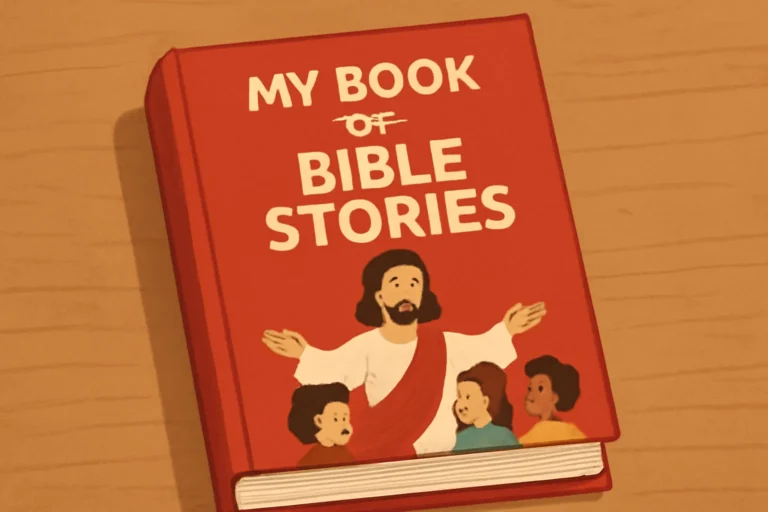
Children’s story Bibles: Simplified retellings designed for younger readers, often with illustrations, questions for discussion, and memory-friendly language.
Historical-context Bibles: Editions that pair narratives with side notes on history, archaeology, and culture to enrich understanding.
Study edition story Bibles: Texts that include commentary, cross-references, and study questions to support group study and sermon preparation.
When choosing a story Bible, consider your goals, the audience, and how deeply you want to engage with historical and literary analysis. For personal devotion, a readable narrative edition may be ideal. For teaching or ministry, a study edition with notes and discussion prompts might be most helpful. The most important criterion is that the edition helps you encounter the stories in a way that fosters growth, faith, and action.
Conclusion: The Enduring Value of Timeless Tales
A Bible Story Bible—in its many forms—offers a powerful invitation to enter the world of Scripture through its stories. The timeless tales of the Bible are not mere antiquities; they are living narratives that continue to shape how people perceive God, themselves, and the world around them. By engaging with Scripture narratives as a coherent, dynamic story, readers gain:
Deeper understanding of God’s character and purpose throughout history
Holistic application of lessons in faith, justice, mercy, and hope
Tools for teaching and preaching that resonate with listeners of diverse ages and backgrounds
Fresh perspectives on contemporary ethical and spiritual questions through ancient wisdom
A habit of reflection that nourishes daily life, worship, and service
In the end, the Bible story Bible is a companion for readers who wish to engage with sacred text in a way that honors its depth and vitality. It invites you to follow the narrative thread—from creation to new creation—and to become a participant in the ongoing story of God’s work in the world. Whether you are a student, a pastor, a parent, or someone seeking meaningful spiritual nourishment, the enduring value of biblical storytelling remains clear: stories shape beliefs, shape lives, and shape communities when read with care, imagination, and devotion.
As you explore this field, remember that a bible story bible is more than a collection of tales. It is a guide to wisdom, a toolkit for reflection, and a doorway to transformation—a timeless companion for anyone who desires to understand the Bible in its fullness and to apply its truths with courage and compassion.






Leave a Reply