The centerpiece of this article is the text of the psalm commonly sung and recited as The Lord's My Shepherd, a beloved paraphrase of Psalm 23 that lives in hymnals and worship services around the world. Below is a widely shared English rendering that many congregations know by heart. It is presented here as the words of the hymn in its traditional cadence, with line breaks to reflect how it is often sung in churches and gatherings.
The Lord's my shepherd, I shall not want;
He maketh me to lie down in green pastures:
He leadeth me beside the still waters.
He restoreth my soul: He leadeth me in the paths of righteousness for His Name's sake.
Yea, though I walk through the valley of the shadow of death,
I will fear no evil: for Thou art with me; Thy rod and thy staff they comfort me.
Thou preparest a table before me in the presence of mine enemies;
Thou anointest my head with oil; my cup runneth over.
Surely goodness and mercy shall follow me all the days of my life:
and I will dwell in the house of the Lord forever.
This version, with its cadence and imagery, remains a touchstone for many readers because it marries biblical language with the prayerful, personal tone of a psalm set to hymn tune. In some hymnals you may encounter minor wording shifts—older or modernized pronouns, or slight punctuation changes—but the core phrases—“The Lord's my shepherd,” “green pastures,” “still waters,” “valley of the shadow of death,” “table before me,” and “goodness and mercy”—appear as the anchors of the text.
For reference, here is a compact, line-by-line recap of the same lyrics in a more compact form, still preserving the essential imagery and rhythm. Note how the phrases in bold are highlighted to emphasize the most memorable lines:
The Lord's my shepherd, I shall not want
He makes me lie down in green pastures
He leads me beside still waters
He restores my soul and guides in paths of righteousness
Even in the valley of the shadow of death, I fear no evil
Thy rod and staff comfort me
Thou preparest a table before me, oil anointing my head
My cup runs over; surely goodness and mercy follow me
I dwell in the house of the Lord forever
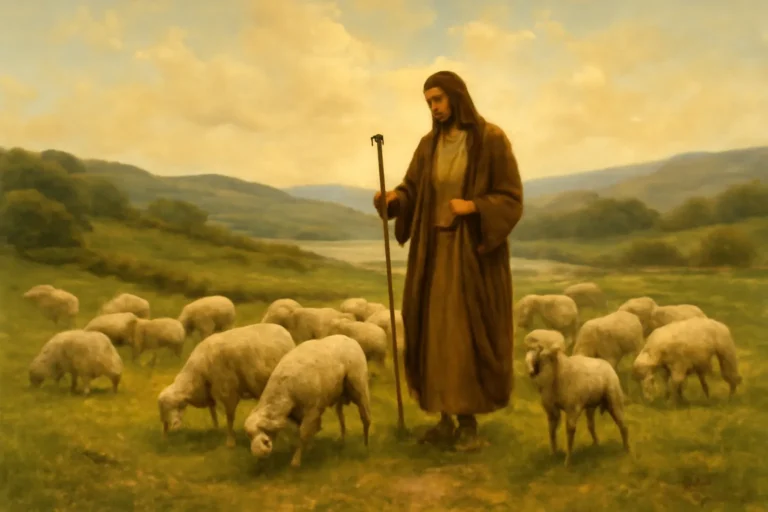
The hymn’s language invites personal reflection as well as communal singing. The imagery is intentionally pastoral, drawing a picture of the shepherd’s care in a landscape of safety and abundance. Throughout the text, the shepherd’s rule is benevolent and protective, and the believer’s life is framed as a journey guided by divine providence.
History of The Lord’s My Shepherd Hymn
Origins and biblical roots
The Lord's My Shepherd is inseparably linked to Psalm 23, a biblical psalm traditionally attributed to King David and cherished in the Judeo-Christian tradition. The psalm appears in the Old Testament in the Book of Psalms and has long been celebrated for its pastoral metaphor and its themes of divine guidance, protection, and blessing. In English-language worship, the psalm is often accessed through paraphrases or hymn-like renderings rather than direct, verse-for-verse translations. This approach preserves the psalm’s rhythm and makes it singable for congregations while retaining the psalmist’s intimate voice.
The hymn tune Crimond and other settings
The most famous musical setting associated with this text is the tune Crimond. Crimond is a Scottish melody that became the standard accompaniment for the hymn in many English-speaking churches during the 19th and 20th centuries. While Crimond is the tune most people recognize, the text has been set to a wide array of melodies, each lending a slightly different feel to the same words. Some choirs and congregations might pair the text with tunes that emphasize a more triumphant or a more contemplative mood, depending on liturgical context, liturgical season, or the musical leadership of the church.
Textual variants and translation history
Because Psalm 23 is old and the English language has evolved, there are numerous textual variants across hymnals and translations. Some editions preserve the archaic cadence—“thou” and “thy”—while others modernize pronouns to you and your. The core theology and imagery remain consistent, but the choice of verbs (maketh vs. makes, leadeth vs. leads) and the capitalization of Lord can differ. Publishers sometimes adjust punctuation to aid contemporary readability, but the essential phrases—especially those highlighted in bold above—tend to endure as the lines most recited by worshippers.
Historical usage and liturgical function
Throughout church history, Psalm 23 has been used in a variety of contexts—from solitary prayer and private meditation to congregational worship and funeral liturgies. The paraphrase style of The Lord's My Shepherd makes the psalm comprehensible and personal for many believers, turning a sacred text into a living prayer. In many denominations, it has become a staple in Sunday services, weddings, and, poignantly, funerals, where the themes of provision, protection, and eternal life resonate deeply with participants who are facing loss or recalling cherished memories.
Influences beyond the church
The enduring popularity of this text has also extended into secular culture, where its imagery—green pastures, still waters, and a faithful guide—appears in poetry, prose, and music beyond strictly religious contexts. The universal appeal of a benevolent guide and a life lived under graceful care helps the hymn cross cultural and linguistic boundaries. This cross-pollination ensures that the words remain a living part of communal memory, even for people who might not attend church regularly.
Meaning and Themes
At its core, The Lord's My Shepherd speaks to trust in divine care through a series of emblematic images drawn from pastoral life. Each image carries layered meaning—spiritual, moral, and existential—inviting readers and hearers to interpret their own lives through the lens of providence and grace.
Key metaphors and their significance
Shepherd and sheep: The central metaphor frames God as a benevolent guide who leads, protects, and provides. The relationship is intimate and relational, underscoring trust and dependence.
Green pastures and still waters: These images evoke nourishment, rest, and renewal. They suggest that life in God’s care includes periods of peace, refreshment, and spiritual restoration.
Righteous paths and the name's sake: The paths of righteousness emphasize moral integrity and the alignment of one’s life with divine purposes. The phrase “for His name's sake” signals that right conduct reflects God’s character and reputation in the world.
Valley of the shadow of death: A vivid reminder that life includes peril and fear, yet the shepherd’s presence dispels dread. It is a declaration of courage grounded in faith.
Rod and staff: Tools of guidance and protection; they symbolize discipline, support, and direction in times of danger or uncertainty.
Table in the presence of enemies and oil on the head: The imagery turns adversity into a stage for blessing—hospitality, honor, and lavish care even in hostile circumstances.
Cup runneth over and the promise of goodness and mercy: Abundant blessing and steadfast mercy mark the believer’s journey.
House of the Lord forever: A future-oriented hope—eternal communion with God beyond earthly life.
Thematic threads and theological implications
Several themes weave through the hymn’s texture. One is trust under divine providence, a sense that the believer’s needs are known and supplied by a shepherd who cares personally. Another is comfort in the presence of danger, where fear yields to confidence because the divine companion remains near. A third thread is ethical conduct shaped by the divine mission; the journey is not only about personal safety but about aligning one’s life with God’s will and testimony. Finally, the repeated emphasis on blessing in abundance and eternal dwelling points toward a life lived with gratitude, hope, and anticipation of a lasting relationship with the divine.
Practitioner notes: reading the text in prayer and worship
For readers and worshippers, the words invite a threefold practice: contemplation—pausing to savor the pastoral imagery; confession—acknowledging one’s dependence on divine care; and commitment—responding with gratitude and faithful living. Bold phrases like green pastures and mercy can serve as anchors for meditative readings or guided prayers, while the contrast between danger and divine companionship can provide material for sermon reflections or sermonettes.
Musical Settings and Cultural Impact
The tune with which a text is sung often shapes how listeners experience its meaning. For The Lord's My Shepherd, the arrangement Crimond has become so iconic that many people associate the text almost inseparably from that melody. Yet the hymn’s impact persists across regions, languages, and worship styles, with various communities selecting tunes that best fit their musical heritage and liturgical rhythm.
Popular tune families and arrangements
Crimond (Scottish origin): The most commonly heard pairing in evangelical and Anglican worship; often performed with a solemn, unhurried tempo that allows the words to breathe.
Other hymn tunes used with the text: In some churches, the psalm text is paired with tunes that emphasize a more intimate or reflective mood, suitable for quiet meditations or funeral services.
Instrumental settings: Instrumental arrangements, piano preludes, or orchestral accompaniments that highlight the melodic line while preserving the text’s reverent quality.
Usage in worship and life ceremonies
Sunday worship: A standard feature in services focused on comfort, divine provision, or guidance.
Weddings: The steadfast, blessing-oriented language often accompanies vows and declarations of lifelong care.
Funerals: The "valley" imagery and the assurance of the shepherd’s presence at the end of life provide solace and hope for mourners.
Private devotion: Reading the psalm as a personal prayer to recalibrate trust and gratitude in daily life.
Translations and cross-cultural adaptation
While the English text remains predominant in many coalitions, the psalm’s universal themes invite translations and paraphrases in other languages. In each language, translators face the challenge of preserving the pastoral imagery, the rhythmic cadence, and the theological intent of the original. The result across cultures is a family of versions that share a common heart—God’s guidance, provision, and companionship—while reflecting diverse linguistic musicality.
Further Reading and Listening
If you would like to explore more deeply, consider the following avenues:
Study editions of the Book of Psalms in the Lutheran, Anglican, Catholic, or Presbyterian traditions to observe different renderings of Psalm 23.
Listen to recordings of the Crimond arrangement to hear how tempo, phrasing, and dynamics affect the text’s reception.
Read commentaries on Psalm 23 that explore the shepherd metaphor, the symbolism of green pastures and still waters, and the significance of “the house of the Lord forever.”
For those who wish to study the hymn in more depth, a number of scholarly and devotional resources offer historical context, literary analysis, and theological reflection. The text’s enduring appeal lies not only in its lyric beauty but in its capacity to speak to universal human experiences—nurture, danger, hospitality, and the promise of a home beyond this world.
The words of The Lord's My Shepherd stand as a bridge between ancient scriptural language and contemporary worship. They translate the timeless message of Psalm 23 into a form that can be spoken, prayed, and sung across generations. Whether heard in a quiet chapel, sung in a grand sanctuary, or whispered in the hush of personal prayer, the hymn remains a living expression of trust in the One who guides, restores, and sustains.
In sum, the lyrics—with their images of green pastures, still waters, and the valley that cannot overcome faith—offer a concise map for a life lived under divine care. The history of the hymn reveals how a biblical psalm can become ashared cultural expression through tunes like Crimond and varied musical settings. The meaning section invites readers to encounter the text not just as poetry but as a practice: to listen, to trust, and to walk through whatever landscapes lie before them with the shepherd’s presence as their constant companion.
Whether you are revisiting the hymn for personal comfort, preparing a worship service, or exploring the history of Christian hymnody, the message remains clear and compelling: life is a journey, and the One who leads is good, merciful, and faithful forever.






Leave a Reply