Welcome to a concise, accessible guide to the Protestant Bible. This resource explains what the Bible used by Protestants is, how it came to be, and how readers today can engage with its texts with clarity and confidence. Whether you are exploring the Protestant canon for the first time or looking for practical ways to study the scriptures in a church or classroom setting, this article offers a structured overview, terminology, and pointers to reliable translations and study tools.
The term Protestant Bible refers to the edition of the Christian Scriptures that is standard among most Protestant churches. In common usage, it is also called the Protestant canon or simply the Bible of Protestant traditions. A defining feature of the Bible for Protestants is its inclusion of a specific collection of books in the Old Testament and the New Testament, organized in a way that reflects historic Protestant teaching and the theological emphasis of the Reformation era. The Protestant Bible is not a single, uniform book but a family of editions that share content and structure while differing in translation philosophy, study aids, and editorial notes.
Historical overview of the Protestant Bible
Origins in the Reformation
The roots of the Protestant Bible reach into the reformational movements of the 16th century. Leaders like Martin Luther and other reformers argued that the church should rely on the authority of Scripture under the principle of Sola Scriptura—that Scripture alone is the ultimate rule of faith and practice. This conviction influenced decisions about which books would be regarded as authoritative in the canon and how those books would be translated and disseminated to lay readers.
Key developments in canon formation
As debates settled, Protestant communities generally affirmed a canon of Old Testament (39 books) and New Testament (27 books) that aligned with the Hebrew Bible’s content but arranged in a way that reflected Christian reading of history, prophecy, wisdom, and gospel witness. The decision to omit the deuterocanonical books (also called the Apocrypha in Catholic and Orthodox traditions) helped distinguish the Protestant Bible from other Christian canons. It is important to note that some editions retain a separate section of these deuterocanonical writings as an aid to study, but they are not counted as part of the canonical text in most Protestant churches.
The Protestant canon: what it includes and what it excludes
Old Testament (39 books)
The Old Testament portion of the Protestant Bible comprises writings organized into the Law (Pentateuch), History, Poetry and Wisdom, and the Prophets. The content covers creation, the formation of Israel, law and covenant, poetic wisdom, and the major and minor prophets who spoke to Israel and beyond. The arrangement mirrors a theological through-line: creation, fall, promise, response, and expectation of the coming Messiah.
New Testament (27 books)
The New Testament follows the life and teachings of Jesus, the spread of the church, and the apostolic witness. It includes the four Gospels that recount the life of Christ, the historical book of Acts, the Epistles (letters) addressing churches and individuals, and the visionary book of Revelation. Together, these writings present the gospel message, church practice, ethical guidance, and eschatological hope for readers across generations.
How the Protestant Bible differs from other canons
Protections and distinctions: Catholic vs. Protestant
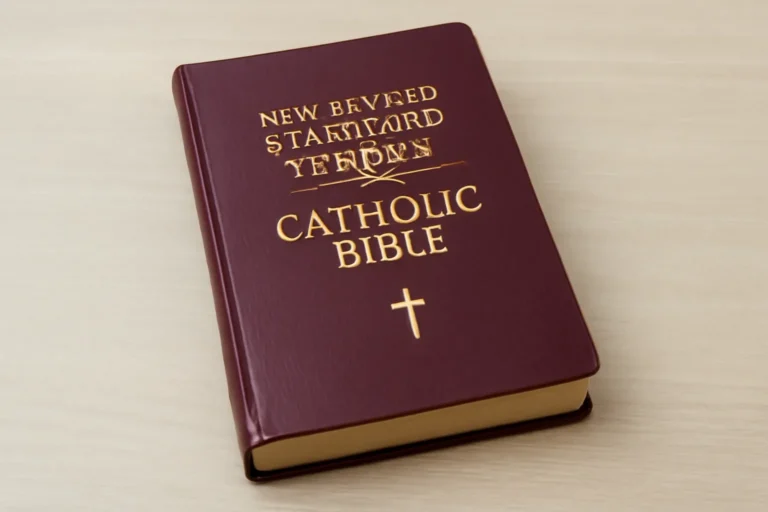
A central difference between the Protestant Bible and the Catholic Bible is the status of the deuterocanonical books. Catholics include Tobit, Judith, Wisdom, Sirach (Ecclesiasticus), Baruch, and 1–2 Maccabees, along with additional additions to Esther and Daniel. Protestants typically do not count these as part of the canonical text, though some study editions provide them in a separate section called the Apocrypha. This distinction was one of the practical outcomes of the Reformation’s emphasis on returning to Hebrew and early Christian sources for the canon.
Differences with Orthodox canons
The Eastern Orthodox Church includes a broader set of writings in its biblical canon. The Orthodox Bible often contains more books in the Old Testament than the Protestant edition, sometimes alongside variations in the order and grouping of the material. In practice, readers who encounter different canons should recognize that the Protestant Bible reflects a particular historic and theological decision within Western Christianity.
Translations and editions: choosing a Protestant Bible for reading and study
Popular translations
King James Version (KJV) — Known for its majestic early modern English and lasting literary influence; prized for tradition and memorability.
New International Version (NIV) — Balanced in readability and accuracy, widely used in churches and study groups.
English Standard Version (ESV) — A more literal, word-for-word translation with precise phrasing suitable for in-depth study.
New American Standard Bible (NASB) — Highly literal and precise, favored by readers who value close adherence to the original languages.
New Revised Standard Version (NRSV) — Scholarly in tone, inclusive language, and common in academic settings and ecumenical contexts.
New Living Translation (NLT) — Readable and contemporary, helpful for devotional reading and outreach contexts.
Translation philosophies
Translations typically fall along a spectrum from word-for-word (formal equivalence) to thought-for-thought (dynamic equivalence) with many versions offering a blend. When selecting a Protestant Bible, readers may consider their goals: formal editions suit close study and quotation, while dynamic editions support accessible reading in personal devotion or youth ministry.
Digital and print formats
Today’s readers can access the Protestant Bible in print, as a digital app, or through online platforms that offer cross-references, search capabilities, and study aids. Some study editions include extensive notes, maps, character timelines, and concordances, which can be especially helpful for newcomers or those studying faithfully with a group. When choosing a digital edition, look for features such as strong concordances, robust cross-references, and reliable tagging of sections like poetry, prophecy, and epistles.
Structure and layout of the Protestant Bible
Basic divisions
The typical layout features two main halves: the Old Testament and the New Testament. Within those sections, books are grouped by genre and purpose. The Old Testament covers creation to the intertestamental period, while the New Testament centers on the coming, life, and impact of Jesus, followed by the church’s mission and conclusion.
Major subcategories in the Old Testament
Law (Pentateuch): Genesis, Exodus, Leviticus, Numbers, Deuteronomy
Historical Books: Joshua through Esther
Wisdom and Poetry: Job, Psalms, Proverbs, Ecclesiastes, Song of Songs
Major and Minor Prophets: Isaiah through Malachi
Major subcategories in the New Testament
Gospels: Matthew, Mark, Luke, John
Acts of the Apostles
Epistles (Letters): Paul’s letters and others to various churches and individuals
Apocalypse: Revelation
How to study the Protestant Bible: approaches and tools
A practical way to begin is to follow a reading plan that covers both Testaments over a year or two. Devotional approaches often pair daily readings with a brief reflection, allowing time to notice themes, promises, and obligations. The aim is not only to read but to understand how the texts relate to faith, life, and worship within a community of believers.
Inductive Bible study
A widely used method is the inductive approach: observe the text, interpret its meaning, and apply it to life. This framework helps readers move from wording to understanding and then to practical change. Key steps include asking questions about context, audience, and purpose; identifying repeated words or motifs; and testing interpretations against the broader witness of Scripture.
Study aids and resources
Tools such as study Bibles, commentaries, lexicons, and concordances can be invaluable. A study Bible often includes notes explaining cultural background, historical context, and theological themes. A concordance helps locate where a word or concept appears across the Protestant Bible, and a reliable commentary series provides scholarly insights and different interpretive angles.
Cross-referencing and thematic study
Cross-references connect related passages scattered across different books, enabling readers to trace themes—such as covenant, salvation, or faith—as they unfold across the whole canon. Thematic study can illuminate how the Gospels relate to the letters of the apostles, or how prophetic writings anticipate and clarify New Testament revelation. Proportionate attention to both Testaments enriches understanding of the proclamation of the gospel.
Practical guidance for individuals and communities
Choosing a translation for personal use
When choosing a translation for daily reading, consider readability, accuracy, and the audience. For classroom use or public preaching, some communities prefer a more formal translation, while others favor a more contemporary, easy-to-understand version. The key is consistency within a study area and clarity for participants.
Using a Protestant Bible in group settings
In Bible study groups, the Protestant Bible serves as the foundation for shared exploration of God’s Word. Leaders often prepare questions that encourage participation, invite diverse insights, and connect ancient texts to present-day life. Respect for different interpretations coexists with the shared commitment to the gospel message and the authority of Scripture.
Devotional practice and worship
Beyond study, reading from a Protestant Bible can support personal worship and corporate liturgy. The psalms and prophetic writings, for instance, find place in prayers and songs, while the New Testament letters inform ethical living and community discipline. The integration of scripture, prayer, and song is a common pattern in many Protestant traditions.
Here are concise definitions of terms often used when discussing the Bible Protestant and its context:
Canon — the collection of books recognized as inspired Scripture by a Christian community.
Deuterocanonical — a term used for books considered canonical by Catholics and Orthodox Christians but not part of the Protestant Bible.
Apocrypha — another term for these deuterocanonical writings, often placed in a separate section in Protestant editions for study.
Sol a Scriptura — the theological doctrine that Scripture alone is the ultimate authority for faith and practice.
Gospels — the four books that recount the life, teaching, death, and resurrection of Jesus (Matthew, Mark, Luke, John).
Epistles — letters written to churches or individuals that explain Christian doctrine and practice (e.g., Romans, Corinthians, Galatians).
Exegesis — critical interpretation of a biblical text to discover its original meaning and relevance.
Hermeneutics — the theory and methodology of biblical interpretation.
Common questions about the Protestant Bible
What distinguishes the Protestant Bible from Catholic and Orthodox editions?
The primary distinguishing feature is the canon—the set of books considered authoritative. The Protestant Bible typically excludes the deuterocanonical books found in Catholic and Orthodox Bibles, or presents them only as auxiliary material. This difference reflects historical and theological debates that intensified during the Reformation and continue to shape how communities read the scriptures today.
Why do translations vary so much?
Translations vary because scholars translate from ancient languages (primarily Hebrew, Aramaic, and Greek) using different manuscript bases and translation philosophies. Stronger emphasis on word-for-word accuracy yields formal translations; greater emphasis on readability yields dynamic translations. Most readers benefit from consulting more than one version to capture both precise wording and overall sense.
How should a beginner approach the Bible Protestant?
A practical path is to start with a readable, reliable translation, join a reading plan, and use a study Bible or commentary for context. As confidence grows, readers can expand to parallel translations, thematic studies, and cross-referencing to deepen understanding. Consistent practice—paired with prayerful reflection and community discussion—helps cultivate a durable grasp of the text and its implications for life.
Conclusion: engaging with the Protestant Bible today
The Bible Protestant tradition offers a robust corpus of sacred writings that have shaped millions of believers across centuries. Understanding its canonical boundaries, its historical development, and its practical use in devotion and study can empower readers to approach Scripture with both reverence and curiosity. Whether you are drawn to the classic cadence of the KJV, the precise wording of the ESV, or the accessible flow of the NIV, the core aim remains the same: to encounter God through God’s Word, to learn how to live in faithful obedience, and to share a message of hope that has sustained communities for generations. This guide highlights the essential features of the Protestant Bible, and invites you to explore its depths with discernment, humility, and a desire for transformation.





Leave a Reply