Baptism Passages: Bible Verses, Readings, and Reflections
Baptism is a central act and symbol in Christian faith, inviting readers and worshippers to
remember a moment of turning toward God, a public confession, and a divine invitation into
new life. The passages below gather a wide range of scriptural voices—from the gospel
narratives that record Jesus’ baptism to the apostolic witness that describes how new believers
enter the community of faith through immersion and confession. This article presents notable
verses, readings suitable for study or church events, and reflections that probe what these
texts say about identity, forgiveness, and the mission of the church. The aim is to offer a
broad and nuanced sense of baptism’s language in the Bible, with variations in wording and tone
that reflect different theological emphases while remaining anchored in the core themes of the
rite.
Overview: What Baptism Signifies
Across biblical books, baptism is described as a meaningful transition that carries
several interlocking meanings. In brief, it is a:
public profession of repentance and faith,
washing away of sin and a step toward forgiveness,
identification with Christ in his death and resurrection,
entry into the people of God—the church and its mission,
symbol of new birth and the turning of life toward the path of righteousness.
The specific language used in various passages emphasizes one or more of these facets.
Some verses foreground the immediate experience of forgiveness, others highlight the act
of baptism as participation in Christ’s death and resurrection, and still others stress
the call to live in obedience after receiving the Spirit. Reading these passages together
helps a reader appreciate baptism as a multi-faceted rite that speaks to history, faith,
and everyday living.
Gospel Accounts: The Baptism of Jesus and the Baptismal Mandate
Matthew 3:13-17: Jesus’ Baptism and the Divine Affirmation
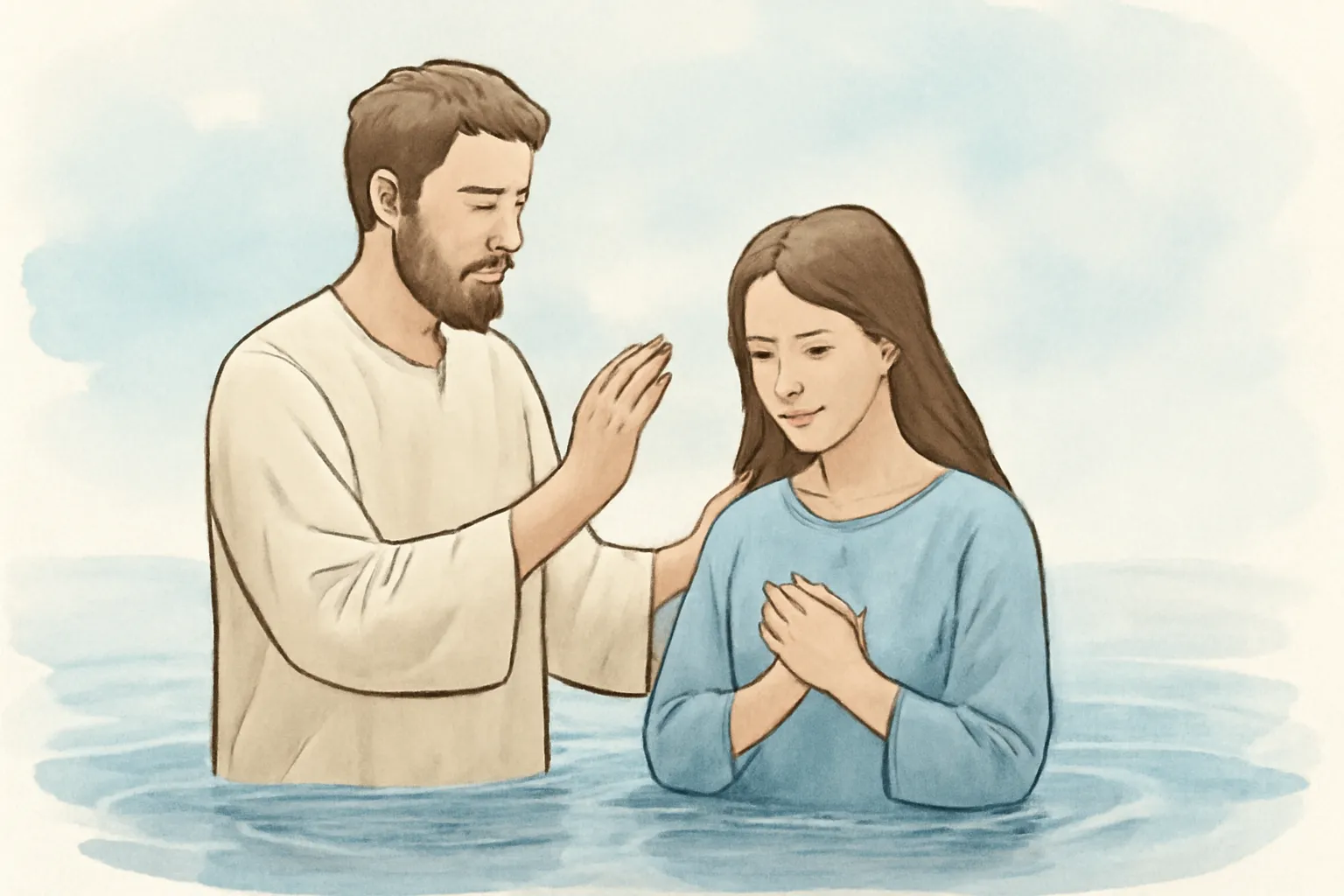
In Matthew’s gospel, the baptism of Jesus is a key moment when the Son is publicly
identified and the Spirit descends like a dove. The passage presents a pattern that
undergirds Christian baptism: humble response to God’s initiative,
a voice from heaven affirming Jesus, and an anointing with the Spirit for ministry.
“Then Jesus came from Galilee to the Jordan to be baptized by John. But John tried to deter him,
saying, ‘I need to be baptized by you, and do you come to me?’ Jesus replied, ‘Let it be so now;
it is proper for us to do this to fulfill all righteousness.’ Then John consented. As soon as Jesus
was baptized, he went up out of the water. At that moment heaven was opened, and he saw the Spirit
of God descending like a dove and alighting on him. And a voice from heaven said, ‘This is my Son,
whom I love; with him I am well pleased.’”
This account invites readers to see baptism not merely as a personal decision but as a
moment that aligns human action with God’s purpose. It also foreshadows the public
ministry that follows and the Spirit’s empowering work in the life of Jesus and, by
extension, in the life of every believer who seeks to follow him.
Mark 1:9-11 and Luke 3:21-22: Shared Beatitude in the Jordan
Parallel passages in Mark and Luke recount the same divine endorsement
of Jesus at his baptism: the heavens open, the Spirit descends, and the Father
proclaims approval. These texts emphasize the unity of the gospel message across
traditions and show baptism as the moment where Jesus’ identity is publicly
revealed and empowered for mission.
John 3:5 and John 1:29-34: Spiritual Rebirth and the Messiah’s Testimony
The Johannine lines connect baptism to the broader theme of spiritual birth and
recognition of the bringing of God’s Kingdom. While John’s gospel often emphasizes
belief and testimony, some readers notice a continuity with baptism as a sign that
one enters a living relationship with Christ. In this stream, baptism is a doorway
into transformation—an outward sign of an inward turning toward God.
Reading these gospel passages together highlights several key ideas:
Jesus’ baptism inaugurates his public mission and serves as a model for believers.
God’s approval is pronounced from heaven, signaling that baptism is a move
within God’s redemptive plan.
The Spirit’s presence at the moment of baptism points to the empowering work that
follows for those who trust in Christ.
Acts and the Early Church: Baptism as Response to the Gospel
The Book of Acts contains several accounts of baptism in connection with gospel reception,
conversion, and the formation of communities. These passages show baptism as a public
confession and a decisive step into new life in Christ.
Acts 2:38: Repent and Be Baptized for the Forgiveness of Sins
This is one of the most cited baptism passages in Christian preaching. In the speech
attributed to Peter on the day of Pentecost, the call to repentance is coupled with
baptism in the name of Jesus Christ "for the remission of sins." The verse culminates
in the promise of receiving the Holy Spirit.
“Peter replied, ‘Repent and be baptized, every one of you, in the name of Jesus Christ
for the forgiveness of your sins. And you will receive the gift of the Holy Spirit.’”
Key themes in Acts 2:38 include repentance, the cleansing of sin, and the
impartation of divine presence through the Spirit. The passage frames baptism as a
transformative act within a corporate encounter with God.
Acts 8:36-39: The Ethiopian Official’s Baptism Outdoors
In this account, Philip explains the good news to an Ethiopian official and then
provides baptism upon the believer’s response. The movement from inquiry to baptism
demonstrates that faith in the gospel naturally leads to baptism as a next step.
“As they traveled along the road, they came to some water and the official said, ‘Look,
here is water. What can stand in the way of my being baptized?’ And he ordered the
chariot to stop. Both Philip and the official went down into the water and Philip
baptized him.”
This narrative emphasizes immediacy and accessibility: baptism is available where faith
is present, even in a desert roadside encounter. It also highlights the communal aspect
—an ongoing reading of scripture and obedient response within a faith community.
Acts 10:44-48: Cornelius and Household Receive the Spirit then Are Baptized
The conversion of Cornelius demonstrates that Gentile believers could receive the Spirit
prior to baptism, yet baptism follows as a visible profession of faith. The Holy Spirit’s
outpouring among Gentiles breaks a longstanding boundary and signals the universal scope
of the gospel.
“While Peter was still speaking these words, the Holy Spirit came on all who heard the
message. The believers who belonged to the circumcision party were astonished that the gift
of the Holy Spirit had been poured out even on Gentiles. Then Peter said, ‘Surely no one can
stand in the way of their being baptized with water. They have received the Holy Spirit just
as we have.’ So he ordered that they be baptized in the name of Jesus Christ.”
From this story, readers can reflect on how baptism functions as a visible sign of faith
that accompanies the inward work of God: cleansing, inclusion, and empowerment for the
mission.
Acts 16:30-34: The Philippian Jailer's Household
In this domestic and transformative moment, the jailer asks, “What must I do to be saved?”
The response is succinct and practical: believe in the Lord Jesus, and be baptized. The
story ends with the family’s faith and baptism, highlighting the church’s emphasis on
household faith and swift obedience.
“They spoke the word of the Lord to him and to all the others in his house. At that hour of
the night the jailer brought them into his house and set a meal before them; he and his
whole family rejoiced because they had come to believe in God.”
Adoption of faith and baptism as a life-long pattern is visible here: baptism accompanies
belief and becomes a shared moment of welcome into the community of Christ.
Pauline Teachings: Death, Burial, and Resurrection in Baptism
The letters attributed to the Apostle Paul develop baptism from a theological angle:
it is a participation in Christ’s death and resurrection, a symbol of spiritual
cleansing, and a sign of the believer’s new identity in the body of Christ.
Romans 6:3-4: The Union with Christ in Baptism
Romans 6 presents baptism as more than a ritual; it is an identification with Christ’s
death, burial, and resurrection. Through baptism, believers are-turned toward living
in newness of life; the old self is symbolically buried and a renewed life is raised with
Christ.
“Or don’t you know that all of us who were baptized into Christ Jesus were baptized into his death?
We were therefore buried with him through baptism into death in order that, just as Christ was raised
from the dead through the glory of the Father, we too may live a new life.”
The imagery of burial and resurrection is a powerful frame for understanding baptism as a
life-transforming event, not simply a ceremonial act.
Romans 6:3-11 and Colossians 2:12: Baptism as burial with Christ and the veiling of sin
Across Romans and Colossians, baptism is linked to a decisive turning from sin and
from an old way of life. In Colossians, the act of being buried with Christ through baptism
and being raised with him is described as a spiritual circumcision—an inward cleansing
accomplished by faith and God’s power.
“For you were buried with Christ when you were baptized. And with him you were raised to
new life because you trusted the mighty power of God, who raised Christ from the dead.”
Galatians 3:27 and 1 Corinthians 12:13: Clothing in Christ and One Spirit
Galatians 3:27 speaks of putting on Christ through baptism, a metaphor for new clothed
identity. In 1 Corinthians 12:13, Paul emphasizes that all believers are incorporated into
one body by one Spirit through baptism, highlighting both unity and diversity within the
church.
“For all of you who were baptized into Christ have clothed yourselves with Christ.”
“We were all baptized by one Spirit so as to form one body—whether Jews or Gentiles, slave or
free—and we were all given the one Spirit to drink.”
Colossians 2:12 and Ephesians 4:5: Spiritual Removal and One Baptism
Colossians 2:12 links baptism to a spiritual washing—a removal of the old self and
the putting on of a new life. Ephesians 4:5 emphasizes the doctrinal unity of “one baptism”
within the church, underscoring that the rite marks membership in the single, coherent
body of Christ.
“Having been buried with him in baptism, in which you were also raised with him through
your faith in the working of God, who raised him from the dead.”
1 Peter 3:21 and Titus 3:5-7: Baptism’s Call for Conscience and God’s Grace
1 Peter 3:21 connects baptism with appeal to God for a clear conscience, framing the act as
more than a ritual; it is a response of a faithful conscience. Titus 3:5-7 highlights the
saving work of God—salvation not by deeds of righteousness but by mercy and the washing of
regeneration and renewal by the Holy Spirit.
“This water symbolizes baptism that now saves you also—not the removal of dirt from the body
but the pledge of a clear conscience toward God. It saves you by the resurrection of Jesus Christ.”
1 Peter 3:21 and the Wider Canon: A Broad Narrative
The letter of Peter, in particular, weaves baptism into a larger story of suffering, hope,
and new life. The motif of a good conscience before God, enabled by faith and the Spirit,
appears across the Pauline and Petrine writings, offering a durable framework for
understanding baptism as a spiritual and communal turning toward God’s future.
Readings for Worship and Personal Devotion
When a church or a family selects passages about baptism for study, pre-baptism classes,
or private devotion, they often combine verses from the Gospels, Acts, and the letters to
present a holistic portrait. The following lists provide sample combinations that can be
used for meditative reading, sermon preparation, or catechetical material.
Core Readings: Core Verses About Baptism
Matthew 3:13-17—Jesus’ baptism and divine affirmation.
Acts 2:38—Call to repentance and baptism for forgiveness and Spirit.
Romans 6:3-4—Identification with Christ’s death and resurrection.
Colossians 2:12—Buried with Christ and raised through faith.
1 Peter 3:21—Baptism as an appeal to God for a clear conscience.
Reading Sets for Different Focuses
Identity in Christ set: Galatians 3:27; Romans 6:4; Colossians 2:12.
Forgiveness and Spirit set: Acts 2:38; Titus 3:5-7; 1 Peter 3:21.
Mission and Community set: Matthew 28:19-20; Acts 2:41; 1 Corinthians 12:13.
Jesus as Model set: Matthew 3:16-17; Mark 1:9-11; Luke 3:21-22.
Passages for Intercession or Reflection
John 3:5 (rebirth through water and Spirit) for themes of renewal.
Romans 6:3-11 for the death-and-resurrection motif in personal discipleship.
1 Corinthians 12:13 to reflect on unity and diversity within the body of Christ.
1 Peter 3:21 to explore conscience, faith, and the hope of salvation.
Devotional Verses by Theme
Forgiveness: Acts 2:38; 1 Peter 3:21
Identity: Romans 6:4; Galatians 3:27
New Life: Romans 6:4; Colossians 2:12
Unity: 1 Corinthians 12:13; Ephesians 4:5
Reflections: Theological and Practical Angles on Baptism
The diversity of baptism passages across narrative, didactic, and missionary texts invites
careful reflection on several practical questions. How does baptism relate to faith and works?
What does it mean to be baptized into a “body” or into Christ personally? How should communities
approach infant baptism or believer’s baptism in light of these texts? While traditions differ
on some specifics, the biblical material generally supports a view of baptism as a distinct,
grace-filled act that awakens faith, signals membership in the people of God, and inaugurates
a life of discipleship.
Questions for Personal Study or Group Discussion
How does the imagery of death, burial, and resurrection shape your understanding of baptism?
What does it mean that baptism is connected to the forgiveness of sins and the gift of the Spirit?
In what ways does baptism create a sense of solidarity with the church’s mission in the world?
How do different biblical authors present the relationship between faith, baptism, and obedience?
Historical and Cultural Considerations
Across the early churches, baptism occurred in varied settings—rivers, streams,
or built basins—and often followed immediate proclamation of the gospel. The
process of catechesis, the expectation of repentance, and the witnesses’ roles
all shaped how baptism functioned as both a personal conversion and a communal
rite. Reading Acts alongside Romans and Galatians helps readers see how baptism
matured from a radical turning to a lifelong identification with Christ and his
people.
Variations in Wording: How Baptism Is Described Across Translations
Because the Bible has been translated into many languages and cultures, the exact
wording of baptism passages varies. Some English translations emphasize
“for the forgiveness of sins,” others say “for the remission of sins,” and
others still phrase it as “in the name of Jesus Christ” or “in the name of the
Father and of the Son and of the Holy Spirit” in line with different textual
traditions. The core themes remain recognizable:
Belief precedes baptism in most accounts, though some early acts
of baptism place emphasis on confession and reception of the Spirit.
Forgiveness and cleansing are repeatedly linked to the act of baptism.
Union with Christ and participation in his death and resurrection are central
motifs in Paul’s letters.
One Spirit, many gifts—the baptismal experience is a doorway into the
communal welcome of the church and the variety of spiritual gifts.
From a study perspective, exploring multiple translations—such as the ESV, NRSV, NIV,
and NJB—can illuminate how language shapes interpretation while preserving the
theological core. Readers may notice nuances in how “forgiveness of sins” is
expressed or how the Spirit’s presence is described in different textual edges.
Practical Guidance: Using these Passages in Study, Worship, and Teaching
Create a reading plan that cycles through gospel accounts, Acts, and Pauline letters to
see baptism from multiple perspectives. For example: week 1—Gospels; week 2—Acts;
week 3—Romans and Colossians; week 4—1 Peter and Galatians.
Use paired readings that juxtapose a narrative account (e.g., Matthew 3) with a Pauline reflection (e.g., Romans 6).
Incorporate reflection prompts such as “What does it mean to be buried with Christ for you today?” or
“How does baptism call you to live in the Spirit’s power this week?”
Plan liturgical moments around baptism dates or baptism anniversaries with a brief reading,
a short prayer, and a song that echoes the themes of washing, new life, and unity in Christ.
Discuss diversity with care—recognize how different traditions practice baptism (immersion,
sprinkling, infant versus believer’s baptism) while focusing on the scriptural vision of the rite's
significance.
In addition to the above, consider using resource sheets that collect the verses with
cross-references to related themes (for example, “water imagery,” “forgiveness,”
“new creation,” and “one body”). Such materials can support sermons, Bible studies,
catechesis, and devotional groups. The aim is to help readers connect the biblical
material to daily discipleship and to the church’s shared mission in the world.
Final Reflections: Baptism as a Living Message
The biblical baptism passages offer more than a rule or a ritual; they present a living
message about how God invites people into his family, how sins are forgiven, how life is
reoriented, and how communities are formed to participate in God’s mission. Across
the Gospels, Acts, and the epistles, baptism emerges as a faithful response to God’s
initiative—an outward sign that accompanies an inward work of the Spirit.
Key takeaways for readers and worshippers include:
Baptism centers on Christ—it is modeled by Jesus and grounded in the gospel
narrative, inviting believers to follow him in faith and obedience.
Forgiveness and new life—the rite is closely associated with cleansing, renewal,
and empowerment by the Spirit for living out the resurrection life.
Community and mission—baptism marks entry into the church; it
strengthens identity while widening the circle of ministry and witness to the world.
Whether you read these passages for personal devotion, classroom discussion, or liturgical
planning, the breadth of wording and imagery in the Bible provides a rich field for
reflection. The varied voices—narrative, instructional, and exhortative—invite a
holistic understanding of baptism as a gift, a responsibility, and a source of hope
for those who seek to live in faith toward God and love toward others.
Glossary: Quick Terms to Know
Baptism — the rite of immersion or sprinkling that signifies inclusion into the faith community and the believer’s identification with Christ’s death and resurrection.
Remission/forgiveness of sins — the release from guilt and the washing away of sin as part of baptism in several biblical accounts.
Spirit baptism — the reception or coming of the Holy Spirit connected with the baptismal act in several New Testament texts.
Union with Christ — the believer’s association with Jesus in his death and resurrection through baptism and faith.
One baptism — a phrase in Paul’s letters underscoring the unity of the church around the single, defining rite of baptism.
Closing Thoughts: Embracing the Richness of Baptism Passages
The Bible offers a tapestry of baptism passages that, taken together, illuminate a
coherent vision: God acts first in welcoming and empowering, Christ calls people to
respond in faith and repentance, and the church receives believers through baptism as an
ongoing formation into Christ’s body in the world. By reading the gospel accounts of Jesus’
baptism, the early church’s testimony in Acts, and Paul’s theological reflections on death,
burial, and resurrection, readers gain a robust sense of what baptism means in both
individual faith and communal life.
If you are preparing for baptism, planning a study series, or seeking devotional material,
let these passages guide your steps. Reflect on the dynamic language of cleansing, new
birth, and mission. Consider how baptism is not only a personal turning but also a
public welcome into a story that stretches across generations—from the Jordan River to
the streets of contemporary churches and beyond.






Leave a Reply