What Does the Bible Say About the End Times? A Clear Biblical Explanation
What Does the Bible Say About the End Times? A Clear Biblical Explanation
In this article, we explore what does the Bible say about the end times? and offer a clear biblical explanation that centers on the person and work of Jesus, the hope of the resurrection, and the ultimate renewal of all things. We will survey both the Old and New Testaments, clarify common themes, address major interpretive perspectives, and highlight practical implications for believers today. The topic is commonly labeled end-times eschatology, and while many readers seek precise timelines, the biblical message emphasizes readiness, faithfulness, and trust in God’s promised restoration rather than predictive certainty.
The phrase end times or last things refers to the period and events that precede the full realization of God’s kingdom in its fullest sense. In biblical language, this includes the return of Christ, the resurrection of the dead, the final judgment, the consummation of salvation, and the creation of a new heavens and a new earth. Across the canon, the Bible presents several enduring motifs that recur in different genres (prophecy, apocalypse, epistle, gospel narrative):
The anticipated return of Jesus Christ in glory.
The resurrection of both believers and nonbelievers, followed by a final judgment.
The defeat of evil and the establishment of God’s enduring Kingdom or reign.
The promise of a new creation, often summarized as new heavens and a new earth.
Instructions for faithful living in light of future realities, rather than predicting exact dates.
When readers ask what does the Bible say about the end times?, they are often seeking twofold assurance: first, that God remains sovereign amid suffering and chaos, and second, that history is moving toward a divinely guided resolution. The biblical story does not merely recite a sequence of dramatic events; it invites trust in God’s purposes, calls for holy living today, and points forward to the ultimate renewal of all things in Christ.
Old Testament Foundations for End-Time Expectation
Prophetic Foreshadowing and the Day of the Lord
Long before Jesus walked the earth, prophets laid groundwork that shapes New Testament understandings of the end times. The concept of the Day of the Lord appears repeatedly in biblical prophecy, signaling a decisive act of God that brings judgment on evil and restoration for the faithful. Key themes include light breaking into darkness, justice for the humble, and the vindication of the righteous. Although the exact timing is not disclosed, the prophets insist that God will intervene in history to accomplish his purposes and reveal his glory among the nations.
Isaiah points readers toward a future where God’s holiness and salvation come to the nations, culminating in a new exodus and the universal worship of the God of Israel.
Daniel offers visions that frame earthly kingdoms within God’s sovereignty, including the coming of a decisive divine intervention that culminates in the establishment of an eternal kingdom.
Joel and other minor prophets speak in vivid language about cosmic signs, darkness, and the outpouring of God’s Spirit, which in the New Testament language becomes a marker of fulfilled fulfillment through Christ.
These prophetic voices establish a sense in which the end times are not a purely private event but a prologue to God’s plan for all creation. They prepare the reader to expect not merely personal comfort but cosmic transformation, where justice is rendered and God dwells with his people.
New Testament Teachings on the End Times
Jesus’ Olivet Discourse: Foretelling the End
In the Gospels, Jesus speaks about the end times with both clarity and paradox. The Olivet Discourse (found in Matthew 24-25, Mark 13, and Luke 21) covers signs that will accompany the period before his return, including wars, natural disasters, persecution, and the spreading of the gospel to all nations. Importantly, Jesus emphasizes:
That false prophets will arise and mislead many, so discernment is essential.
That wars and rumors of wars do not signal the immediate end but the beginning of birth pains.
The call to watchfulness and faithful endurance, because no one knows the exact day or hour of his return.
That when the Son of Man returns, he will judge the nations and gather his people; a time of reckoning and renewal will follow.
Jesus’ teaching stresses readiness and obedience rather than a precise timetable. It invites readers to trust in God’s sovereignty while participating in the mission of the church—making disciples, proclaiming the gospel, and living in holiness as people who anticipate Christ’s return.
The Apostolic Writings: Exhortations About Last Things
The letters of the Apostles build on Jesus’ teaching, offering pastoral guidance about how to live in light of the end times. Notable sections include:
1 Thessalonians 4–5: Paul reassures believers about those who die in Christ, describes the return of the Lord, and exhorts them to live awake, sober, and ready, preserving moral purity and readiness at all times.
2 Thessalonians 2: Paul addresses misconceptions about the timing of the Day of the Lord, clarifying that certain events (like the revelation of the man of lawlessness) must occur before Christ’s return, but that the exact moment remains undisclosed.
Other Pauline passages discuss resurrection, judgment, and the ongoing call to worship, holiness, and steadfast faith, even amid trials and persecution.
The New Testament therefore presents end-time expectations as both future hope and present responsibility. The church is called to endure, proclaim the gospel, care for the vulnerable, and live in a way that reflects the coming kingdom, all while awaiting the return of Christ with confident faith.
Revelation: Apocalyptic Vision and the Final Conflict
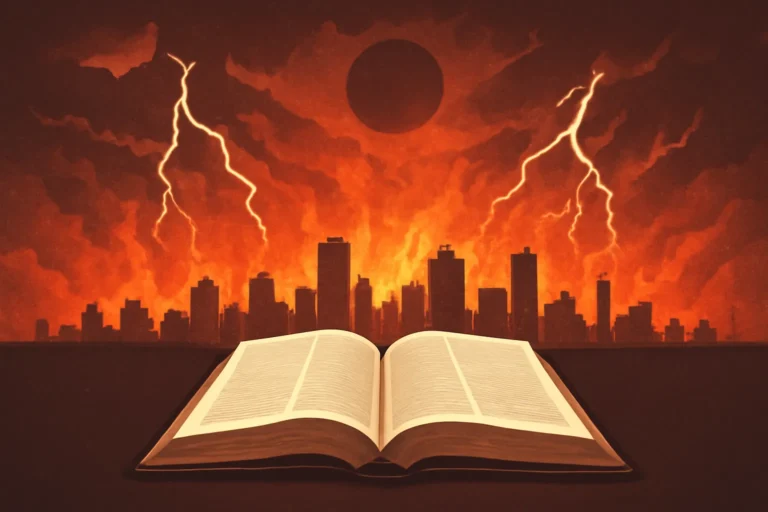
The final book of the Bible, Revelation, contains a distinctive and highly symbolic portrayal of last things. While interpretive methods vary, the central arc remains consistent: the cosmic battle between good and evil leads to the ultimate triumph of God, mercy is extended, judgment is executed justly, and creation is renewed. Major motifs include:
The unveiling of malevolent powers and their final defeat.
The return of Christ, the judgment of the dead, and the establishment of a redeemed cosmos.
The promise of a new heavens and a new earth where God dwells with his people, and where suffering and death are no more.
In Revelation, the imagery is vivid—seals, trumpets, bowls, and a cosmic drama—that points readers toward spiritual realities behind historical events. While some readers seek literal timelines, many scholars emphasize that the text uses symbolic language to communicate timeless truths about Jesus, justice, mercy, and the ultimate restoration of all things in God’s kingdom.
Core Eschatological Themes Across the Bible
Across both Testaments, several essential themes recur whenever the Bible speaks about the end times. These themes anchor readers in a coherent biblical vision, even when details differ across books or interpretive traditions.
Christ’s return in glory is the central future event that will complete God’s redemptive work and vindicate his people.
The resurrection of the dead, involving both the righteous and the unrighteous, is described as a decisive turning point in human history.
The final judgment will sort humanity based on faith in Christ and deeds that reflect that faith, resulting in eternal reward or punishment.
The Kingdom of God is both a present reality and a future consummation—the reign of God established in Christ, growing in the church, and realized fully at the end of the age.
The creation is renewed—the new heavens and new earth symbolize the reversal of the curse and the eternal dwelling of God with his people.
Meanwhile, the defeat of evil culminates in the eradication of death, pain, and sin.
Readers are encouraged to live in light of the age to come, embodying faith, hope, and love as they await Christ’s return.
Different Theological Perspectives on the End Times
Major Millennial and Rapture Frameworks
Within Christian history, several credible views have framed the sequence and nature of end-time events. While theologians disagree on specifics, they agree on the central Christian confession: Jesus will return, judge, and restore all things. The major frameworks include:
Premillennialism: Christ returns before (pre-) a literal thousand-year reign. This view often correlates with a focus on a future, visible Millennium and a period of tribulation, followed by Christ’s return to establish his kingdom.
Amillennialism: There is no literal thousand-year reign to be awaited in the future; instead, the millennium is understood symbolically as the present reign of Christ from the resurrection onward, with the end-time drama culminating in the final judgment and the new creation.
Postmillennialism: The gospel progressively ushers in a golden age or era of righteousness before Christ’s return, culminating in a final event of Christ’s return at the end of history.
Rapture and Tribulation Variations
Among Protestant and Catholic theologians, there are differing interpretations about when and how the rapture occurs (if at all) relative to the great tribulation and the return of Christ. Some frameworks emphasize a pre-tribulation rapture as a separate event; others teach a mid-tribulation or post-tribulation view, or deny a distinct rapture altogether, interpreting the catching up of believers as a symbolic or ongoing spiritual reality rather than a discrete future moment. Regardless of the specifics, most traditions agree on these core convictions about the end:
Jesus will return visibly and bodily in glory.
There will be a resurrection and a final judgment.
God will restore all things and bring about a new creation.
For readers seeking what does the Bible say about the end times, it helps to recognize the diversity of reputable positions while focusing on shared convictions: the return of Christ, the resurrection, the judgment, and the transformation of creation in God’s kingdom.
Scripture Passages at a Glance: Key References for End-Time Discussion
To ground the discussion in scripture, here is a concise guide to several pivotal passages and how they contribute to the biblical picture of last things. This is not an exhaustive catalog, but it highlights foundational texts that readers commonly consult when studying end-time topics.
Daniel 7–12: Apocalyptic visions that emphasize divine sovereignty over earthly kingdoms and the arrival of God’s eternal rule.
Isaiah 65–66 and related prophecies about the new creation and the reunification of heaven and earth.
Joel 2–3 and other prophetic writings describing signs, the Spirit’s outpouring, and the day of the Lord.
Matthew 24–25 (Olivet Discourse): Jesus’ teaching on signs, watchfulness, and the ethical implications of his return.
1 Thessalonians 4–5: Comfort about the dead in Christ, the rapture (in some traditions), and exhortations to live holy lives.
2 Thessalonians 2: Clarifications about the timing of the Day of the Lord and the rise of deception.
1 Corinthians 15 and 2 Corinthians 4–5: Resurrection hope, mortality-to-immortality, and the judgment seat of Christ for believers.
Revelation 19–21: The return of Christ, the defeat of evil, and the vision of the new creation.
Readers should approach these passages with humility, recognizing literary genres (prophecy, apocalypse, epistle, gospel narrative), and acknowledging that numbers and images often carry symbolic weight as well as historical memory. The throughline is consistent: God’s plan for salvation moves toward restoration, justice, and everlasting life with him.
Practical Implications: How Belief About the End Times Guides Daily Life
Even though eschatology deals with future events, its implications are deeply practical for how Christians live right now. The biblical end-times vision invites believers into a way of life shaped by expectancy, ethics, and mission.
Watchfulness and spiritual readiness: Since the exact time of Christ’s return is not announced, believers are urged to live in a state of continual readiness, remaining faithful in prayer, worship, and obedience.
Hope amid suffering: The end-time narrative provides hope that suffering and injustice are not the final word; God will set all things right in due time, which sustains perseverance.
Holiness and mission: Practical holiness—loving God and neighbor, pursuing justice, and sharing the gospel—takes on greater urgency when readers hold to the reality of Christ’s return and the judgment to come.
Resurrection-centered faith: The belief in the bodily resurrection shapes ethics, identity, and the value of human life, since all people bear divine image and face ultimate accountability.
Hopeful interpretation of suffering: When believers encounter trials, the end-times narrative reframes hardship as temporary, pointing toward the eternal weight of glory that follows.
Common Questions and Clarifications About the End Times
Below are some frequent questions people ask when they study biblical end-time topics, along with concise clarifications grounded in Scripture and traditional Christian interpretation. This section is designed to help readers navigate common concerns without getting distracted by speculative timelines.
Is predicting the exact date of Jesus’ return biblical? No. The Bible repeatedly warns that the exact time is known only to God the Father. Jesus teaches vigilance and preparedness, not date-setting.
Do all Christians agree on when the tribulation occurs? No. There are diverse but respectable positions ranging from pre- to mid- to post-tribulation frameworks, with amillennial and postmillennial perspectives offering different readings of biblical symbolism. The core is that believers should remain faithful and hopeful regardless of the timing.
What is the relationship between Israel and end-time prophecy? The Bible links God’s redemptive plan for Israel with the coming of the Messiah and the fulfillment of many prophecies, but many Christians emphasize that Gentiles are grafted into the people of God through faith in Christ, and that the ultimate fulfillment of God’s promises centers on the person of Jesus and the new covenant.
What happens to nonbelievers at the end of the age? The Bible teaches a final judgment in which all people are held accountable before God. Believers are joined to Christ through faith, while those who reject him face eternal separation from God. Interpretations vary on the nature and timing of this judgment, but the moral center remains clear: accountability before the holy God.
What should we do with the biblical instruction on the end times? Focus on faithful discipleship, biblical literacy, steadfast prayer, and compassionate service, while avoiding sensationalism and date-binding. The message invites us to live as people of light, embodying righteousness in a world yearning for redemption.
Putting It All Together: A Clear Biblical Explanation
To summarize the biblical teaching about the end times in a way that is both faithful and practical, consider these essential points:
Jesus’ return is certain, but the timing is unknown. Christians are called to be ready, not to calculate dates.
The resurrection and final judgment are central to the biblical eschatology. All people will be raised and judged by the God who is just and merciful.
The Kingdom of God is both a present reality (in the church, by the Spirit) and a future culmination (the new creation under Christ's reign).
God’s people live with hope and mission. Knowing the end games should shape ethical living, joyful worship, and bold proclamation of the gospel today.
Different interpretive paths exist (premillennial, amillennial, postmillennial, and various rapture schemes), but they share a common core: Jesus will return, evil will be judged, and God will renew all things.
For readers seeking a concise takeaway, the biblical answer to what does the Bible say about the end times? is not primarily a timetable but a trajectory: God sovereignly governs history, Jesus will return in glory, the dead will be raised, the wicked will be judged, and the creation will be renewed so that God dwells with his people forever. Faithful living now—rooted in love, truth, and hope—aligns with this trajectory and prepares believers for the age to come.
Final Encouragement: Read the Bible Holistically on This Topic
End-time questions often bring a mix of curiosity and concern. The biblical author’s aim is not to satisfy curiosity about dates but to shape character and conduct today. When you read end-times passages, keep these guiding principles in view:
Let the composite witness of Scripture inform your understanding of the future rather than isolated verses.
Allow the revelation of Christ to anchor your hope, recognizing that the biblical narrative centers on Jesus as the fulfillment of God’s promises.
Balance vigilance with mercy: live awake to the signs of the times while actively serving neighbors and sharing the good news of Jesus.
Prefer humble interpretation over sensationalism. Many beliefs about end times are secondary matters; the primary matters are the gospel and discipleship.
Ultimately, the phrase What Does the Bible Say About the End Times? A Clear Biblical Explanation is answered best by a faithful reading of Scripture that foregrounds Jesus, resurrection, justice, and the creation of the new order in which righteousness dwells with God forever. This approach invites readers into both confident hope and conscientious living, reminding them that the true fulfillment of all things rests not in human schemes but in God’s sovereign and gracious plan.
Glossary of End-Time Terms for quick reference
End times or last things: The period and events surrounding the culmination of history and the coming of God’s kingdom.
Second Coming: The anticipated, visible return of Jesus Christ in glory to judge the world and renew creation.
Resurrection: The raised state of all people—believers to eternal life with God, others to judgment.
Kingdom of God: The rule and reign of God through Christ, existing both now in a spiritual sense and fully in the future consummation.
New heavens and new earth: The final creation where God dwells with humanity and all things are made right.
Tribulation: A period of trouble and testing described in various ways in prophetic literature; interpretations differ on its timing and duration.
Millennium: The anticipated thousand-year period described in Revelation 20, variously understood as literal or symbolic depending on tradition.
Rapture: A term used to describe Christ’s gathering of believers, interpreted differently across traditions; some see it as separate from Christ’s return.







Leave a Reply