What Are the 7 Spirits of God: Meaning and Biblical Significance
What Are the 7 Spirits of God: Meaning and Biblical Significance
The phrase “the seven spirits of God” appears in the New Testament with striking imagery and a long history of interpretation. For readers exploring biblical symbolism, it raises questions about how God’s Spirit can be described in multiple facets, what that means for the nature of God, and how believers should understand the Spirit’s work in the world and in the church. This article offers a thorough, devotional, and scholarly-friendly guide to the concept, its biblical foundations, and its practical implications. We will use several variations on the question, such as what is meant by the sevenfold Spirit of God, what are the manifestations of the Spirit, and how should the seven spirits shape Christian living, to provide semantic breadth while staying faithful to the biblical text.
What are the seven spirits of God? A concise starting point
In biblical terms, the expression the seven spirits of God is most directly found in the Book of Revelation, where John describes visions surrounding the throne of God. The imagery of seven lamps and seven eyes points to a fullness or completeness of divine action and presence. A related Old Testament passage in Isaiah 11:2 lists seven descriptors—often read as a sevenfold manifestation of the Spirit—that Christians have historically connected with this idea. Across the Bible, the sevenfold idea is not typically presented as seven separate divine persons; rather, it is a symbolic way of signaling the breadth, power, and purity of the Spirit’s activity in creation, revelation, and redemption. In that sense, the question can be reframed as: what are the seven manifestations or aspects of God’s Spirit revealed to humanity?
Biblical foundations: where the seven spirits appear
Revelation 4:5 and Revelation 5:6: the throne room imagery
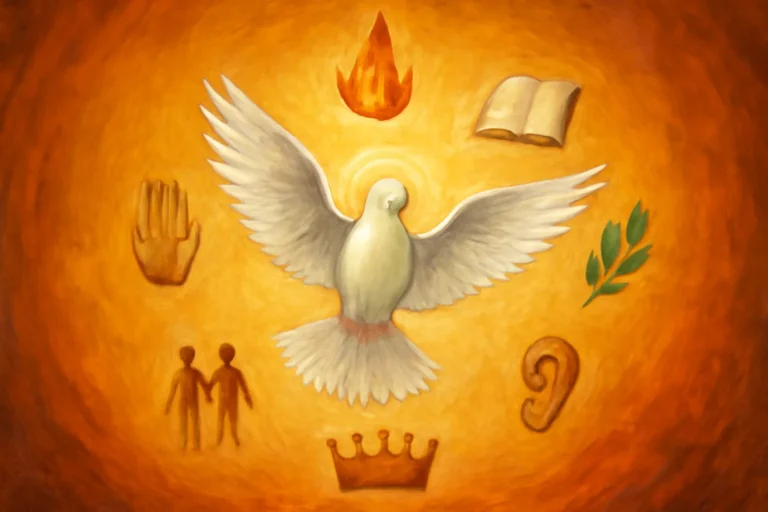
The most explicit biblical locus for the phrase is in Revelation, where the heavenly throne room is described with striking symbols. John notes that from the throne proceed “lightnings, thunderings, and voices,” and in front of the throne are “seven lamps of fire, burning before the throne, which are the seven spirits of God.” Later, in Revelation 5:6, he sees a Lamb standing as though slain, and in the midst of the throne are “seven horns and seven eyes, which are the seven spirits of God sent forth into all the earth.” In this context, the seven spirits are bound up with completeness and potent activity—God’s Spirit steadies the cosmic judgment and the unfolding of redeeming history. For readers, this is not a portrait of seven separate divine beings; rather, it emphasizes that God’s Spirit is fully present, fully active, and perfectly diverse in bearing out God’s purposes on earth.
Isaiah 11:2: a sevenfold list of Spirit-given qualities
A foundational Old Testament parallel is found in Isaiah 11:2, which describes the Spirit resting upon the Messiah in seven connected ways:
Spirit of the Lord
Spirit of wisdom
Spirit of understanding
Spirit of counsel
Spirit of might
Spirit of knowledge
Spirit of the fear of the LORD
Many scholars read this as a sevenfold, composite depiction of the Spirit’s activity—wisdom, understanding, counsel, might, knowledge, and reverence for God—added to the Spirit who rests on the Lord. While Revelation uses the phrase the seven spirits of God, Isaiah provides a parallel biblical framework that Christians often connect to a holistic vision of divine enablement for leadership, justice, and righteousness. The exact wording differs, but the harmony is clear: the Spirit equips, guides, strengthens, and sanctifies those who bear God’s mission in the world.
What the sevenfold Spirit expresses about God’s work
Thinking with both Revelation and Isaiah helps us to see several core meanings behind the phrase. The sevenfold conception highlights:
fullness of the Spirit’s presence and activity; God does not do a half job, but acts in complete measure.
diversity within unity; a single divine Spirit can manifest in multiple ways to meet different needs—wisdom, justice, strength, and reverence among them.
perfection or completeness; seven as a biblical number often signals wholeness and totality in Scripture.
omnipresence and omnipotence of the Spirit in the world—the Spirit is described as being sent forth into all the earth to fulfill God’s purposes.
leadership for the faithful—believers are encouraged to seek and rely on these Spirit-given qualities in governance, decision-making, and character formation.
The sevenfold list in Isaiah 11:2 as a framework for understanding
Spirit of the Lord: the overarching sovereignty and presence
The opening descriptor, Spirit of the Lord, points to the Spirit’s close association with divine authority and kingship. In the Messiah, this Spirit gives an authority that is just, compassionate, and righteous. For believers today, this aspect invites trust in God’s sovereignty, especially when human systems falter or rulers act unjustly. It frames wisdom, counsel, and power as grounded in a divine source rather than human ingenuity alone.
Spirit of wisdom and Spirit of understanding: discernment and insight
These two terms pair intellectual acuity with practical discernment. Wisdom primarily involves the ability to judge rightly in the complexities of life, while understanding connotes deep insight into both circumstances and God’s purposes. For readers, these two dispositions together guide moral choices, strategic planning, and the interpretation of Scripture, especially in moments of ambiguity or crisis.
Spirit of counsel and Spirit of might: direction and power
Counsel refers to strategic guidance—knowing what to do and how to do it in a way that aligns with God’s will. Might emphasizes strength for action, perseverance, and the fortitude required to pursue righteous aims under pressure. The pairing suggests a dynamic equilibrium between thoughtful planning and decisive execution in the life of faith communities and leaders.
Spirit of knowledge and Spirit of the fear of the LORD: practical righteousness and awe
Knowledge here is experiential and relational knowledge of God, not merely factual information. The fear of the LORD is a posture of reverence, worship, and obedience that undergirds wisdom and knowledge with a moral orientation. Collectively, these traits guide believers toward holy living, humility, and dependence on God rather than arrogance or self-reliance.
Theological interpretations: how scholars and traditions understand the seven spirits
Across Christian traditions, the phrase the seven spirits of God is read through different lenses, yet many convergences are common. Here are three broad strands that scholars frequently discuss:
Symbolic fullness of the Holy Spirit: In Revelation, the seven spirits are often read as a symbolic way to convey the complete and perfect work of the Holy Spirit in the world—without limitation or deficiency. This reading emphasizes plenitude rather than multiplicity of divine beings.
Sevenfold manifestations as a theological motif: The Isaiah list is taken as a canonical expression of what the Spirit does in a Messiah-empowered life. The seven manifestations become a framework to describe the Spirit’s multifaceted ministry—spiritual leadership that forms character, courage, and godly governance.
Continuity with Jewish apocalyptic imagery: Jewish traditions frequently use numbers symbolically. The sevenfold Spirit can be read as part of a broader scriptural pattern that communicates divine completeness in the end-times, judgment, and restoration.
Most mainstream Christian theologies affirm one Holy Spirit who acts in manifold ways. The sevenfold language does not imply seven distinct persons within the Godhead; instead, it spotlights the Spirit’s comprehensive, effective work in the plan of salvation and in the life of believers. This distinction is important for maintaining biblical orthodoxy about the Trinity while still appreciating the vivid symbolism of Scripture.
Historical perspectives: how Christians across eras have treated the seven spirits
Historical reception of the symbolism has varied, but several themes recur across eras:
Patristic and medieval interpreters tended to emphasize the Spirit’s diverse roles in guiding the church, imparting grace, and sustaining the life of faith. They often connected the seven aspects to the apostolic functioning of church leaders and to the sacraments as means by which the Spirit works in the world.
Reformation and post-Reformation dialogues generally preserved the idea of a single Holy Spirit with diverse operations, aligning with concerns about avoiding a doctrinal shift toward polyphanism while still acknowledging the Spirit’s rich activity in preaching, conversion, sanctification, and mission.
Pentecostal and charismatic movements have particularly foregrounded the experiential dimension of the Spirit’s work—gifts of the Spirit, healings, prophecy, and tongues—as expressions of the Spirit’s fullness in the life of believers today. While these movements may focus on gifting, they typically balance this with a call to holiness and alignment with Scripture.
The sevenfold Spirit and Christian living: practical implications
What does it mean for a believer to live under the influence of the sevenfold Spirit? Several practical applications flow from the concept, whether one emphasizes doctrinal understanding or devotional devotion:
Seek wisdom and understanding: In decision-making, communities can seek the Spirit’s guidance for discernment, asking for the axes of wisdom and understanding to sharpen judgment in personal and corporate life.
Rely on counsel and might: Leadership and mission requires prudent planning (counsel) and robust courage (might) to pursue just and compassionate aims, particularly in the face of opposition or fear.
Pursue knowledge and a holy fear: Knowledge of God and reverential awe for God’s holiness mold ethical behavior, worship, and witness in the world.
Ground decisions in the Spirit’s Lordship: The overarching Spirit of the Lord reminds believers that Christ-like authority, mercy, and justice must inform every action and policy.
From a devotional perspective, the sevenfold framework can shape personal prayer and communal practices. For example, a study or worship plan might invite participants to reflect on each aspect—asking how the Spirit’s wisdom, understanding, counsel, might, knowledge, and reverence are already at work in their lives and where they need grace to grow.
Common questions and clarifications
Because the topic touches both doctrine and imagery, readers often ask clarifying questions. Here are some commonly asked questions with concise answers:
Is there more than one Holy Spirit? No. Christians affirm one Holy Spirit who operates with diverse modalities. The phrase seven spirits of God is a symbolic way of describing the Spirit’s fullness and range of activity, not a list of multiple divine beings.
Are the seven spirits seven distinct persons or persons of the Trinity? The traditional Christian view is that the Holy Spirit is the third person of the Trinity. The sevenfold expression is symbolic language to convey completeness and the Spirit’s diverse work, not a reference to seven separate persons.
Why seven rather than another number? The number seven carries rich symbolic weight in Scripture, often signaling completeness, perfection, or fullness. In Revelation’s visionary literature, seven lamps and seven eyes reinforce the sense of total readiness and pervasive presence of God’s Spirit.
How should we study this topic? A balanced approach looks to the biblical texts in Revelation and Isaiah, considers the historical and doctrinal interpretations, and then applies the insights to worship, ethics, and community life.
How to study the sevenfold Spirit: a reading and reflection plan
For readers who want to deepen their understanding, here is concise guidance to study this theme thoughtfully and practically:
Read the primary texts with context: Revelation 4–5 for the throne-room imagery, and Isaiah 11:2 for the sevenfold Spirit list.
Note the symbolic language: Pay attention to terms like “lamps,” “eyes,” and “the Spirit of …” as pointers to function and presence rather than literal enumeration of beings.
Compare translations: Different Bible translations render the phrases in slightly different ways; comparing can illuminate nuances in meaning.
Consult secondary sources: Bible dictionaries, commentaries, and reputable theological essays can help reveal historical interpretations and contemporary applications.
Reflect theologically: Consider how the sevenfold Spirit relates to the doctrine of the Trinity, the person and work of Christ, and the life of the church today.
Apply personally: Use the seven aspects as a devotional scaffold—asking God to cultivate wisdom, understanding, counsel, courage, knowledge, and reverence in daily decisions and relationships.
The idea of the seven spirits of God invites readers to recognize the breadth and depth of God’s Spirit at work in both the cosmos and the heart. It is a reminder that divine help is not generic or distant; it comes to bear in concrete, practical forms—through wisdom to guide choices, understanding to interpret life’s complexities, counsel to navigate relationships and leadership, might to sustain faith under pressure, knowledge to pursue truth and justice, and a holy reverence that orders every motive under God’s lordship. In Revelation’s vision, the Spirit’s fullness steadies the cosmos as God’s redemptive plan unfolds. In Isaiah’s portrait, this same Spirit equips a righteous ruler or community for transformative, compassionate ministry. Together, these strands offer a robust framework for thinking about how God acts in the world and how believers can cooperate with that divine action in daily life.
Finally, the concept underscores a key clinical truth of Christian faith: the life of faith is not a solitary journey of self-improvement but a partnership with the Holy Spirit who brings divine resources to bear on human weakness. Whether you approach this topic theologically, devotionally, or pastorally, the imagery of the seven spirits invites deeper trust in God’s power, a richer pursuit of wisdom and righteousness, and a more hopeful imagination about how God’s Spirit can transform individuals, communities, and nations for good.



Leave a Reply